As an Amazon Associate, we earn from qualifying purchases. Some links on this site are affiliate links at no extra cost to you. Our recommendations are based on thorough research and editorial judgment.

What Is The Best Workout Routine For Football Players?

The best workout routine for football players is a multicomponent athletic performance program. This includes strength training, functional strength exercises, and high-intensity interval training (HIIT). Such a routine improves speed, endurance, and agility while addressing injury prevention. Incorporating individualized training strategies guarantees alignment with specific player needs. Regular evaluations help in modifying training loads and emphasizing recovery. For further insights on effective exercise sequencing and tailored workouts, additional exploration is essential.
Key Takeaways
- Combine strength training with compound lifts and Olympic exercises to develop explosive power and overall strength for football performance.
- Incorporate high-intensity interval training (HIIT) to enhance cardiovascular efficiency, speed endurance, and muscle strength critical for repeated sprints.
- Design individualized training programs based on players’ biomechanical evaluations to address specific strengths, weaknesses, and position-specific requirements.
- Maintain high training frequency, with three aerobic and two strength sessions per week, to improve overall performance and sustainability during matches.
- Prioritize recovery strategies and load management to ensure player well-being and prevent injuries, particularly for those with prior injuries.
Importance of Multicomponent Athletic Performance Programs
The effectiveness of multicomponent athletic performance programs is essential for enhancing football players’ physical capacities, as evidenced by research indicating significant improvements in high-speed running performance and the ability to accelerate and decelerate effectively. These tailored programs combine multiple exercise types, yielding superior performance gains compared to traditional single-component modalities. Improvements in jump performance and short-space accelerations are particularly remarkable, addressing the sport’s dynamic physical demands. Control groups lacking a multicomponent approach demonstrate no comparable enhancements, underscoring the important role of individualized training stimuli. Additionally, integrating mobility and stability exercises within these programs optimizes fundamental movement quality, fostering injury prevention, agility, and aerobic capacity, thereby solidifying the multicomponent benefits essential for success in competitive football. Structured training phases are also recommended for optimal performance levels, enhancing the overall effectiveness of these programs.
Strength Training Strategies for Football Players
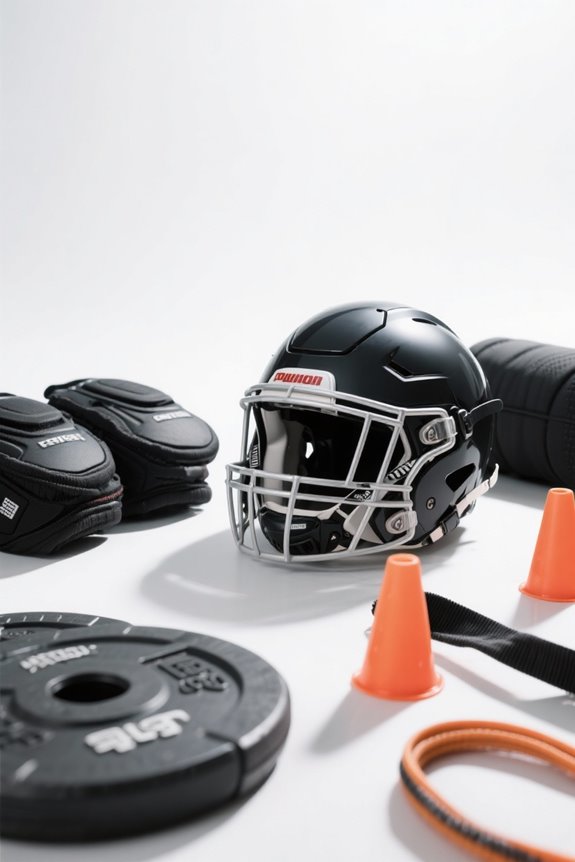
Strength training strategies are pivotal for football players seeking to enhance their on-field performance and overall physical durability. Key compound lifts, such as squats, deadlifts, and bench presses, are foundational exercises that target major muscle groups, thereby increasing strength and power output essential for gameplay. Olympic lifts, including cleans and snatches, develop explosive power, enabling athletes to generate force rapidly. Programs typically emphasize low to moderate repetitions, ranging from four to eight per set, at high intensity to optimize strength gains. Incorporating pulling exercises, like dumbbell rows, strengthens back muscles, improving balance during competition. Employing various training methods and maintaining consistent volume throughout the year enhances durability, reduces injury risk, and supports sustained performance on the field. Utilizing high-quality materials like polyurethane foam in protective gear can further help to enhance safety and support during intense training sessions.
Recommended Products
![FORZA Aluminum Soccer Goals [11 Sizes] | Professional Soccer Goal Posts *The Goal Nets Used by MLS & Premier League Clubs* (Alu110 Socketed, 16ft x 7ft)](https://m.media-amazon.com/images/I/51tZuoU-8ZL._SL500_.jpg)
PROFESSIONAL SOCCER GOAL & NET - Available in multiple regulation sizes (6ft x 4ft to 24ft x 8ft), these premium soccer goals are perfect for players of all levels, from junior athletes to seasoned professionals. Designed for durability and performance, they’re ideal for clubs, training sessions, and competitive matches.
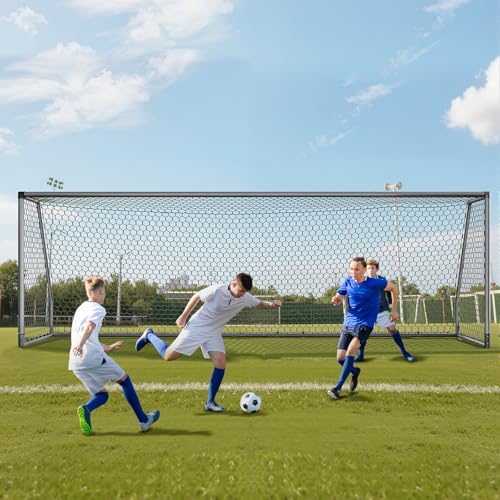
Perfect for Training & Match Prep: Available in multiple sizes, ideal for youth teams, clubs, schools, or adult practice, offering realistic dimensions for developing skills or match simulation

REGULATION PORTABLE SOCCER GOAL - This Full Size Bownet Soccer Goal is ideal for training both indoor or outdoor and is easy to fold for storage and transport.
Functional Strength Training and Technological Integration
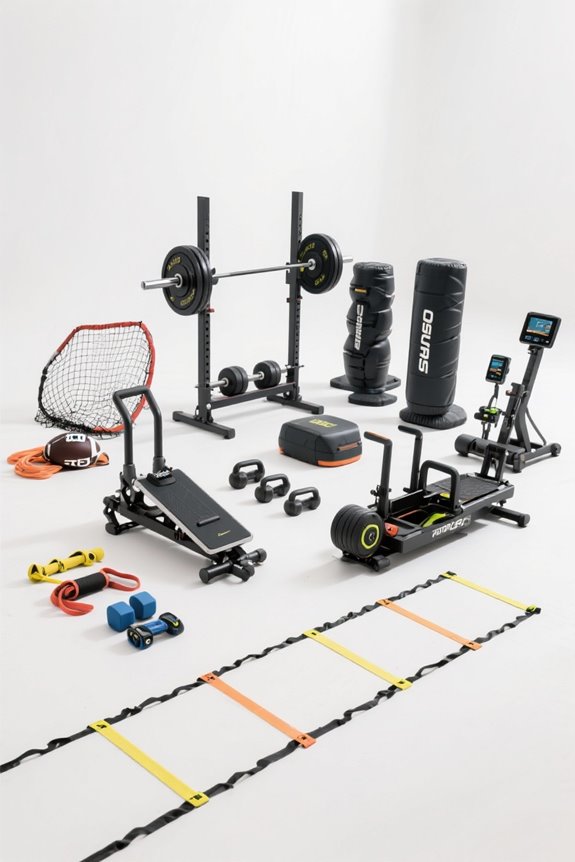
Functional strength training has become an essential component of modern football preparation, focusing on movements that closely replicate the actions performed during games. This type of training utilizes multi-joint, compound exercises to enhance performance-related strength and power, while also promoting endurance, balance, agility, and coordination. By aligning training with football-specific movement patterns, athletes can improve their injury prevention techniques, preparing their muscles and joints for the demands of the sport. Additionally, advancements in functional training technology, such as motion capture and wearable devices, allow for real-time assessments of performance and tailoring of training regimens. These innovations guarantee that players can address movement inefficiencies effectively, thereby enhancing their overall functional capacity while reducing injury risks associated with high-contact scenarios. Furthermore, incorporating tools like football training harnesses can further improve strength and agility during workouts.
Recommended Products

Heavy Duty Steel Frame: Built from 12-gauge powder-coated steel, this sled supports up to 300 lb and is designed for intense conditioning workouts on turf, grass, cement, or asphalt.

Weight Sled for Training: Heavy duty Rep Fitness weight sled designed for simple, effective strength and conditioning. Plate-loaded sled accepts Olympic weight plates and delivers scalable resistance for sled workouts, CrossFit training, and athletic development.

Suitable for 1"&2" weight plate. Built with durable steel buckles and sturdy framework, the workout sled provides intense resistance training
Benefits of High-Intensity Interval Training (HIIT)
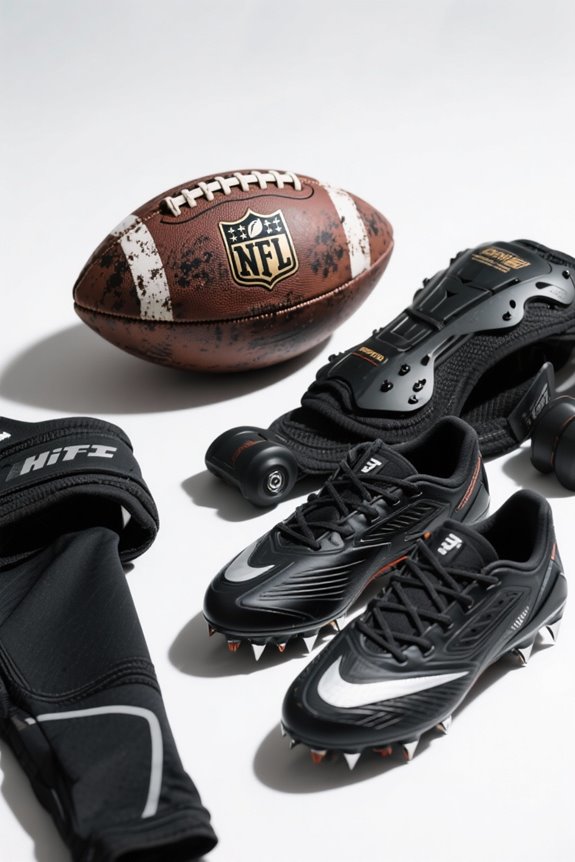
High-Intensity Interval Training (HIIT) plays a transformative role in the fitness regimens of football players, yielding numerous physiological and cognitive benefits conducive to improving on-field performance. HIIT adaptations greatly enhance cardiovascular efficiency, increasing oxygen uptake and delaying fatigue onset, which is critical during matches. In addition, research indicates that short-duration, high-intensity efforts improve speed endurance and muscle strength, fundamental for repeated sprints. Cognitive performance is also elevated, as HIIT fosters better reaction times and decision-making under fatigue, enhancing overall game intelligence. Moreover, effective recovery strategies are employed during HIIT sessions, allowing players to maintain high performance levels while minimizing injury risks. These combined benefits make HIIT an indispensable component of a football player’s training routine. Moreover, incorporating flexibility and mobility training alongside HIIT can further enhance resilience and performance throughout the season.
Recommended Products

COMPLETE HOME GYM SET — 5 long resistance bands, 2 rubber handles, 1 door anchor and 1 resistance band bar. Everything you need for pull up assistance, strength training and stretching in one box

WHAT’S IN THE BOX: Add an extra challenge to your training with TRX long resistance bands. This pack of full-body-size strength bands includes multiple levels of resistance from 5–70 lbs. for the 4 pack and 5–150 lbs. for the 6 pack.

NEXT LEVEL RESISTANCE GUARANTEED - Whether you’re looking for a better way to stretch or simply want a new challenge to your workout regiment, the Gymreapers Resistance Bands are made for you. Our bands enable you to tone, strengthen, and tighten any muscle group no matter where you are. The portable and lightweight bands are ideal for recovery, strength building, conditioning, or as a substitute for your favorite gym machine
The FIFA 11+ Program for Injury Prevention and Performance
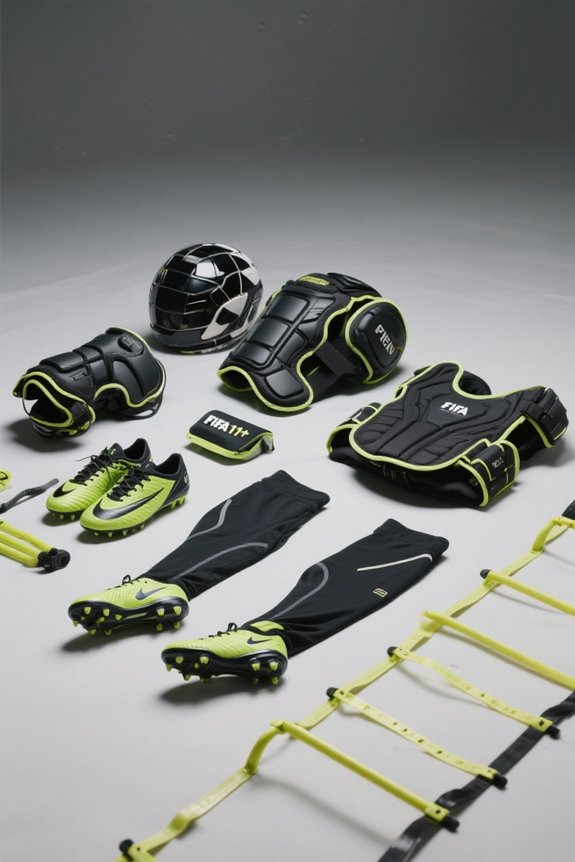
The FIFA 11+ program stands as a leading initiative in injury prevention and performance enhancement for football players, particularly due to its evidence-based design grounded in the expertise of international specialists. This extensive program, developed from methodologies like “The 11” and “PEP,” incorporates running, strength, plyometric, and balance exercises that take approximately 20 minutes to complete, ideally twice a week. Research indicates significant FIFA 11+ benefits, including up to a 50% reduction in severe injuries, particularly among young and competitive athletes. The program’s minimal equipment requirements, such as cones and balls, enhance accessibility. By focusing on dynamic balance and adaptability, the FIFA 11+ effectively aids in injury prevention, supporting both male and female players across various levels. Additionally, regular engagement in such programs can complement safety measures like safety certifications that ensure equipment efficacy and player protection.
Effective Exercise Sequencing and Training Styles
Effective exercise sequencing and training styles are critical components in optimizing performance and minimizing injury risk for football players. A well-structured routine should begin with movement preparation, followed by strength-focused compound lifts like squats and deadlifts to maximize neural drive. Following this, explosive and plyometric training can enhance power and speed. It is vital to prioritize exercise selection strategically; incorporating unilateral movements improves balance and reduces muscle imbalances. Program adaptation should revolve around scheduling different training aspects, with strength training assigned three days, explosive work one day, and plyometrics another. Integrating active recovery and appropriate rest periods between sets guarantees sustained high intensity, ultimately fostering improved athletic performance while mitigating injury risk through systematic planning and execution. Additionally, utilizing proper protective gear, such as football rib protectors, can further enhance safety during high-contact training sessions and games.
Load Management and Recovery Techniques
Load management, an important aspect of physical training for football players, seeks to balance training demands with recovery to enhance performance and minimize injury risks. Effective load monitoring involves evaluating both external and internal loads, utilizing tools such as GPS tracking and heart rate monitors to collect performance data. Recovery protocols, which encompass periodized rest days and low-intensity sessions, are essential for maintaining athlete wellness and performance capacities. Applying techniques like velocity-based training allows for real-time adjustments, ensuring athletes avoid sudden increases in load that can elevate injury risk. Furthermore, active recovery strategies, including mobility work and nutritional interventions, are critical to facilitate recovery and optimize training effectiveness, therefore ensuring football players remain at peak performance throughout their season. The importance of shoulder pads for protection during training cannot be overlooked, as proper equipment is essential for safe practices on the field.
Recommended Products

Increase Vertical Power & Jump Height: Designed to elevate your performance, these training soles attach easily to most sport shoes for men and women. They target calves and fast-twitch muscle fibers to improve vertical jump, explosive strength, and balance for basketball, volleyball, and agility training.

ENHANCED STABILITY - CORESHORTS 3.0 mens and womens compression shorts enhance functional movement while providing optimal stability, control, and protection. These athletic shorts provide maximum directional support for all activities that require quick movements, a change in direction and increased load or intensity. Ideal for those who need extra support due to decreased muscle strength, poor stability, and injury recovery.

DESIGNED TO BE WORN AS AN OUTER SHORT - Made to fit your body so there is no bunching of fabric while you are working out. Ditch the layers and get the one-performance compression short with a built-in jockstrap that provides the best groin protection.
Frequency of Training and Its Impact on Performance
Training frequency plays a vital role in shaping a football player’s performance, particularly regarding aerobic capacity, strength, and match readiness. High-frequency training programs, comprising three aerobic and two strength sessions per week, markedly improve young players’ maximal oxygen uptake (*p* = 0.037). Furthermore, engaging in four or more training sessions weekly allows semi-professional and professional players to sustain high-intensity efforts during matches better than those with fewer sessions. Additionally, integrating strength training while managing fatigue is essential, as excessive frequency without load balancing may lead to decreased power outputs. Properly implementing these training variables enhances players’ endurance and overall match performance while mitigating fatigue accumulation, ensuring players can maintain peak performance throughout their demanding schedules. Incorporating tools like resistance bands can further optimize strength and agility during training, maximizing their benefits.
Tailoring Workouts to Individual Player Needs
Tailoring workouts to individual player needs is essential for optimizing performance and reducing injury risks in football. Thorough individual evaluations are performed to evaluate players’ biomechanical profiles, identifying strengths and weaknesses related to flexibility, strength, and endurance. This data informs customized programming, which is vital for addressing specific deficits. Functional assessments further pinpoint areas requiring corrective exercises, ensuring a focused approach to training. Position-specific requirements dictate exercise selection, promoting athletic development tailored to each player’s unique role. Incorporating recovery protocols and load management maintains overall well-being, especially for players with prior injuries. By regularly evaluating skill levels and adapting training regimens, coaches can effectively prohibit overloading while facilitating continuous progression, ensuring athletes are battle-ready for competitive environments. Additionally, ensuring optimal traction and agility in training footwear, such as cleats, can significantly enhance training performance on the field.
Frequently Asked Questions
How Do I Maintain Motivation During Training Sessions?
Maintaining motivation during training sessions can be like igniting a flame. Setting clear training goals alongside accountability partners creates a supportive environment, inspiring continuous effort and engagement, ensuring progress remains a shared, exhilarating journey.
What Is the Best Nutrition Plan for Football Players?
A thorough nutrition plan for football players emphasizes balanced meals with ideal protein distribution, strategic hydration timing, and energy-focused carbohydrates, ensuring peak performance and recovery while incorporating hydration strategies to maintain electrolytes during intense training and matches.
How Can Mental Training Improve Physical Performance?
Studies indicate that athletes who employ visualization techniques and focus strategies experience up to a 40% improvement in performance parameters. Mental training enhances physical performance by sharpening focus, boosting confidence, and improving stress management under pressure.
What Are Common Mistakes to Avoid During Workouts?
Common mistakes during workouts include neglecting recovery, which increases overtraining risks, and failing to guarantee workout consistency. Balancing intensity, incorporating rest, and adhering to a structured routine are essential for effective training and injury prevention.
How Can I Prevent Burnout During Intensive Training?
How can one effectively prevent burnout during intensive training? Implementing recovery techniques alongside stress management strategies is essential, ensuring a balance between workload and rest to promote sustainable performance and mental wellbeing.


