As an Amazon Associate, we earn from qualifying purchases. Some links on this site are affiliate links at no extra cost to you. Our recommendations are based on thorough research and editorial judgment.


How Do Football Players Train For Endurance And Stamina?

Football players train for endurance and stamina through a combination of specialized techniques. Interval training simulates game intensity, involving high-intensity sprints followed by rest. Long-distance running enhances cardiovascular endurance, while circuit training promotes muscular endurance with football-specific movements. Shuttle runs develop agility and speed, and functional conditioning mimics match situations. Additionally, progressive overload strategies guarantee continuous improvement, while adequate recovery is emphasized to prevent injuries. Further exploration reveals more about the diverse training methods utilized.
Key Takeaways
- Football players utilize interval training with high-intensity sprints followed by rest to simulate game scenarios and improve cardiovascular fitness.
- Long-distance running between 3 to 5 miles enhances aerobic capacity and supports muscle adaptation for better fatigue resistance.
- Circuit training integrates bodyweight and plyometric exercises focusing on football-specific movements to increase muscular strength and endurance.
- Agility and speed drills, like shuttle runs, develop quick lateral movements and enhance overall cardiovascular fitness necessary for match performance.
- Recovery strategies, including rest and proper nutrition, are essential for adapting to training intensity and preventing injuries.
Interval Training for Game Intensity
Endurance training is a crucial component in preparing football players for the intense demands of the game, and interval training stands out as a method that effectively simulates these conditions. Common interval training techniques include high-intensity sprints with corresponding rest periods, reflecting the stop-start nature of football. For example, professional clubs conduct full field sprints at approximately 75% sprint speed for 20 seconds, followed by equal rest, repeated multiple times. Sprint interval variations such as 15-second high-intensity runs followed by 15 seconds of rest further enhance physical adaptability. These sessions, typically lasting under 15 minutes, can be performed one to two times weekly, ensuring optimal conditioning. The method supports improvements in cardiovascular fitness and muscular endurance, essential for sustained performance. Incorporating flexibility and mobility training into the routine can further enhance resilience and aid in injury prevention.
Recommended Products

BUILT TOUGH - Jacobs Ladder Is A Versatile Workout Machine, Expertly Designed Strong To Exercise Both Arms & Legs, Giving You A Superb Full Body Cardio Workout. Ideal For High Intensity Interval Training.

REALISTIC GAME-SPEED TRAINING: Delivers accurate serves, spikes, and sets to simulate live-match conditions for advanced volleyball practice, helping players improve reaction time, ball control, and defensive skills.

ADJUSTABLE TRIPODS FOR PERFECT HEIGHT (UP TO 5.25FT) Includes 4 sturdy, height-adjustable tripods that extend up to 5.25 feet. Easily customize the height to match your training needs, ensuring precise timing for every sprint, drill, or workout.
Enhancing Aerobic Capacity Through Long-Distance Running
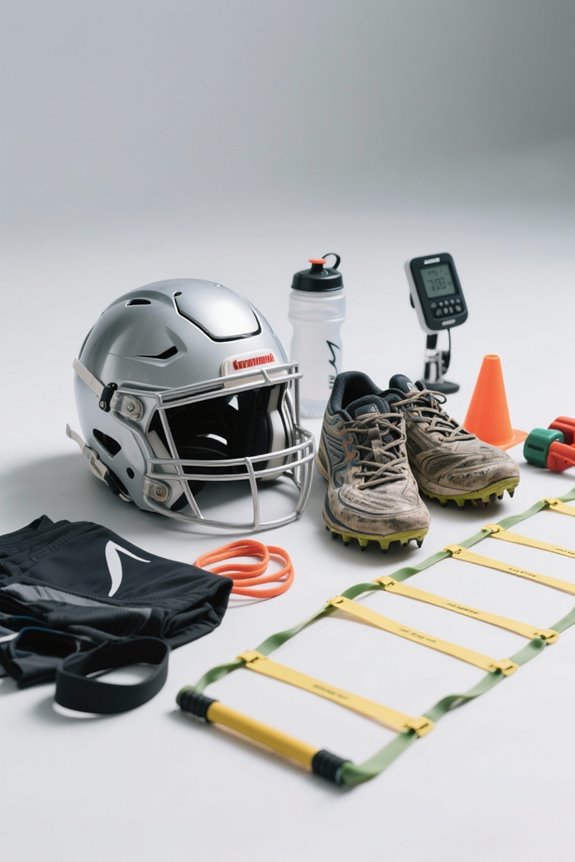
To effectively enhance aerobic capacity, football training includes long-distance running as a significant component in player development. This exercise offers numerous long-distance benefits, primarily improving cardiovascular endurance and facilitating efficient oxygen delivery to muscles. Sessions typically involve steady-pace runs of 3 to 5 miles, helping players develop foundational aerobic endurance necessary for prolonged activity in matches. Training consistency in these workouts promotes adaptations in muscle fibers for better fatigue resistance, while also increasing mitochondrial density which supports energy utilization. Additionally, incorporating longer runs alongside game-specific drills maximizes stamina and reflects the dynamic demands of football. Enhanced aerobic capacity through long-distance running ultimately leads to quicker recovery times between high-intensity efforts, essential for performance longevity. Furthermore, progressive strength training is also crucial for improving overall performance in the sport.
Recommended Products

Running few women Adidas

Elastic cuff around the ankle is comfortable and breathable.
Elastic cuff around the ankle is comfortable and breathable.
Circuit Training for Muscular Endurance
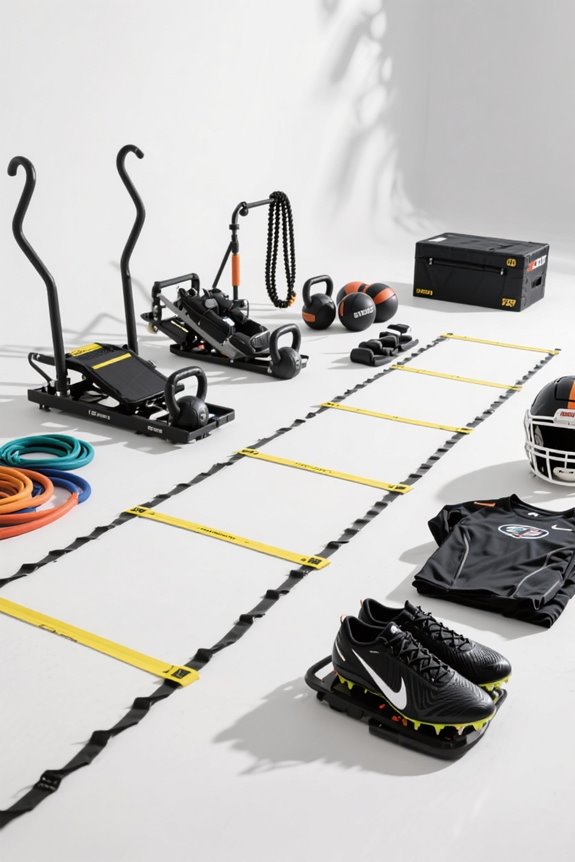
Circuit training serves as a thorough approach to developing muscular endurance in football players, effectively combining multiple exercises performed sequentially with minimal rest. This training method enhances both total body strength and fitness levels while focusing on football-specific movements, such as jumping and sprinting. The circuit structure typically involves timed exercises, often ranging from 45 to 60 seconds, followed by brief rest intervals. Players engage in various activities, including plyometric moves and bodyweight exercises, ensuring extensive muscular endurance development. Utilizing minimal equipment like dumbbells and resistance bands, circuits can adapt to different fitness levels. Additionally, progress can be achieved by increasing exercise duration or complexity, allowing athletes to meet the demands of football’s stop-start nature and maintain functional power under fatigue. Incorporating techniques such as noise cancellation benefits can further enhance focus during training sessions amidst distractions.
Recommended Products


Increase Speed and Agility By Building Hip Strength and Explosiveness. Plus Lifetime Warranty On Resistance Bands

300% More Durable Than The Competition - When you're shopping for resistance bands, it's important to know how they are manufactured. The cheap $40-$50 bands you find on Amazon are molded into a single piece of latex. This process is cheaper and results in many bands breaking under moderate use. We have upgraded all of our bands to a layered manufacturing process. This is much more expensive for us to produce, but results in bands that are 300% more durable and resistant to breaks and tears.
Agility and Speed Development With Shuttle Runs
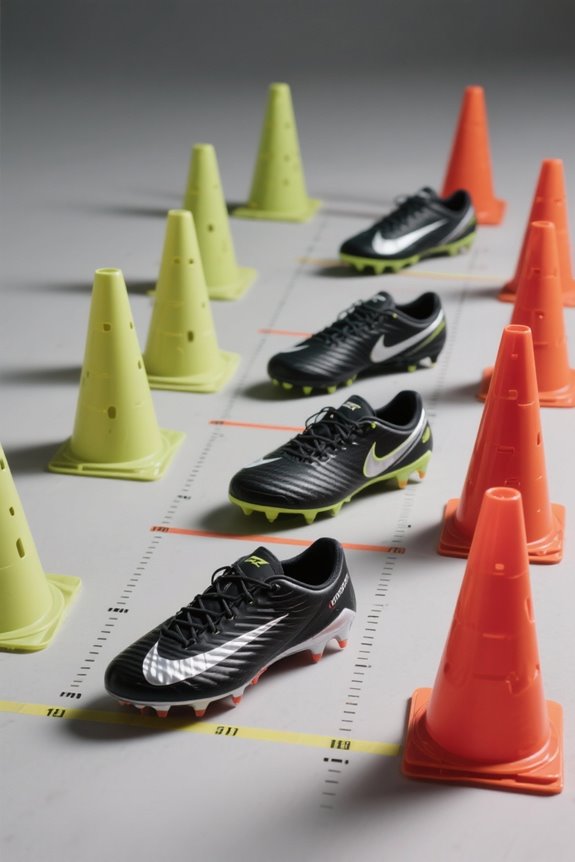
Developing agility and speed is a fundamental aspect of training for football players, particularly through the implementation of shuttle runs. These exercises, which consist of sprinting back and forth over designated distances, greatly enhance both cardiovascular fitness and speed-endurance. Shuttle drills focus on lateral movements, requiring athletes to execute rapid directional changes that mimic game scenarios. For instance, the Agility 4x10m Shuttle Run tests short-distance speed and agility, while the 300 Yard Shuttle evaluates anaerobic endurance. Regular practice of shuttle runs improves athletes’ mental resilience and overall performance by conditioning them for high-intensity actions encountered during matches. Coaches utilize these drills strategically to develop necessary skills for effective in-game agility while evaluating fitness and readiness for competition. Incorporating interval training into shuttle run routines can further optimize endurance and speed development.
Recommended Products

Flexible & Durable PVC: Built from heavy duty, flexible plastic to withstand repeated use for soccer cones, parking cones, traffic cones, or street cones in any setting.

Heavier, Thicker, Stronger: Finally, heavier, thicker, and stronger agility cones that won't tip over or slide around. LVL10 Sports Pro practice cones are made of thick and flexible PVC vinyl that's 200% thicker than flimsy, brittle, and small plastic cones from the competition.
![FORZA Soccer Superdome Training Marker Cones [Choose Your Color] (White)](https://m.media-amazon.com/images/I/61+NWEx1b1L._SL500_.jpg)
PROFESSIONAL-GRADE JUMBO CONES - Ideal for enhancing speed, agility, and ball control drills, suitable for soccer players from youth leagues to professional teams.
Cross-Training for Joint-Friendly Conditioning
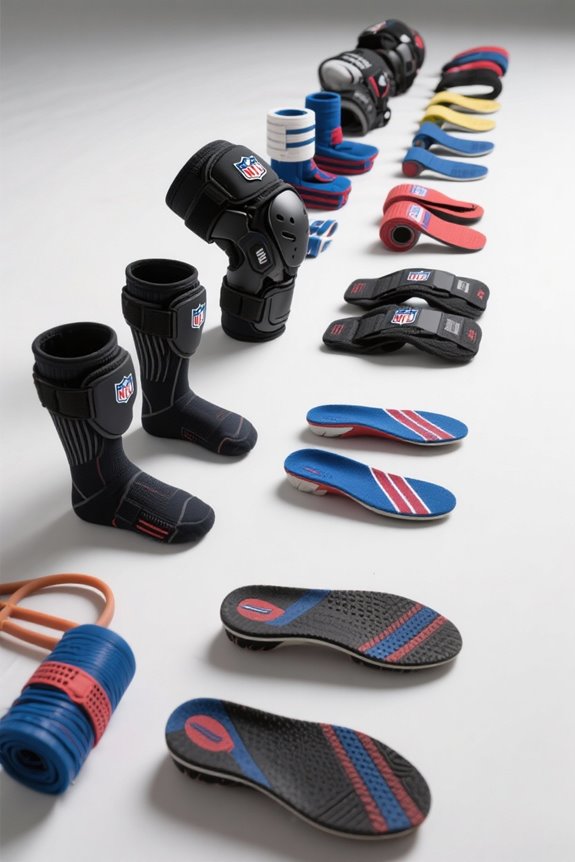
While traditional football training often emphasizes high-impact exercises, the incorporation of cross-training for joint-friendly conditioning provides a beneficial alternative that enhances overall athletic performance. Cross-training, which includes low-impact activities such as elliptical training and cross-country skiing, greatly reduces the risk of injury by promoting functional fitness. These activities improve balance, flexibility, and mobility, essential components for effective movement on the field. Additionally, cross-training benefits players by increasing stamina and lung capacity while filling training gaps often overlooked in conventional practice. By diversifying training regimens and focusing on underworked muscle groups, athletes can better their movement efficiency and posture, ultimately leading to improved performance and reduced risk of soft-tissue injuries during demanding matches. Furthermore, utilizing durable materials for training equipment can ensure that athletes receive the best support as they develop their endurance and stamina effectively.
Recommended Products

Dual-Screen Console

Comes Fully Assembled

Extra Wide Swivel Seat
Football-Specific Drills for Stamina
Football players must engage in football-specific drills designed to enhance stamina, as these exercises closely mimic the physical demands experienced during a match. Notable drills include stop and go activities, which combine sprinting and jogging intervals lasting 30 to 45 minutes, simulating game pacing. Additionally, football conditioning circuits featuring movements like throwing, tackling, and running develop both endurance and functional strength. Position-specific stamina drills focus on unique demands per role, enhancing game-time endurance. Meanwhile, endurance runs with integrated football movements incorporate steady-state running and high-intensity sprints, essential for building applicable stamina. Ultimately, shuttle runs and agility drills improve lateral movement and anaerobic capacity, vital for dynamic gameplay. Supportive braces are recommended for high-impact activities, ensuring players maintain optimal performance during these demanding drills. Collectively, these football drills greatly contribute to overall stamina enhancement.
The Role of Strength and Power Training
Enhancing performance in football extends beyond stamina drills, as strength and power training play a pivotal role in an athlete’s ability to excel on the field. Key exercises such as squats, deadlifts, and power cleans serve as foundational strength training techniques, essential for generating explosive force during gameplay. Heavy squats enhance lower body strength, directly impacting sprint acceleration and blocking capabilities. In contrast, plyometric training, including high-intensity box jumps and lateral bounds, develops explosive power necessary for quick directional changes. This targeted power development improves an athlete’s rate of force production, vital for in-game performance. Programs that integrate varying resistance levels and mimic game-specific movements guarantee athletes maximize their strength and power, ultimately translating to enhanced endurance on the field. Incorporating agility training tools can further complement these strength training efforts by enhancing coordination and quickness, leading to overall improved athletic performance.
Importance of Core and Stability Conditioning
Core and stability conditioning represents a fundamental aspect of athletic training, imparting essential benefits that elevate performance and reduce the risk of injury. By establishing core stability, athletes acquire better force absorption, which is critical during impacts and sudden decelerations. Training with unstable surfaces enhances neuromuscular control, aiding in the activation of local stabilizer muscles pivotal for injury prevention. Techniques such as diaphragmatic breathing further bolster core stability, co-contracting pelvic and deep abdominal muscles for ideal support. Additionally, exercises targeting reactive strength and promoting dynamic motor patterns make certain athletes can swiftly adapt to the demands of the game. Collectively, these conditioning approaches considerably contribute to overall athletic performance while mitigating the risk of potential injuries. Incorporating proper protective gear is vital to ensuring safety and enhancing performance on the field.
Implementing Progressive Overload and Recovery
Training regimens for football players increasingly emphasize the principles of progressive overload and recovery as essential components for developing endurance and overall performance. Progressive overload entails systematically increasing training intensity, volume, and frequency to foster gradual adaptation in athletes. This method allows joints, tendons, and muscles to adapt without risking injury or burnout. Complementing this approach, recovery strategies are crucial. They include appropriate rest, nutrition, hydration, and sleep, which mitigate the risks of overtraining. Effective recovery is monitored through both subjective and objective measures, enabling tailored adjustment to training loads. Periodization, dividing training into distinct phases, further enhances performance by ensuring that athletes alternate between challenging exercises and adequate recovery intervals to optimize their endurance capacity safely and effectively. Additionally, similar to how players should focus on moisture-wicking technology in their gear for improved comfort and performance, proper clothing can also play a significant role in how well players recover during their training.
Match Simulation and Functional Conditioning
As football players seek to enhance their endurance and overall performance, match simulation and functional conditioning have emerged as crucial elements of modern training regimens. Utilizing tools such as Virtual Reality (VR) technology, teams can replicate realistic match scenarios while minimizing physical strain. These simulations facilitate cognitive training, enabling players to develop essential perceptual-cognitive skills necessary for effective decision-making under pressure. Functional conditioning drills mimic the intensity of actual games, promoting cardiovascular endurance and neuromuscular coordination necessary for executing match strategies. Additionally, video-based simulations supplement this training by improving rapid decision-making and situational awareness. Furthermore, incorporating practices with target pockets of various sizes can help players improve muscle memory and decision-making in game-like scenarios. By combining these advanced methods, players can refine both their physical abilities and cognitive responses, ultimately enhancing their stamina and overall game performance.
Frequently Asked Questions
How Often Should Football Players Train for Endurance?
“Practice makes perfect” reflects that football players should engage in endurance workouts 3–5 times weekly. This training frequency supports ideal performance by balancing aerobic conditioning and recovery, essential for sustaining high-intensity efforts during games.
What Nutrition Supports Endurance Training for Football?
Nutrition supporting endurance training for football includes adequate carbohydrate sources for energy replenishment and strategic protein timing to facilitate muscle repair and recovery, optimizing overall performance and stamina during rigorous training sessions and competitions.
What Role Does Hydration Play in Stamina Maintenance?
Hydration strategies greatly influence stamina maintenance by ensuring ideal electrolyte balance. Adequate hydration preserves muscle function, enhances cognitive performance, and mitigates injury risks, ultimately supporting sustained athletic efforts and overall performance in football.
How Do Injuries Affect Endurance Training Schedules?
When it rains, it pours; injuries necessitate significant training adjustments during injury recovery. Athletes must initially reduce intensity and volume, adopting alternative exercises to maintain fitness while carefully reintroducing demanding endurance drills as recovery progresses.
Can Mental Training Improve Endurance Performance in Football?
Mental training can considerably enhance endurance performance in football by fostering mental resilience and incorporating visualization techniques. These strategies help players maintain focus and confidence, improving their ability to sustain effort during demanding matches.


