As an Amazon Associate, we earn from qualifying purchases. Some links on this site are affiliate links at no extra cost to you. Our recommendations are based on thorough research and editorial judgment.


What Is Plyometric Training And How Does It Help Football Players?

Plyometric training is a conditioning methodology focused on explosive movements, vital for enhancing speed, power, and agility in football players. This training utilizes dynamic exercises, such as jumping and bounding, to engage the stretch-shortening cycle of muscles, thereby improving muscle contraction efficiency and neuromuscular coordination. Studies show that plyometric drills can enhance vertical jump height by up to 19%, reduce injury risks, and foster rapid changes in direction during gameplay. Further insights on applications and exercises can be explored.
Key Takeaways
- Plyometric training involves explosive movements that improve speed, power, and strength, crucial for optimal football performance.
- It enhances muscle contraction efficiency and neuromuscular coordination, allowing players to react quickly during gameplay.
- This training method reduces ground contact time, boosting acceleration and sprinting abilities essential for football.
- Plyometrics also helps prevent injuries by improving dynamic knee stabilization and reducing knee torque forces.
- Incorporating plyometric exercises enhances endurance and cardiovascular performance, vital for sustaining high-intensity efforts throughout a match.
Understanding Plyometric Training
Plyometric training is an advanced exercise methodology characterized by explosive movements that aim to enhance an athlete’s speed, power, and strength, particularly significant in football. This training employs plyometric principles, incorporating dynamic movements such as jumping, bounding, and hopping that engage the stretch-shortening cycle of muscles. Originating with Eastern European athletes, it has become prominent across various sports stressing explosiveness. Remarkably, plyometric training fosters specific training adaptations, including heightened neuromuscular coordination and the development of fast-twitch muscle fibers, essential for sprinting and agility. Enhanced power output enables faster acceleration and deceleration, critical for football players. Additionally, the emphasis on proper sizing for optimal comfort in footwear can further enhance the overall performance of athletes during plyometric training. While beneficial for athletes, proper progression and technique are paramount to mitigate injury risk during implementation.
The Mechanism of Plyometric Movements

The mechanism of plyometric movements relies on a complex interplay of physiological processes that enhance athletic performance. Central to this are the phases of the stretch-shortening cycle (SSC), where muscle dynamics facilitate energy conservation. During the eccentric phase, muscles and tendons lengthen, storing elastic energy. A brief amortization phase maintains this energy before the concentric phase explosively releases it, enhancing power output. Proprioceptive reflexes enable rapid muscle responses, while elastic properties in fibers allow efficient energy usage. Improved coordination and muscle pre-activation stabilize joints, ensuring efficient energy transfer during movements. Additionally, the shift speed among these phases relates directly to power generation, reflecting the importance of maintaining efficient muscle dynamics for effective plyometric training in athletes. Incorporating agility ladder drills can further enhance reflex and coordination through dynamic plyometric exercises.
Benefits of Plyometrics for Football Players
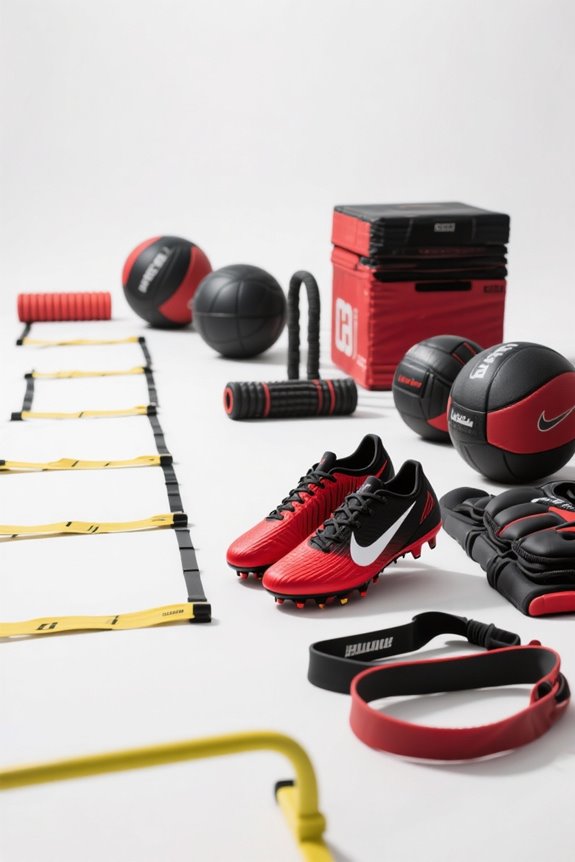
While plyometric training is often recognized for its role in enhancing athletic performance, its specific benefits for football players are profound and multifaceted. Plyometric benefits include increased explosive power, which is essential for actions such as sprinting and tackling. This training improves muscle contraction efficiency, enhancing neuromuscular coordination and enabling higher force outputs during rapid movements. Additionally, plyometric exercises enhance agility and change of direction, critical for effective footwork and positioning on the field. Improved velocity and sprint performance, resulting from enhanced stride length and frequency, further contribute to overall gameplay effectiveness. Moreover, plyometrics increase kicking precision and technical execution under fatigue, solidifying their value in developing not only explosive performance but also all-encompassing athletic capability in football players. Including training with a sled harness can complement plyometric exercises by further improving strength and resistance capabilities.
Enhancing Speed With Plyometric Training
Maximizing speed on the football field is a critical objective for players attempting to enhance their performance. Plyometric training enhances explosive strength by improving muscle power through rapid stretch-shortening cycles, which are fundamental to plyometric mechanics. These cyclical actions accelerate muscle contractions, necessary for effective sprint starts, subsequently boosting overall acceleration and speed. Improved neural activation leads to better coordination between the nervous system and muscles, contributing to faster reaction times essential in game situations. This training fosters adaptations that reduce ground contact time, allowing athletes to generate maximum force efficiently. Specific drills, such as Hydro Bag Switches and Single Leg Bounds, focus on developing the mechanics and power needed for peak sprinting, thereby enhancing competitive performance on the field. Incorporating speed parachutes into plyometric training can further amplify muscle endurance and sprinting power, making it a valuable resource for athletes.
Recommended Products

Package Weight: 4.672 kilograms


HIGH QUALITY: GSI Kids Parachutes comes in rainbow multicolor pattern with bright colors. It is made of high quality Polyester material which is durable and can tolerate a wide temperature range. The handles are cross-stitched making them extra-strong and the reinforced mesh center allows ample airflow.
Improving Agility Through Plyometrics

Improving agility through plyometric training has been recognized as an essential component for football players seeking enhanced on-field performance. Plyometric exercises, such as lateral jumps and single-leg hops, markedly contribute to improved lateral agility and reaction times. Research indicates that collegiate football players can experience considerable enhancements in agility test times, with improvements recorded from 4 to 12 weeks of training. Reaction drills, which incorporate quick stretch-shortening cycles, further develop muscle power output, allowing for better acceleration and deceleration. Studies show that the Illinois agility test times decreased by approximately 0.97 seconds following plyometric interventions, highlighting the effectiveness of this training modality in fostering agility. Consequently, plyometrics, when executed thoughtfully, optimize performance across various skill levels in football players. Furthermore, incorporating moisture-wicking technologies in training attire can also contribute to overall comfort and performance during workouts.
Recommended Products

HEAVY DUTY - 20kg/44lb barbell constructed of steel for strength and durability during your workout! Features 195k psi tensile strength with great whip. Built with high quality needle bearings, bushings, and a black protective rubber ring on collar.

ADJUSTABLE AGILITY HURDLES FOR SPEED TRAINING: Height adjusts from 12” to 40” in 4-inch increments, ideal for speed training, agility drills, plyometric workouts, and athletic performance development.

BUILT TO LAST: EPE pro-duty foam construction of Step up box for workout absorbs pressure and supports up to 440 lbs; With a heavy-duty vinyl coating, plyometric box withstands wear and tear; Ideal plyo box jump for intense plyometric workouts
Injury Prevention With Plyometric Exercises
Plyometric exercises serve not only to enhance agility but also play a pivotal role in reducing the risk of injuries among football players, particularly concerning noncontact anterior cruciate ligament (ACL) injuries. Research indicates that lower extremity plyometric training substantially decreases first-time ACL injury risk, enhancing neuromuscular control and improving alignment during explosive movements. These exercises foster better dynamic knee stabilization and dissipate forces across muscles, tendons, and bones, thereby lowering direct knee torque. Injury statistics underscore plyometric safety as critical for athletes; robust plyometric programs have shown efficacy in mitigating ligament strains and tears. By addressing muscle activation timing and endurance, plyometrics facilitate an athlete’s ability to maintain control during high-intensity situations, further reducing their risk of injury. In addition, coaches can use magnetic boards to strategize plyometric drills, creating an organized training environment that optimizes athlete performance.
Recommended Products

Solid Wood Construction for Safe Squats & Jumps: Built from high-quality wood, this plyometric platform offers dependable support for squats, step-ups, and jumping exercises. Great for power training, calisthenics, and weightlifting at home or in the gym.

Train Safer – Soft Foam Jump Box for All Fitness Levels Build strength, balance, and agility while protecting your joints and shins. Each box features impact-absorbing foam and a non-slip vinyl cover, ideal for plyometric workouts, HIIT, and step-up exercises in your home gym or commercial training studio.

Adjustable Exercise Box: Customize your workout intensity with this adjustable plyo box, offering 4 height options: 12, 16, 20, and 24-inch to suit all fitness levels
The Role of Plyometrics in Joint Health
While many training methodologies contribute to overall athletic performance, plyometric exercises uniquely support joint health through various physiological mechanisms. Plyometric training enhances hip stability and joint resilience by promoting neuromuscular control, which improves the coordination of hip adductor and abductor muscles. This increased muscular activation helps mitigate joint stress, particularly during dynamic movements. Moreover, plyometrics stimulate bone density, contributing to enhanced structural adaptations that reduce the risk of fractures, especially in weight-bearing areas like the hips. Additionally, plyometric exercises increase the thickness of knee cartilage, enhancing joint cushioning and potentially lowering the risk of osteoarthritis. Collectively, these adaptations signify that plyometric training plays an essential role in maintaining joint health for athletes engaged in physically demanding sports like football. Furthermore, incorporating captain armbands for visibility during training can aid in leadership visibility and team cohesion among players.
Metabolic Gains From High-Intensity Plyometrics
High-intensity plyometrics represent a highly effective training methodology for enhancing metabolic fitness in football players, as these exercises engage both anaerobic and aerobic energy systems due to the rapid stretch-shortening cycles involved. The integration of both eccentric and concentric muscle actions increases intramuscular tension, leading to significant metabolic adaptations. Short rest periods between drills augment metabolic stress, enhancing fat loss and promoting hormonal responses that stimulate muscle growth. Football players often exhibit improved VO₂ peak and greater anaerobic power outputs, which are vital for performance during matches. Additionally, elevated post-exercise oxygen consumption (EPOC) indicates that metabolic activation continues beyond the workout, supporting improved endurance and fatigue resistance essential for high-intensity efforts on the field. Using proper wrist support can prevent injuries during these intense workouts and improve performance on the field.
Cardiovascular Benefits of Plyometric Training
Cardiovascular fitness represents a critical aspect of performance for football players, and recent studies have shown that plyometric training greatly enhances cardio-respiratory endurance. The plyometric mechanics involved in rapid muscle contractions stimulate heart rate elevation, ensuring sustained aerobic demand and fostering essential endurance adaptations. Enhanced cardio-respiratory endurance allows players to maintain high-intensity performance throughout a match, considerably reducing fatigue. Additionally, plyometric training cultivates peripheral circulatory adaptations via increased skeletal muscle capillarization, optimizing the transport of oxygen and nutrients. This contributes to prolonged exercise capacity and efficient recovery between high-intensity efforts. Furthermore, improved neuromuscular coordination through plyometrics minimizes systemic cardiovascular strain, enhancing exercise economy and supporting agile movements on the field. Overall, plyometric training provides thorough cardiovascular benefits essential for football excellence, and it complements strength training for football as part of a comprehensive conditioning program.
Practical Applications for Football Players
Building upon the cardiovascular benefits previously discussed, plyometric training offers football players a multitude of practical applications that can considerably enhance performance on the field. These practical drills substantially improve explosive power, boosting sprint performance and aiding in rapid changes of direction, which are critical elements in both offensive and defensive scenarios. Research indicates that players experience up to a 19% increase in vertical jump height, enhancing their capacity for aerial duels and set-piece effectiveness. Additionally, enhancements in agility and coordination contribute to efficient movement patterns, reducing injury risk during high-velocity maneuvers. Overall, the real-world applications of plyometric training empower football players to adapt to the dynamic demands of the sport, ultimately elevating their competitive performance. Incorporating explosive power through plyometric workouts is essential for maximizing on-field performance.
Recommended Products

COMMERCIAL GRADE STEEL CONSTRUCTION: Built with heavy-duty welded steel for exceptional strength, stability, and long-lasting performance. Designed to withstand intense plyometric training in gyms, schools, athletic facilities, and home workout spaces.

Burn twice the calories in half the time

4-Piece Set with Multiple Sizes: You have the freedom to select from different sizes, including 12 inches, 18 inches, 24 inches, and 30 inches, for versatile full-body workouts. This product caters to individuals of all levels, from beginners to professionals, and is also well-suited for home gym setups.
Essential Plyometric Exercises for Football
Plyometric exercises are fundamental components of training regimens designed for football players, as they greatly enhance various aspects of athletic performance. Essential plyometric drills include box jumps and depth jumps, which focus on vertical power, critical for effective headers and sprints. For horizontal power, broad jumps and bounding enhance acceleration and stride length, aiding in breakaway runs. Lateral power is developed through exercises such as lateral box jumps, promoting agility for quick direction changes. Additionally, rotational power is addressed with rotational jumps and med ball throws, enhancing core strength for pivoting and kicking. Incorporating these explosive movements into a training program fosters strength development and supports overall athletic performance, ultimately making players more versatile and effective on the field.
Recommended Products

STACKABLE BOXES - Complete with adjustable landing heights, these plyometric boxes are available as a full box set or individually - Green (6in), Blue (12in), Red (18in), & Black (24in). Perfect option to cater for all fitness abilities.

Professional gym-quality plyometric boxes designed to be a fixture in your gym, training room or home for years to come

Build Explosive Power: Intensify workouts and strengthen your lower body with the Champion Sports Foam Plyo Boxes! Designed with long hook and loop tabs for securing the plyometric jumper boxes together, these fitness box will push you to the max.
Key Considerations for Safe Plyometric Training
When engaging in plyometric training, safety must be a paramount consideration for athletes, especially football players whose performance hinges on explosive strength and agility. To guarantee safe training, it is essential to limit the volume of plyometric exercises, focusing on quality over quantity; excessive repetitions can increase injury risk. Athletes should allow 48-72 hours between sessions for adequate recovery. Proper technique is key, emphasizing correct landing mechanics to minimize joint stress. Utilizing shock-absorbing surfaces and supportive footwear can further reduce injury risks. Additionally, establishing a strength base before plyometrics, along with structured warm-ups and cool-downs, is critical. Incorporating effective recovery strategies helps athletes maintain peak performance and prevent overtraining, ultimately fostering a safer training environment.
Frequently Asked Questions
Can Beginners Safely Start Plyometric Training?
Beginners can safely start plyometric training by following safety guidelines, such as using beginner modifications, focusing on low-intensity exercises, ensuring proper supervision, and incorporating adequate rest to promote recovery while minimizing injury risk.
How Often Should Plyometric Training Be Incorporated Into a Routine?
Plyometric training should be incorporated into a routine two times per week for ideal results. This training frequency allows for effective performance gains while ensuring suitable recovery and minimizing injury risks during routine integration.
Are There Age Restrictions for Plyometric Training?
Research suggests age restrictions for plyometric training are minimal, focusing instead on youth development and safety guidelines. Emphasizing physical maturity and proper technique, coaches can tailor programs to guarantee safe participation for young athletes.
What Equipment Is Needed for Plyometric Exercises?
Essential equipment for plyometric exercises includes jump boxes for various jumps and depth landings, along with resistance bands to add intensity during training. Proper footwear and stable surfaces enhance safety and effectiveness while minimizing injury risk.
Can Plyometrics Be Beneficial for Sports Other Than Football?
“Variety is the spice of life.” Plyometrics offer substantial benefits across sports, enhancing agility and explosiveness, particularly in basketball and tennis, where quick movements are essential. This training improves performance in diverse athletic endeavors.


