As an Amazon Associate, we earn from qualifying purchases. Some links on this site are affiliate links at no extra cost to you. Our recommendations are based on thorough research and editorial judgment.


How Do Football Players Train In The Off-Season?

Football players engage in an extensive off-season training regimen that encompasses multiple phases, including recovery, strength development, and speed enhancement. Key components involve customized programs tailored to individual athlete profiles, focusing on strength training techniques, speed drills, and conditioning workouts. Nutritional strategies are essential, emphasizing energy management through balanced meals and hydration. Mental preparation, such as visualization and goal setting, supports overall athlete development. For a deeper understanding of effective training methods, further insights are available.
Key Takeaways
- Football players focus on recovery and general physical preparation, ensuring adequate rest and light conditioning during the off-season.
- Customized training programs include individual assessments for tailored plans addressing each athlete’s unique needs and goals.
- Strength training utilizes progressive overload with major lifts, alongside speed and agility drills to enhance performance on the field.
- Nutrition and hydration strategies are essential, emphasizing energy management and nutrient timing to support training demands.
- Mental preparation techniques, including visualization and mindfulness, help improve emotional regulation and cognitive performance.
Off-Season Training Phases
Football players undergo a series of structured off-season training phases aimed at optimizing their physical readiness for the upcoming season. The initial phase, focusing on recovery and general physical preparation (GPP), emphasizes rest and light conditioning to maintain aerobic fitness while addressing previous injuries. Progressing into strength and power development, players engage in progressive overload with major lifts tailored to their position-specific needs. The subsequent phase enhances speed, agility, and movement quality through targeted drills and biomechanical improvements. Conditioning and endurance building phase simulates game intensity to bolster stamina without compromising neuromuscular qualities. Finally, the individualization phase tailors off-season progression to each athlete’s profile, ensuring training flexibility to mitigate injury risks and prepare them for peak performance. Incorporating tools like training harnesses for resistance can further enhance overall performance during these phases.
Importance of Physical Conditioning
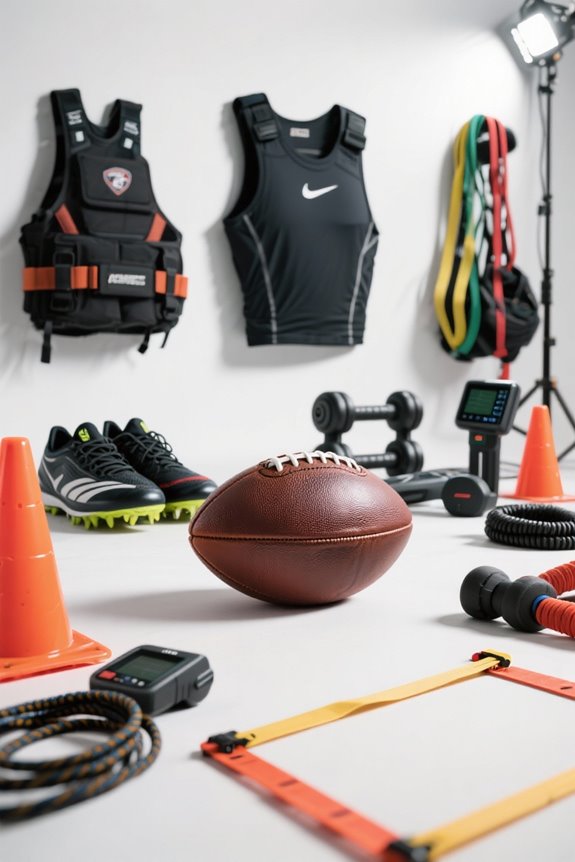
The significance of physical conditioning in sports is underscored by its multifaceted benefits, which enhance both athletic performance and injury resilience. Conditioning develops essential aerobic and anaerobic fitness, allowing players to sustain high-intensity efforts and recover effectively during games. Enhanced stamina supported by conditioning guarantees consistent technical skill execution and decision-making under fatigue. Players experience physiological adaptations that promote strength and power, contributing to performance and durability. Additionally, focused training helps maintain these qualities throughout the competitive season. Injury resilience is further cultivated through increased musculoskeletal strength and reduced sensitivity to contact. Overall, adequate physical conditioning is crucial for optimizing performance, guaranteeing players are better prepared to meet the demands of competitive football while mitigating injury risks. Incorporating speed training techniques into conditioning programs enhances agility and explosiveness on the field.
Customized Training Programs
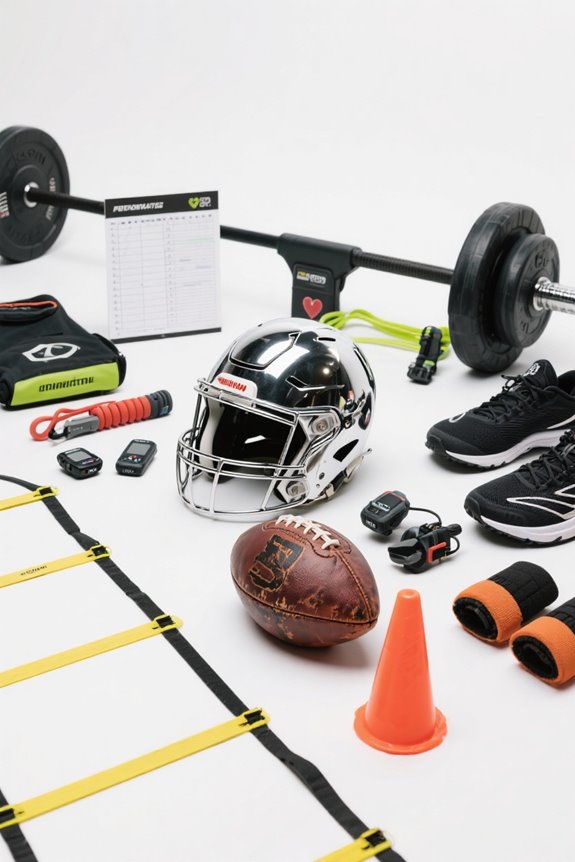
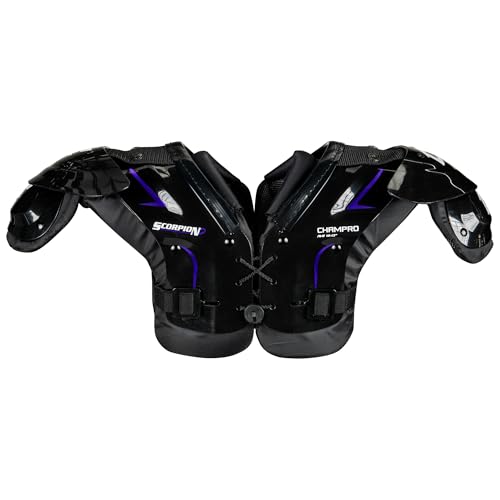
Customized training programs are designed to address the unique needs of each football player, guaranteeing that their off-season preparation is both personalized and effective. These programs begin with individual assessments, focusing on strengths, weaknesses, and injury history to create tailored training plans. Coaches collaborate with athletes to establish both short-term and long-term goals, emphasizing position-specific demands. For instance, position drills are integrated to improve technical skills, with receivers working on route running and linemen honing blocking techniques. Regular reassessments track progress, enabling necessary adjustments to training loads. Such a structured approach guarantees that players address their specific performance targets, ultimately enhancing their capabilities as they prepare for the upcoming season. Additionally, incorporating elements of lightweight and breathable shoulder pads can further improve players’ comfort and mobility during training sessions.
Recommended Products

Professional grade 15-degree Fahrenheit (-9-degree Celsius) ultralight down sleeping bag for for 3-season backpacking, bike packing, and touring; contoured mummy shape features hood and zipper draft tubes

The Sprint XR kayak has a deep V-chine hull design and 10.75 ft length for better tracking and secondary stability in choppy waters with maximum return on each stroke.(Sprint XR)

Stripped down, lightweight, lean and mean for moving fast and getting the job done. Built with rugged dependability to keep you moving strongly toward your objective, no matter how big
Strength Training Techniques
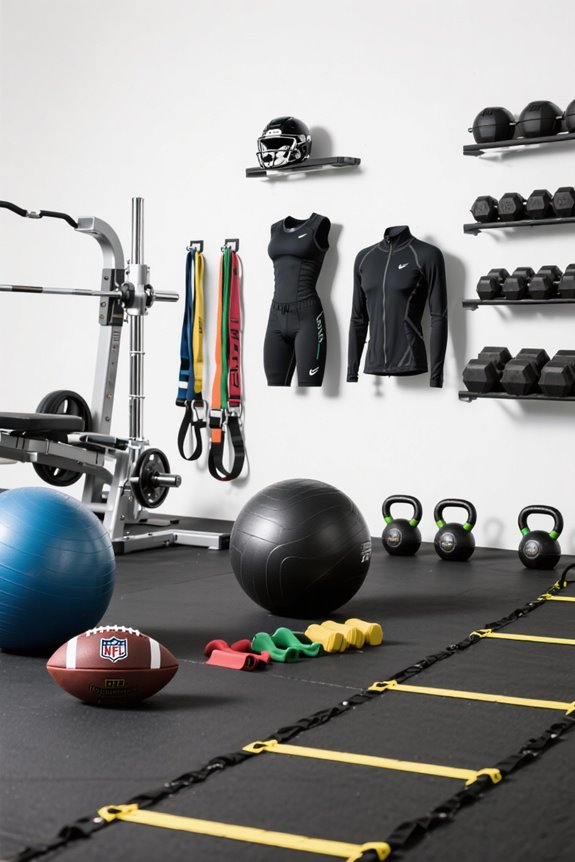
Strength training techniques are essential in the off-season preparation of athletes, as they greatly enhance physical performance on the field. Football players engage in fundamental strength exercises such as squats, deadlifts, and bench presses to build foundational strength necessary for explosive power and overall performance. Variations, including single-leg squats and accommodating resistance with bands, are employed to develop unilateral strength and improve lifting mechanics. Training programs typically emphasize heavy sets in the 4-8 rep range, focusing on muscular hypertrophy and power. Additionally, targeted exercises like sled pushes enhance functional strength, mimicking game situations. This structured approach, complemented by recovery days, enables players to cultivate the physical attributes required for competitive football while reducing injury risks. Incorporating tackling dummies in their training regimen provides realistic practice scenarios that further develop their techniques and response times.
Recommended Products

VERSATILE DUMMY FOR SPORTS TRAINING - Step Over Dummy Perfect for Footwork Drills for a Variety of Sports Including Football, Soccer, and More

CONTACT DRILLS: Heavy-duty tackle dummy for safely simulating contact drills for a variety of sports or for martial arts training
DURABLE: Cantilever design disperses impact and shock, maintaining the pad’s shape and structural integrity. High impact polyethylene construction increases the arches’ strength and durability
Speed and Agility Development

Building upon the foundational strength developed through dedicated training, speed and agility hold significant importance in a football player’s off-season regimen. Players utilize various speed drills, such as shuttle runs and the 5-10-5 drill, to enhance explosive power and quick lateral movements. Agility techniques, including cone drills and zig-zag patterns, improve directional speed and footwork, essential for effective gameplay. Plyometric exercises, such as tuck jumps, develop muscular explosion vital for rapid acceleration. Additionally, ladder drills are implemented to refine coordination and foot placement, allowing players to maintain balance during quick cuts and turns. Overall, these thorough training strategies collectively enhance a player’s agility, speed, and overall performance on the field. Incorporating agility ladder training into the regimen can further boost coordination and foot speed, leading to improved competitive performance.
Recommended Products

Multi-Sport & Therapy Approved Used by professionals in soccer, basketball, boxing, and physical therapy, BlazePod makes training fun, fast, and measurable. Improve focus, speed, and cognitive agility across any discipline.

TRAINER KIT - Your Pods are the foundation of your training experience. Trainer kit is recommended for all trainers on the move for one-on-one or small group training. More Pods give you more versatility, more stations, color coding, and the ability to set up a wider variety of drills.

ATHLETE BUNDLE - Boost your training with the perfect bundle for individual and one-on-one sessions. Improve reaction time, agility, decision-making, and so much more with the smart, engaging, and challenging platform. Enjoy activities in every field and in-depth analytics on the app, with multifunctional accessories to push your boundaries and reach new heights.
Conditioning Workouts
Conditioning workouts are crucial components of a football player’s off-season training regime, as they enhance both fitness and performance levels necessary for competitive gameplay. Among these, High-Intensity Interval Training (HIIT) techniques, which include sprints over short distances, improve cardiovascular fitness and lower body power. Plyometric drills, such as box jumps and burpees, are essential for developing explosive strength and enhancing agility. Endurance training further supports muscular endurance, guaranteeing athletes can sustain performance throughout a game. Additionally, the incorporation of structured recovery methods is necessary for muscle repair and injury prevention. These conditioning workouts are strategically designed to prepare athletes physically for the upcoming season, emphasizing progression in intensity and volume to promote optimal readiness. Incorporating resistance bands into the training routine can further enhance strength and agility.
Recommended Products

COMMERCIAL GRADE STEEL CONSTRUCTION: Built with heavy-duty welded steel for exceptional strength, stability, and long-lasting performance. Designed to withstand intense plyometric training in gyms, schools, athletic facilities, and home workout spaces.

Train Safer – Soft Foam Jump Box for All Fitness Levels Build strength, balance, and agility while protecting your joints and shins. Each box features impact-absorbing foam and a non-slip vinyl cover, ideal for plyometric workouts, HIIT, and step-up exercises in your home gym or commercial training studio.

ADJUSTABLE AGILITY HURDLES FOR SPEED TRAINING: Height adjusts from 12” to 40” in 4-inch increments, ideal for speed training, agility drills, plyometric workouts, and athletic performance development.
Recovery Strategies
Recovery strategies play a crucial role in the overall development and longevity of football players, particularly during the off-season when they aim to rejuvenate both physically and mentally. Sleep optimization, encompassing prioritization of sleep hygiene and structured rest periods of 1-2 weeks, is essential for clearing accumulated fatigue and enhancing physical regeneration. Prolonged and high-quality sleep considerably reduces injury risk before the pre-season training intensifies. Additionally, injury prevention is enhanced through eccentric loading exercises that maintain muscle-tendon health, while regular soft tissue treatments, such as self-myofascial release and compression techniques, assist in muscle recovery and flexibility. Implementing a periodized recovery framework also guarantees recovery aligns with training intensity fluctuations, optimizing the overall recovery process for athletes.
Nutrition and Energy Management
Nutrition serves as a fundamental pillar in the off-season training regimen of football players, greatly influencing their energy management and overall performance. To optimize muscle growth and energy levels, players focus on balanced meal preparation, incorporating complex carbohydrates, lean proteins, and healthy fats. Consuming multiple meals and snacks throughout the day, with an emphasis on nutrient timing, helps in maximizing recovery and nutrient absorption. Pre-training meals should prioritize carbohydrates for energy, while post-workout nutrition focuses on quickly digestible proteins and carbohydrates. Additionally, an increased caloric intake, prioritizing high-energy foods like nuts and whole grains, supports the elevated demands of offseason training. Monitoring individual dietary needs further aids in tailoring nutrition for specific goals and performance enhancements. Incorporating breathability during training practices, such as staying properly hydrated, ensures optimal performance levels.
Recommended Products

ACCELERATES RECOVERY - Ultragen is engineered to maximize recovery following demanding training and racing. Each serving provides clinically effective doses of the essential nutrients needed to accelerate recovery, increase energy levels, and consolidate gains so you can train harder and recover faster than ever before. Ideal after intense workouts, refuels exhausted muscles to support runners, cyclists, triathletes and athletes at every level.

HIGH-PROTEIN, WHOLE FOOD MEAL REPLACEMENT – Each serving of MTN OPS AMMO delivers 19g of premium protein, 10g of flaxseed, and 4.5 servings of real fruits and vegetables including spinach, broccoli, carrot, apple, and orange — the perfect nutrient-dense fuel to replace a full meal.

PREMIUM WHEY PROTEIN BLEND – MTN OPS MAGNUM combines fast‑digesting and slow‑release proteins for balanced muscle nourishment, sustained energy, and optimized recovery—anytime, anywhere.
Mental Preparation for the Upcoming Season
As football players shift into the off-season, mental preparation emerges as a critical component of their overall training strategy, underscoring the importance of cognitive readiness alongside physical athleticism. Players utilize visualization techniques to mentally rehearse game scenarios, enhancing preparedness and emotional resilience during high-pressure situations. Mindfulness practices, such as meditation, improve emotional regulation and reduce anxiety, ensuring better focus on performance. Structured goal setting establishes specific, measurable benchmarks for athletes, while cognitive drills enhance decision-making speed and situational awareness through targeted mental challenges. In addition, mental recovery strategies, including designated rest periods and sleep optimization, support sustained performance. Collectively, these approaches foster a well-rounded off-season regimen that prepares players for the challenges of the upcoming season. Moreover, emphasizing effective communication with young athletes helps athletes articulate their thoughts and feelings, fostering a supportive mental environment.
Frequently Asked Questions
How Do Players Maintain Motivation During the Off-Season?
Players maintain motivation during the off-season through mental resilience and the establishment of personal goals. By setting measurable objectives and celebrating milestones, they foster ongoing engagement and commitment to their training and development.
What Role Does Teamwork Play in Off-Season Training?
Teamwork enhances off-season training substantially by fostering team chemistry through collaborative exercises. Engaging in group workouts promotes motivation, accountability, and skill development, ultimately preparing players better for the challenges of the upcoming season.
How Can Players Track Their Progress During Off-Season Workouts?
How can athletes accurately gauge their development? Progress tracking through digital tools enables football players to monitor performance metrics like sprint times and lift values, ensuring data-driven decisions enhance training effectiveness and avoid overtraining.
Are There Specific Injury Prevention Strategies Unique to Off-Season Training?
Specific injury prevention strategies during the off-season include targeted stretching techniques and conditioning drills, which enhance flexibility and endurance. These practices help mitigate injury risks, ensuring athletes maintain peak performance levels upon returning to play.
How Do Weather Conditions Affect Off-Season Training Sessions?
Weather conditions markedly influence off-season training sessions, necessitating temperature adjustments for safety and performance. Outdoor limitations may require indoor training adaptations, affecting workout intensity and progression based on prevailing environmental factors and athlete resilience strategies.


