As an Amazon Associate, we earn from qualifying purchases. Some links on this site are affiliate links at no extra cost to you. Our recommendations are based on thorough research and editorial judgment.


How Do Young Players Choose The Right Football Position?

Young players choose the right football position through a combination of early exploration, physical attributes, mental skills, and past sports experiences. Coaches guide athletes in evaluating their unique strengths, such as size, speed, and agility, which dictate suitable positions. Position-specific drills enhance technical proficiency, while effective communication among coaches and parents fosters understanding. As players experiment, they develop positional awareness, allowing for flexibility in choice. Additional insights on this selection process will be elaborated further.
Key Takeaways
- Young players explore various positions through experimentation in youth leagues, guided by coaches who provide feedback and training tailored to their skills.
- Physical attributes such as size, strength, speed, and agility significantly influence the suitability of athletes for specific football positions.
- Mental skills, including decision-making clarity and situational awareness, are essential factors in determining a player’s effectiveness in their chosen position.
- Mastery of position-specific skills, along with past sports experience, enhances adaptability and performance in football roles.
- Thorough evaluation of physical traits, technical abilities, and cognitive attributes helps match players to positions that suit their strengths.
Early Exploration in Football
How do young athletes determine their ideal roles on the football field? Position exploration begins with early experimentation, as youth leagues introduce players to various roles, allowing them to identify which positions align with their skills. Coaches play a essential role, guiding players through feedback and training tailored to their specific abilities and interests. Through practice, young athletes develop fundamental skills relevant to different positions, facilitating a deeper understanding of game dynamics. This exploratory phase aids in fostering versatility while providing a foundation for specialization. Additionally, exposure to position-specific drills and mentorship enhances players’ technical proficiency, ultimately informing their choices as they progress in their football careers. Such thorough guidance is critical for exemplary role determination on the field. Furthermore, incorporating variety of tackling dummies in practice can enhance the development of position-specific skills, improving overall performance on the field.
The Importance of Physical Attributes
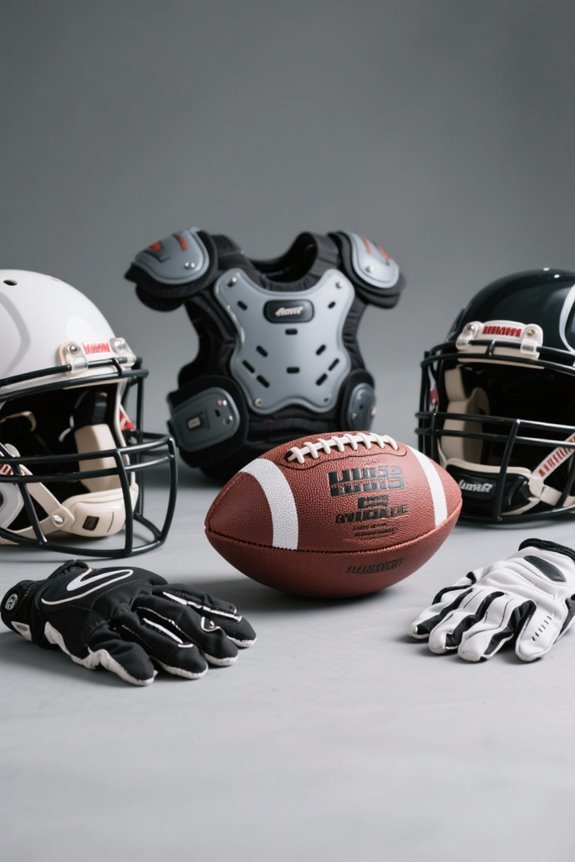
Physical attributes play an essential role in determining the suitability of athletes for specific football positions, as characteristics such as body size, strength, speed, and agility greatly influence performance and effectiveness on the field. Linemen, typically exceeding 120 kg, require significant body mass and upper-body strength for blocking. Conversely, wide receivers and cornerbacks often stand around 6’2″ and weigh approximately 190 lbs, prioritizing speed and agility over sheer strength. Body composition affects performance; stocky linebackers embody a balance of power and quickness, while running backs blend moderate size with agility for evasive maneuvers. Consequently, each position demands unique height and weight combinations, emphasizing distinct physical traits essential for success on the gridiron. Additionally, compression levels can enhance athlete performance and recovery, allowing players to perform at their best.
Recommended Products

Impenetrable Advantage: LEGION stands alone as the only shoulder pad featuring a custom-molded, dual-density, beaded foam body. Unlike traditional pads, LEGION pads resist the absorption of water, sweat, and other fluids, keeping athletes drier and lighter.

ENHANCED STABILITY - CORESHORTS 3.0 mens and womens compression shorts enhance functional movement while providing optimal stability, control, and protection. These athletic shorts provide maximum directional support for all activities that require quick movements, a change in direction and increased load or intensity. Ideal for those who need extra support due to decreased muscle strength, poor stability, and injury recovery.

DESIGNED TO BE WORN AS AN OUTER SHORT - Made to fit your body so there is no bunching of fabric while you are working out. Ditch the layers and get the one-performance compression short with a built-in jockstrap that provides the best groin protection.
Understanding Mental Skills and Football IQ
In the domain of football, possessing strong physical attributes is just one component of a player’s overall effectiveness on the field. Understanding mental skills, including decision-making clarity and situational awareness, is vital for young athletes. Mental agility allows players to assess situations rapidly, while emotional resilience aids them in managing stress and pressure. Confidence building through positive experiences enhances performance across various positions. A strategic mindset is bolstered by effective communication skills, fostering teamwork and collaboration. Adaptability training prepares players to navigate different game scenarios, while reflective learning through game analysis improves comprehension of tactical strategies. Together, these mental attributes form the foundation of a well-rounded football IQ essential for success in dynamic game environments. Additionally, incorporating practice with tools like pop-up dummies can enhance players’ situational awareness by simulating real-game dynamics.
Position-Specific Skills and Drills
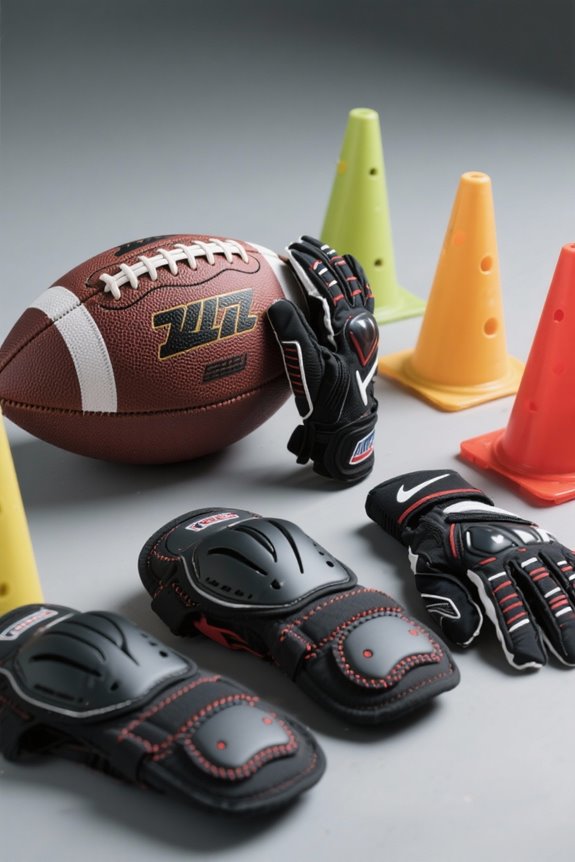
Effective football performance necessitates mastery of position-specific skills and drills, as each role on the field demands distinct technical competencies and tactical understanding. Position drills designed for forwards incorporate dynamic movement training to enhance ball control, quick decision-making, and shooting abilities, essential for exploiting scoring opportunities. Wingers focus on cutting inside and delivering precise crosses while improving speed and agility for effective attacking plays. Full-backs practice crossing techniques and defensive drills to maintain defensive integrity. Centre-backs refine positioning and intercepting skills through targeted screening drills and communication exercises. Collectively, these skill enhancement strategies foster anticipation, spatial awareness, and stamina, ensuring players are equipped to fulfill their respective roles within a competitive environment. Additionally, integrating periodization strategies into training can optimize development and performance throughout the season.
The Role of Past Sports Experience
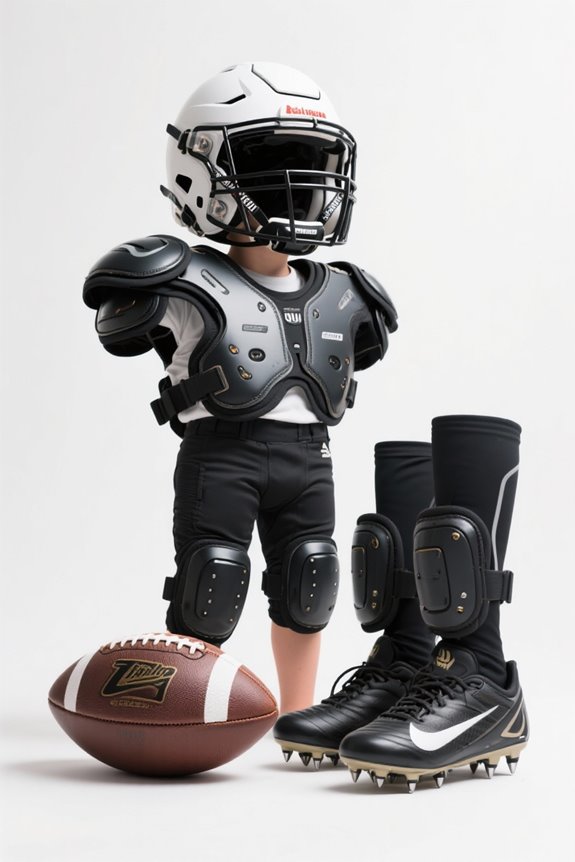
While many factors influence a player’s suitability for specific football positions, the role of past sports experience stands out as a significant contributor to overall athletic success. Participation in multiple sports, such as soccer or baseball, offers multi-sport benefits that enhance speed, agility, and coordination—key attributes for various football roles. Players who engage in diverse athletic activities develop positional versatility, enabling them to adapt more readily to different football positions. Furthermore, experiences in tactical team sports refine game understanding, decision-making, and leadership qualities, enhancing positional appropriateness. Past coaches can provide insights into a player’s physical and mental readiness, ensuring alignment between a player’s strengths and the demands of specific football roles, ultimately fostering a more effective athlete. Additionally, utilizing training equipment designed for agility improvement can be beneficial in honing the skills needed for various positions.
How External Feedback Influences Position Choice
External feedback from coaches and parents greatly shapes a young player’s decision regarding football position choice. Feedback mechanisms involving regular communication help identify the child’s strengths, weaknesses, and preferences, allowing for tailored development plans. Coaches evaluate players through structured drills, analyzing physical traits and tactical understanding to recommend suitable positions. In competitive environments, the presence of specialized coaches can prompt earlier positional adaptability among players, often influenced by peers specializing in specific roles. Additionally, past sports experiences enrich coaches’ insights into players’ abilities. Consequently, the choice of position should incorporate the child’s evolving skill set alongside external evaluations, ensuring that players remain versatile while maneuvering the competitive landscape without prematurely before honing foundational skills. This process is further enhanced by understanding player development over winning, which fosters a more positive learning environment for the athletes.
Timing for Position Commitment
Timely commitment to a specific football position is essential for a player’s long-term developmental success, with several factors influencing the best timing. Biological maturation plays a critical role, as peak height velocity typically occurs around ages 17 to 18, marking a pivotal period for physical readiness in various positions. Early commitment can disadvantage players not yet physically mature, especially those who may excel later. Additionally, the relative age effect can skew position choices, favoring older players within a selection year and potentially limiting opportunities for younger, late developers. By allowing flexibility in position commitment until adequate maturation and psychological readiness, players can better explore their capabilities, ultimately leading to enhanced engagement and performance in suitable positions as they grow. Understanding the importance of periodization training strategies can further enhance a player’s development trajectory.
Evaluating Player Strengths and Weaknesses
Evaluating player strengths and weaknesses is essential in determining suitable football positions that align with an athlete’s abilities and potential. Thorough player evaluation incorporates physical traits, technical skills, and cognitive attributes. Height and weight play a foundational role; for instance, taller athletes often excel as linemen, while lighter players thrive as receivers. Strength analysis reveals which players can dominate physically; running backs and linebackers benefit from strong upper and lower body capabilities. Additionally, mental attributes like decision-making under pressure are critical for playmakers. Performance metrics further indicate readiness for competitive roles. Consistent high-level performance, such as All-State recognitions, serves as a reliable indicator of an athlete’s potential. Consequently, a multi-faceted approach is essential for optimizing positional alignment in football. Furthermore, considering adjustable temperature settings can enhance athletes’ comfort and performance in varying weather conditions.
The Impact of Body Type on Position Suitability
Body type greatly influences the suitability of football positions, as physical attributes directly affect performance capabilities on the field. Position suitability analysis reveals that large, broad athletes, often exceeding 120 kg, are ideal for offensive and defensive lineman roles due to their brute strength. Stocky and muscular players excel as linebackers and running backs, merging strength with agility. Slim, quick athletes fit into roles like wide receivers and cornerbacks, relying more on speed than size. Height and weight averages by position further illustrate these body type characteristics, such as defensive linemen averaging 250 to 350 pounds and 6’2” to 6’6” tall. Understanding these distinctions is critical for young players selecting a compatible position based on their unique body types. Additionally, choosing the right gear, such as ColdGear linings, can greatly enhance performance and comfort in various weather conditions.
Recommended Products
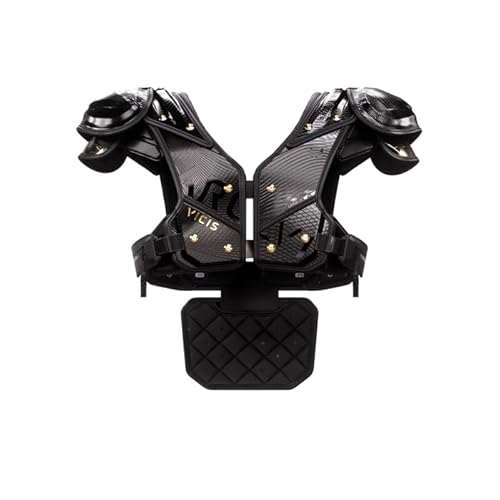
Shoulder Width Sizing - Small (16"-17"), Medium (17"-18"), Large (18"-19"), XL (19"-20"), 2XL (20"-21"), 3XL (21"-22")

Football's first ever position-specific helmet, engineered for reducing linemen's repetitive, low velocity helmet impacts

PROTECTION FOR TOUGH POSITIONS: TAG ALT4-950 shoulder pads feature high-impact polycarbonate epaulets and NV815 super foam for top energy absorption, built specifically for running backs, linebackers, fullbacks and defensive backs.
Building a Foundation of Fundamental Skills
A solid foundation of fundamental skills is essential for any football player, as these abilities are critical for enhancing overall performance on the field. Skill assessment is crucial in identifying each player’s strengths and weaknesses, enabling targeted improvements in foundational techniques. Key skills include dribbling, passing, ball control, shooting, and basic defending, which collectively enhance technical proficiency. Furthermore, players develop mobility through agility drills and speed training, promoting quick directional changes. Emphasizing teamwork through partner drills and small-sided games further strengthens collaboration. Finally, fostering confidence through positive feedback and pressure-free practice environments allows players to refine their skills, ultimately leading to improved decision-making and game performance, thereby aiding in the selection of suitable positions on the field. Incorporating hand-eye coordination training tools into practice sessions can further enhance players’ reaction time and agility.
Encouraging Open Communication
Effective communication among coaches, parents, and players is vital, particularly in youth football programs where the alignment of expectations greatly affects player development. Encouraging open dialogue fosters a culture of understanding, enabling coaches to clearly define player roles and minimize frustration regarding responsibilities. Parents, acting as positive supporters, can enhance team morale by participating in regular discussions about player progress and preferences. Constructive feedback from players is significant; it allows coaches to identify strengths and match players to suitable positions effectively. Additionally, utilizing technology such as team communication apps guarantees transparency by providing centralized information on roles and evaluations, thereby reinforcing collaborative communication among all stakeholders and promoting ideal player growth throughout the season.
Flexible Position Assignments in Youth Football
In youth football, flexible position assignments offer significant benefits by accommodating the varying physical and developmental stages of players. This adaptability allows for position versatility, which is important as youth exhibit diverse ranges of motion that may impact their suitability for different roles. Programs incorporating adaptive training can address these evolving needs, such as enhancing hip mobility to prevent injuries. Additionally, understanding training load differences is essential; positions requiring high-speed engagements may demand different preparation than less intense roles. Coaches can rotate players based on these physiological demands, managing fatigue effectively. Small-sided and position-specific games further facilitate skill development, creating an environment for young athletes to experiment and adapt without the pressure of full matches, ultimately promoting a holistic football experience.
Development of Positional Awareness
Developing positional awareness is critical in football, as players must understand the nuances of positioning in relation to teammates and opponents while adapting to the dynamics of the game. This cognitive development encompasses not only recognizing when to maintain or vacate a position, but also how to fluidly move within the tactical framework of the team. Players gain spatial awareness by learning to exploit numerical superiority and maintaining proper distances that enhance passing options. In practice, grid-based exercises can improve this awareness, encouraging players to assess their location relative to others. Moreover, drills that emphasize the shift of play heighten the understanding of inter-channel movements, fostering a habit of positional discipline essential for effective ball possession and tactical execution.
Iterative Process of Position Selection
The iterative process of position selection in football encompasses a systematic appraisal of a player’s attributes, preferences, and performance to determine the most suitable role within a team framework. Initially, players experience multiple positions, providing insight into their physical capabilities and preferences, such as size, speed, and coordination. Coaches utilize iterative feedback during practice, evaluating technical skills and cognitive traits to guide selection adjustments. Furthermore, performance data, including agility and strength measurements, inform positional suitability. Regular evaluations, facilitated by multi-sport experiences and cross-coach collaboration, enable continual refinement of player roles. By leveraging both subjective insights and objective data-driven models, coaches can optimize the alignment of young athletes with positions that enhance their growth and contribution to the team.
Frequently Asked Questions
How Can Parents Support Their Child’s Position Choice?
Parents can support their child’s position choice through position encouragement and skill assessment, fostering an environment that celebrates exploration. They should engage in discussions about preferences, monitor progress, and provide constructive feedback to inspire confidence and enjoyment.
What Role Do Coaches Play in Position Selection?
Coaches, like master artisans sculpting clay, employ coaching strategies and player assessments to identify talents. They analyze skills, mental attributes, and preferences, guiding players toward positions where strengths align, fostering both growth and enjoyment in the sport.
When Should Players Consider Changing Positions?
Players should consider changing positions during early exploration phases, seasonal evaluations, or when adapting to skill development needs. Position flexibility enhances overall performance, allowing players to gain confidence and contribute more effectively within their teams.
How Important Is Teamwork in Positional Placement?
Teamwork plays a vital role in positional placement, as effective communication skills foster collaborative strategy among players, coaches, and parents. This synergy helps identify individual strengths and ideally aligns players within the team dynamic for long-term success.
Can Player Preferences Influence Position Assignment?
Player preferences greatly influence position assignment, as aligning player aspirations with positional strengths fosters motivation and performance. Coaches can enhance team synergy by integrating individual desires into strategic placement, thereby optimizing both player development and team success.


