As an Amazon Associate, we earn from qualifying purchases. Some links on this site are affiliate links at no extra cost to you. Our recommendations are based on thorough research and editorial judgment.


How Does Zone Defense Work In American Football?

Zone defense in American football is a strategic approach where defenders are assigned to cover specific areas of the field rather than individual players. This method complicates passing attempts, as quarterbacks face a structured barrier against deep throws. Key elements include formations like Cover 2 and Cover 3, which emphasize teamwork and communication among defenders. Effective zone coverage requires anticipation of offensive plays, enhancing interception opportunities. Further exploration reveals varied structures and real-time adjustments to maximize defensive efficacy.
Key Takeaways
- Zone defense focuses on defenders covering specific areas of the field instead of individual players, complicating quarterback decision-making.
- It limits offensive routes and reduces deep passing opportunities, forcing teams to rely on shorter passes or runs.
- Effective zone coverage relies on strong communication among defenders to maintain assignment integrity and spatial awareness.
- Key formations like Cover 2 and Cover 3 utilize multiple deep defenders to enhance coverage, while each formation has unique responsibilities.
- The defense adapts to game situations, adjusting strategies based on field position and offensive tactics, ensuring minimal gaps in coverage.
Understanding Zone Defense in Football
Zone defense in American football represents a complex strategy that focuses on area coverage rather than the assignment of individual offensive players to defenders. This approach relies on zone principles, with defenders covering specific areas of the field, consequently complicating completion opportunities for quarterbacks. Defensive backs and linebackers collaborate to monitor their designated zones, which include flats, curls, and deep regions, emphasizing positional awareness primarily on the quarterback. Coverage strategies vary, with formations such as Cover 2, which assigns two safeties deep, and Cover 3, assigning three defenders across deep thirds. Effective zone coverage requires defenders to be alert to incoming receivers and to communicate fluidly to prevent gaps from forming, ensuring thorough protection against offensive plays. Understanding visibility and color in positioning chain sets can also enhance strategic planning on the field.
Objectives of Zone Defense
The objectives of zone defense in American football encompass several strategic goals that collectively reduce the offense’s effectiveness. Primarily, zone alignment allows defenders to cover specific deep areas, preventing deep passes and big plays that can greatly impact the game. This coverage philosophy effectively limits offensive route options, thereby compelling quarterbacks to execute shorter passes or runs. By disrupting timing routes and monitoring route progressions, defenders enhance the chance of creating turnover opportunities, positioning themselves for interceptions or deflections. In addition, effective zone defense improves team communication and coordination, ensuring defenders maintain strong situational awareness and coverage integrity. Altogether, these objectives not only mitigate scoring threats but also uphold defensive discipline essential for success on the field. Moreover, utilizing high-density foam in training equipment can help enhance tackling techniques, ultimately supporting improved zone defense strategies during gameplay.
Key Concepts of Zone Coverage
Effective implementation of zone coverage in American football relies on several key concepts. Defenders must develop spatial awareness, understanding the boundaries of their assigned zones to close coverage gaps effectively. Zone coverage techniques necessitate constant communication among defenders, as signaling shifts in responsibilities prevents misalignments during play. Moreover, defensive alignment strategies are vital; defensive backs align at various depths according to the zone scheme, while linebackers cover shorter zones. Maintaining disciplined reactions is essential; defenders should refrain from chasing receivers unless necessary. Additionally, successful zone coverage requires adaptation to offensive strategies, ensuring defenders adjust dynamically to shifting formations and route combinations, thereby maximizing field coverage and neutralizing quick passes effectively. Incorporating mental training techniques can further enhance defenders’ focus and adaptability during games.
Types of Zone Coverage
In American football, various types of zone coverage are employed by defenses to effectively counter offensive strategies and limit scoring opportunities. Cover 3 zone coverage features three defenders assigned to deep coverage, with corners positioned outside their receivers and a strong safety covering the deep outside third. Tampa 2 variation enhances traditional Cover 2 by involving a middle linebacker in deep middle coverage. Cover 4 divides the deep field into four quarters, utilizing two safeties and two cornerbacks for robust defense. Cover 2 Man combines deep responsibilities with man-to-man coverage beneath, while Cover 3 Cloud creates confusion by disguising coverages. These zone coverage types demonstrate distinct coverage strategies, each with strengths and vulnerabilities tailored to specific offensive threats. To maximize protection, it’s critical to ensure defenders wear lightweight and breathable shoulder pads to reduce injury risk while maintaining agility.
Recommended Products

Medium + Super Skill Combination: Configured with - Super Skill Arch, Super Skill Epaulets, Super Skill Cups and a Skill 3/8” Shoulder Foam. Each shoulder pad and size combination is uniquely configured by our experts to ensure maximum safety and performance for your exact needs on the field.

Size Large. The ALT4-950 football shoulder pad from TAG features high energy absorption, durability, comfort, and flexibility. For running back, defensive back, fullback and line backer positions. To measure for TAG shoulder pads, measure your chest and shoulder width. If you are between sizes, we recommend following your accurate shoulder measurement instead of the shoulder width.

One Bundle, Full Coverage: Shoulder pads, back plate, and wrist coach working together to give skill position players everything they need — protection, breathability, and play management all in one package.
Cover 2 Structure and Benefits
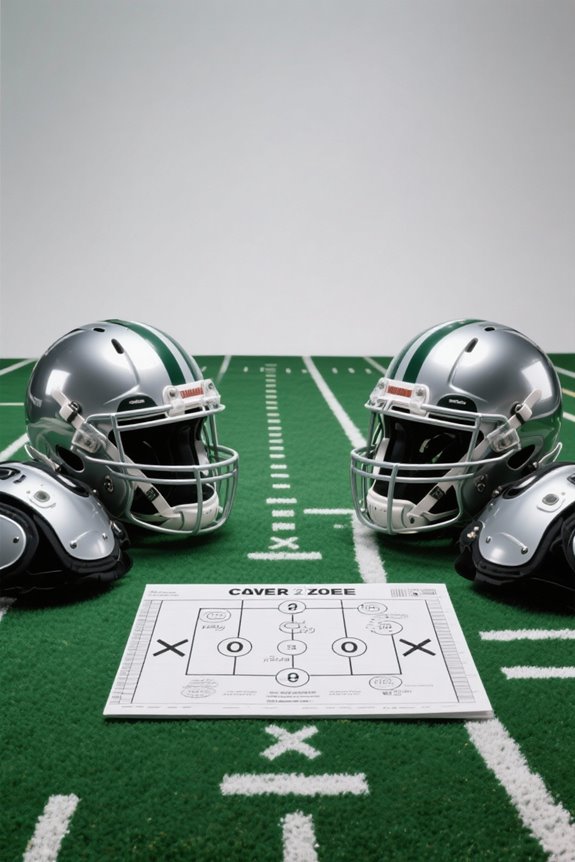
Cover 2 defense structures are strategically designed to provide robust coverage against a variety of offensive threats in American football. This scheme employs two safeties, each responsible for one half of the deep field, while five underneath defenders, including corners and linebackers, cover shorter areas. Though effective against short and intermediate passes, Cover 2 vulnerabilities exist, particularly against deep seam routes that split the safeties. To counteract these weaknesses, Cover 2 adjustments, such as the Tampa 2, can shift a linebacker to cover deeper zones, enhancing coverage integrity. The defense’s emphasis on clear zone responsibilities, along with effective communication, allows for a balanced approach that challenges offenses reliant on quick passing and minimizes the chance of big plays over the top. Additionally, coaching fundamentals play a crucial role in maximizing the effectiveness of the Cover 2 scheme, ensuring players understand their specific responsibilities within the defensive structure.
Recommended Products
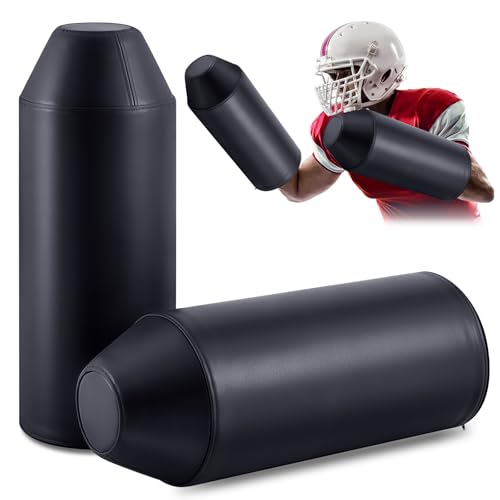
What You Get: package include a set of two football arm shields constructed from high-density foam; Offering robust protection, each shield measures approximately 61 cm in length and about 24 cm in width
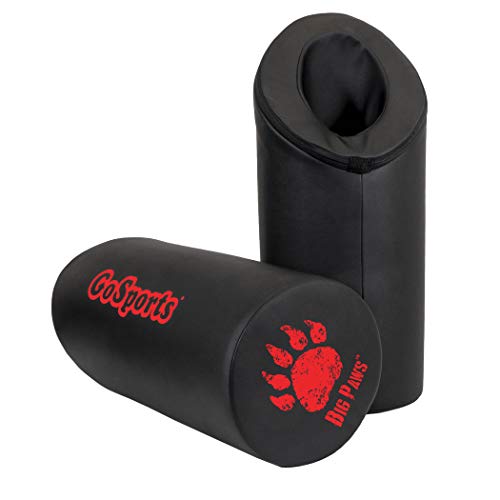
BIG PAWS: Heavy-duty wearable arm guards for simulating defenders for a variety of drills across all major sports and martial arts

PLAYBOOK WRISTBAND - Playbook wristbands have 3 PANEL COMPARTMENTS, keep plenty sports plays right on your wrist for easy viewing. Play card included.
Cover 3 Overview
Zone defense strategies in American football often include the Cover 3 scheme, which provides a robust framework for defending against both the pass and the run. Cover 3 fundamentals center around three deep defenders—typically two cornerbacks and a free safety—each covering a third of the field. The scheme assigns four defenders to cover the underneath zones, balancing the defense’s strengths against various offensive threats. While Cover 3 effectively neutralizes deep vertical routes, it can become predictable, leading to the implementation of Cover 3 variations, such as press coverage or zone swapping, to confuse offenses. Additionally, the capability to add an extra defender to the box enhances run defense without greatly compromising deep coverage integrity. This strategic approach parallels how high absorbency in cooling towels provides immediate relief to athletes during intense physical exertion.
Recommended Products

✔ Size: 30"x 60" (76x152cm). Value pack with 30 rainbow beach towels. THIN and Soft velour on the front and loop terry on the reverse side. We recently improved the colors and the weight delivering more vibrant colors and quality. Towel will get more absorbent, thick and soft after first wash.

You Will Get: 400 pieces of ice towels, which include 10 different brilliant colors, multiple color options and multiple packaging, easy to replace and clean and meet your daily needs, making you feel cool and comfortable throughout the day and get away from the trouble of high temperatures

85''-130'' ADJUSTABLE REMOVABLE DANCE POLE: The multi-piece dancing pole fits ceiling heights from 85 to 130 inches, making it easy to move and install in different rooms. Designed for versatile home use, it adapts to your space without extra extension poles. Set up your own private dance studio anytime with confidence and ease.
Additional Zone Coverage Variants
Additional zone coverage variants enhance defensive strategies in American football, providing teams with versatile options to counter specific offensive schemes. Cover 2 variants, like Tampa 2, assign safeties to deep halves while incorporating a middle linebacker to cover the deep middle zone. Cover 4 splits the field into four deep zones, countering offenses that favor vertical routes, and is often complemented by underneath zone coverage. Cover 6 combines elements from Cover 2 and Cover 4, allowing for flexible responses to varied offensive alignments. In addition, fire zone coverage incorporates blitzing while maintaining zone integrity behind, compelling quick offensive decisions. Additionally, special teams coverage strategies may also adapt elements of these zone concepts to optimize field coverage and defensive effectiveness. Proper sizing is crucial to ensuring that each defensive player can effectively adjust and respond to fast-paced offensive plays.
Recommended Products

WRISTBAND PLAYBOOK - Lead your team to victory with the WristCoaches quarterback wristband (5 Pack). Run the offense like a pro while you call deep balls, play-action passes, screens, or go for the RPO. Put defenses on skates as you skillfully execute big plays!

40 Defensive Game Scenarios – Covers cutoffs, relays, bunt defense, popup priorities, double cuts, backups, rotations, and player responsibilities so kids know where to be before the ball is hit.

The Ultimate Basketball Coaches Companion: Our basketball playbook was crafted by coaches for coaches, students of the game, players and enthusiasts alike. It is intended to help teach players basic formations as well as complex, in-depth concepts to understand the game at a higher level.
Defensive Player Roles in Zone Coverage
In American football, defensive players assume distinct roles within zone coverage schemes to effectively mitigate offensive threats. Defensive back roles include cornerbacks and safeties, who cover specific areas rather than individual receivers. Cornerbacks typically handle short to intermediate zones along the sidelines, while safeties focus on deeper zones, providing over-the-top coverage against long passes. Meanwhile, linebackers take on essential responsibilities in linebacker coverage, primarily zoning short to midrange areas in the middle of the field. They must adjust their coverage, especially if blitzing teammates create vacated spaces. Effective communication among defensive players is crucial, as it assists in tracking receivers who move through zones, allowing for coordinated adjustments and successful defensive execution. Properly constructed tackling dummies can help improve athletes’ skills by simulating offensive movements and enabling practice in zone coverage drills.
Spatial Awareness in Zone Defense
Effective spatial awareness is a critical component of zone defense in American football, as it enables defenders to anticipate and respond to the shifting dynamics of offensive formations. Defenders must use dynamic repositioning techniques, adjusting collectively to cover evolving threats and prevent receivers from exploiting open areas. Communication is essential for reallocating coverage in response to offensive movements, especially in overloaded zones. To enhance spatial awareness, teams conduct visual awareness drills, which train defenders to assess key players and analyze spatial coverage effectively. This practice fosters intuitive recognition of potential vulnerabilities, allowing for real-time adjustments. Overall, improved spatial control not only aids in maintaining coverage integrity but also contributes considerably to the overall effectiveness of zone defense strategies. Additionally, the importance of visibility improvement on the field can greatly enhance a defender’s ability to track the ball and the movement of receivers.
Anticipating Offensive Routes
Anticipating offensive routes is an essential skill for defenders operating within a zone defense in American football, where precise awareness and strategic foresight determine the effectiveness of coverage. Defenders hone route recognition skills by analyzing receiver alignments and common offensive patterns frequently employed by teams. By tracking quarterback cues—such as the positioning of the throwing arm—defenders improve their anticipation skills and adjust their positioning accordingly. Effective communication signals among teammates help mitigate over-commitment, ensuring coverage remains intact. Additionally, understanding the timing of plays, receiver movements, and pre-snap formations allows defenders to make zone adjustments that neutralize anticipated threats. This combination of awareness and discipline ultimately enhances a defense’s ability to effectively respond to diverse offensive strategies. Incorporating agility ladder drills into practice can further sharpen defenders’ foot speed and reaction times.
Advantages of Zone Defense
Although zone defense may initially seem less aggressive than man-to-man coverage, it offers significant advantages that enhance a team’s overall performance on the field. For instance, zone defense reduces the likelihood of explosive plays by compelling offenses to execute shorter, more methodical passes, rather than risking long completions. Misconceptions surrounding zone coverage often overlook its potential to confuse quarterbacks, leading to errors. Additionally, zone blitz strategies integrate pressure while maintaining coverage integrity, enhancing defensive effectiveness. This flexibility and adjustability enable defenders to react swiftly to both passing and running plays, ultimately increasing the likelihood of turnovers. Overall, the systematic application of zone principles creates a cohesive and adaptable defense, minimizing open spaces while improving overall spatial awareness among players.
Communicating Within the Defense
Communicating effectively within a zone defense is essential for maintaining assignment integrity and ensuring cohesive team performance on the field. Pre-snap communication is imperative, as defenses utilize code words and hand signals to signal coverage schemes, facilitating player alignment before the snap. Vocal leaders, particularly safeties, are important in calling out changes loudly, preventing simultaneous execution of different schemes. In-play adjustments further enhance coordination among defensive backs, where calls such as “deep switch” help clarify responsibilities during dynamic situations. Continuous verbal communication minimizes miscommunication, preventing gaps in coverage. As the offensive formation shifts or motions occur, defensive players promptly relay alerts, ensuring clarity regarding new threats, maintaining a strong defensive structure against intricate offensive tactics.
Coordination Among Defensive Players
Coordination among defensive players in zone defense is essential for preventing effective offensive plays and maintaining overall defensive integrity. Defensive players must employ inter player strategies to communicate regarding offensive movements and coverage responsibilities. As defenders are assigned specific zones—deep, intermediate, or short—they must monitor receivers entering or leaving their areas to minimize coverage gaps. Smooth coverage shifts are crucial, enabling defenders to effectively “pass-off” responsibilities as receivers change zones. Additionally, active awareness of adjacent zones allows defenders to provide support and maintain a cohesive unit. Continuous communication and synchronized movements during practices help eliminate coverage voids, ensuring that no offensive player exploits the defense. This interconnected approach ultimately enhances the effectiveness of the zone defense.
Relationship Between Zone Coverage and Defensive Fronts
The relationship between zone coverage and defensive fronts greatly shapes an effective defensive strategy in American football. Defensive fronts dictate the alignment and function of defenders, influencing how zone coverage assignments are executed. For example, a 4-3 front allows for ideal zone pressure, utilizing four linemen to pressure the quarterback while enabling linebackers and secondary players to focus on coverage. Conversely, a 3-4 front requires linebackers to adjust, balancing gap control and coverage duties. Effective zone coverage relies on successful communication and alignment between the front and secondary, ensuring that defensive players maintain clear responsibilities. When the front generates sufficient pressure, it limits the quarterback’s decision-making time, enhancing the effectiveness of zone coverage schemes.
Recommended Products

CONTACT DRILLS: Heavy-duty tackle dummy for safely simulating contact drills for a variety of sports or for martial arts training

ELITE BLOCKING PAD: XL size uses over 2X the material of our standard version for high impact absorption; must-have for advanced level coaches and athletes in contact sports

Reinforced Protection with a Wedged Design: this football training dummy for youth exhibits a wedged shape, empowering players to push forward with their legs during scrums, the shield's tapered design is skillfully made to mimic combat in actual games, promoting the growth of muscle memory and honing the player's blocking and tackling skills, it's proper for conditioning and fitness training, as players have to generate considerable force to push the dummy forward
Adapting Zone Defense to Offensive Strategies
Adapting zone defense to varying offensive strategies is essential for maintaining effectiveness in American football, particularly in the face of increasingly sophisticated passing attacks. Quick pass adaptation requires defenders to possess speed and agility to minimize coverage gaps. Effective mismatch handling focuses on route anticipation and strong communication among teammates, ensuring proper alignment in zones. For pick route counteraction, defenders must quickly recognize and disrupt routes through physical play and strategic rotations. Vertical threat defense hinges on deep zone responsibility, with defenders reading the quarterback’s movements to anticipate passes. Finally, goal line adjustments necessitate compact zones and immediate threat identification, allowing defenders to prioritize short routes effectively while remaining aware of crossing routes during critical plays near the end zone.
Frequently Asked Questions
How Does Zone Defense Affect Player Statistics and Performance Metrics?
Zone defense affects player statistics by increasing interception rates and passes defended, while creating variable defensive metrics for sacks. Players must adapt to broader coverage responsibilities, altering traditional performance measures within the context of zone statistics.
Can Zone Defense Be Effective Against Mobile Quarterbacks?
Zone defense can be effective against mobile quarterbacks when strategically adapted, combining disciplined defensive strategy with coverage adjustments. This allows defenders to contain quarterback mobility, closing gaps and limiting scramble opportunities while maintaining zone integrity throughout the game.
What Adjustments Are Made Against Different Offensive Formations?
Adjustments against different offensive formations include formation adaptations and personnel adjustments. Defenses tighten zones or shift responsibilities, enhancing coverage against specific routes, while communication among players guarantees effective matching of schemes to offensive threats and formations.
How Do Referees View Penalties Related to Zone Defense?
Referees interpret penalties in zone defense by evaluating defender actions relative to receiver movement, emphasizing penalty interpretation and referee dynamics. For instance, a defender’s late hit on a crossing route may lead to personal foul penalties.
What Historical Teams Excelled at Using Zone Defense Consistently?
Historically, teams like the 1962 Green Bay Packers, 1976 Pittsburgh Steelers, 1985 Chicago Bears, and 2008 Pittsburgh Steelers excelled at employing innovative zone schemes, showcasing their defensive prowess and ability to limit opponent scoring consistently.


