As an Amazon Associate, we earn from qualifying purchases. Some links on this site are affiliate links at no extra cost to you. Our recommendations are based on thorough research and editorial judgment.


What Are Nickel And Dime Packages In Defense?

Nickel and dime packages are defensive formations used in football to enhance pass coverage against pass-heavy offenses. The nickel package comprises five defensive backs, while the dime package includes six. These alignments enable defenses to counter multiple receiving threats and improve matchup capabilities. Although they provide stronger coverage, they are vulnerable to running plays due to a smaller front. Further insights into personnel roles and tactical applications are beneficial for understanding these complex defensive strategies.
Key Takeaways
- Nickel and dime packages are defensive formations featuring additional defensive backs to counter pass-heavy offenses.
- The nickel package employs five defensive backs, while the dime package uses six against multiple receivers.
- These packages enhance pass coverage, providing better matchups against offensive threats like tight ends and spread offenses.
- A significant weakness of these formations is reduced effectiveness against run plays due to smaller defensive fronts.
- Future trends include leveraging analytics and hybrid players to improve defensive strategies against evolving offensive tactics.
Definition and Basic Structure of Nickel and Dime Packages
Nickel and dime packages represent essential defensive strategies in modern football, addressing the increasing prevalence of pass-oriented offensive formations. The nickel structure typically includes five defensive backs, replacing a linebacker or lineman to enhance pass coverage. In this configuration, teams commonly deploy four down linemen, two linebackers, and five defensive backs, adapting to offenses featuring three wide receivers. Conversely, the dime structure expands this concept to six defensive backs, appropriate for situations involving four or more receivers. This shift reduces the number of defenders at the line of scrimmage, further emphasizing coverage capabilities. Teams tailor their alignments, utilizing either 4-2-5 or 3-3-5 configurations, highlighting the versatility required to counteract diverse offensive threats effectively. Incorporating specialized equipment like lineman gloves can enhance player performance and safety during these defensive schemes.
Purpose and Tactical Use
A strategic approach in modern football involves the use of nickel and dime packages, specifically designed to counter the increasing effectiveness of pass-heavy offenses. These packages modify defensive alignments by incorporating additional defensive backs, thereby enhancing coverage through nickel formations. The primary purpose is to effectively match up against multiple receivers, preventing successful completions during critical situations such as third downs or long-yardage plays. Tactical adjustments are made based on the opposing offense’s formation, with flexibility to counter tight ends and respond to spread offenses. Additionally, players within these packages often specialize in specific coverage roles, enabling teams to exploit favorable matchups due to their versatility, consequently improving the overall efficiency of their defensive strategy. This adaptability mirrors the same customization and personalization options that football gear, like SHOC visors, offers to players for optimal performance.
Recommended Products

Fits all sizes (S-2XL) of the Schutt F7 football helmets

Fits all sizes of VICIS ZERO2 football helmets

Fits all sizes of VICIS ZERO2 football helmets
Strengths and Advantages
Defensive formations employing nickel and dime packages provide teams with significant strengths and advantages, particularly in enhancing pass coverage capabilities against modern offenses. These packages increase the number of defensive backs, allowing for improved coverage schemes against multiple receivers and complex passing routes. The speed and agility of additional defensive backs enable better coverage on short-yardage scenarios, reacting swiftly to quarterback decisions. In addition, nickel and dime formations allow for tactical flexibility, adjusting personnel and coverage dynamics based on offensive strategies and tendencies. By incorporating these packages, defenses can effectively manage medium-to-long pass threats, forcing quarterbacks to hesitate, which can disrupt offensive rhythm. Overall, these defensive formations optimize personnel, maximizing individual matchups against contemporary offensive threats. Additionally, utilizing tackling dummies during training can help defenders practice their skills and improve their performance in nickel and dime situations.
Vulnerabilities and Limitations
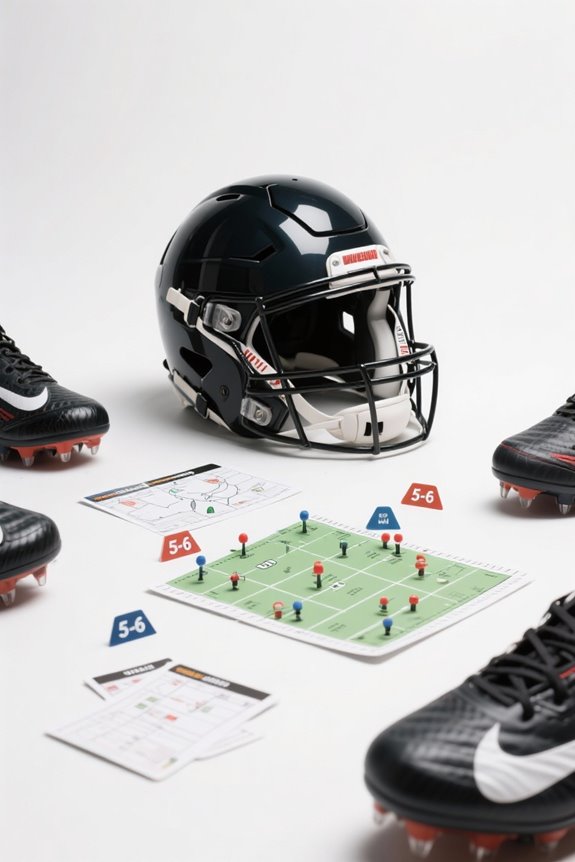
While providing advantages in pass coverage, defensive formations that utilize nickel and dime packages inherently possess multiple vulnerabilities and limitations, which can hinder overall effectiveness in certain game situations. One significant issue is their vulnerability to running plays, as smaller defensive fronts struggle against larger offensive linemen, creating gaps for ball carriers. Additionally, reduced pass rush capability emerges due to fewer down linemen, potentially granting quarterbacks extra time to find open receivers. Coverage challenges arise when defensive backs face physical or agile offensive threats, leading to coverage mismatches. Moreover, frequent reliance on these packages can make defenses predictable, enabling offenses to exploit inherent weaknesses, particularly against power-running teams that effectively overwhelm these lighter defenses. Furthermore, tackling dummies can play a crucial role in training defensive players to improve their skills against these vulnerabilities.
Personnel and Player Roles
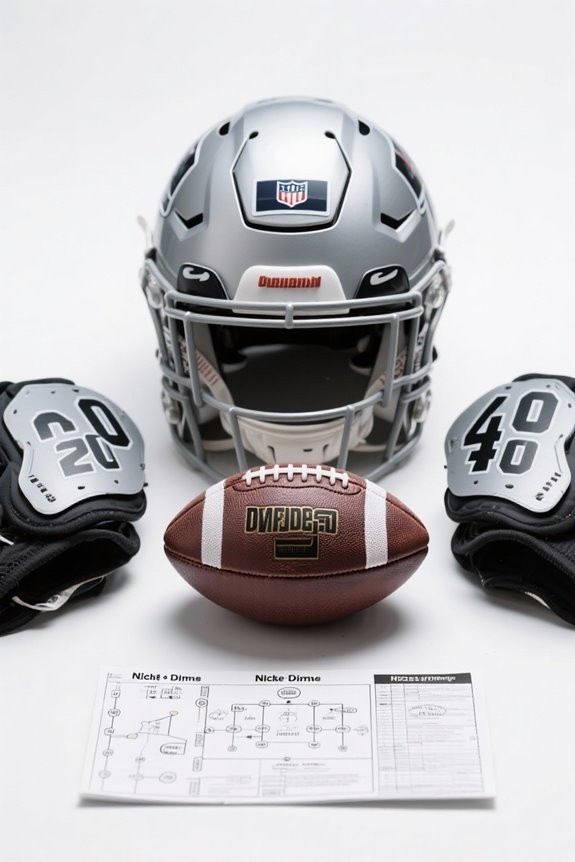
Utilizing nickel and dime packages considerably alters the composition of defensive personnel, adjusting the roles of players on the field to better combat offensive threats, especially in passing situations. In a nickel package, the nickelback role involves covering the offense’s third wide receiver or slot receiver, effectively replacing an inside linebacker. Conversely, the dimeback, as part of a six defensive back set in the dime package, assumes additional responsibilities by covering additional receiving threats during clear passing scenarios. These personnel adjustments enhance the ability of defenses to counter multiple wide receiver formations while maintaining coverage flexibility. Moreover, the additional defensive backs may press receivers, disrupting short passes, while also preparing to defend against occasional run plays or screens near the line. Alpha Menace Cleats can be just as pivotal for players adapting to various game scenarios on the field, ensuring optimal performance and support.
Variations and Strategic Innovations
As the game of football evolves, variations and strategic innovations in nickel and dime packages have become critical for defensive units to effectively counter contemporary offensive schemes. The standard nickel and dime setups, such as the 4-2-5 and 4-1-6 formations, form the foundation of modern defenses. However, hybrids, like the Big Nickel, incorporate hybrid players who possess both coverage capabilities and run support skills. Strategic innovations also include versatile coverage schemes that empower defenses to shift dynamically between man-to-man and zone coverage, adapting to offensive formations. Additionally, the use of dime pressure packages with disguised blitzes further complicates offensive planning. These enhancements collectively guarantee that defensive units can effectively handle increased offensive speed and complexity. The integration of high-density foam in training equipment allows defensive players to develop their tackling skills safely.
Recommended Products

RUGBY CONTACT TRAINING PAD – C-shaped rugby pad helps players develop correct tackling technique, rucking efficiency and body positioning during contact drills.

VERSATILE TACKLING DUMMY - Durable Tackling Dummy for Football, Basketball, Kickboxing, Martial Arts, and More

VERSATILE DUMMY FOR SPORTS TRAINING - Step Over Dummy Perfect for Footwork Drills for a Variety of Sports Including Football, Soccer, and More
Historical Context of Nickel and Dime Defenses
The evolution of nickel and dime defenses has its origins in a response to the increasing prevalence of passing offenses within the game of football. Initially popularized by Bill Arnsparger, the nickel defense replaced a linebacker with a fifth defensive back to improve pass coverage. This innovative defensive evolution also led to the development of the dime defense, which added a sixth defensive back for enhanced protection against the passing game. Historically, nickel packages were employed primarily in obvious passing situations; however, as offenses adopted multiple receiver sets, these formations became more prevalent. Strategic adaptations allowed defensive coordinators to counteract faster slot receivers and manage the complexities of spread offenses, marking a significant shift from traditional base defenses to more dynamic, hybrid models. This evolution parallels the performance features observed in athletes adapting their skills for increased agility and efficiency in play.
Impact on Modern Football Strategies
Nickel and dime defensive packages have fundamentally reshaped modern football strategies by providing tailored responses to the increasing complexity of offensive formations. As teams adapt to spread offenses featuring three to four wide receivers, defensive evolution has necessitated strategic adjustments, leading to the inclusion of five or six defensive backs. This adjustment addresses mismatches that traditional linebackers face in coverage situations. Consequently, defensive personnel have evolved to prioritize speed and agility, with hybrid defenders becoming essential across roles. The implementation of these packages introduces tactical advantages, reducing opponent completion rates while allowing defenses to disguise coverage schemes. Ultimately, these strategies force offensive coordinators to reconsider play-calling, balancing passing and running threats against lighter defensive fronts. Additionally, the success of these defensive formations is often influenced by weather performance considerations, which can affect grip and control during gameplay.
Recommended Products

6 PACK BASKETBALL DEFENDER - Complete set includes 6 basketball defenders, 6 empty sandbags (sand not included, filled with sand according to training needs), and 1 carrying bag. The 6-pack defender is durable and gives flexibility for different drills, such as basketball, football, soccer, and more.

XTRAMAN PRO BLOCKERS: PRO spec 46 inch tall x 20 inch wide dummy defenders for intermediate to expert level training; Full set includes 3 pre-weighted collapsible blockers (9 lbs each), carry case, and instructions with example drills

Flexible & Durable PVC: Built from heavy duty, flexible plastic to withstand repeated use for soccer cones, parking cones, traffic cones, or street cones in any setting.
Future Trends in Defensive Packages
How will the future of defensive packages evolve to meet the challenges posed by increasingly sophisticated offenses? Emerging technologies and player analytics will play pivotal roles in shaping these strategies. Teams are increasingly deploying linebacker-safety hybrids, enhancing flexibility to counter diverse offensive schemes. Defensive coordinators are utilizing advanced analytics to optimize personnel based on opponent tendencies, while real-time player tracking allows for dynamic sub-package adjustments during games. Additionally, tactical adjustments will leverage disguised coverages and layered zone-man concepts to confuse quarterbacks. Roster construction will emphasize depth, enabling sustained performance despite high-speed demands. As nickel and dime packages become standard, NFL defenses must adapt quickly, employing innovative strategies to mitigate the challenges posed by modern offenses. Incorporating principles from Defensive Football Strategies will further refine these defensive approaches and enhance overall effectiveness.
Frequently Asked Questions
How Did Nickel and Dime Packages Originate in Football?
Nickel and dime packages originated from the historical evolution of defensive formations, designed to counteract offenses with multiple wide receivers by incorporating additional defensive backs, thereby enhancing coverage flexibility and adaptability against pass-heavy strategies.
Who Were the Pioneering Teams Using Nickel and Dime Defenses?
In the domain of football’s strategic evolution, the New York Giants and Pittsburgh Steelers emerged as pioneers, crafting hybrid formations in nickel and dime defenses to outsmart relentless passing offenses, shaping the game’s defensive landscape considerably.
Are There Notable Games Featuring Successful Nickel and Dime Strategies?
Notable game highlights include the 2005 National Championship, Super Bowl XLVIII, and Alabama vs. Notre Dame (2020), where strategic defensive formations like nickel and dime successfully countered potent offenses, contributing to significant victories for those teams.
How Do College Defenses Utilize Nickel and Dime Packages Differently?
College defenses utilize nickel packages for zone coverage against three wide receivers, enhancing player utilization, while dime packages expand to four wideouts, demanding greater versatility. This contrast reflects shifting offensive strategies and the need for adaptable defensive alignments.
What Role Do Coaches Play in Adapting These Defensive Strategies?
Coaches play a crucial role in adapting defensive strategies through timely defensive adjustments and tailored coach strategies. They analyze offensive trends, adjusting personnel for ideal alignment, ensuring effective coverage against evolving attack formations while mitigating run vulnerabilities.


