As an Amazon Associate, we earn from qualifying purchases. Some links on this site are affiliate links at no extra cost to you. Our recommendations are based on thorough research and editorial judgment.


What Is A Blitz In Football And When Is It Effective?

A blitz in football is a defensive strategy involving five or more defenders pressuring the quarterback. This tactic aims to disrupt the offense by forcing the quarterback to make rapid decisions, often on critical plays such as third-and-long situations. While blitzing can increase pressure rates by over 30%, it may also create vulnerabilities in coverage, allowing for potential large gains. Understanding the various types and effectiveness of blitzes reveals a strategic complexity essential for defensive success.
Key Takeaways
- A blitz is a defensive strategy involving five or more defenders aimed at pressuring the quarterback and disrupting the offensive rhythm.
- Effective during short-yardage situations, like 3rd-and-1, where aggressive pressure can disrupt runs.
- Blitzing is also strategic in passing downs, particularly 3rd-and-long, to influence the quarterback’s decision-making.
- Different types of blitzes, like linebacker, safety, and zone blitzes, cater to specific game scenarios and challenges.
- While effective, blitzing carries risks of exposing coverage vulnerabilities, requiring a balance between aggression and defensive integrity.
Definition and Mechanics of a Blitz
In the domain of football, a blitz is defined as a defensive strategy that involves sending five or more defenders into the offensive backfield with the primary objective of pressuring the quarterback. This tactic, which has its origins in defensive schemes aimed at disrupting the opponent’s offensive rhythm, has evolved considerably over the years. Typically, four defensive linemen are supported by additional linebackers or defensive backs, increasing pressure and complicating the quarterback’s decision-making process. The mechanics of a blitz involve rushed, coordinated movements immediately after the snap, emphasizing timing and precision. While successfully executed blitzes can result in sacks or hurried throws, they also increase risk by reducing coverage for potential receivers, necessitating a balance between aggression and defensive reliability. Utilizing advanced air-management technology in shoulder pads can enhance a player’s comfort and performance during these high-pressure plays, contributing to overall mobility and protection.
Types of Blitzes
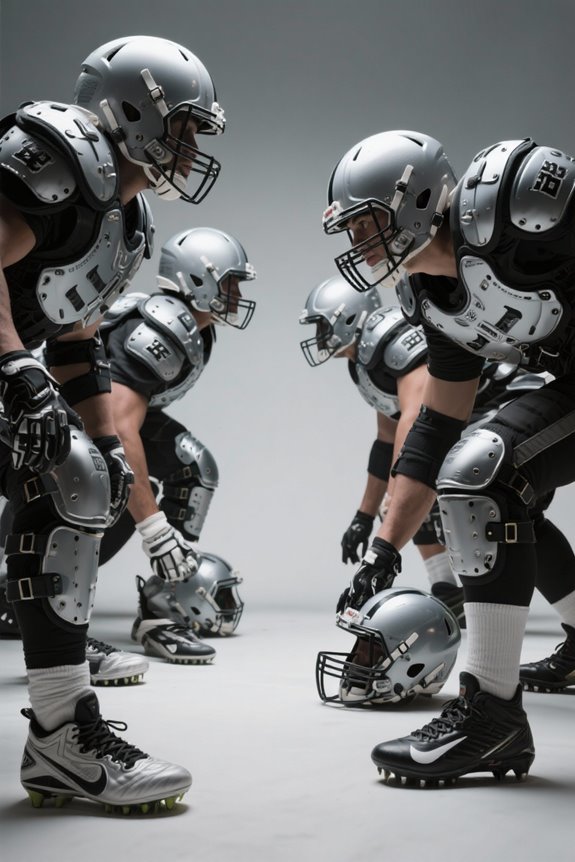
A variety of blitzes exist within football, each designed to apply pressure on an opposing offense and disrupt their planned execution. Linebacker blitzes involve players rushing the quarterback or ball carrier, often employing stunts to confuse the offense. A safety blitz sees a defensive back charging unexpectedly from the deep field, aiming to surprise and disrupt plays. The zero blitz sends all available rushers with no deep safety help, making it an aggressive tactic often used in short-yardage situations. Cornerback blitzes entail a cornerback leaving coverage to apply pressure, creating unexpected rushing from the edge. Finally, the zone blitz combines blitzing with zone coverage, allowing defensive players to confuse blocking schemes while maintaining coverage integrity. Effective moisture-wicking fabrics can also aid in better performance by keeping players dry and comfortable during intense game situations.
Effectiveness and Risks
Effectiveness and risks characterize the use of blitzing in football, illustrating a tactical duality that every defensive coordinator must navigate. Blitzing enhances pressure dynamics, leading to increased quarterback pressure rates above 30%, often resulting in sacks or hurried throws that disrupt offensive rhythm. However, this aggressive strategy exposes coverage vulnerabilities, as fewer defenders are available to cover receivers, potentially allowing for significant offensive gains. A poorly executed blitz may lead to big plays, while overreliance on predictable blitzing tactics can neutralize their effectiveness. Teams, particularly those with elite defenses, successfully combine innovative blitz strategies and effective coverage schemes to maximize their havoc rate, achieving substantial pressures and turnovers, underscoring the nuanced balance required in blitz usage. Regular updates to play card strategies are essential for adapting to opposing teams’ tactics and maximizing defensive effectiveness.
Historical Context and Terminology
Recognizing the significance of language in sports, the term “blitz” originated from the German word meaning “lightning,” highlighting the concept of rapid and overwhelming action. It emerged within English during World War II, primarily associated with *Blitzkrieg*, which described swift military assaults. This military origins shaped the broader linguistic evolution of “blitz,” which came to signify sudden, intense attacks across various fields, including American football. Adopted in the sport by 1959, a “blitz” typically involves sending five or more defenders to pressure the quarterback. Originally, specific terms differentiated rush counts, with *red-dog* designating a six-rusher blitz. Overall, “blitz” reflects an intersection of historical military tactics and contemporary competitive strategy, maintaining its core essence of speed and aggression. Effective coaching strategies often incorporate blitzes at critical moments to disrupt the opponent’s offensive rhythm.
Situational Use of Blitz
In various football situations, particularly during short-yardage scenarios such as 3rd-and-1 or goal-line plays, defensive teams often opt for a blitz to enhance their chances of stopping the opposing offense. Short yardage blitzing is vital in these moments, as it allows defenders to rapidly engage offensive blockers, thereby hampering running plays. Moreover, zero blitzes, which send all available rushers without deep coverage, intensify this pressure to disrupt potential runs. In passing situation blitzing, such as during 3rd-and-long, defenses aim to apply pressure on the quarterback, forcing hurried decisions that could lead to mistakes. These strategic adaptations are essential for maintaining defensive effectiveness and can greatly impact game outcomes by stifling offensive momentum. Additionally, effective impact absorption capabilities can be crucial for defenders to execute tackles safely during these high-pressure situations.
Statistical and Strategic Impact
As defensive strategies evolve in football, the statistical and strategic impact of blitzing has become increasingly significant. Blitz frequency analysis shows that elite defenses pressure quarterbacks over 30% of the time while utilizing blitz rates of 30-40%. This increased pressure correlates with elevated sack and hurry numbers, consequently forcing quarterback mistakes and disrupting the offensive rhythm. Furthermore, quarterback pressure dynamics indicate that higher blitz rates contribute to greater havoc rates, revealing effective defensive disruption. Coordinators leverage blitzes to create mismatches and dynamic alignments against opposing offensive schemes, enhancing defensive complexity. Data indicates that aggressive blitzing can lead to improved defensive efficiency, as it directly influences metrics such as Expected Points Added (EPA), reducing the offensive success on passing downs. The use of high-quality materials in football down indicators ensures that referees can effectively track the game and maintain high visibility during offensive and defensive plays.
Factors Influencing Blitz Success
The effectiveness of blitzing in football is influenced by various factors that can greatly enhance or diminish defensive performance. Key components include defensive formations, as well as the skills of personnel, particularly linebackers and defensive backs, who add unpredictability to the rush. Successful blitzing often hinges on sound coverage behind the rushers, ensuring that quick completions are prevented. Situational contexts, such as third-and-long situations and late-game scenarios, further elevate quarterback pressure by making offenses more predictable. Additionally, the quality of the opposing quarterback greatly impacts blitz success; elite quarterbacks are adept at countering pressure, while weaker quarterbacks may struggle, leading to increased turnovers. Ultimately, a nuanced understanding of these influences is essential for effective defensive strategies. Incorporating injury prevention features such as ankle braces can also help players maintain performance levels while minimizing the risk of injury during aggressive plays.
Common Misconceptions About Blitzing
Misconceptions surrounding blitzing in football frequently lead to misunderstandings about its effectiveness and strategic implementation. One prevalent myth is that blitzing guarantees success; however, it primarily applies pressure rather than ensuring sacks or turnovers. Moreover, blitzing may leave defenses vulnerable to big plays, yet well-designed strategies incorporate coverage disguises to mitigate such risks. Another misconception asserts that blitzing involves only linebackers or defensive backs, while in reality, any defensive player can participate, including linemen executing specific gap schemes. In addition, recent data indicate that blitz frequency has declined in modern football, revealing a cautious approach to its use. Overall, understanding these blitzing myths is essential for appreciating the nuances of this defensive strategy. Impact absorption materials significantly enhance player safety during blitzing situations, making it a critical element to consider.
Famous Blitzing Strategies in History
Although blitzing has evolved considerably over the decades, several famous strategies have left a lasting impact on football history. The 1960 “Wildcat Blitz,” pioneered by Larry “Wildcat” Wilson, informed future defensive strategies by introducing secondary players in the rush. Additionally, the zone blitz, popularized by Dick LeBeau’s Steelers in the 1980s, revolutionized defensive tactics by blending rushing and coverage, complicating offensive schemes. Iconic moments, such as Phil Villapiano’s blitz in the 1972 AFC Divisional Playoff, and the New York Giants’ blitzing strategy in Super Bowl XLII, showcased how effective blitzing could be in high-pressure situations. These famous blitzes contributed to a narrative in which defensive pressure became a critical component of game-changing plays and profoundly influenced the evolution of modern football. In modern training, using durability and material quality in lineman equipment can help players better prepare for engaging in successful blitzing techniques.
Frequently Asked Questions
How Do Teams Practice Their Blitzing Techniques Effectively?
In the symphony of football, teams hone their blitzing techniques through blitz drills, ensuring every player is a harmonious note. Effective communication strategies weave together, enabling synchronized movements that counter the rival offense’s rhythm with precision.
What Skills Are Essential for Successful Blitzers?
Successful blitzers require strong tackling techniques and effective communication skills. These attributes enable them to execute strategic plays, maintain synchronization with teammates, and swiftly adjust to offensive maneuvers, ensuring excellent pressure on the quarterback.
How Does Weather Impact Blitz Effectiveness in Games?
In adverse weather, such as rain conditions or snow impact, blitz effectiveness diminishes as defenders struggle for traction. Slippery surfaces hinder blitzers’ speed while increasing quarterback errors, complicating strategies on the field considerably.
Can Blitzing Strategies Vary by Team or Coaching Style?
Blitzing strategies indeed vary by team and coaching philosophies. Defensive coordinators adapt blitz variations based on their team’s strengths, weaknesses, and overall strategy, often influenced by the coach’s aggressiveness or conservatism in defensive playcalling.
What Are the Most Famous Blitz Plays in NFL History?
Several legendary blitzes have marked NFL history, with most memorable plays featuring Lawrence Taylor’s iconic pressures, the Steelers’ Steel Curtain dominance, and strategic mixes from teams like the Patriots that turned aggressive defense into pivotal game moments.


