As an Amazon Associate, we earn from qualifying purchases. Some links on this site are affiliate links at no extra cost to you. Our recommendations are based on thorough research and editorial judgment.


How Do Defensive Linemen Rush The Quarterback?

Defensive linemen rush the quarterback by utilizing unit rush coordination, defined rush lanes, and specialized techniques. Effective communication facilitates synchronized pressure, while gap responsibility guarantees control over offensive alignments. Linemen employ various moves such as speed bull rushes, swim moves, and chop rip techniques to disengage from blockers and exploit weaknesses. Conditioning and open-field awareness enhance their ability to sustain pressure throughout the game. For further insights on specific strategies and training techniques, more information is available.
Key Takeaways
- Defensive linemen coordinate their rush using techniques like stunts and mirror steps to exploit gaps in the offensive line.
- Maintaining defined rush lanes is crucial for controlling the quarterback’s movement and limiting their escape routes.
- Various pass rush moves such as bull rushes, swim moves, and spin moves are employed to take advantage of offensive linemen weaknesses.
- Conditioning drills, including sprint intervals and explosive movements, enhance endurance and allow for sustained pressure throughout the game.
- Effective communication among defensive linemen is essential for executing coordinated blitzes and making timely adjustments during plays.
Understanding Unit Rush Coordination
Unit rush coordination is a fundamental aspect of defensive line play, essential for successfully applying pressure on the quarterback. Effective unit dynamics require cohesive actions among defensive linemen, ensuring they execute intricate communication strategies during pass rush scenarios. Through continuous practice, these players enhance their ability to synchronize movements, using techniques such as stunts and mirror steps to exploit openings in the offensive front. Drills focused on hand combat further develop vital skills, allowing linemen to control their opponent’s movements. This fundamental coordination minimizes mistakes and maximizes potential for disruption, emphasizing that defensive linemen must maintain an acute awareness of both their teammate’s tactics and the offensive line’s responses. Mastery of unit rush coordination ultimately leads to greater quarterback pressure, enhancing their gripping and catching techniques crucial for defensive success.
The Importance of Defined Rush Lanes
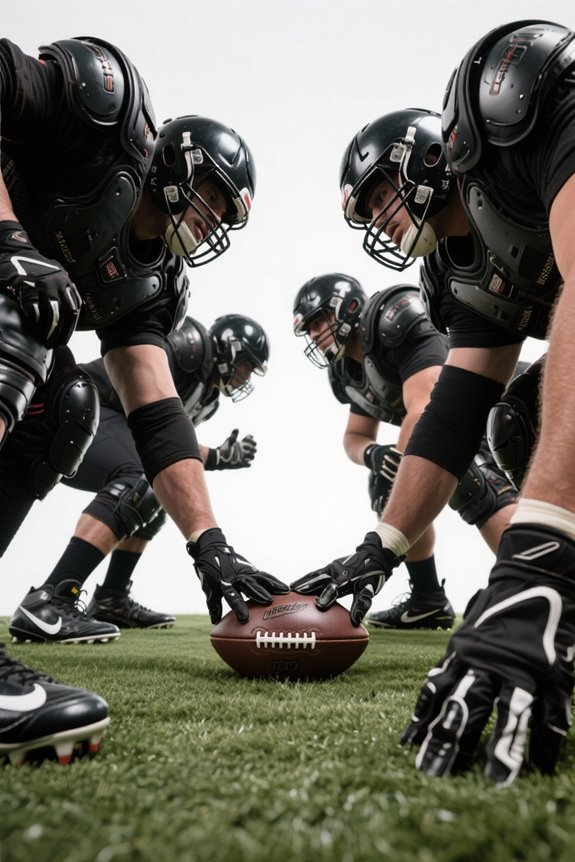
Defined rush lanes play a critical role in the effectiveness of defensive linemen’s efforts to pressure the quarterback during passing situations. These lanes, which are designated gaps or paths, help control the quarterback’s movement and limit escape routes. By maintaining lane integrity, defensive units can implement effective rush strategies, forcing quarterbacks into less favorable positions while reducing their available time to throw. Pressure tactics reliant on disciplined lane control can lead to hurried, inaccurate throws, as well as increased chances for turnovers. Conversely, a breakdown of these lanes can result in escape routes for quarterbacks, undermining the efficiency of the defense. Ultimately, defined rush lanes are essential for coordinated efforts to maximize pass rush effectiveness against opposing offenses. Additionally, the use of high-density polycarbonate shells in protective gear enhances player safety during intense matchups.
Techniques for Synchronized Pressure
Effective pressure on the quarterback relies heavily on synchronized techniques employed by defensive linemen, which enhance their ability to work in harmony during pass-rushing attempts. These linemen adjust their alignment based on pre-snap play direction tags, ensuring cohesive movement against offensive blockers. By maintaining proper leverage and using strategic hand techniques, they effectively manipulate blockers and create lanes for penetration. Pressure anticipation is critical, as linemen read the movements of nearby offensive players, allowing for timely adjustments. Tactical communication is essential, enabling linemen to coordinate blitzes and reinforce each other’s efforts without overlap. This synchronization ultimately maximizes the defensive front’s pressure capacity, enabling a more formidable challenge to the opposing quarterback and disrupting offensive schemes. Incorporating techniques from strength and conditioning programs can further enhance a lineman’s ability to execute these strategies effectively.
Recommended Products

Sturdy wire frame construction with wind-friendly mesh

OPTIMIZE YOUR TRAINING REGIMEN - Prepare yourself for fiercer competition by replicating larger defenders and tackling dummies for football, creating the ultimate distraction, improving physical technique and mental decision making skills.

【Adjustable Armband】 2 pcs muay thai pads have adjustable arm band and elastic wrist band which is suitable for different size of arms.Adults and children of all ages are easily to use.The kick shield can be used for right-handed and left-handed persons.
Gap Responsibility in Rush Schemes
Gap responsibility plays an essential role in the effectiveness of defensive linemen during rush schemes, particularly when it comes to pressuring the quarterback. Each defensive lineman is assigned specific gaps to control or penetrate, ensuring that offensive block assignments are thwarted. Failure to maintain proper gap alignment can lead to significant gap misalignment consequences, allowing opposing offenses to exploit weaknesses. Additionally, offensive teams may employ deceptive blocking tactics to distract or mislead defenders, complicating the rush. Defensive linemen must execute their assignments meticulously, often utilizing stunts to confuse blockers while maintaining overall gap integrity. By attacking the appropriate gaps, defensive linemen maximize their chances of successfully pressuring the quarterback and disrupting offensive plays. The use of integrated cushioning in protective gear can enhance the defensive linemen’s performance by providing essential protection during such aggressive plays.
Utilizing the Spy Technique for Elusive QBs
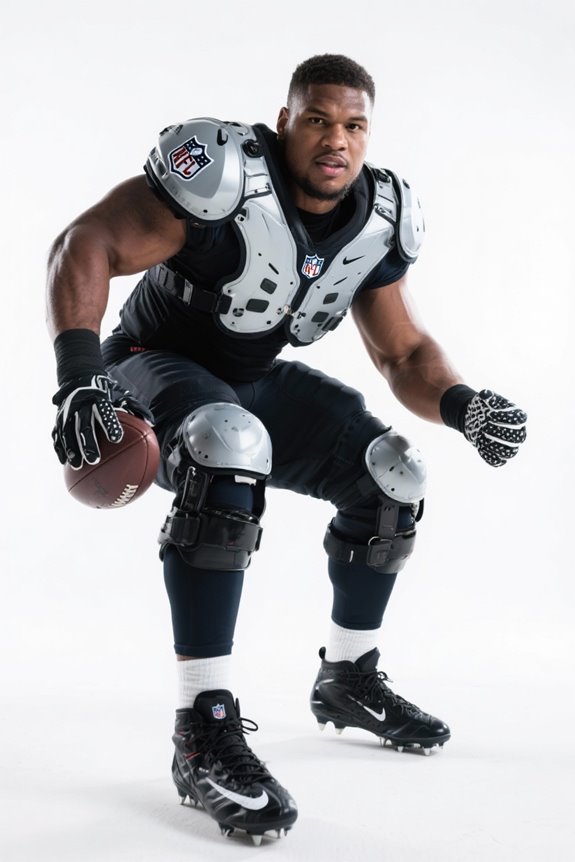
As mobile quarterbacks become increasingly prevalent in today’s game, defensive schemes have adapted by utilizing the spy technique, a strategic approach designed to contain these elusive players. This technique assigns a designated defender, often a linebacker, to focus solely on the quarterback, effectively managing spy responsibilities. The spy executes a shallow drop off the line of scrimmage to maintain a clear view of the quarterback’s movements while being agile enough to mirror him laterally. This positioning enables effective quarterback containment, minimizing open running lanes and curtailing the quarterback’s ability to extend plays. By blending pressure with containment, teams can effectively balance aggressive pass rushing while still restricting mobile quarterbacks from easily escaping tackles or creating off-script opportunities on the field. This approach mirrors the versatility of shoulder pads in adapting to different challenges effectively.
Engaging Blockers With the Spy Approach
The spy technique, while primarily focused on containing mobile quarterbacks, also necessitates a strategic approach to engaging blockers effectively. With designated spy assignments, defenders concentrate on recognizing the quarterback’s movement while simultaneously gauging the intentions of surrounding blockers. Engaging blockers is essential as it provides insight into whether they plan to execute reach, cut-off, or base blocks. Maintaining leverage through a low stance enhances the ability to shed blocks and regain pursuit. Adaptability is crucial; spies must quickly adjust to various blocking schemes and quarterback actions. Techniques such as gap shooting allow spies to bypass blockers and deter quarterback scrambles, ensuring a balance between maintaining focus on quarterback movement and effectively handling those who obstruct their path. Additionally, brightly colored flags can be important in maintaining player visibility and safety during intense gameplay.
Key Pass Rush Moves and Techniques
In order to effectively rush the quarterback, defensive linemen employ a variety of pass rush moves and techniques tailored to exploit offensive linemen’s weaknesses. Speed bull rushes capitalize on quick get-offs and leverage techniques, pressuring blockers backward. Edge rushers often utilize ghost rushes to evade engagement, creating misdirection and forcing respect for outside threats. Additionally, speed rushes emphasize low pad levels and quick footwork to maintain agility while bending around the edge. The swim move allows linemen to bypass blockers with swift arm movements and body positioning. Finally, the spin move‘s 360-degree rotation can create sudden opportunities to approach the quarterback, making timely execution essential for success in a pass-rushing strategy. Incorporating dynamic stretching into their routines can enhance muscle preparation and overall effectiveness on the field.
Recommended Products

XTRAMAN BLOCKER: Upgrade practice sessions with dynamic training; full set includes 3 pre-weighted collapsible blockers, carry case and instructions with example drills

CONTACT DRILLS: Heavy-duty blocking pad for safely simulating contact drills for a variety of sports or for martial arts training
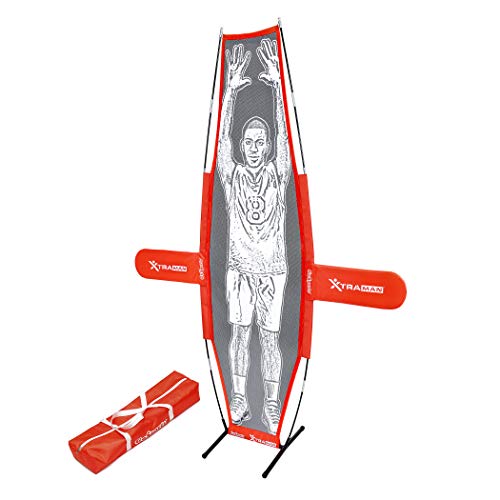
PRO DEVELOPED: The XTRAMAN was developed by GoSports in collaboration with professional basketball coaches and players to deliver a versatile training aid for players of all abilities
Mastering the Chop Rip Move
Mastering the chop rip move requires an extensive understanding of its mechanics and application within the context of defensive pass rushing. This technique begins with an initial chop utilizing chop techniques to disrupt an offensive lineman’s balance. The next step features a violent rip execution, where the defender swings their arm under the blocker’s arm to create separation. By leaning into the offensive lineman after the chop, the defender maintains control and prevents recovery. Successful execution hinges on maintaining a low pad level and quick footwork to guarantee balance during the shift. Practicing these components through targeted drills leads to a powerful and efficient method for penetrating gaps and reaching the quarterback, making the chop rip a valuable asset for defensive linemen. Incorporating football blocking dummies into practice drills can significantly enhance the effectiveness of mastering this technique.
Effective Use of Rip and Swim Techniques
Effective use of rip and swim techniques is essential for defensive linemen aiming to excel in pass rushing scenarios. The rip technique involves an upward arm motion, allowing defenders to disengage from blockers by pushing them off balance. Similarly, the swim technique uses a lateral arm sweep to maneuver around an opponent’s arms. Both techniques strategically exploit leverage and weaknesses rather than relying solely on physical strength. To execute the rip technique effectively, linemen must maintain a low stance to gain leverage, while the swim technique is particularly effective against overly aggressive blockers. Successful execution of both moves requires agility, precise timing, and awareness of the quarterback’s position, enabling defensive linemen to disrupt the offensive flow and apply pressure efficiently. Incorporating effective fundamental strategies into practice can further enhance a lineman’s pass rushing skills.
The Spear Technique Explained
The spear technique, a strategic approach utilized by defensive linemen, involves a dynamic combination of force, agility, and precise hand placement to effectively disrupt offensive blockers during pass rushing. This method focuses on impactful spear strikes, targeting the offensive lineman’s essential “pillar” areas, enabling defensive leverage to manipulate positioning. By delivering a “3-point punch,” linemen can engage blockers with explosive hand movements while maintaining firm body control. The technique emphasizes redirecting the opponent’s energy, destabilizing their balance rather than relying on sheer strength. Consequently, maintaining forward momentum without lunging is critical, allowing linemen to navigate around blockers efficiently. Ultimately, the spear technique is integral to creating opportunities for quarterback pressures or forced mistakes in passing situations. Proper injury prevention measures should be taken to ensure longevity and performance.
The Role of First Step and Explosiveness
In defensive football, the first step serves as a crucial determinant of a lineman’s effectiveness in pressuring the quarterback. A quick first step can drastically improve a lineman’s momentum, enhancing their ability to engage blockers effectively. To achieve this, proper core engagement is essential, allowing linemen to maintain stability and maximize push-off force through explosive hip and leg movements. Drills such as the “ball drop” emphasize reaction timing, enabling linemen to simulate game scenarios that require rapid response. Additionally, aligning hand placement correctly after the first step aids in defeating blocks, further closing the distance to the quarterback. This integration of speed, power, and technique establishes a foundational advantage for defensive linemen in pass-rush situations.
Recommended Products

Hexagonal target rings with easy-connect clips for customizable training layouts

Magnigrip+ Receiver Palm: High-tack silicone compound on palm improves grip to secure the catch in all conditions — built for wide receivers, defensive backs, and running backs who need elite grip every snap.

GETTING MORE AGILE:Speed training equipment provides inelastic resistance to high-speed movement to build immediate release of explosive power, recruiting more muscle fibers for greater leg power and stride length, allowing you to increase speed in less time; when releasing from dynamic resistance, the conscious mind engages in explosive stomping to drive the body to move, which is a key factor in generating the power needed to increase first-step speed and enhance rapid acceleration.
Practicing Lane Discipline and Contain
Practicing lane discipline and contain is imperative for defensive linemen seeking to pressure quarterbacks effectively while preventing big plays. Defensive linemen must maintain strict alignment to assigned gaps, ensuring each player controls a specific area. Key to this is keeping square shoulders and focusing on the quarterback’s hip, which helps prevent overpursuit. Controlled lateral movements, reinforced through repetitive drills, strengthen their ability to maintain gap integrity. Effective contain techniques involve push-step footwork and a bow-and-arrows stance to maintain leverage against offensive tackles. Additionally, defenders must react to the quarterback’s movement without abandoning their lanes, swiftly closing gaps if outside leverage is lost. By avoiding common mistakes, such as overrunning gaps or losing outside shoulders, linemen can enhance their effectiveness in the game.
Recommended Products
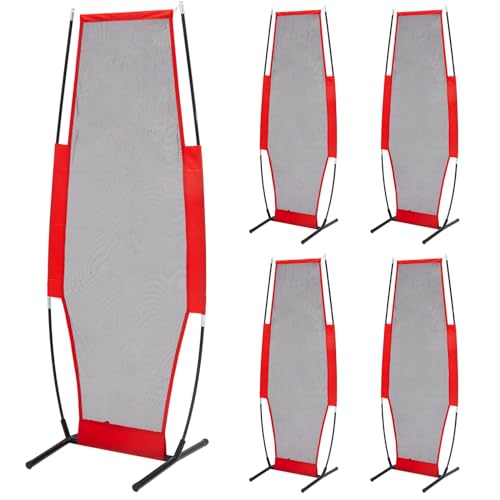
Defender Training: you will receive 5 pieces of soccer dummy defender mannequin and 5 carrying bags, the sufficient quantity is enough to meet your use and replacement needs, you can also share with your teammates and friends

SIMULATION STATION: Simulate real play with a tactile, non-solid dummy that reacts to your hits.

CONTACT DRILLS: Heavy-duty tackle dummy for safely simulating contact drills for a variety of sports or for martial arts training
Importance of Open-Field Chase Training
Open-field chase training plays a critical role in the development of defensive linemen, particularly when it comes to effectively pressuring quarterbacks and tackling ball carriers during dynamic game situations. This training focuses on key elements such as proper tackle techniques and accurate pursuit angles. Defensive linemen must enhance their speed and agility to effectively close the distance to their targets, while also improving reaction times to quickly adjust to a quarterback’s movements. Additionally, maintaining gap responsibility is essential to prevent escape lanes, emphasizing a balanced approach to pursuit. By integrating drills that emphasize angle recognition and effective tackling, coaches foster greater confidence and efficiency in defensive linemen, ultimately enhancing overall team performance during critical game scenarios.
Recommended Products

Develop your speed and agility with the SKLZ Speed Gates and Agility Hurdles. Set up your own training station and track your times. Challenge yourself, friends, family and teammates to see who can get the best time.

Train footwork and agility patterns in game-like situations

Improves reaction time by combining mental and physical training
Conditioning for Sustained Pressure
How can conditioning optimize a defensive lineman’s ability to exert sustained pressure on the quarterback? Effective conditioning combines sprint intervals, explosive drills, and agility training, targeting the unique energy systems utilized during play. Muscular endurance is developed through compound movements, such as sled pushes and power cleans, enhancing push mechanics while maintaining intensity. Training protocols emphasize anaerobic capacity, incorporating short bursts of high-output efforts followed by brief recovery periods to replicate game dynamics. Techniques such as pattern running intervals help linemen adapt to repetitive high-intensity situations. Additionally, improved power generation from explosive hip exercises contributes to a quicker first step, essential for consistent pressure on the quarterback. Overall, focused conditioning prepares defensive linemen for the demanding nature of their role.
Enhancing Open-Field Awareness and Anticipation
Enhancing situational awareness and anticipation is vital for defensive linemen seeking to optimize their effectiveness in rushing the quarterback. Key visual cues, such as an opponent’s inside hip and offensive lineman’s inside knee, play a critical role in visual tracking, enabling linemen to anticipate directional moves and react appropriately to blocking schemes. Maintaining a head-up posture guarantees balance and readiness for contact, while monitoring the quarterback’s drop and hand movements aids cognitive processing to predict throw timing. Moreover, employing peripheral vision to assess field position and teammate locations allows for informed decision-making regarding pursuit angles. By training these skills through drills focusing on recognition and reaction, defensive linemen can greatly enhance their performance in open-field scenarios.
Frequently Asked Questions
What Are Common Mistakes Linemen Make When Rushing the Quarterback?
Common mistakes linemen make when rushing the quarterback include poor technique and positioning errors, as they misjudge their stance and hand usage, ultimately diminishing their chances of success and allowing offensive players to dominate the field.
How Do Weather Conditions Affect Pass Rush Techniques?
Weather conditions greatly affect pass rush techniques; rain effects lead to slipperiness favoring aggressive approaches, while wind impact encourages defensive linemen to adjust timing and angles for an effective rush, exploiting quarterback inaccuracies driven by adverse elements.
What Mental Strategies Do Linemen Use During a Rush?
Ironically, while brute strength dominates perceptions, linemen strategically leverage mental visualization and opponent analysis. Such foresight enables rapid adjustments, enhancing their ability to disrupt quarterbacks effectively, proving that the mind often triumphs over mere physicality.
How Do Defensive Schemes Impact Individual Lineman Roles?
Defensive schemes greatly influence individual lineman roles through alignment adjustments and specific gap responsibilities. These factors dictate positioning, techniques employed, and overall strategies, allowing linemen to optimize their effectiveness based on their schematic assignments and responsibilities.
What Role Does Film Study Play in Preparing for a Game?
Film analysis plays a vital role in game preparation, enhancing defensive linemen’s understanding of opponents’ tendencies and strategies. This insight informs their techniques and decision-making, ultimately improving their effectiveness and overall performance on the field.