As an Amazon Associate, we earn from qualifying purchases. Some links on this site are affiliate links at no extra cost to you. Our recommendations are based on thorough research and editorial judgment.


What Makes A Good Cornerback In American Football?

A good cornerback in American football possesses key physical attributes, such as a height of 5’11” to 6’0”, and weight of 190-200 lbs. Crucial skills include mastering press coverage techniques, effective jamming at the line, and solid mental processing for quick decision-making. Strong tackling ability and ball skills contribute to overall performance, while anticipation of plays enhances turnover potential. Continuous development through training improves these skills, fostering a cornerback’s success on the field; further insights follow.
Key Takeaways
- Physical athleticism, including height, weight, and speed, enhances a cornerback’s overall performance on the field.
- Mastery of coverage techniques, such as press coverage and footwork, is essential for disrupting receiver routes.
- High football IQ enables quick decision-making and effective communication within the defense.
- Strong tackling skills and efficient run support are crucial for preventing yards after contact.
- Anticipation and ball skills lead to increased turnovers through interceptions and pass breakups.
Physical and Athletic Traits of Elite Cornerbacks
The physical and athletic traits of elite cornerbacks in American football are necessary determinants of their effectiveness on the field. Typically, these athletes meet height requirements of 5’11” to 6’0” and maintain a weight range of 190-200 lbs for an ideal physicality balance. Arm length and wing span are vital for deflecting passes, while hand size, averaging 9 inches, enhances interception ability. Elite cornerbacks demonstrate explosiveness metrics, indicated by vertical jumping heights of 35-38 inches and broad jump distances, which facilitate burst capability in various situations. Speed thresholds, with 40-yard dash times of 4.4 to 4.5 seconds, combined with strong results in agility drills like the 3-cone and shuttle, highlight their change direction skills and body control, supporting effective coverage. Furthermore, the use of specialized gear, such as Cutters Football Gloves, can significantly improve grip performance during gameplay.
Coverage Skills and Techniques
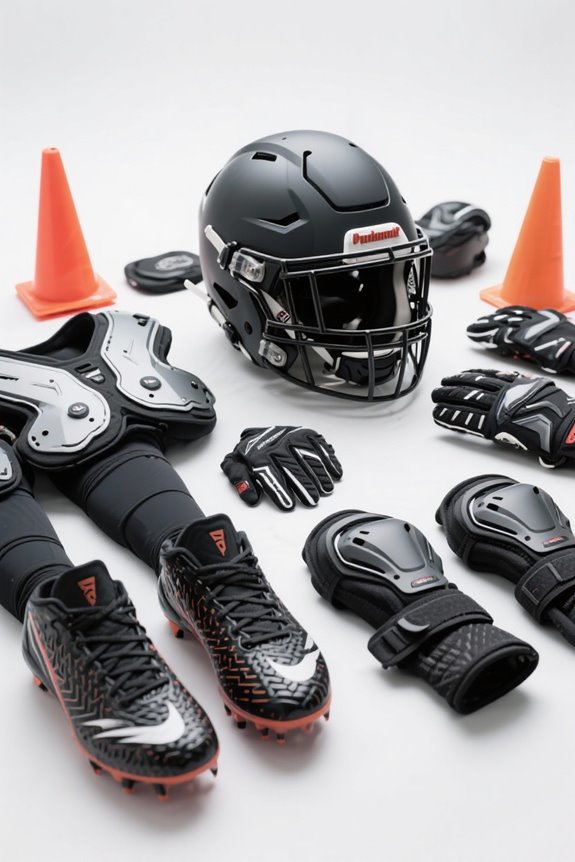
Successful coverage skills and techniques serve as essential components for cornerbacks aiming to excel in American football. Effective coverage techniques, such as press alignment, allow cornerbacks to disrupt receivers’ routes with precise timing and jam effectiveness. Mastery of footwork drills enhances agility, facilitating quick shifts and maintaining balance during route anticipation. Leverage positioning is critical; staying in the receiver’s “hip pocket” minimizes the quarterback’s throwing window while effective hip mechanics enable cornerbacks to open their hips for smooth route shifts. Mirroring skills, paired with strong eye discipline, prevent cornerbacks from being deceived by deceptive receiver movements. The bail technique aids in adapting coverage based on field position, ensuring cornerbacks remain competitive against various offensive schemes.
Recommended Products

Versatile: Can be used for fitness, football, basketball, soccer, tennis, track running, rugby, and more!

Dimensions: 34 1/4" to top rung, 28 1/4" wide and 24" wide feet

Train footwork and agility patterns in game-like situations
Mental Processing and Football IQ
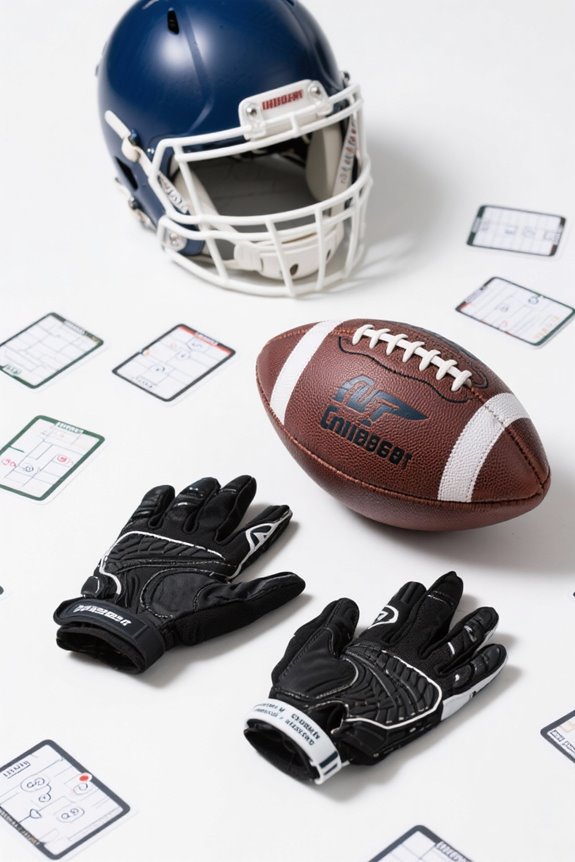
Mental processing and football IQ are essential attributes for cornerbacks, greatly influencing their effectiveness on the field. High football IQ enables cornerbacks to swiftly comprehend defensive play calls and anticipate offensive formations, enhancing their decision-making capabilities. A cornerstone of this intelligence is thorough film analysis, allowing adept players to recognize opponents’ tendencies and route concepts. This preparation leads to improved pre-snap recognition, as cornerbacks identify potential coverage responsibilities and communicate effectively with teammates. Additionally, recognizing offensive shifts, audibles, and changing plays is vital for maintaining defensive integrity during games. Ultimately, the combination of rapid mental processing, defensive communication, and diligent film study not only heightens a cornerback’s performance but also fortifies the overall cohesion of the secondary defense. Furthermore, effective training programs can enhance a cornerback’s physical attributes, ensuring they are equipped to translate their mental acumen into on-field success.
Run Support and Tackling
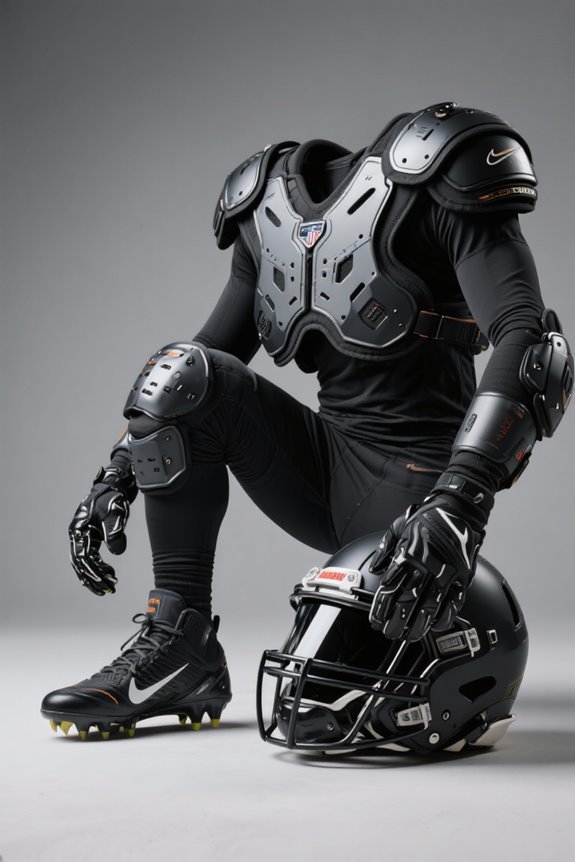
Run support and tackling represent critical components of a cornerback’s role on the football field, complementing their coverage skills by enhancing the defense’s overall effectiveness against the run. Effective cornerbacks must demonstrate strong tackling efficiency to stop runs outside the tackles, requiring proficiency in block shedding and physicality to stand up against larger opponents. Proper angles in pursuit and well-developed tackling mechanics further minimize yards after contact, preventing big plays. Versatile cornerbacks who are comfortable in varying positions exhibit higher tackle counts, showcasing their ability to fill run gaps reliably. Statistical indicators, such as high tackle numbers, reflect a cornerback’s active involvement in run support, reinforcing their value within the defensive scheme. Additionally, the ability to utilize impact absorption capabilities is crucial for cornerbacks to safely engage opposing ball carriers while minimizing injury risks.
Ball Skills and Turnover Creation
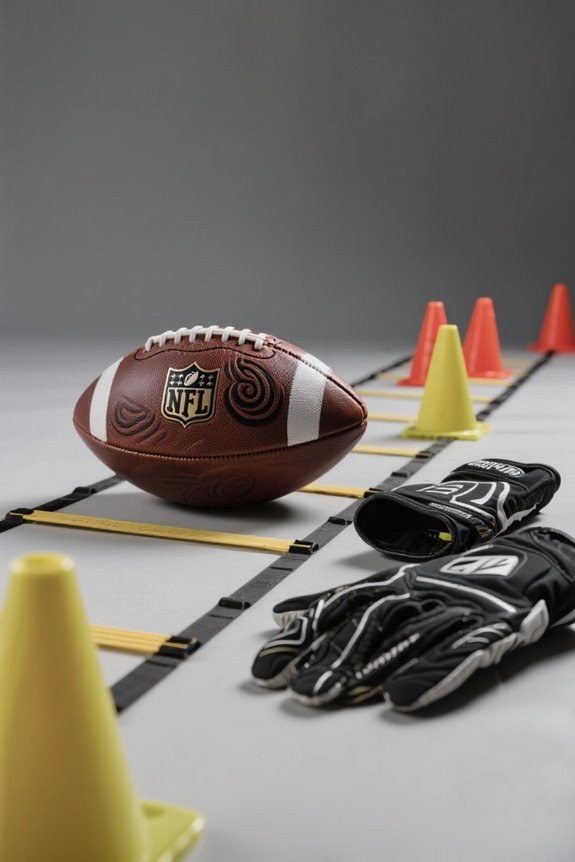
The effectiveness of a cornerback in American football is considerably influenced by their ball skills and ability to create turnovers, which are essential for shifting the momentum of a game. Elite cornerbacks demonstrate refined ball tracking, allowing them to anticipate the trajectory of passes and contest receptions effectively. Their success with interception techniques and pass deflections relies on smooth, controlled movements, which prevent overcommitment. Mental anticipation plays a critical role, enabling cornerbacks to predict quarterback decisions, thereby enhancing turnover metrics. Additionally, the ability to create catch disruption through effective press coverage positions players advantageously to intercept passes or lead defenses. These capabilities distinguish top cornerbacks, whose performances considerably impact game outcomes and potential contract values. Moreover, proper size and fit considerations for protective gear like knee sleeves can further support their agility and performance on the field.
Recommended Products

FLEXIBLE PERFORMANCE FIT: Tailored Men’s fit and a vertical zipper provide easy entry and exit, hassle-free and user-friendly; it should fit comfortably snug to avoid water entry

Enhanced Heating with Slim Quilted Long Design: This Venustas women's long heated down jacket features a flattering diamond-quilted pattern and slim waist cut for a stylish winter silhouette. The mid-length design adds extra coverage to block wind and retain warmth in freezing temperatures.

High-grade Engineered Elastic knee brace for therapeutic compression, circulation and comfort
Positional Versatility and System Fit
In the domain of American football, the effectiveness of a cornerback extends beyond individual skills to encompass positional versatility and system fit, which are essential for team success. A cornerback’s ability to adapt to various schemes enhances their effectiveness in executing multiple coverage responsibilities, fostering defensive flexibility. For instance, versatility allows a player to defend across outside and slot positions, providing matchup advantages against different offensive threats. Coaches can adjust coverage assignments mid-game, leveraging scheme adaptation to counter opposing formations. Additionally, deploying cornerbacks as blitzers or in the box can diversify defensive strategies, creating unpredictability and confusion for quarterbacks. This multi-faceted approach emphasizes the importance of alignment within the defensive scheme to achieve peak performance. Furthermore, using tools like quarterback training nets can significantly enhance a cornerback’s understanding of offensive strategies by simulating real-game passing scenarios.
Importance of Speed and Agility
Speed and agility are paramount attributes that greatly influence a cornerback’s performance on the football field. Exceptional speed allows players such as Darrell Green and Deion Sanders to close gaps and intercept passes effectively, enhancing their value in coverage. A fast 40-yard dash time is essential for improving a prospect’s draft stock, as it indicates potential for successful shifts from college to the NFL. Agility is equally important; it enables cornerbacks to change direction suddenly, facilitating effective coverage against fast receivers. Engaging in speed training and agility drills is essential, as these exercises enhance quickness and reaction time, thereby improving performance in game situations. Overall, speed and agility considerably contribute to a cornerback’s effectiveness and longevity in professional football. Additionally, utilizing football training harnesses can further enhance a player’s speed and agility through targeted resistance training.
Recommended Products

Weight Sled for Training: Heavy duty Rep Fitness weight sled designed for simple, effective strength and conditioning. Plate-loaded sled accepts Olympic weight plates and delivers scalable resistance for sled workouts, CrossFit training, and athletic development.

Develop your speed and agility with the SKLZ Speed Gates and Agility Hurdles. Set up your own training station and track your times. Challenge yourself, friends, family and teammates to see who can get the best time.

【3-in-1 Training Method】This weight sled innovative design combines three training methods in one heavy-duty sled: high push handles, low push handles, and pull training.
Mastering Press and Off-Man Coverage
Mastering press and off-man coverage is imperative for cornerbacks working to excel in competitive football environments. In press coverage, effective jamming at the line of scrimmage is essential; quick, powerful hand strikes aimed at the receiver’s chest disrupt their release and route timing. Cornerbacks must maintain a balanced stance, remaining 1 to 2 yards from the receiver, allowing for an explosive first move. Conversely, off-man coverage emphasizes staying hip-to-hip with the receiver while employing a shuffle technique to react to their movements. Maintaining proper hand placement aids in minimizing separation, as cornerbacks focus on positioning while keeping their head turned to locate the football. This thorough skill set is imperative for cornerbacks aiming to effectively contest passes and prevent successful completions, as training with reflex and reaction equipment can enhance their response time and agility on the field.
Recommended Products


Portable & Easy Setup: The Roll Out training ladder offers quick setup for agility drills anywhere. Simply roll it out to create a stable 15-foot training surface that stays in place to help you focus on movement precision and form.

Durability and Strenuous Training Support: our rubber training ladder for footwork is made with quality rubber, providing durability; The material ensures dependability during your high intensity workouts; No need to worry about longevity or reliability, it's built to last!
Understanding Zone Coverage
Zone coverage is a defensive strategy in American football where cornerbacks and other defenders are assigned to protect specific areas of the field rather than individual offensive players. In this scheme, defenders must exhibit strong zone communication to properly coordinate coverage adjustments, particularly when offensive motions shift routes. Different types of zone coverage, such as Cover 2 and Cover 3, dictate specific responsibilities; for example, Cover 2 includes two safeties covering deep halves while corners manage flat zones. Successful zone coverage relies on defenders maintaining spatial awareness and discipline to avoid chasing receivers outside their designated areas, thereby preserving the integrity of their zones. This strategic approach helps mitigate vulnerabilities against complex offensive formations and quick passing attacks. Additionally, incorporating effective tackling techniques through training dummies can further enhance a cornerback’s performance in maintaining zone discipline.
Recommended Products

GREAT FOR ANY LEVEL: These tackling dummies for football help Adult and Youth players develop the proper tackling techniques.

Material and Size: taking into consideration the football dummy's quality, you'll find it's made of quality PVC sandwich cloth and filled with a high density sponge, ensuring it can withstand intense training; Measuring around 42 x 12 x 6 inches, this step over dummy football presents the ideal size for realistic training

VERSATILE: Serves as both step-over dummy for agility drills and blocking/tackling dummy for contact training
Anticipation and Instincts on the Field
In American football, anticipation and instincts on the field are critical skills that greatly influence a cornerback’s performance, especially during live gameplay where split-second decisions can determine the outcome of a play. Effective route prediction hinges on pre-snap awareness, which allows defenders to assess receiver tendencies and adjust their defensive positioning based on offensive motions. Instinctive playmaking emerges as cornerbacks utilize anticipation techniques, reacting swiftly to the quarterback’s cues and the flow of the play. Spatial recognition enables them to track both the ball and receivers within their assigned areas. By analyzing film and understanding patterns, experienced cornerbacks enhance their anticipation skills, enabling them to predict route breaks and capitalize on potential interceptions or pass breakups more effectively. Incorporating speed training techniques can further refine their agility and reaction times, significantly enhancing their on-field performance.
Continuous Development and Learning
Continuous development and learning are essential components in the career of a cornerback, as this position requires a combination of physical attributes and intellectual understanding of the game. Effective cornerbacks engage in various training methodologies, integrating strength conditioning with agility drills to enhance their physical performance. Regular feedback loops, created through consistent practice and film study, manifest in improved technique and game awareness. Cornerbacks master specific drills to refine their footwork and recovery techniques, which increases their anticipating abilities. Additionally, understanding offensive formations becomes pivotal, as it directly influences a player’s decision-making speed. This commitment to continuous learning and development not only reduces injury risk but also elevates a cornerback’s effectiveness on the field throughout an entire season. Incorporating battle mouthguards into their gear helps ensure dental safety while focusing on their performance.
Frequently Asked Questions
How Do Cornerbacks Prepare Mentally Before a Game?
Cornerbacks prepare mentally before games through mental visualization techniques and established game day routines. This consistent preparation fosters focus, enhances performance, and builds confidence, enabling them to effectively handle pressure during vital matchups against receivers.
What Strategies Do Cornerbacks Use to Recover From Mistakes?
Cornerbacks employ mistake analysis to identify errors and implement technique adjustments in their recovery strategies. By focusing on lateral quickness, visual tracking, and mental awareness, they enhance their ability to regain position after setbacks.
How Do Injuries Affect a Cornerback’s Performance?
Injuries haunt cornerbacks; rehabilitation impacts their performance metrics dramatically. Mobility declines, complicating coverage, as chronic issues erode confidence and agility, forcing adaptations that often compromise their effectiveness in a high-stakes, fast-paced game.
What Role Do Cornerbacks Play in Team Chemistry?
Cornerbacks play an essential role in fostering team dynamics through effective communication. Their strong interpersonal relationships not only enhance defensive coordination but also promote a positive locker room atmosphere, contributing greatly to overall team chemistry and success.
How Important Are Practice Drills for Cornerbacks’ Skill Development?
Drill techniques are paramount for cornerbacks’ skill enhancement, refining everything from agility to reaction times. These relentless practices forge unmatched confidence and adaptability, equipping players to dominate the field against any opposing receiver with remarkable precision.