As an Amazon Associate, we earn from qualifying purchases. Some links on this site are affiliate links at no extra cost to you. Our recommendations are based on thorough research and editorial judgment.


How Do Quarterbacks Improve Their Throwing Accuracy?

Quarterbacks enhance their throwing accuracy through refined mechanics, emphasizing arm alignment and proper footwork. Techniques such as maintaining an 80-90 degree elbow angle and ensuring a square shoulder position to the target are critical. Additionally, effective footwork increases power generation and release point precision. Mental discipline, including visualization techniques, fosters focus during high-pressure situations. These strategies collectively improve performance on the field, with further techniques and drills available for deeper understanding of their applications.
Key Takeaways
- Perfecting body mechanics with proper elbow angle and alignment enhances throwing accuracy during passes.
- Engaging in drills like the Two Knees and Front Side Stability Drill isolates mechanics for improved performance.
- Developing visual processing skills allows quicker field scanning and better decision-making under pressure.
- Practicing dynamic stretches prepares the body, increasing core stability and flexibility for precise throws.
- Mental discipline and visualization techniques help quarterbacks manage stress and anticipate defensive movements, enhancing accuracy.
Understanding the Mechanics of Accurate Throws
Accurate throwing is fundamentally rooted in the intricate mechanics of a quarterback’s technique, which encompasses various physical elements vital to performance. Central to this is a sound throwing philosophy that prioritizes body balance and stability, essential for effective control throughout the throw. Proper elbow angle and wrist velocity are paramount; these aspects influence precision, especially when reaching ideal positioning. Footwork and stride length play significant roles, as shorter strides facilitate hip rotation, resulting in greater power generation and accuracy. Additionally, arm extension and release point must align properly to prevent mechanical errors that compromise throw efficiency. A thorough biomechanics exploration supports the significance of these factors in cultivating consistent throwing techniques, ultimately leading to enhanced accuracy on the field. Implementing tools like quarterback training nets can further refine these skills through targeted practice.
The Role of Arm Alignment in Throwing Precision
Arm alignment greatly influences a quarterback’s throwing precision, as it dictates the mechanics involved in delivering an accurate pass. Proper throw mechanics begin with the shoulder being square to the target, ensuring a consistent throwing path. Elite quarterbacks maintain an elbow angle of approximately 80-90 degrees, optimizing release point accuracy. Additionally, the non-throwing arm, positioned at a lower angle of around 30 degrees, contributes to overall arm stability, preventing interference during the throw. Misalignment or excessive extension increases the likelihood of off-target passes due to inconsistent release trajectories. The kinematics of the throw directly correlate with arm alignment, as tighter angles facilitate faster releases and enhanced accuracy. Consistency in arm position is essential for achieving reliable throwing precision. Moreover, incorporating compression shorts can provide additional support and comfort, allowing quarterbacks to focus on their mechanics without distraction.
Recommended Products

Use Both Sides.No Springs, Nuts, Bolts, Or Screws.Will Not Tilt Over.


Improve Running Speed: This is one of the most simple ways to improve your speed by keeping arms in a 90 degree angle throughout the running activity.
Importance of Front Side Discipline
Front side discipline plays an essential role in maintaining a quarterback’s accuracy during the throwing motion, as it guarantees stability and alignment throughout the process. This discipline assures that the front shoulder remains stable and does not over-rotate, which can lead to premature opening that disrupts throw trajectory. Consistent front side mechanics, including a controlled front stride, prevent common errors like the shoulder “swinging open,” allowing for a precise release point. Furthermore, proper weight distribution and hip rotation contribute to maintaining front side control, promoting an extended release point essential for accuracy. Therefore, effective training that emphasizes front side discipline enables quarterbacks to achieve more reliable and consistent throwing outcomes, ultimately enhancing their overall performance on the field. Incorporating weighted footballs into practice can also help strengthen throwing mechanics by improving both power and accuracy.
Recommended Products

Jugs Football Passing Machine throws precise passes, punts, and kickoffs to any spot on your field.

Jugs Field General Football Machine throw accurately from 5 to 60 yards, allowing you to hit receivers in stride, running any route in playbook

Jugs Field General Football Machine throw accurately from 5 to 60 yards, allowing you to hit receivers in stride, running any route in playbook
Biomechanics of Wrist and Elbow for Accuracy
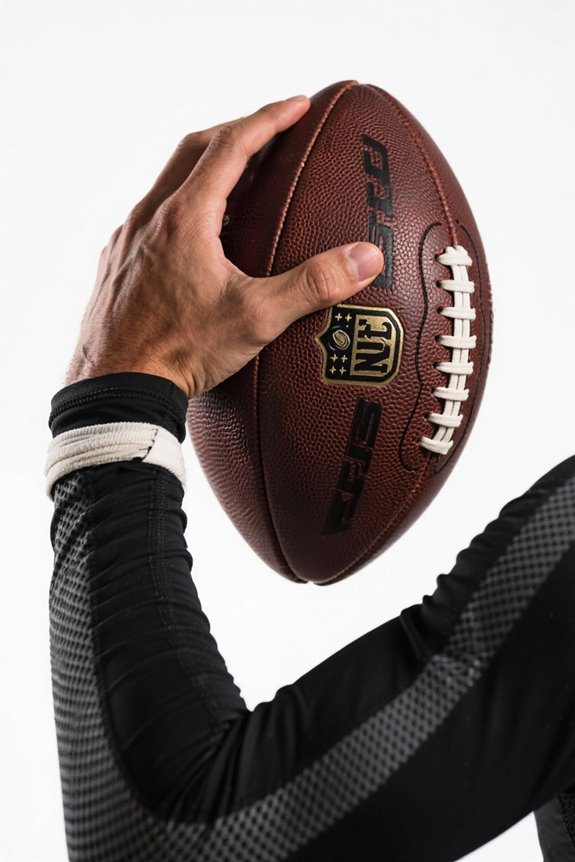
When examining the biomechanics of wrist and elbow function in quarterbacks, it becomes evident that proper alignment and movement are essential for enhancing throwing accuracy. Elbow flexion peaks during the cocking phase, supporting effective energy transfer as the throw progresses toward ball release. Gradual elbow extension contributes considerably to throwing velocity and precision. Additionally, higher wrist velocity at ball release is correlated with improved accuracy, especially in bullet passes due to tighter spirals. Biomechanical sequencing between elbow extension and wrist snap optimizes energy efficiency, reducing spatial deviation. Muscular contributions from key muscles stabilize the elbow and control wrist dynamics, enhancing accuracy while minimizing injury risk. These biomechanical factors collectively influence a quarterback’s ability to deliver precise passes, similar to how agility ladders enhance performance and coordination in athletes.
Footwork Techniques for Improved Throwing
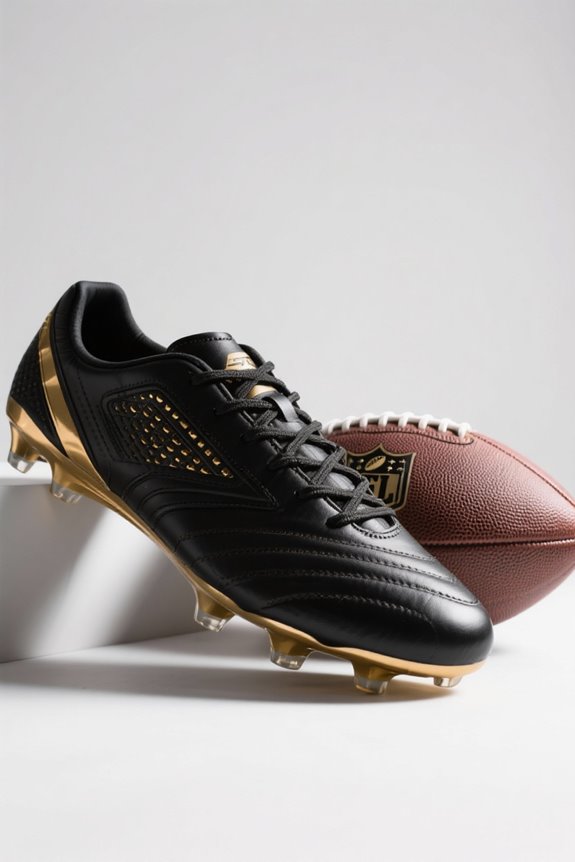
Throwing accuracy in quarterbacks is not solely reliant on upper body mechanics; effective footwork techniques are equally important. Footwork fundamentals provide a solid foundation for balance, power generation, and consistent, accurate passes. By employing quick, short strides and maintaining a strong base, quarterbacks can improve their weight transfer and overall throw accuracy. Common errors, such as over-striding, hinder power and compromise precision due to disrupted weight shifts. Consistent dropbacks tailored to play design enhance timing, while shuffling under pressure creates valuable space from defenders. Additionally, advanced drills focusing on lateral movements and hip flexibility improve movement proficiency, allowing quarterbacks to make quick decisions. Incorporating agility ladder drills into training can further enhance foot speed and coordination, ultimately supporting throwing performance. Mastering these footwork techniques is essential for elevating throwing performance and accuracy.
Recommended Products

Train footwork and agility patterns in game-like situations


Portable & Easy Setup: The Roll Out training ladder offers quick setup for agility drills anywhere. Simply roll it out to create a stable 15-foot training surface that stays in place to help you focus on movement precision and form.
Shoulder Positioning and Its Impact on Throws
Accurate throwing in football hinges greatly on shoulder positioning, which plays an essential role in determining both the trajectory and precision of passes. Maintaining a balanced shoulder alignment is vital for establishing a solid throwing base, directly affecting the release height and overall pass accuracy. Research indicates that shoulder abduction angles greater than 90° can enhance wrist speed and improve accuracy in less experienced quarterbacks, especially for bullet and lob passes. Conversely, comfortable throws often involve shoulder positions less than 90°. The position of the front elbow also greatly impacts shoulder tilt, influencing the vertical trajectory of the ball. Ultimately, there is no single ideal shoulder angle; effectiveness is contingent upon individual comfort and the type of throw being executed. Additionally, wearing a 5-pad football girdle can provide essential protection, allowing quarterbacks to focus on their throwing mechanics without the distraction of potential injuries.
Identifying Common Throwing Problems
Identifying common throwing problems in quarterbacks is essential for enhancing overall throwing accuracy and consistency. Key issues often arise from improper throwing fundamentals, which include release timing and arm motion errors, leading to vertical or lateral misses. Minor deviations in release angle can dramatically impact accuracy over varying distances. Additionally, grip and ball handling are critical; an excessively tight grip can drop the ball while a loose grip can elevate it, both leading to inaccuracies. Footwork also plays a significant role, as improper stride and lower body stability can disrupt weight transfer and throw momentum. Finally, common positional issues, such as incorrect elbow alignment and shoulder rotation, further contribute to the frequency of common mistakes that hinder precision. Implementing proper grip quality and sizing techniques can significantly improve the throwing performance.
Recommended Products

After Extensive research and development, we have enhanced the original Rev Throw to meet the needs of all overhand sofball positions. Through our research we found the girls of all ages had a very tough time holding on to the 11 inch and 12 inch softballs while REVVIN with the Rev throw. We developed these with the 9 inch yellow ball to perfectly fit in your handfor ease of use with the ability to learn and repeat the proper throwing motion
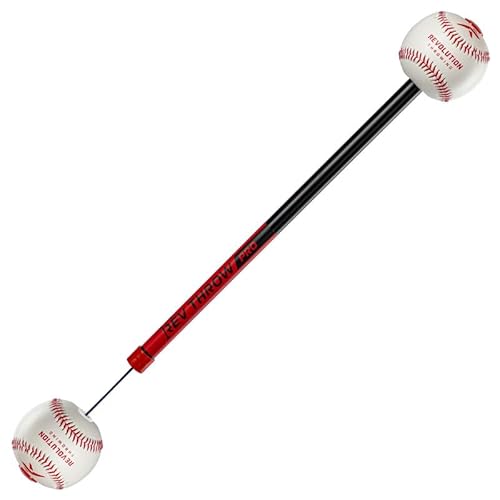
The Rev Pro is a throwing trainer that is specifically designed to train the arm path and sequencing in the throwing motion

【High Quality】Football Net is made of a 7-strand knotless polyester net with a dense mesh to ensure a firm grip on your power ball and withstand it without breaking.The frame is made of heavy-duty iron,Painted iron pipes can resist bending, twisting and rust.High quality fiberglass poles has the characteristics of good toughness, high strength and light weight so it can definitely withstand years long of frequent use.
Effective Corrective Drills for Quarterbacks
Enhancing quarterback performance through effective corrective drills is essential for fostering improved throwing mechanics and overall accuracy. Various drill variations, such as the Two Knees Drill, focus on arm warm-up and accuracy, allowing quarterbacks to isolate their arm and core mechanics. The Spot Throw Drill emphasizes decision-making under pressure by simulating game scenarios, requiring quick target recognition. The Front Side Stability Drill prevents over-rotation, promoting consistent throwing mechanics aligned with proper elbow placement. In addition, the Elbow Placement Drill addresses common flaws by correcting front elbow height, ensuring accurate release. Finally, the Scan the Field Drill trains rapid receiver identification and peripheral vision, critical for making timely decisions. Collectively, these drills provide significant corrective feedback for quarterbacks seeking improved performance, resembling how tacky grip technology enhances ball control for receivers.
Recommended Products

REALISTIC QUARTERBACK PASSES: Launches accurate spiral footballs at adjustable speeds and trajectories to simulate game-like passing drills for quarterbacks, receivers, defensive backs, and special teams practice.
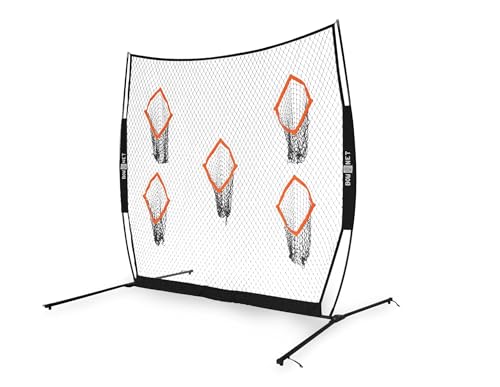
Heavy duty, portable net has five sock training pockets to help improve accuracy during short passing drills while remaining stable and upright after every high intense throw

ADJUSTABLE ANGLES – The removable bullseye target features a 5-point adjustment system, allowing you to set angles from 90° vertical to 180° flat. This versatility makes it ideal for practicing a wide range of passing techniques and drills.
The Impact of Visual Focus on Accuracy
Visual focus plays a pivotal role in a quarterback’s throwing accuracy, as the ability to quickly process visual information directly influences decision-making during high-pressure game situations. High visual-spatial processing, when combined with strong decision-making abilities, can enhance accuracy by approximately 6%. Quarterbacks must scan the field within three seconds, utilizing a visual strategy to recognize coverage and locate open receivers effectively. Cognitive training that emphasizes visual processing speed notably improves real-time defensive awareness, enhancing passing precision under stress. Key skills such as peripheral awareness, ocular motor control, and depth perception are essential for maintaining a mental map of the field and making decisive throws. Enhancing these visual and cognitive functions is vital for quarterbacks aiming to secure passing success. Additionally, utilizing high-visibility colors during practice can help improve a quarterback’s spatial awareness and field recognition.
Developing a Pre-Throw Routine
Establishing a pre-throw routine is essential for quarterbacks aiming to enhance their throwing accuracy and performance during games. Effective pre-throw preparation includes dynamic stretching, which involves exercises like arm circles and torso twists, thereby increasing flexibility and preparing muscles for action. Additionally, incorporating rotational preparations helps activate the necessary power for precise throws, while exercises focused on glenohumeral motion improve shoulder mobility and reduce injury risk. Engaging the core muscles is also critical, as it stabilizes the body during throws, enhancing overall accuracy. Structured throwing drills, such as stationary throws and simulated game situations, further prepare quarterbacks by developing strength, accuracy, and decision-making skills under pressure, ensuring they remain competitive during actual gameplay. It’s important to include proper sizing of equipment, such as shin guards, to ensure players are comfortable and protected during practice and games.
Synchronizing Body Movements for Optimal Performance
The synchronization of body movements plays a pivotal role in achieving peak throwing accuracy for quarterbacks, building upon the foundation established through a solid pre-throw routine. Effective body alignment is essential, as lower body positioning facilitates energy storage and the transfer of power to the upper body. Initiating hip rotation while maintaining upper body stability enhances torque generation. This timing synchronization between the lower and upper body is critical; ideal coordination guarantees maximal force transfer and improves accuracy metrics. A balanced posture, characterized by knee flexion and active feet, supports movement coordination. By effectively integrating these elements, quarterbacks can achieve a powerful throw while preserving control, ultimately enhancing their overall performance on the field.
Mental Discipline and Its Role in Throwing Consistency
Mental discipline emerges as a foundational element for quarterbacks aiming to achieve consistent throwing accuracy. This discipline encompasses mental resilience, allowing players to manage stress effectively, which is essential during high-pressure situations. Stress negatively influences accuracy, especially on long throws, where increased strain leads to frustration and poor performance. Utilizing visualization techniques, quarterbacks mentally simulate throws, enhancing spatial awareness and cognitive focus. By anticipating defensive adjustments, they can pre-place throws, thereby minimizing errors. Additionally, strong cognitive load management reduces mental overwhelm during plays, ensuring quicker and higher-quality decision-making. As a result, developing these mental skills markedly correlates with improved throw consistency, reducing turnover-worthy plays while fostering confidence in executing precise passes under varying conditions.
Frequently Asked Questions
How Does Weather Affect a Quarterback’s Throwing Accuracy?
Weather dramatically influences a quarterback’s throwing accuracy; strong wind effects and varying moisture levels create a challenging environment. Rain and snow reduce grip and visibility, often leading teams to adapt their gameplay towards safer, less risky strategies.
What Mental Exercises Can Enhance a Quarterback’s Focus?
Mental exercises such as visualization techniques and concentration drills greatly enhance a quarterback’s focus. By mentally rehearsing plays and training sustained attention amid distractions, they develop sharper decision-making skills and improved performance under pressure.
How Important Is Nutrition for a Quarterback’s Performance?
Nutrition notably impacts a quarterback’s performance, where balanced dietary choices optimize energy levels and recovery. Effective hydration strategies are essential for maintaining peak physical condition, enhancing endurance, and promoting overall health throughout the demanding football season.
What Role Does Practice Intensity Play in Accuracy Improvement?
Research indicates that practice sessions with 80% intensity can enhance accuracy by 25%. Intensity drills coupled with focused repetition develop essential motor skills, improving kinematic sequencing and fostering better adaptability under game-like conditions for quarterbacks.
How Can a Quarterback Adjust to Different Game Environments?
A quarterback can adjust to different game environments by modifying footwork, employing strategies to counter environmental factors, and enhancing grip on the ball. These adaptations guarantee consistent performance despite challenging game conditions, improving overall effectiveness.