As an Amazon Associate, we earn from qualifying purchases. Some links on this site are affiliate links at no extra cost to you. Our recommendations are based on thorough research and editorial judgment.


How Do Centers Snap The Ball And Call Protections?

Centers snap the ball using precise grip techniques, maintaining a three-point stance for balance and stability. After executing the snap, centers assess the defensive front and communicate essential protection calls to the offensive line. They adapt their stance based on play type and leverage, shifting from run blocking to pass protection as needed. Post-snap, they guarantee quarterback safety, while coordinating linemen for effective blocking. Further exploration reveals additional techniques and drills that refine these critical skills.
Key Takeaways
- Centers adopt a balanced three-point stance, allowing for effective snapping and communication of defensive alignments to teammates.
- Successful snaps require a firm grip, smooth follow-through from the hips, and coordinated foot positioning for immediate readiness.
- After the snap, centers engage in run or pass blocking while continuously communicating adjustments and protections to the offensive line.
- Pre-snap evaluations help centers identify defensive threats, using verbal and hand signals to adjust blocking schemes and alignments.
- Centers modify snap timing based on the quarterback’s cadence and use visual signals to ensure synchronization in noisy environments.
Understanding the Center’s Stance and Positioning
The center’s stance and positioning are crucial components of effective gameplay in football, serving as the foundation for both snap execution and subsequent blocking responsibilities. By adopting a three-point stance with feet slightly wider than shoulder-width, the center achieves ideal balance, facilitating snap timing. The center should keep the weight evenly distributed across the full bottom of the feet, maintaining a flat back while leaning over the ball. Adjustments based on the quarterback’s formation allow for stability and mobility, essential for smooth shifts after the snap. The position of the center also enhances the ability to communicate defensive alignments to teammates, making the stance a critical element in not only executing the snap but ensuring overall offensive effectiveness. Additionally, incorporating adjustable wrist straps can improve grip and comfort for the players involved in the snap exchange.
The Mechanics of a Successful Snap
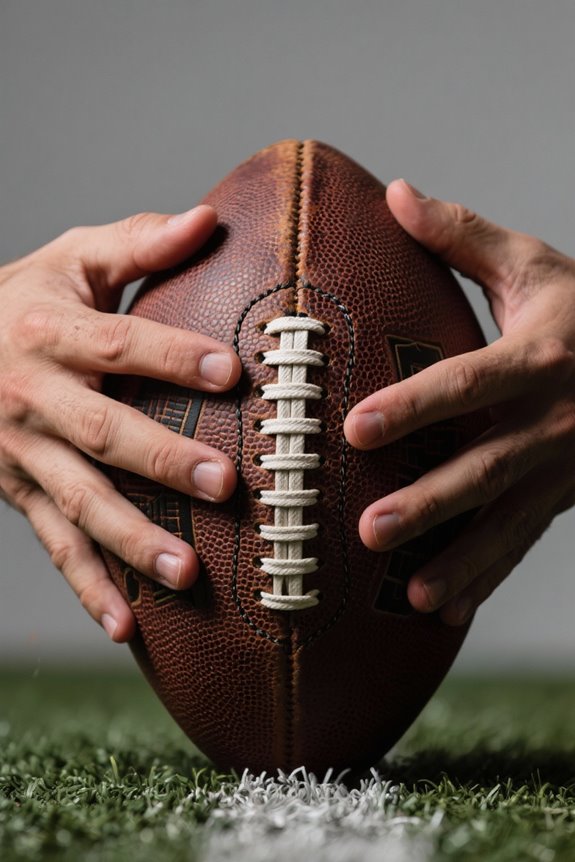
Executing a successful snap requires precision in ball handling, footwork, and mental coordination, elements that are fundamental for optimizing offensive performance in football. Snap efficiency begins with grip techniques, where applying firm pressure with palms creates a tight spiral, vital for accurate throws. Following through during the snapping motion enhances speed and strength, directing the ball consistently to the quarterback’s preferred spot. Initiating movement from the hips guarantees greater power, while coordinated foot positioning promotes immediate readiness for blocking. Additionally, focusing visually on the quarterback enhances timing, reducing errant snaps. Centers should practice these skills regularly to develop muscle memory, ultimately contributing to more effective plays and reducing the likelihood of penalties or disruptions in the offense. Incorporating resistance bands into training routines can also enhance arm strength and improve snapping accuracy.
Types of Snaps: Under Center, Shotgun, and Long Snaps
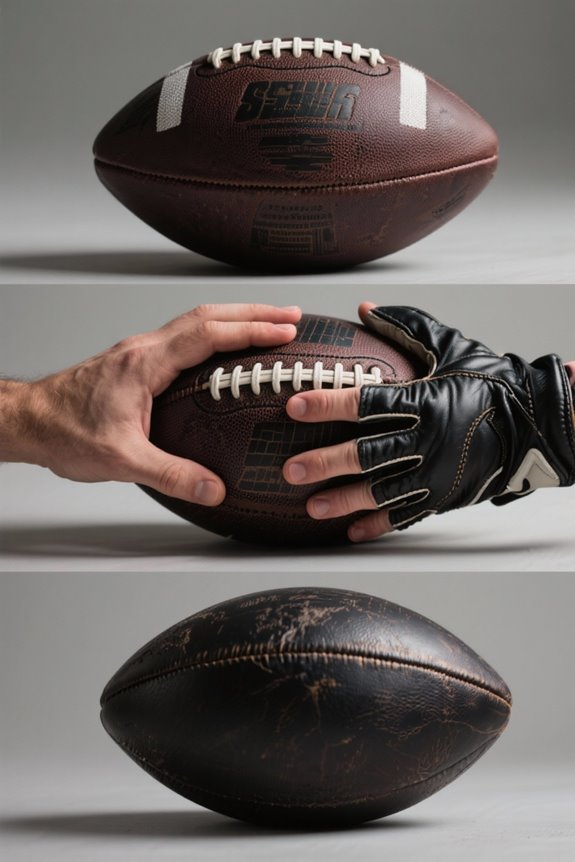
Snaps in football are categorized into three primary types: under center, shotgun, and long snaps, each serving distinct strategic purposes within the game. The under center snap, the most traditional technique, involves the center delivering the ball directly to the quarterback positioned immediately behind them, emphasizing a precise ball delivery for immediate blocking actions after the snap. Shotgun snaps, executed from a distance of 5 to 10 yards, provide quarterbacks with increased visibility and reaction time, relying on swift snapping techniques for enhanced velocity and accuracy. Long snaps, performed by specialized players during special teams play, require exceptional precision and spiral control over greater distances to maintain effective ball delivery, minimizing errors that can impact scoring opportunities. Additionally, UV protection offered by amber football visors can significantly enhance a player’s ability to see the field clearly during games.
Post-Snap Responsibilities of the Center
Post-snap responsibilities of the center play a vital role in the overall effectiveness of an offensive scheme, reflecting the position’s importance in both blocking assignments and communication. The center must execute run or pass blocking based on the play call and shifting defensive fronts immediately after the snap. This requires effective communication strategies to relay real-time adjustments to guards and tackles, allowing coordination of blocking assignments. Additionally, centers must identify and respond to defensive threats, assisting with post-snap adjustments and implementing changes in protection schemes as necessary. As an on-field leader, the center plays a significant role in maintaining a cohesive effort among the offensive line while ensuring a successful execution of the play and protecting the quarterback. Effective blocking assignments are similar to how flag football sets facilitate player organization in team sports.
Recommended Products

VERSATILE: perfect for football blocking drills and other contact sports technique development

CONTACT DRILLS: Heavy-duty tackle dummy for safely simulating contact drills for a variety of sports or for martial arts training
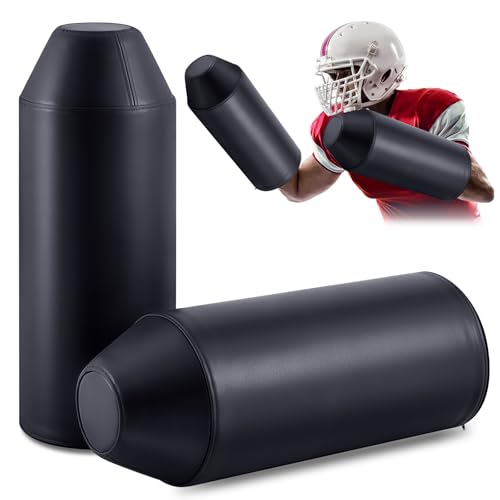
What You Get: package include a set of two football arm shields constructed from high-density foam; Offering robust protection, each shield measures approximately 61 cm in length and about 24 cm in width
Protecting the Quarterback After the Snap
Protecting the quarterback after the snap is a critical responsibility for the offensive line, demanding precise execution and effective communication to assure the player’s safety and maintain offensive effectiveness. Immediately following the snap, linemen redirect pass rushers through strategic positioning and leverage, forming a protective “dish” around the quarterback. This entails recognizing defensive alignments and adjusting techniques to account for various rushers. The center employs explosive power and proper hand positioning to establish control and guarantee blockers effectively manage pressure. Constant communication among the offensive line is essential, enabling them to adapt to blitzes and defensive formations. Ultimately, these actions collectively enhance quarterback safety and optimize pass rusher management, allowing for successful offensive plays. Having proper 5-pad football girdles can significantly increase player protection during these critical moments.
Calling Protections: The Center’s Role
At the core of offensive line coordination lies the center’s essential role in calling protections, a responsibility that significantly influences the effectiveness of a team’s offensive strategy. The center’s communication skills are vital for relaying protection schemes from the quarterback to the offensive line. Utilizing hot words or coded terms, such as “Leaf” or “Rake,” the center quickly conveys alignment details and blocking responsibilities. In addition to directing slide protections, the center evaluates the defensive front, noting potential blitzes and adjustments required. This involves ensuring that all players, including the quarterback and running backs, understand their roles in the protection plan. Ultimately, the center’s ability to optimize communication and recognition of defensive setups is fundamental for maintaining an effective offensive line. The center’s awareness of weather conditions can also influence the choice of equipment, such as selecting gloves designed for enhanced grip in different weather conditions.
Analyzing Defensive Alignments
Analyzing defensive alignments is essential for understanding the strategic interplay between offenses and defenses in football. Defensive line responsibilities vary depending on formations, with gap control techniques being vital for effective run defense strategies. The 4-3 front emphasizes 1-gap techniques, while the 3-4 front relies on more flexible, two-gap concepts, incorporating defensive front variations. Linebacker alignments further reflect these schemes, as the Sam and Mike linebackers adjust to control gaps and provide support. Defensive backs execute zone coverage principles, adjusting their alignments to disrupt offensive timing. Effective pass rush techniques and defensive adjustments rely on recognizing these alignments, enabling teams to optimize their defensive strategies against diverse offensive formations, thereby improving overall execution on the field. Proper equipment selection for defensive drills can greatly enhance player performance and safety.
Pre-Snap Adjustments and Communication
While teams prepare to execute plays, pre-snap adjustments and communication are vital elements that determine the effectiveness of offensive strategies in football. Centers play an essential role in conveying pre-snap signals, which include verbal cues and hand signals to inform teammates of potential changes. These communication strategies enable the offensive line to identify defensive alignments and adjust their protection schemes accordingly. Centers assess the defense’s positioning, signaling any adjustments necessary to optimize the team’s response. Effective collaboration among players guarantees that everyone understands their responsibilities, reducing the risk of miscommunication that could lead to failed plays. Ultimately, precise pre-snap adjustments enhance a team’s ability to adapt during the game, markedly impacting overall performance and success on the field. Additionally, utilizing training tools that create unpredictable bounces can help improve players’ reaction times during these critical moments.
Variations in Stance Based on Play Type
Variations in stance based on play type serve as an essential aspect of a center’s effectiveness in football, reflecting the need for adaptability to both the offensive strategy and the defensive front. Centers utilize stance adjustments that enhance their blocking techniques, incorporating foot placement tailored to each play type. For run blocking, a 3-point stance offers ideal leverage strategies, while a 2-point stance is favored for pass protection to improve agility and visibility. In shotgun formations, a balanced and upright position guarantees accuracy in snapping and readiness for immediate engagement. Ultimately, effective foot placement allows centers to execute rapid movements, whether to engage defenders or shift to receiving roles in trick plays, maintaining a vital balance between stability and mobility. These adjustments in foot placement can significantly impact a center’s overall performance on the field.
Drills to Enhance Snapping Skills
To enhance snapping skills, centers must engage in targeted drills that focus on both technical proficiency and physical conditioning. Essential snapping drills include repetitive practices that develop hand and ball pressure techniques, ensuring accurate ball grip for minimal wobble. Visual focus exercises cultivate consistent aiming at the quarterback’s hands, vital for successful receptions under pressure. Footwork routines, such as a three-step technique, stabilize body balance, promoting efficient follow-through after each snap. Additionally, centers should complete a high volume of snaps, targeting 100 or more per session, which reinforces endurance and consistency. These precision techniques combined with a variety of snap types, including long snaps, ultimately improve overall snapping performance in game situations. Utilizing quarterback training nets in practice sessions can further enhance coordination and accuracy during snapping drills.
Techniques for Effective Blocking
Effective blocking techniques are essential components of successful offensive line play, requiring a combination of precise footwork, hand placement, and body positioning. Effective footwork drills begin with a lateral step toward the defender’s playside foot, maintaining balance and leverage. Proper hand placement is critical for controlling defenders, where timing the punch with footwork can disrupt their momentum. Body leverage is optimized by keeping hips lower than the opponent, facilitating a stronger position in drive blocks. Additionally, various block types, such as down and drive blocks, utilize specific footwork patterns and hand techniques to guarantee success. Clear communication signals among linemen aid in synchronizing these complex blocking techniques during gameplay, contributing to overall offensive effectiveness.
Adapting Snaps and Protections in Real-Time Scenarios
How can offensive linemen adapt their snap and protection strategies in response to ever-changing defensive conditions? Centers exhibit real-time adaptability by modifying snap timing based on the quarterback’s cadence and the defensive alignment. This flexibility guarantees ideal rhythm for either handoffs or passes. To counteract potential blitz pressures, snap counts are frequently altered, disrupting the defense’s timing. In noisy environments, centers utilize both silent cues and visual signals to maintain synchronization. Additionally, centers receive last-second updates from the quarterback or coaching staff to adjust blocking schemes accordingly. Verbal and visual signals, along with mental checklists that address down-and-distance, empower offensive linemen to respond quickly, emphasizing the critical nature of precise communication and snap timing in high-pressure scenarios.
Frequently Asked Questions
How Does the Center Maintain Focus During High-Pressure Situations?
The center maintains focus during high-pressure situations through mental resilience and various focus techniques. Utilizing controlled breathing, cue words, and attention management allows for adaptability while minimizing distractions, enhancing performance when it matters most.
What Mental Preparation Is Essential for a Center Before Games?
Mental preparation for a center before games includes pre-game visualization techniques and strategy review. These practices enhance confidence, mitigate anxiety, and guarantee a clear understanding of defensive alignments, vital for effective gameplay execution.
How Can Centers Improve Communication With Quarterbacks?
Like dance partners anticipating each move, centers can improve communication with quarterbacks by synchronizing verbal cues and hand signals. This alignment enhances understanding, ensuring seamless execution of plays and reducing potential errors during high-pressure situations.
What Common Mistakes Do Centers Make During Snaps?
Common mistakes centers make during snaps include poor snapping technique and timing errors. These issues lead to erratic ball placement, delayed exchanges with quarterbacks, and compromised offensive flow, increasing the likelihood of fumbles and miscommunication.
How Can Centers Enhance Their Overall Football IQ?
Centers can enhance their overall football IQ by studying football strategies, analyzing film, reading defenses effectively, practicing communication skills, and mastering blocking techniques. Continuous improvement in these areas cultivates a deeper understanding of the game.