As an Amazon Associate, we earn from qualifying purchases. Some links on this site are affiliate links at no extra cost to you. Our recommendations are based on thorough research and editorial judgment.


What Are The Different Positions In American Football And Their Roles?

American football features various positions, each with specific roles essential for team success. The quarterback directs plays and makes critical decisions. Running backs advance the ball through rushing and receiving, while fullbacks provide lead blocking support. Wide receivers are responsible for catching passes, and tight ends serve dual roles in blocking and receiving. On defense, linebackers and defensive backs focus on stopping offensive plays. Special teams players handle kicking and returning duties. Further details enhance understanding of each position’s impact on the game.
Key Takeaways
- The quarterback (QB) leads the offense, executing plays and making quick decisions under pressure to advance the ball.
- Running backs (RB) and halfbacks (HB) carry the ball, block for the QB, and catch passes, playing a vital role in the ground game.
- Fullbacks (FB) primarily act as lead blockers, occasionally running the ball or catching passes to maintain offensive balance.
- Wide receivers (WR) catch passes from the QB, requiring precise routes and agility to create separation and make significant yardage gains.
- The offensive line, including centers, guards, and tackles, protects the QB and facilitates both passing and running plays through effective blocking.
Quarterback (QB)
The quarterback (QB) serves as the central figure within an American football team’s offense, fundamentally responsible for executing the play after receiving the snap from the center. Their role encompasses not only throwing passes or handing off the ball but also making swift decisions against opposing defenses, thereby underscoring the quarterback’s importance. As the offensive leader, the QB commands the team in practice and games, maintaining morale and inspiring confidence among teammates. Effective quarterback leadership necessitates a strong understanding of plays, defensive strategies, and the ability to adapt under pressure. Often credited with success or blamed for failures, the quarterback’s accountability considerably impacts the team’s overall performance, making this position essential for offensive success in football. Training with accurate throwing techniques can significantly enhance a quarterback’s performance on the field.
Recommended Products

Jugs Football Passing Machine throws precise passes, punts, and kickoffs to any spot on your field.

Jugs Field General Football Machine throw accurately from 5 to 60 yards, allowing you to hit receivers in stride, running any route in playbook

Jugs Field General Football Machine throw accurately from 5 to 60 yards, allowing you to hit receivers in stride, running any route in playbook
Running Back (RB) / Halfback (HB)
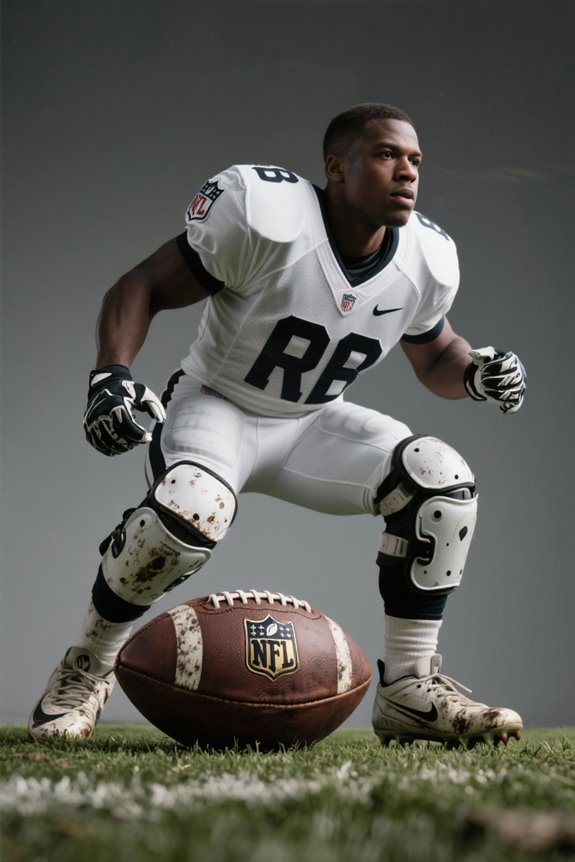
As an integral component of an American football offense, the running back (RB), also referred to as halfback (HB), plays a critical role in orchestrating the team’s ground attack. Primarily, the RB receives handoffs from the quarterback, employing effective rushing techniques to gain positive yardage while maintaining ball security. Positioned strategically behind or beside the quarterback, running backs must exhibit agility, strength, and vision to navigate through defenses. Their responsibilities extend beyond rushing; they also engage in blocking strategies to protect the quarterback during passing plays, enhancing the offense’s effectiveness. Modern RBs are often versatile athletes, contributing both as primary rushers and as capable receivers, thereby highlighting the evolving nature of this essential football position. Choosing the right running back cleats can significantly enhance their performance on the field.
Fullback (FB)
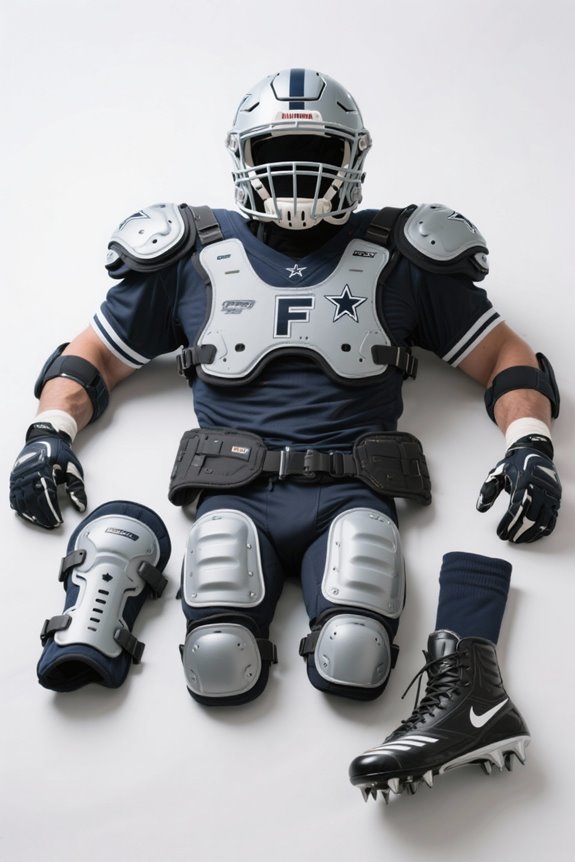
Positioned strategically within the offensive structure, the fullback (FB) serves a pivotal role in securing the effectiveness of the running game in American football. Primarily acting as a lead blocker, the fullback employs blocking techniques to clear paths for the ball carrier, while also occasionally carrying the ball or catching passes. Typically aligning in the backfield, the fullback’s responsibilities include protecting the quarterback and maintaining offensive balance through versatile play. As the fullback evolution progresses, their role has shifted from primary ball-carrier to multifaceted player focused on blocking and supporting modern offenses. While modern trends favor pass-heavy schemes, the fullback remains essential in power-running systems, continually adapting to meet the demands of today’s game. Fullbacks can benefit from durable construction in their gear, such as tinted football visors, to enhance performance and safety on the field.
Wide Receiver (WR)
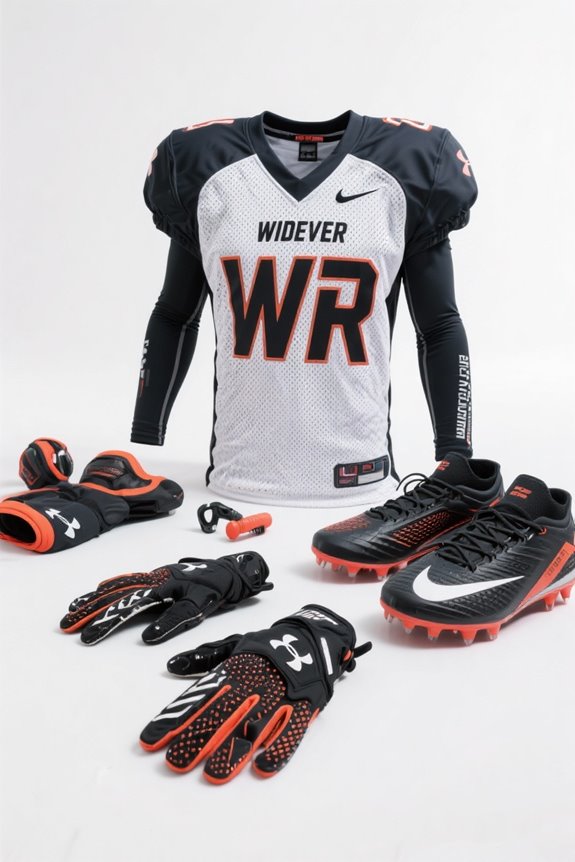
In American football, the wide receiver (WR) occupies a critical role within the offense, primarily tasked with catching passes from the quarterback to advance the team toward the opponent’s end zone. Wide receivers must exhibit exceptional route precision, running specific patterns to effectively create separation from defenders. Their agility allows them to navigate tight spaces and evade tackles after receptions, potentially leading to significant yardage gains. Typically, receivers line up near the sidelines, with formations varying from two to five receivers, influencing blocking responsibilities and defensive matchups. Additionally, they must possess a high football IQ to anticipate plays and guarantee synchronization with the quarterback. Ultimately, their versatility supports both passing and running plays, integral to offensive strategies. Moreover, enhancing their catching ability through the use of specialized equipment like football gloves is essential for maximizing performance on the field.
Recommended Products
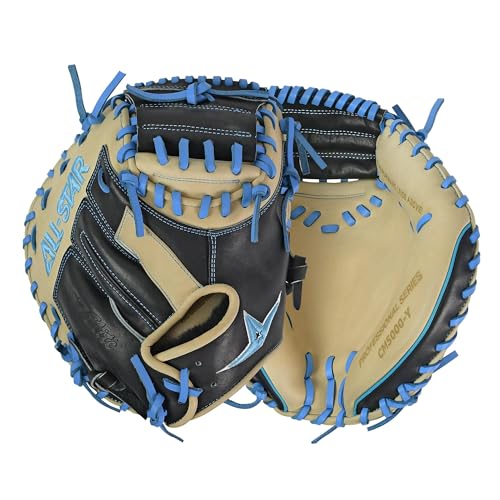
33 Inch Catcher's Model

33 pattern with deep pocket construction and Pro Travel Fit that is tapered for smaller hands

LATEX GUSSETS provide optimum flexibility.
Tight End (TE)
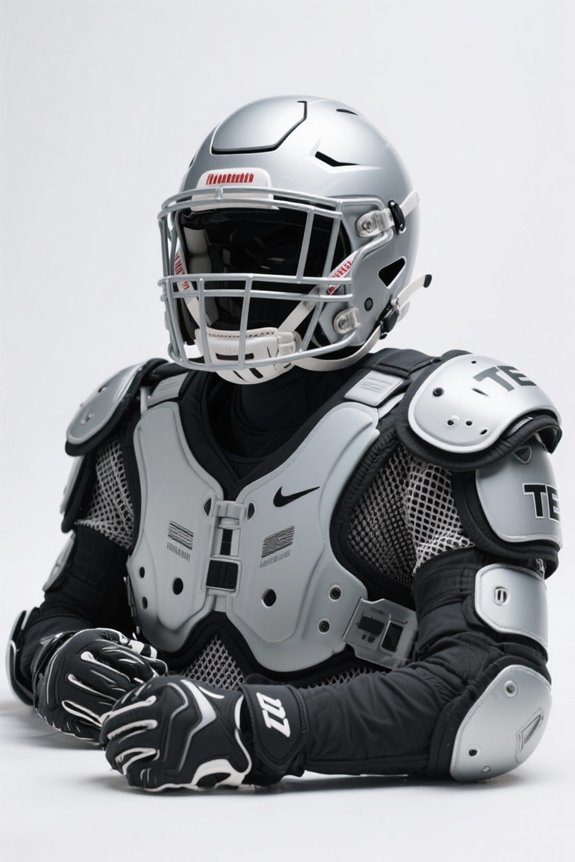
Tight ends (TE) serve an essential dual role within American football offenses, functioning both as blockers and receivers. Historically, the tight end evolution has seen these players change from primarily blocking duties to significant receiving options. Typically positioned next to the tackle or split wide, TEs create receiving mismatches against linebackers, exploiting their size and athleticism. They engage in blocking defensive players to protect the quarterback and create running lanes. Elite tight ends not only run precise routes but also possess the catch ability of wide receivers. Their tactical flexibility allows them to shift roles seamlessly, enhancing offensive strategies. Consequently, a TE’s effectiveness substantially influences the balance between the run and pass game, reflecting their critical role in modern football. Additionally, top TEs often utilize lightweight receiver shoulder pads designed to elevate their agility and protection on the field.
Offensive Line (C, G, T)
The offensive line, comprising the center, guards, and tackles, serves as a foundational element of an American football team, critical for both protecting the quarterback and facilitating successful running plays. The center (C) is responsible for snapping the ball, calling line communication, and blocking defensive players. Guards (G) support both the quarterback and running back by executing critical blocks and creating running lanes. Tackles (T), positioned at the ends, focus on protecting the quarterback’s blind side and sealing the edge during running plays. Effective offensive line strategies rely on the players’ strong football IQ, agility, and physicality. This cooperation and awareness among linemen guarantee a cohesive unit capable of adapting to various defensive schemes and maintaining consistent play execution. Additionally, coaches often emphasize the importance of impact absorption capabilities to ensure linemen can better handle defensive pressures.
Defensive Line (DT, DE)
Defensive linemen, comprising defensive tackles (DT) and defensive ends (DE), play a pivotal role in American football, serving as the initial line of defense against opposing offenses. Defensive ends utilize specific defensive end skills, including speed and agility, to rush the quarterback and contain outside runs, impacting offensive strategies. Positioned on the outer edges of the line, they focus on disrupting plays. In contrast, defensive tackles employ a defensive tackle strategy, where strength and technique are vital for stopping running plays and engaging offensive linemen. Typically lining up near the center, they aim to collapse the pocket and control inside gaps. Together, these players guarantee a balanced defensive approach, essential for defending against both run and pass plays. Protection level is critical for their effectiveness, influencing both strategy and player safety.
Linebackers (MLB, OLB)
Linebackers, consisting of middle linebackers (MLB) and outside linebackers (OLB), serve an essential function in American football, positioned between the defensive line and the secondary to monitor opposing offenses. The MLB, often termed the “quarterback of the defense,” calls plays and adjusts alignments. His duties include stopping the run, diagnosing plays, and covering receivers in pass situations. In contrast, OLBs, positioned outside defensive ends, provide pass rush and defend against outside runs, requiring both speed and strength. Both linebacker roles demand adaptability to switch seamlessly between run stopping, pass coverage, and pressure tactics, underscoring their value. Their communication functions often lead defensive strategies, enhancing their impact on game outcomes and team performance. Tackling dummies are important training tools for linebackers to practice their techniques and improve their overall performance on the field.
Defensive Backs (CB, Safety)
Cornerbacks and safeties, essential components of a football team’s defense, occupy the last line of protection against offensive advances, countering potential scoring plays. Cornerbacks are tasked primarily with covering wide receivers, utilizing cornerback techniques such as press coverage to disrupt opponent routes. They demonstrate exceptional speed and agility, essential for maintaining tight coverage. Safety responsibilities vary between free and strong safeties; the former acts like a “center fielder,” while the latter combines physical prowess for run support with coverage skills against larger receivers. Both positions require keen awareness of offensive formations and quick decision-making to anticipate plays, contributing greatly to a defense’s overall effectiveness in preventing successful passes and tackling ball carriers. Additionally, players in these positions can benefit from compression technology that aids in muscle support and enhances athletic performance during gameplay.
Special Teams Roles
Special teams play a critical role in American football, often determining the outcomes of games through strategic execution and specialized skills. Each player within special teams, including kickers, punters, and returners, follows specific kicking strategies that enhance field position or score points. For instance, kickers are tasked with executing field goals and extra points, while punters aim to shift field position effectively. Long snappers and holders provide essential support by ensuring precise snaps and placements, thereby facilitating successful kicks. Additionally, returners utilize agility and speed to evade defenders, potentially changing game momentum. Coverage specialists, such as gunners and personal protectors, work to limit returns, showcasing the intricate special teams dynamics crucial for overall team success. The effectiveness of kickers can be significantly improved by utilizing high-quality football kicking tees, which provide stability and enhance performance during practice.
Specialized Roles in Football
Football encompasses various specialized roles, each contributing uniquely to the overall team strategy and performance. Special teams players, such as kickers and punters, focus on crucial moments of field position. With an emphasis on player development, effective coaching strategies enhance techniques for all positions. Offensively, the quarterback leads plays, relying on position flexibility to adapt based on defensive setups. Running backs offer versatility as primary ball carriers while also supporting the quarterback in protecting against defensive pressure. Fullbacks, although less common today, remain essential in short-yardage situations, emphasizing their physicality. Each position, through its specific role, is integral to fostering a cohesive unit, ultimately influencing a team’s success on the field.
Frequently Asked Questions
How Many Players Are on an American Football Team?
An American football team comprises 11 players on the field, with specific team composition defining player roles in offense and defense. Each player’s role is vital during gameplay, contributing to overall team strategy and performance.
What Is Offside in Football?
Offside in football refers to a pre-snap penalty where defensive players illegally cross the line of scrimmage, resulting in tactical implications such as a 5-yard advancement for the offense and potential disruption of defensive strategies.
How Long Is a Typical Football Game?
A typical football game lasts around 3 to 3.5 hours due to game duration and time management factors. Frequent clock stoppages, halftime, and specific circumstances contribute to the extended timeline beyond the standard 60 minutes of playtime.
What Equipment Do Players Need to Wear?
In the theater of football, players don uniforms and essential safety gear like helmets, shoulder pads, and mouthguards. This protective ensemble not only showcases team colors but also shields athletes from the game’s brutal impacts.
What Are Common Penalties in American Football?
In American football, common fouls include roughing the passer, holding, and pass interference. Penalty flags are thrown by officials to signal these infractions, impacting the game’s flow and potentially changing the course of a match.