As an Amazon Associate, we earn from qualifying purchases. Some links on this site are affiliate links at no extra cost to you. Our recommendations are based on thorough research and editorial judgment.


What Stretching Routines Prevent Injuries In Football?

Dynamic stretching routines, which incorporate active movements, noticeably enhance flexibility, joint stability, and muscular coordination in football players. Exercises like leg swings, high knees, and dynamic lunges are effective in preparing athletes for sport-specific demands, thereby reducing injury risks. Static stretching can complement these routines by improving range of motion, particularly when applied on muscle tightness. Additionally, integrating core strengthening exercises boosts overall stability and efficiency in motion, contributing to an all-encompassing approach to injury prevention that merits further exploration.
Key Takeaways
- Implement structured stretching programs combining both dynamic and static stretching for effective injury prevention in football.
- Focus on dynamic stretches like leg swings, high knees, and lunges to enhance flexibility and reduce injury risks.
- Incorporate core strengthening exercises within stretching routines to improve stability and force transmission, minimizing stress on limbs.
- Tailor stretching and mobility programs to individual movement patterns, addressing specific limits to enhance functional mobility and injury prevention.
- Utilize physical therapist guidance and mobility apps for ongoing assessments to adapt stretching routines according to training loads and recovery needs.
The Role of Stretching in Injury Prevention
Although stretching has long been recognized as a common practice aimed at preventing injuries in football, recent studies reveal that its effectiveness in injury reduction may be overstated. Many experts argue that flexibility myths surrounding stretching often overshadow the thorough nature of injury prevention, which encompasses factors such as strength, coordination, and neuromuscular control. While stretching might contribute to a psychological boost or routine-based adherence for athletes, it does not inherently protect against injuries like hamstring strains. These injuries primarily arise from neuromuscular fatigue and coordination failures, rather than flexibility deficits. As a result, a multifaceted approach, prioritizing strength and coordination training, is considered more effective in mitigating injury risks, challenging the traditional emphasis placed on the role of stretching in athletic performance. Additionally, integrating compression shirts into training regimens can enhance muscle support and improve overall athletic performance.
Understanding Dynamic Stretching
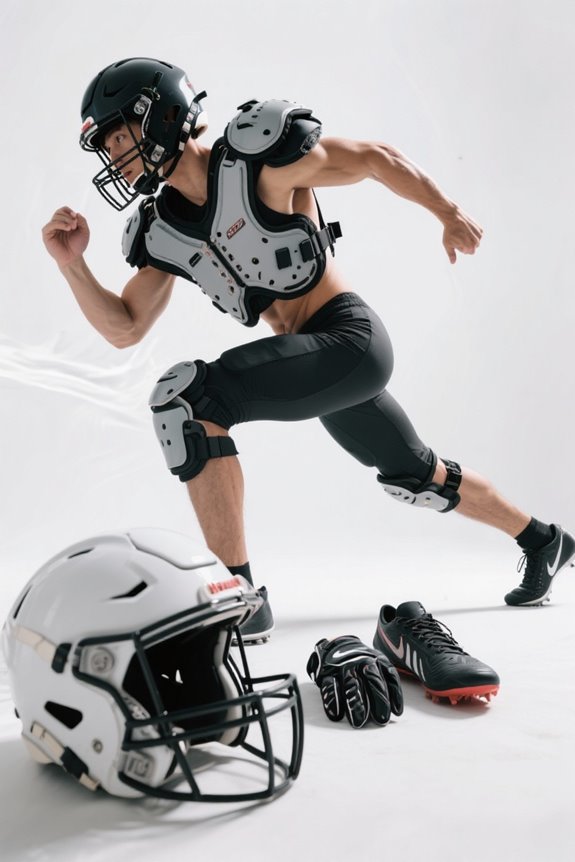
Dynamic stretching has emerged as an essential practice within football training regimens, particularly for its capacity to enhance athletic performance and reduce injury risks. This technique involves active movements that take muscles and joints through their full range of motion, regularly engaging muscle contractions rather than passive holds. By mimicking sport-specific actions, dynamic stretching prepares the neuromuscular system for the demands of play. Typically performed following a general warm-up, these exercises, such as walking lunges and high knees, promote increased flexibility, balance, and joint stability critical for rapid movements. This practice not only aids in improving neuromuscular readiness but also mitigates the risks associated with prolonged static stretching, providing athletes a proactive approach to injury prevention. Additionally, incorporating techniques that enhance blood circulation can further optimize performance and athletic readiness.
Benefits of Dynamic Stretching Routines

The implementation of dynamic stretching routines offers numerous benefits to football athletes, particularly in the contexts of injury prevention and performance enhancement. Dynamic stretching enhances dynamic flexibility, allowing muscles to prepare for sport-specific actions, which greatly reduces the risk of injuries. Moreover, these routines improve joint mobility and facilitate neuromuscular engagement, leading to better coordination and reaction times essential for football. By elevating core body temperature, dynamic stretches not only increase muscle readiness but also lower passive muscle stiffness, a known risk factor for injuries, especially hamstring strains. Additionally, consistent practice of dynamic stretching has been associated with improved movement efficiency, contributing to greater agility and speed during gameplay, ultimately supporting overall athletic performance. Implementing safety measures like rib protectors further supports athletes in preventing injuries and enhancing performance on the field.
Common Dynamic Stretching Exercises for Football
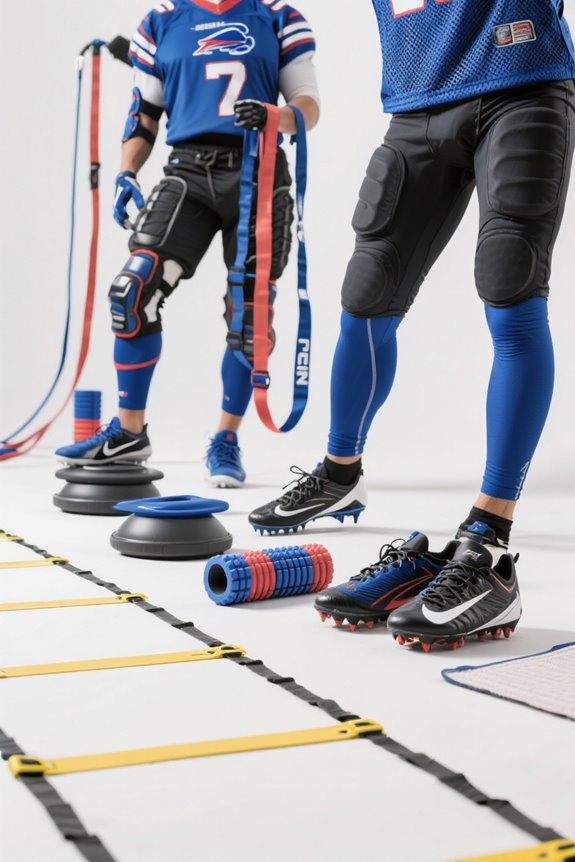
Incorporating common dynamic stretching exercises into the warm-up regimen is essential for football players to enhance their performance and mitigate injury risks. Leg swings and hip circles improve hip mobility, while high knees and butt kicks prepare the muscles for sprinting demands. Dynamic lunges and bodyweight squats engage multiple muscle groups, enhancing lower body strength and stability. Lateral shuffles and carioca drills focus on agility and hip mobility, vital for effective directional changes during gameplay. Ankle mobility exercises enhance joint flexibility, and core activation drills promote trunk stability. Additionally, integrating dynamic stretching techniques prepares muscles, enhancing mobility and reducing injury risk. Collectively, these dynamic exercises not only prepare players for the physical demands of football but also greatly reduce the likelihood of common injuries associated with the sport.
Recommended Products

Build Shoulder and Core Strength and Stability - The Deluxe 4KOR Resistance Cord Strength System is designed to be a convenient system to improve shoulder and core strength and stability. This system includes 5 different resistance levels (7lbs, 12lbs,17lbs, 22lbs, and 30lbs), with 2 cords per resistance level, for a total of 10 resistance cords. System also includes 2 handles, 2 foot straps, 2 door strap anchors, 2 power rack straps, 2 exercise charts, and a carrying bag.

A portable and proven way to build upper and lower body strength
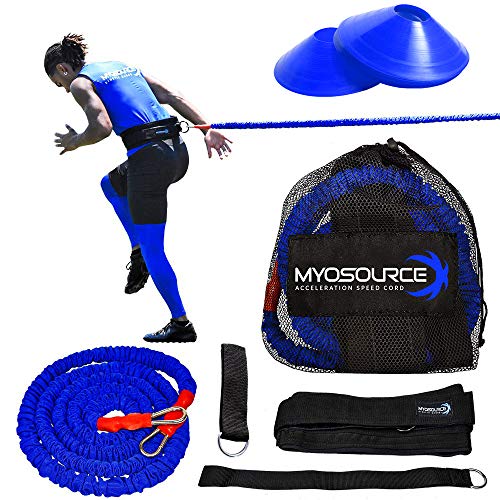
Explosive Power: Increase speed, strength, and vertical jump height. Develop more power and achieve your maximum velocity to accelerate, decelerate, and re-accelerate in the shortest amount of time possible in any given direction
The Importance of Static Stretching
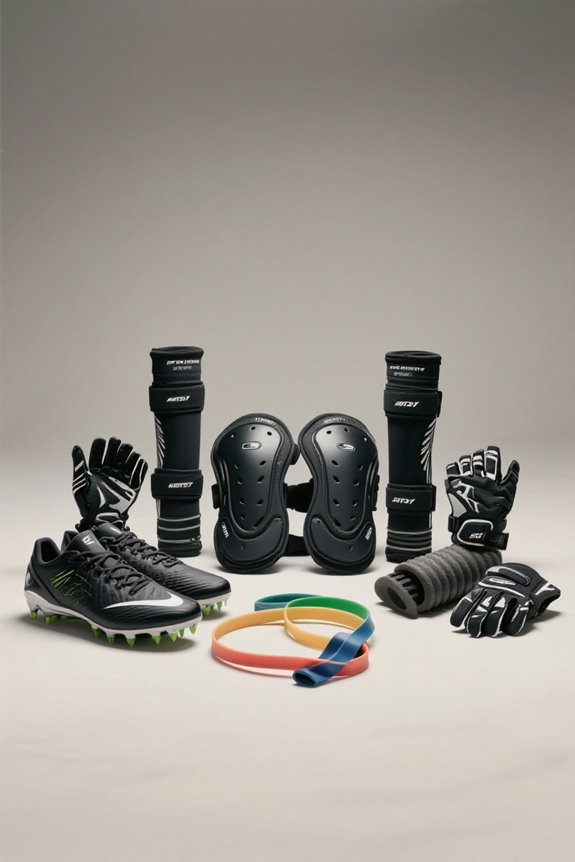
While dynamic stretching exercises play a significant role in preparing football players for the physical challenges of the sport, static stretching also holds a substantial place in injury prevention protocols. Static stretching is shown to enhance static flexibility, improving joint range of motion (ROM) and reducing injury risks, particularly in running and change-of-direction sports. Research indicates that stretching durations of less than 60 seconds per muscle group are effective for increasing flexibility without compromising strength. Additionally, integrating static stretching with dynamic warm-up activities has been found to lower muscle injury risk, as it enhances ROM without significant performance detriments. Ultimately, established routines that incorporate static stretching contribute to mitigating musculotendinous injuries, vital for the sport of football. Moreover, wearing cold gear during warm-ups can help maintain optimal muscle temperature, further decreasing the risk of injuries.
Effects of Static Stretching on Performance
Static stretching plays a complex role in athletic performance, particularly in football, where explosive movements are essential. Research indicates that static stretching lasting longer than 30–45 seconds can lead to considerable performance reductions, impairing muscle strength and power. Specifically, stretches that exceed 60 seconds can result in a decrease of up to 7% in strength and explosiveness, negatively impacting activities like sprints and jumps. Additionally, prolonged stretching reduces neuromuscular activation, which is critical for ideal performance in high-intensity football activities. Consequently, while short-duration static stretching can be included in warm-up routines without affecting performance notably, careful consideration must be given to stretch duration to avoid detrimental effects on athletic capabilities. Implementing a proper warm-up, including moisture-wicking technologies in athletic gear, can further enhance performance and reduce injury risks.
Combining Static and Dynamic Stretching
Effective injury prevention in football increasingly relies on the strategic integration of both static and dynamic stretching within training regimens. By combining these stretching techniques, teams can optimize injury prevention, addressing both flexibility and neuromuscular readiness. Static stretching, effective during cool-down, improves passive flexibility and reduces musculotendinous tension, thereby lowering the risk of strain injuries. In contrast, dynamic stretching, performed before activity, enhances joint range of motion and primes the nervous system for explosive movements typical in football. Studies indicate that routines incorporating both types of stretching markedly reduce injury rates compared to using one approach alone. This combined strategy supports not only improved performance but also enhanced safety, emphasizing the importance of balanced flexibility training in football preparations. Incorporating tools like resistance bands can further enhance flexibility and improve overall strength.
Personalized Stretching Programs
Personalized stretching programs are increasingly recognized as essential tools in enhancing performance and reducing injury risk among football athletes. These programs utilize customized assessments to evaluate individual movement patterns, imbalances, and prior injury history, ensuring tailored stretching routines that address specific needs. By pinpointing tight or weak muscle groups, the programs can concentrate on enhancing hip, hamstring, knee, and ankle mobility, vital for football performance. Incorporating athlete feedback, these protocols can adapt to evolving training loads and recovery demands, optimizing effectiveness. Additionally, technologies such as mobility apps provide real-time assessments, allowing continuous adjustments to these stretching routines. Collectively, these elements contribute to improved flexibility and reduced strain injuries, fostering athlete resilience and long-term performance sustainability. A comprehensive approach to injury prevention includes regular maintenance of gloves, which is crucial for sustaining grip quality during gameplay.
Recommended Products
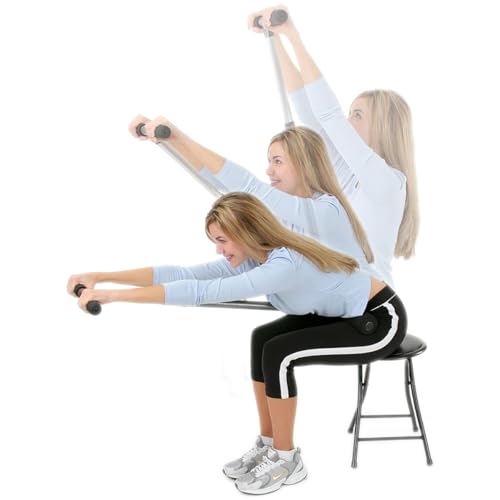
✶BACK PAIN RELIEF – CoreStretch delivers a deep and effective stretch for all areas of the back, as well as the hamstrings and hips. It provides a stretch that allows the tissues to both relax and elongate to help develop the major muscle groups that make up the core.

COMPREHENSIVE TENNIS TRAINING KIT: Curated to maximize the potential of tennis players by enhancing balance, strength, speed, agility, reaction time, and muscle memory. Designed with input from tour-level coaches to deliver professional-grade results, this kit is ideal for anyone looking to improve their game with tennis training equipment and tennis training aids.

✅【Agility Training Equipment Kit】 The Most complete speed agility training equipment kit in the market! Includes 1 Speed Training Ladder(20ft long 12 rungs) with 4 Fixable Stakes, 4 Adjustbale Hurdles Training Equipment, 12 Agility Cones with 1 Cone Holder, 1 Running Parachute Speed Training, 1 Jump Rope, 5 Exercise Bands, 1 Sweat Towel, 1 Training Guide Book and 1 Carry Bag.
Longitudinal Outcomes of Stretching Interventions
How effective are stretching interventions in promoting long-term injury prevention for football athletes? Research indicates that structured stretching programs yield significant long-term effects on injury prevention. A controlled trial involving male high school soccer players demonstrated that a 12-week physical therapist-led stretching regimen effectively reduced injury incidence over the next 40 weeks, particularly for non-contact, muscle, and lower-limb injuries. Key improvements in flexibility, such as ankle dorsiflexion and hip rotation, were sustained up to 52 weeks after the intervention. In addition, stretching targeting muscle tightness correlates with lower injury occurrences, suggesting that enhanced functional mobility plays a critical role in injury prevention. Continuous monitoring by physical therapists supports adherence to these programs, optimizing long-term benefits for athletes. Furthermore, incorporating integrated padding during physical activities can enhance overall protection, thus reducing the likelihood of injury.
Mechanisms Behind Stretching and Injury Prevention
Stretching plays an important role in injury prevention, as it enhances flexibility, which is directly linked to reducing injury risk in sports. Ideal flexibility is often sport-specific, meaning routines should align with the unique demands of football. Statistically, static stretching effectively increases range of motion, particularly with 15 to 30 seconds of stretch duration. However, it may induce transient stretch-induced strength loss due to neurological mechanisms or altered muscle mechanical properties. Conversely, dynamic stretching can enhance proprioceptive feedback and neuromuscular coordination, leading to decreased injury risk. Integrating pre-contraction techniques may further enhance range of motion through improved neurological modulation and mechanical response. Consequently, understanding these intricate mechanisms is vital in designing effective injury prevention strategies in football. Additionally, incorporating proper warm-up routines is essential for athletes to condition their muscles effectively before engaging in vigorous activities.
The Role of Core Strengthening in Stretching Routines
Core strengthening is an indispensable component of stretching routines, particularly in football, where the demands on the body are intensive and multifaceted. Core muscles stabilize the trunk and pelvis during motion, enhancing overall strength, flexibility, and fundamental core stability, vital for injury prevention. Programs that incorporate various core exercises yield superior outcomes compared to isolated muscle targeting. Improved core stability facilitates effective force transmission, thereby reducing stress on limbs and joints. Thorough core training also addresses muscular imbalances, particularly between preferred and non-preferred legs, which lowers injury risks. The FIFA 11+ warm-up represents a successful integration of core strengthening that not only boosts core muscle strength but also contributes to improved posture and neuromuscular control, critical for safe gameplay.
Recommended Products

Advanced Cognitive + Physical Training – Unlock multisensory drills with light, sound, motion, vibration, distance, and balance integration.
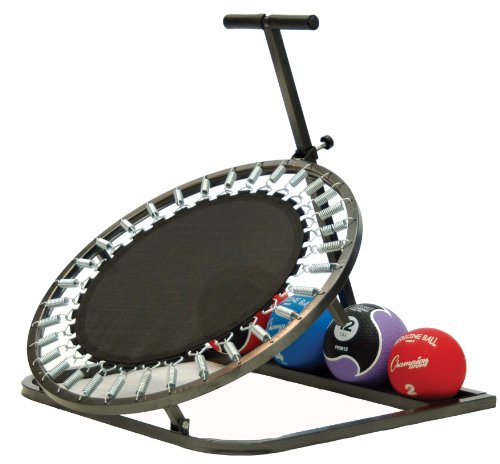
28" diameter multi-purpose rebounder is perfect for medicine ball beginner and rehabilitation exercises

Home Gym Equipment: Balance trainer combines elements of cardio, strength, and flexibility into unique and highly effective workouts
Integrating Core Work With Stretching Exercises
Integrating core work with stretching exercises provides a thorough approach to enhancing performance and preventing injuries in football. This integration emphasizes core engagement, which is fundamental for maintaining balance and stability enhancement during athletic movements. Exercises such as isometric lunges with cross lateral punches and Roman chair kettlebell drops strengthen the core while simultaneously enhancing posture and balance. Additionally, dynamic stretching routines that incorporate core activation promote flexibility and control, critical for reducing injury risks. For instance, utilizing hollow body holds alongside hamstring stretches can optimize core strength while improving overall flexibility. This approach guarantees that players can execute movements efficiently, ultimately decreasing the likelihood of strains and injuries during play. A well-rounded regimen of core and stretching exercises is indispensable for football athletes.
Recommended Products

Tubular steel construction.

Board adjusts to 20, 30, 35 and 40 degrees

SPACE SAVER - Made of steel tubing and space saving design, the Element Fitness Stability Ball Rack will fit easily in any corner so you can maximize the space of your gym or room
Designing a Comprehensive Injury Prevention Warm-Up
Designing a thorough injury prevention warm-up is crucial for football players seeking to minimize the risk of injuries while enhancing performance on the field. Extensive protocols, such as the FIFA 11+ program, demonstrate significant effectiveness, reportedly reducing lower limb injuries, including ACL ruptures, by up to 50%. These protocols comprise running exercises, progressive exercises for strength and conditioning, and high-speed running tailored to different skill levels. Important components include dynamic stretches, movement skill drills, and exercises focusing on neuromuscular control to guarantee proper biomechanics. Additionally, players are encouraged to maintain knee alignment and pelvic stability, which are essential for preventing injuries. Regular implementation of a structured warm-up routine fosters the development of movement skills crucial for competitive play.
Recommended Products

One Size For All Your Gaming Needs: The Md Sports All-Inclusive Converter Table Means You Don’T Need To Invest In Multiple Games Or Choose Just One. Fully Equipped, Table Tennis, Slide Hockey, Pool, And Foosball Combination Kit Comes With All The Basics

MATERIAL: Steel, 1 ½" round metal tubing, powder-coated white

Advanced Graphene HeatMaster Technology: Experience flawless warmth distribution with cutting-edge graphene panels. Rapid, uniform heat across core zones prevents hotspots for consistent comfort. Safer and efficient, this mimics your body's natural thermal flow for ideal cold defense.
Frequently Asked Questions
How Often Should Football Players Stretch for Optimal Injury Prevention?
Football players should stretch 3 to 5 times weekly, incorporating dynamic stretching during warm-ups and static stretching post-training. This routine enhances flexibility and markedly reduces the risk of injuries over time. Consistency is essential.
Are There Specific Stretches to Avoid Before a Game?
In the sphere of performance, timing is essential; dynamic stretches energize, while static stretches, like heavy fog, may shroud potential. Therefore, players should avoid static stretches just before a game to guarantee agility and strength remain unfettered.
Can Stretching Reduce Recovery Time After Injuries?
Stretching may support recovery techniques by enhancing flexibility and circulation, thereby aiding injury management. However, empirical evidence linking stretching directly to reduced recovery time remains inconclusive, emphasizing the need for thorough rehabilitation approaches.
What Role Does Hydration Play in Stretching Efficacy?
Hydration’s impact on stretching efficacy unfolds dramatically; improper hydration before stretching can lead to tight, unresponsive muscles. Timing hydration throughout activities guarantees ideal flexibility and injury prevention, allowing athletes to perform at their best with reduced risk.
Is There an Age Limit for Effective Stretching Routines?
There is no fixed age limit for effective stretching routines. Child athlete differences necessitate distinct protocols, while senior flexibility adaptations require tailored approaches to accommodate physiological changes, ensuring injury prevention and maintaining function throughout the lifespan.


