As an Amazon Associate, we earn from qualifying purchases. Some links on this site are affiliate links at no extra cost to you. Our recommendations are based on thorough research and editorial judgment.

What Is A West Coast Offense In Football?

The West Coast offense, developed by coach Bill Walsh in the late 1970s, is an innovative offensive strategy in American football. It emphasizes short, precise passes and ball control, aiming for high completion rates while stretching defenses laterally. This system requires players to master quick route combinations and precise timing. Walsh’s approach led to three Super Bowl victories, establishing a lasting influence on the game. Understanding its implementation and advantages reveals further intricacies of this strategic method in football.
Key Takeaways
- The West Coast Offense emphasizes short, quick passes and efficient ball control to achieve high completion rates in American football.
- Associated with Bill Walsh, it gained prominence in the late 1970s and 1980s, particularly with the San Francisco 49ers.
- It utilizes precise route combinations like slants and curls, aiming to stretch defenses laterally and exploit mismatches.
- Players must master timing, route running, and communication to integrate the offense effectively.
- This strategy helps control the game clock, maintain possession, and reduce interception risks.
Definition and Core Concepts
The West Coast Offense is a strategic approach in American football that emphasizes efficient passing and ball control. Central to its passing philosophy are short and precise routes, allowing teams to maintain high completion rates while advancing the ball methodically. This technique enhances game management by promoting quick releases and timing between quarterbacks and receivers. Implementing horizontal passing movement, the West Coast Offense stretches defenses laterally, maximizing yards after catch by swiftly delivering the ball to playmakers in open space. It protects the quarterback from blitzes through concepts such as hot receivers and flexible play calls, which promote multiple options during execution. By doing so, it prioritizes minimizing risks while maintaining offensive rhythm and controlling the game clock. Additionally, the utilization of moisture-wicking technology in players’ gear ensures they can perform comfortably throughout the game without distraction from sweat buildup.
Historical Development

While the West Coast Offense (WCO) is often associated with its implementation by Bill Walsh and the San Francisco 49ers in the late 1970s and 1980s, its origins can be traced back to earlier influences and locations, particularly the Midwest. The WCO’s foundational concepts emerged during Walsh’s tenure as an assistant coach with the Cincinnati Bengals under Paul Brown, where he absorbed critical offensive philosophies. Additionally, Walsh’s experiences with the Oakland Raiders further shaped his strategic insights. His time at Stanford allowed him to refine these concepts in live games. By 1979, as head coach of the 49ers, he formalized the WCO, leading it to significant success, including three Super Bowl victories, thereby establishing its lasting impact on professional football. This innovative approach emphasized mental training to enhance players’ focus and performance on the field.
Tactical Characteristics
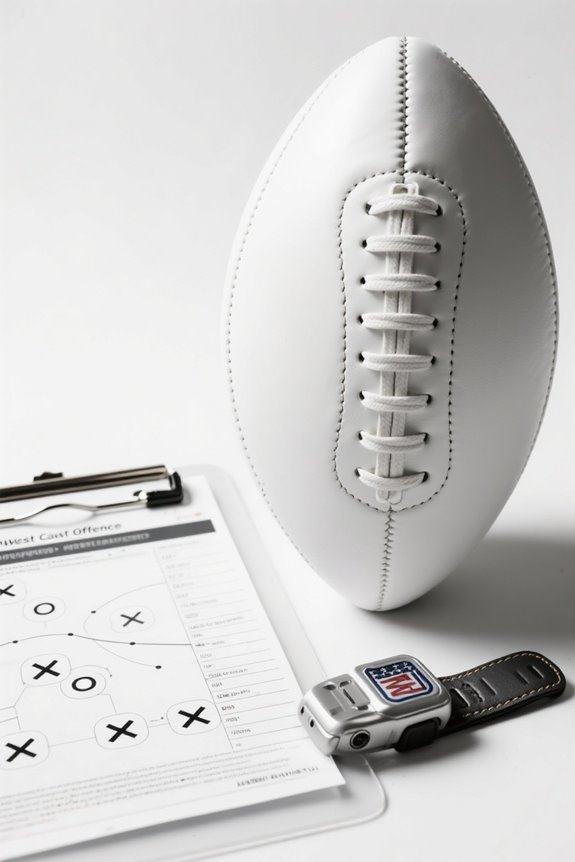
At the core of the West Coast Offense (WCO) lies an extensive tactical framework that emphasizes efficiency and adaptability in offensive play. This system focuses on a passing strategy characterized by short, quick passes aimed at maintaining ball control and minimizing defensive disruptions. To achieve high completion rates, the WCO utilizes precise timing and route combinations such as slants, curls, and flats, effectively stretching defenses horizontally and vertically. Formations and shifts are implemented to confuse opponents, while pre-snap motions help diagnose defensive alignments. Additionally, dual-threat quarterbacks enhance unpredictability, allowing teams to instantaneously adjust strategies in response to defensive shifts. Overall, the tactical characteristics of the WCO create a dynamic offensive structure that effectively exploits defensive weaknesses. Moreover, strategic padding in high-impact sports can support players during intense gameplay and reduce injury risks.
Recommended Products

✅【UNMATCHED VERSATILITY】: ShotSled transforms training with its capacity for both solo and partner exercises, making it the ideal companion for wrestlers, MMA fighters, and athletes keen on mastering takedown techniques and enhancing explosive power. Its adaptability ensures athletes at all levels can fine-tune their skills and strength, offering a comprehensive workout regime that pushes the boundaries of athletic performance.

Large + Standard Combination: Configured with - Standard Arch, Standard Epaulets, Skill Cups, and a Standard 1/2" Shoulder Foam. Each shoulder pad and size combination is uniquely configured by our experts to ensure maximum safety and performance for your exact needs on the field.

REALISTIC FAIRWAY SIMULATION: With 110 ounces of nylon, this mat enables golfers to achieve that coveted Down-and-Through motion, replicating the experience of a genuine fairway. Dense nylon fibers, coupled with the 5/8” closed cell foam pad, deliver authentic feedback on all your shots, whether they're fat, thin, or pure.
Strategic Advantages
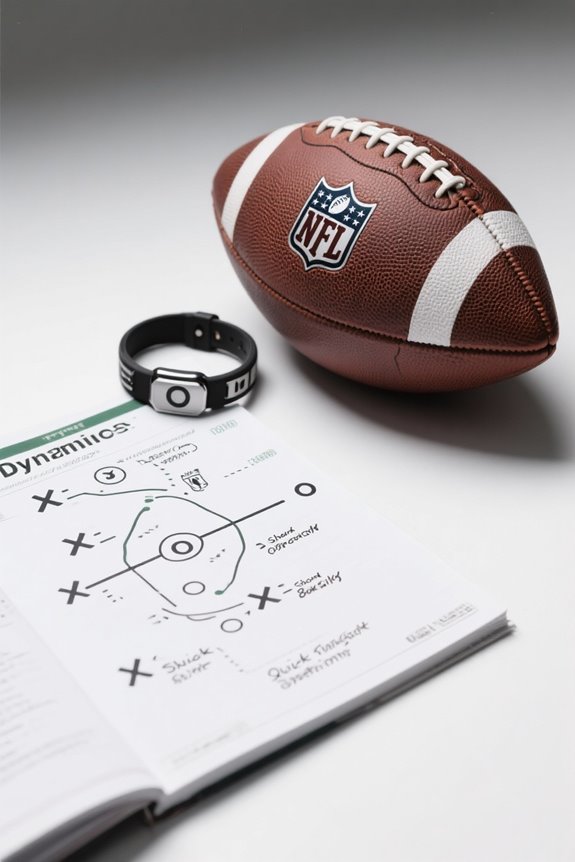
Strategic advantages inherent in the West Coast Offense (WCO) markedly enhance its effectiveness in modern football, primarily through its focus on efficiency, adaptability, and ball control. The offense emphasizes dynamic play calling that utilizes short, accurate passes, maintaining high completion rates while reducing interception risks. This focus fosters sustained drives and controls the game clock, allowing teams to keep their opponents off the field. In addition, WCO’s flexibility enables it to exploit defensive mismatches by spreading the field and adapting to various defensive schemes. By integrating versatile skill positions, such as running backs acting as receiving threats, the WCO adds unpredictability, compelling defenses to cover broader areas. This thorough strategy positions teams favorably against strong defensive units, optimizing their offensive performance. Furthermore, incorporating specialized training equipment like quarterback training nets can further enhance a quarterback’s precision and execution within the WCO framework.
Recommended Products
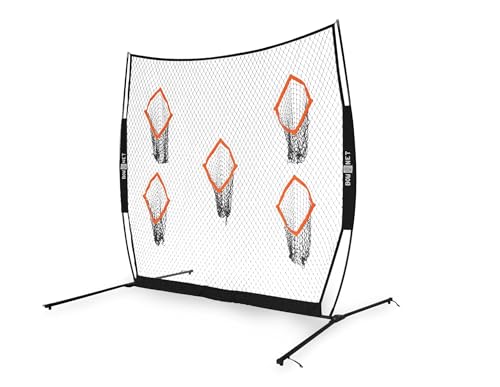
Heavy duty, portable net has five sock training pockets to help improve accuracy during short passing drills while remaining stable and upright after every high intense throw

Fade net measures 8' tall to the center of the net with a basket that adjusts to 45 degrees catching passes from every yard line

ADJUSTABLE ANGLES – The removable bullseye target features a 5-point adjustment system, allowing you to set angles from 90° vertical to 180° flat. This versatility makes it ideal for practicing a wide range of passing techniques and drills.
Implementation Requirements
The implementation of the West Coast Offense (WCO) necessitates a thorough understanding of various player skills, practice routines, tactical schemes, and continuous team evaluation to guarantee peak performance on the field. Players must master precise route running, while quarterbacks require accuracy on short, timed passes to connect effectively with receivers. Running backs and tight ends should be adept at executing “check-release” assignments for efficient pass protection. A regimented practice regimen is essential, focusing on repetitive drills that develop synchronization and timing among players. Additionally, coaches must evaluate individual strengths, adapting schemes accordingly, and providing consistent feedback. This systematic approach to player development is vital for achieving the desired fluidity and effectiveness inherent in the West Coast Offense. Incorporating training tools that enhance hand-eye coordination can further boost players’ performance in this offense.
Recommended Products

REALISTIC QUARTERBACK PASSES: Launches accurate spiral footballs at adjustable speeds and trajectories to simulate game-like passing drills for quarterbacks, receivers, defensive backs, and special teams practice.

Lightweight pitching machine for honing swings of up-and-coming hitters.

Swing Training: The ProVelocity Bat is a professional baseball swing trainer designed to increase bat speed and improve swing mechanics.
Influence and Legacy
While originating from Bill Walsh’s innovative concepts in the 1970s, the West Coast Offense (WCO) has markedly influenced the development of modern football strategies. This influence is evident in the extensive coaching lineage that has propagated Walsh’s principles, with notable disciples like Mike Holmgren and Andy Reid incorporating WCO elements into their systems. The WCO’s emphasis on precise, timing-based player roles transformed quarterback requirements, focusing on accuracy over arm strength, while receivers adapted to fulfill varied roles beyond mere speed. The introduction of situational football strategies furthered offensive preparedness, showcasing its legacy. Ultimately, the WCO’s success reshaped personnel evaluations and tactical approaches across the NFL, solidifying its impact on the game’s evolution. Furthermore, the importance of proper fit in equipment like football cleats underscores how modern performance decisions echo the principles established by the WCO.
Frequently Asked Questions
How Does the West Coast Offense Impact a Team’s Overall Scoring?
How can an offensive strategy enhance scoring efficiency? The West Coast offense boosts a team’s overall scoring through consistent, high-percentage passes, optimizing ball control, and facilitating sustained drives, ultimately improving their red zone performance and touchdown conversions.
Which NFL Teams Currently Use the West Coast Offense?
The 49ers strategy prominently features West Coast offensive formations, while teams like the Chiefs, Packers, Rams, and Seahawks also utilize principles from this approach, focusing on short, timing-based passing and versatile personnel to enhance their offenses.
Who Are Notable Players Associated With the West Coast Offense?
Notable players associated with the West Coast Offense include Joe Montana and Steve Young, both Hall of Famers, alongside Brett Favre and Dan Marino, who adapted many principles to thrive in their respective systems.
What Adjustments Can Be Made for Different Quarterback Styles?
Adjustments for different quarterback styles include emphasizing quarterback mobility with rollouts, bootlegs, and quick throws, while also making offensive line adjustments to enhance protection and create running lanes tailored to individual quarterback capabilities.
How Can High School Teams Implement a West Coast Offense Effectively?
High school teams can implement a West Coast Offense effectively by focusing on practice drills that enhance timing and precision, while clearly defining player roles to guarantee quarterbacks, receivers, and backs contribute strategically to the offense’s success.


