As an Amazon Associate, we earn from qualifying purchases. Some links on this site are affiliate links at no extra cost to you. Our recommendations are based on thorough research and editorial judgment.


What Are The Responsibilities Of A Running Back?

A running back is integral to football, responsible for executing running plays, receiving passes, and blocking. They initiate plays by receiving handoffs from the quarterback while locating running lanes created by the offensive line. In pass situations, they run safe routes and must demonstrate reliable receiving abilities. Effective blocking enhances offensive performance and protects key players. Additionally, the position demands both physical strength and mental acuity. Understanding these responsibilities allows for a better grasp of the running back’s multifaceted role.
Key Takeaways
- Initiates running plays by receiving handoffs from the quarterback and locating running lanes created by the offensive line.
- Excels in receiving passes out of the backfield, especially on third-down scenarios to provide reliable targets for the quarterback.
- Engages in effective blocking techniques to protect key players and enhance overall offensive performance.
- Maintains ball security through proper ball handling techniques and protects against fumbles during contact.
- Utilizes agility and physical stamina to adapt to defensive formations, ensuring strategic offensive adjustments.
Primary Running Responsibilities
The primary responsibilities of a running back encompass a range of essential skills that contribute greatly to the success of an offensive play. Initially, the running back receives a handoff or pitch from the quarterback, starting the running play. Key to their role is the ability to locate and exploit designated running lanes created by the offensive line, requiring speed and agility to evade defenders. Ball protection is paramount, as maintaining possession during contact is critical to prevent fumbles. Moreover, running backs must exhibit balance and strength to break tackles, consistently pushing for positive yardage. This awareness of spatial dynamics, coupled with the capability to adapt to defensive formations, reinforces their significant influence within the offensive strategy and overall team success. Additionally, effective running backs often benefit from the use of durable football blocking pads to enhance their training and performance during practice.
Recommended Products

AMPLE STORAGE CAPACITY – Our volleyball cart equipped with 4 large removable baskets and side hooks, this volleyball equipment cart can hold up to 30+ volleyballs, blocking pads, nets, training aids, and even water bottles. Keep all your team's gear organized in one mobile storage solution.

Revolutionary MVP-PRO Catchers Helmet features Deflexion shock hammocks to help disperse impacts and I-BAR BSP Cage with extended back swing protection for coverage against wild swings

Dominate the field with our Tackle Wheel Football Dummy: Take your tackling skills to the next level with our high-quality tackle wheel football dummy. perfect for youth football players and seasoned pros alike, this dummy is designed to withstand the most challenging training sessions and help you dominate on the field. Covered with high quality vinyl resistant to rip and tear.
Pass Play Duties
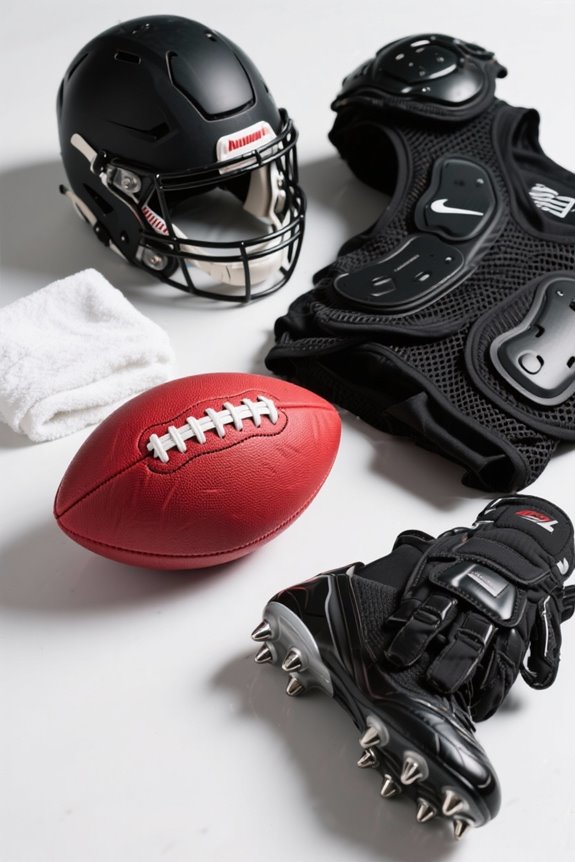
While running backs primarily focus on rushing plays, their responsibilities extend greatly into passing situations, where they become integral components of the offensive strategy. They often run “safe routes,” such as hooks or flats, providing reliable targets for the quarterback when other receivers are tightly covered. Effective running backs must display strong receiving skills to catch passes out of the backfield, serving as a safety valve in essential situations. In third-down scenarios, specialized backs excel at high-stakes receptions. Additionally, they may execute deceptive plays by faking runs and exploiting defensive alignments. This versatility not only allows for significant yardage gains but also creates opportunities for other players, enhancing the overall passing game and complicating defensive strategies. Moreover, having the right wide cleats can significantly improve a running back’s performance and comfort on the field.
Recommended Products

Sales for this item are NON-CANCELLABLE

BIOM Technology encourages your foot to move more naturally and efficiently, and has an anatomical fit, plus a low profile that lets you feel connected to the ground

Go wild and go fast in the ECCO BIOM 2.1 X COUNTRY, a sporty new shoe that is perfect for trail running and cross-country adventures. Speed, sublime comfort and high performance are combined in a shoe that is powered by BIOM NATURAL MOTION Technology. Three independent layers, and a mix of premium textiles and durable ECCO Yak Leather. While the PHORENE midsole supplies energy return and bounce, the ECCO PERFORMANCE RUBBER+ outsole delivers excellent grip and traction.
Blocking Responsibilities
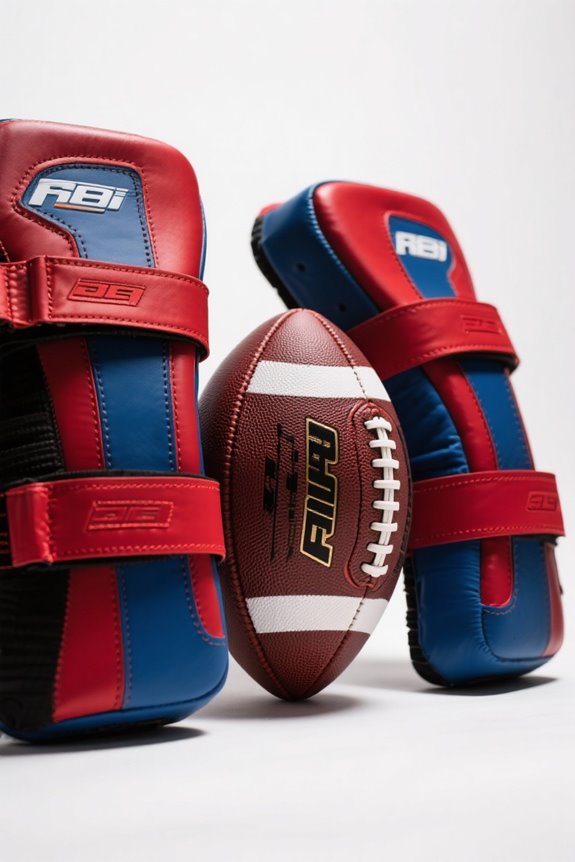
Blocking responsibilities serve as a crucial aspect of a running back’s role within an offensive scheme, demanding both skill and awareness on the field. Running backs must excel in blocking techniques, quickly accelerating to meet defenders and ensuring they engage effectively within specific gaps, such as the A-gap or C-gap. Maintaining proper positioning, they square up to defenders while utilizing a low stance for balance and leverage. Additionally, running backs must adhere to legal restrictions, avoiding penalties caused by illegal actions. Effective blocking also requires cooperation with lead blockers and quick recognition of defensive movements, enabling running backs to make strategic impact assessments to optimize play outcomes. Success in these responsibilities enhances overall offensive performance and protects key players. Proper shoulder pad protection is essential for minimizing injuries during blocking encounters.
Recommended Products

Medium + Super Skill Combination: Configured with - Super Skill Arch, Super Skill Epaulets, Super Skill Cups and a Skill 3/8” Shoulder Foam. Each shoulder pad and size combination is uniquely configured by our experts to ensure maximum safety and performance for your exact needs on the field.

HIGHLY FLEXIABLE AND DURABLE TO USE: Each weighted vest is 65lb with removable weights to scale to your training levels and goals. Specifically engineered for performance and comfort during any workout. Our compact design allows extreme weight with less bulkiness ensuring no restrictions in your range of motion
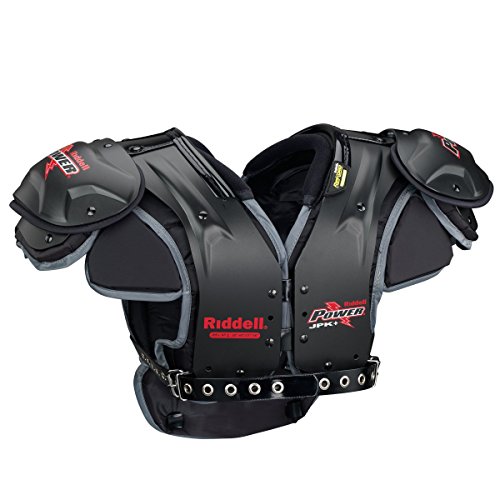
Integrated RipKord Technology
Physical and Mental Skills Required
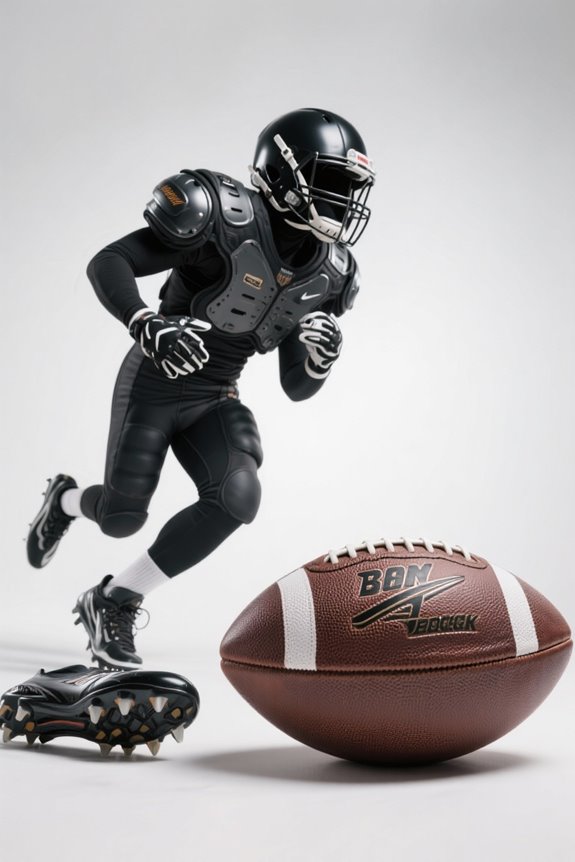
Success in football requires a unique combination of physical and mental skills, particularly for running backs who operate at the intersection of athleticism and strategy on the field. To achieve ideal performance, running backs must excel in explosiveness factors, which include rapid acceleration and lower body strength, reflected in vertical jumps of around 36 inches. Agility training is essential, as it enhances quick lateral movements and body control, enabling effective evasion of defenders. Mental acuity is equally important; recognizing defensive formations and making split-second decisions can dictate the outcome of plays. By mastering both physical capabilities and mental awareness, running backs can exploit opportunities on the field, thereby maximizing their impact within the team structure. Additionally, incorporating targeted training tools into their regimen can further enhance their overall performance and skill development.
Playbook Knowledge and Execution
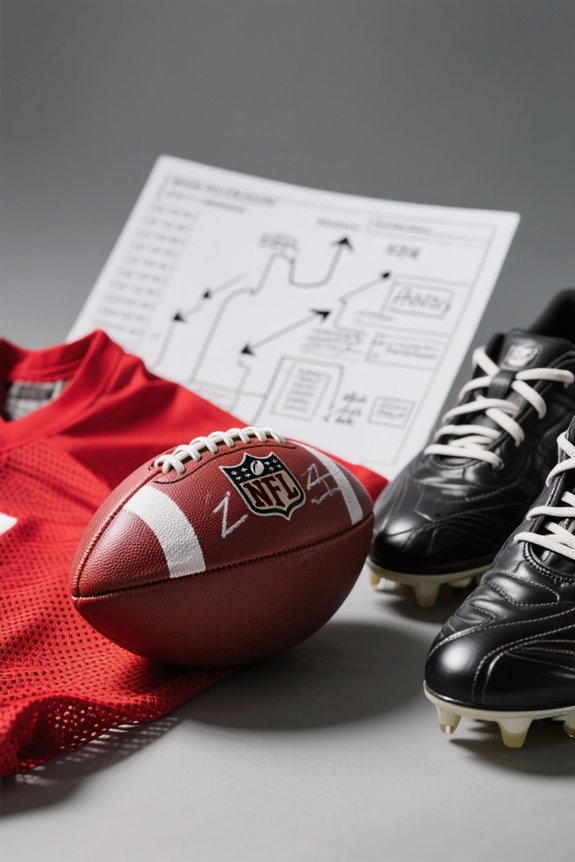
A thorough understanding of playbook knowledge and execution is vital for running backs, as their performance hinges on the ability to accurately interpret and implement complex assignments. Playbook comprehension requires mastery of run play designations, which includes knowledge of hole numbers and run-pass options within various formations. Execution timing is essential, particularly when adapting to specific play calls, which dictate precise run routes and blocking assignments. Additionally, recognizing defensive alignments enhances decision-making, allowing running backs to anticipate openings during running plays. Memorizing location and timing nuances for pass routes guarantees synchronization with the quarterback, increasing the likelihood of successful completions. Ultimately, the depth of playbook knowledge directly influences a running back’s effectiveness on the field, impacting overall team performance. Engaging in diverse best youth football plays can further refine a running back’s skills, enhancing their adaptability in various game situations.
Training and Fundamental Techniques
Training and fundamental techniques serve as the backbone of a running back’s performance, establishing a framework for executing plays effectively and efficiently. Ball security is paramount, requiring players to master the five-point contact technique for ideal grip and fumble reduction. Regular drills, such as tuck-and-hold and gauntlet exercises, build muscle memory under pressure. In parallel, agility training enhances footwork through various ladder and cone drills, improving spatial awareness and cutting mechanics. Additionally, strength and conditioning exercises, including lower-body strength training and core stability workouts, support the physical demands of the position. Ultimately, a thorough training regimen guarantees running backs maintain both versatility and effectiveness on the field, allowing them to navigate defenses skillfully while securing the football. Proper fit and wrist support from quality equipment, such as football gloves, can also contribute to a running back’s overall performance and injury prevention.
Recommended Products

Breathable compression Lycra back delivers a performance fit. AVAILABLE IN FULL FINGER STYLE.

Designed for linemen, provides substantial padding while maintaining a flexible, minimal feel; C-TACK padded palm patch for added grip and protection when you're going hard against your opponent

Size UP: Runs snug—go a size up if between sizes or for a looser fit.
Importance of Versatility in the Role
Versatility in the role of a running back greatly enhances an offense’s effectiveness on the field. Running backs who can function as dual threats, excelling in both rushing and receiving, create unique matchup challenges for defenses. They can receive handoffs, catch passes, and block effectively, forcing opponents to adapt their coverage schemes. Versatile running backs keep defenses guessing with varied play options, such as screen plays and draw plays, enhancing offensive unpredictability. Players like Christian McCaffrey exemplify how such versatility can lead to over 1,000 yards in both rushing and receiving. Furthermore, their presence strengthens play-action passes and third-down efficiency, allowing offenses to maintain momentum while complicating defensive game plans appreciably. Ultimately, versatility proves essential for modern offensive strategies. Advanced technologies increase safety for running backs who engage in physical play, emphasizing the need for high-quality equipment like authentic football helmets.
Frequently Asked Questions
How Do Injuries Impact a Running Back’s Game Performance?
Injuries considerably hinder a running back’s game performance, as they often require extensive injury rehabilitation and performance recovery strategies, ultimately leading to reduced agility, effectiveness, and participation levels while potentially impacting their overall career longevity.
What Nutritional Strategies Enhance a Running Back’s Endurance?
To run the race, effective nutritional strategies for a running back include carbohydrate loading before activities and diligent hydration practices to maintain performance. These tactics guarantee energy levels remain high, prolonging endurance during exertion.
How Does a Running Back’s Role Vary by Offensive Scheme?
A running back’s role varies by offensive scheme, emphasizing run blocking in power offenses, while requiring pass catching skills in spread systems. Each scheme demands unique strengths, such as power, agility, or versatility, tailored for maximum effectiveness.
What Qualities Make a Running Back Standout in the NFL?
Standout NFL running backs exhibit exceptional speed, agility, balance, and strength. Their ability to change direction rapidly, break tackles, and maintain stability while maneuvering through defenses distinguishes them as elite players in professional football.
How Can Running Backs Improve Their Vision on the Field?
Field awareness fosters formidable decision-making. Through drills enhancing reaction, lateral movement, and reading blocks, running backs can cultivate keen vision, improving their ability to navigate the field effectively and exploit openings during gameplay.