As an Amazon Associate, we earn from qualifying purchases. Some links on this site are affiliate links at no extra cost to you. Our recommendations are based on thorough research and editorial judgment.

What Are The Best Agility Drills For Football Players?

Effective agility drills for football players include ladder drills, cone drills, shuttle runs, box and four-corner drills, and plyometric exercises. These drills enhance speed, coordination, and quick directional changes, essential for on-field performance. Players improve their balance and body control, leading to a reduced risk of injury during dynamic movements. Implementing these training techniques benefits all player positions, greatly contributing to overall athletic performance. Further exploration reveals additional training methods and their specific advantages.
Key Takeaways
- Ladder Drills: Improve foot speed and coordination through rapid footwork techniques, essential for enhancing overall performance on the field.
- Cone Drills: Develop quick direction changes and acceleration, crucial for skill players to evade defenders effectively.
- Shuttle Runs: Boost anaerobic and aerobic endurance while improving agility and speed, serving as a reliable performance indicator.
- Box and Four-Corner Drills: Enhance cardiovascular endurance and dynamic game simulations, improving foot speed and balance during play.
- Plyometric Drills: Build explosive power and reactive strength through exercises like depth jumps, aiding athletes in quick response movements.
Ladder Drills
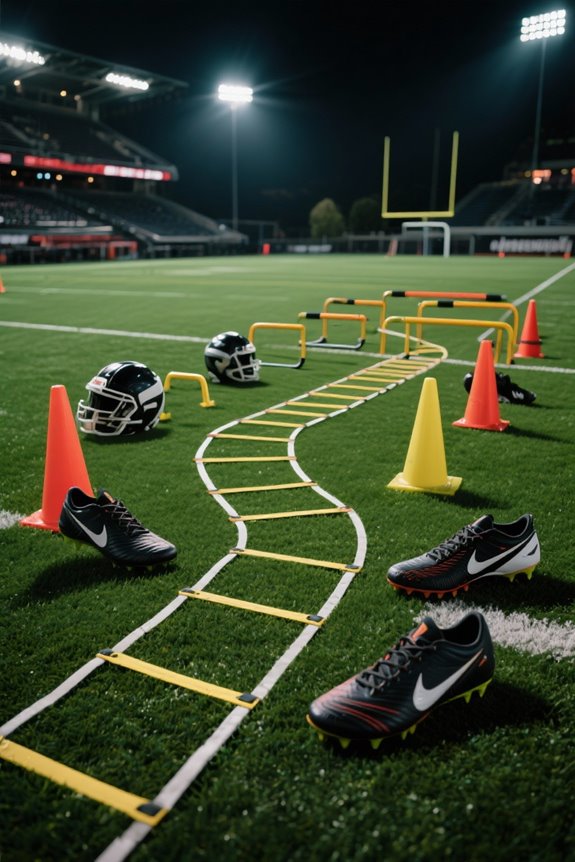
Ladder drills represent a highly effective training tool for football players, aimed specifically at enhancing speed and agility, which are vital components of on-field performance. These exercises focus on rapid footwork techniques, such as high knees and single-leg runs, which improve both foot speed and leg turnover. The ladder training benefits include enhanced motor coordination through refined brain-to-muscle communication pathways, resulting in improved balance, posture, and stability. Increased coordination contributes to reduced injury risk during dynamic movements on the field. Additionally, athletes develop the ability to execute complex footwork under pressure, an important skill for quick cuts and direction changes. Therefore, practicing with agility ladders plays a significant role in preparing football players for the demands of competitive play.
Recommended Products

Multi-Sport & Therapy Approved Used by professionals in soccer, basketball, boxing, and physical therapy, BlazePod makes training fun, fast, and measurable. Improve focus, speed, and cognitive agility across any discipline.

TRAINER KIT - Your Pods are the foundation of your training experience. Trainer kit is recommended for all trainers on the move for one-on-one or small group training. More Pods give you more versatility, more stations, color coding, and the ability to set up a wider variety of drills.

ADJUSTABLE ANGLES – The removable bullseye target features a 5-point adjustment system, allowing you to set angles from 90° vertical to 180° flat. This versatility makes it ideal for practicing a wide range of passing techniques and drills.
Cone Drills
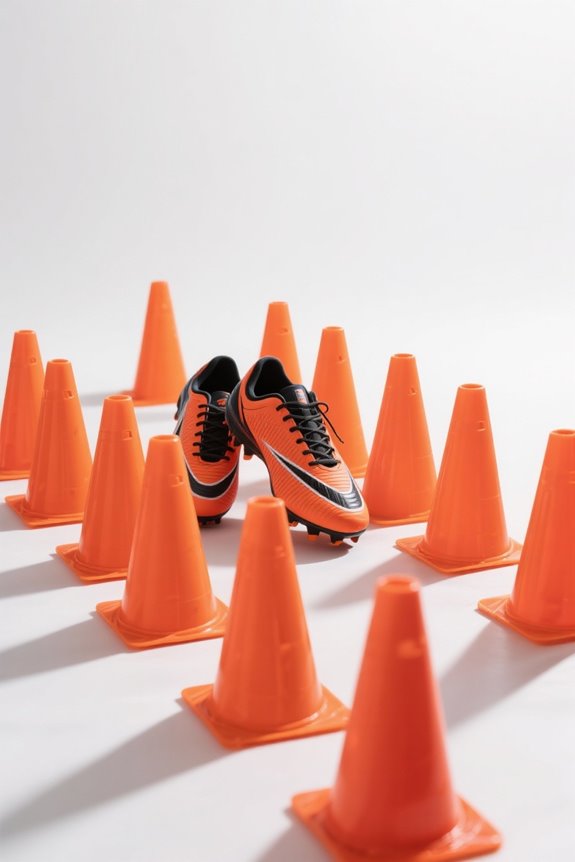
Cone drills serve as an essential component of agility training for football players, enabling them to develop important skills such as quick changes in direction and acceleration. Utilizing various cone placements, such as staggered setups and square formations, athletes engage in targeted cone variations that enhance their functional movement. For instance, the zigzag cone drill requires players to navigate through spaced cones, emphasizing sharp and controlled cuts, which is crucial for offensive maneuvers. Additionally, incorporating lateral shuffles and backpedals in different cone arrangements intensifies the drill’s focus on body positioning and peripheral awareness. Overall, these drills contribute to improved footwork, promoting athletic efficiency while minimizing injury risks, making them fundamental to a football player’s training regimen. Incorporating agility ladders in combination with cone drills can further enhance coordination and balance during training sessions.
Recommended Products
![FORZA Aluminum Soccer Goals [11 Sizes] | Professional Soccer Goal Posts *The Goal Nets Used by MLS & Premier League Clubs* (Alu110 Socketed, 16ft x 7ft)](https://m.media-amazon.com/images/I/51tZuoU-8ZL._SL500_.jpg)
PROFESSIONAL SOCCER GOAL & NET - Available in multiple regulation sizes (6ft x 4ft to 24ft x 8ft), these premium soccer goals are perfect for players of all levels, from junior athletes to seasoned professionals. Designed for durability and performance, they’re ideal for clubs, training sessions, and competitive matches.

9-A-SIDE MATCH GOAL – Engineered to meet official regulations for junior match days and senior soccer training, FORZA Match Goals are ideal for larger backyard setups. Their freestanding design ensures stability and versatility on any playing surface, providing the perfect match experience for players of all ages.
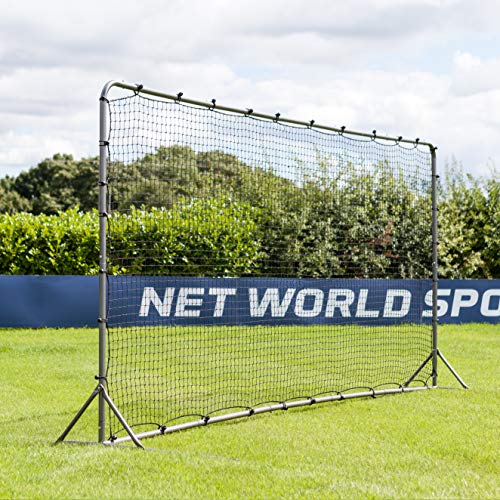
TWO SIZES AVAILABLE – Choose between a 12ft x 6ft or 16ft x 7ft soccer wave rebounder to suit your requirements, with the smaller size being perfect as a junior rebounder or for an added challenge for senior players.
Shuttle Runs
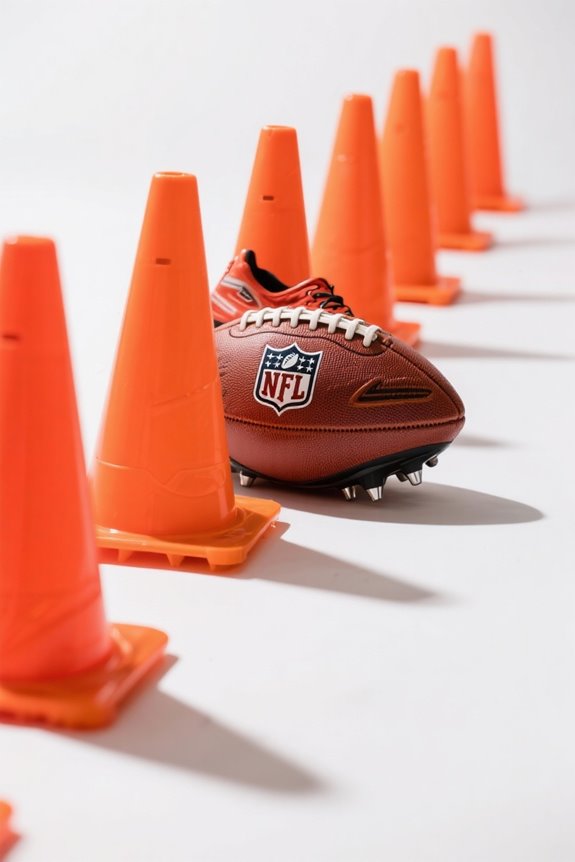
Shuttle runs are an essential agility drill for football players, enabling them to develop important skills such as speed, agility, and quick changes in direction. These drills typically involve cones placed in a straight line, spaced 10 meters apart, requiring athletes to sprint to each cone, touch it, and return continuously. This exercise promotes both anaerobic and aerobic endurance through various shuttle run variations. Moreover, the 5-10-5 shuttle run specifically targets rapid directional changes, crucial for positions requiring agility. Performance tracking is important, as recording times serves as a measurable indicator of speed and endurance improvement. Overall, shuttle runs effectively enhance an athlete’s physical attributes significant for ideal on-field performance, with added versatility in training applications allowing for various training techniques that can elevate an athlete’s game.
Recommended Products


Flexible & Durable PVC: Built from heavy duty, flexible plastic to withstand repeated use for soccer cones, parking cones, traffic cones, or street cones in any setting.

Heavier, Thicker, Stronger: Finally, heavier, thicker, and stronger agility cones that won't tip over or slide around. LVL10 Sports Pro practice cones are made of thick and flexible PVC vinyl that's 200% thicker than flimsy, brittle, and small plastic cones from the competition.
Box and Four-Corner Drills
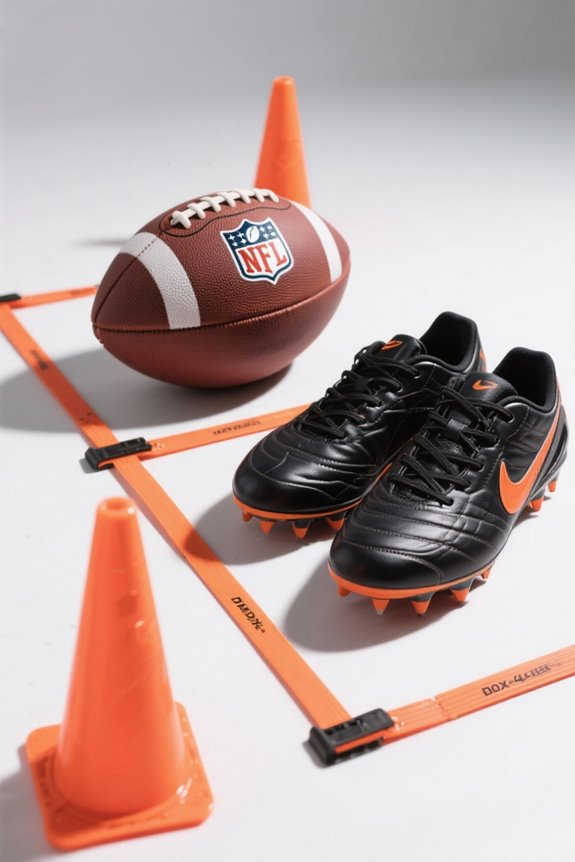
Engaging in box and four-corner drills offers football players a structured method to enhance their agility and overall athletic performance. Utilizing box drill techniques, athletes place four cones in a square formation, typically spaced one yard to ten feet apart, depending on skill level. These drills focus on perimeter running and angle cutting, encouraging rapid directional changes through lateral movement and sprinting. Variations may include backpedals and side shuffles to simulate dynamic game conditions. The primary benefits include improved foot speed, balance, and cardiovascular endurance, essential for effective performance on the field. Customization can be achieved by adjusting cone distances or incorporating timed intervals, making box and four-corner drills a versatile training tool for football skill development. Additionally, incorporating strength training exercises can further augment the benefits of agility drills by enhancing overall athletic performance.
Plyometric and Jumping Drills
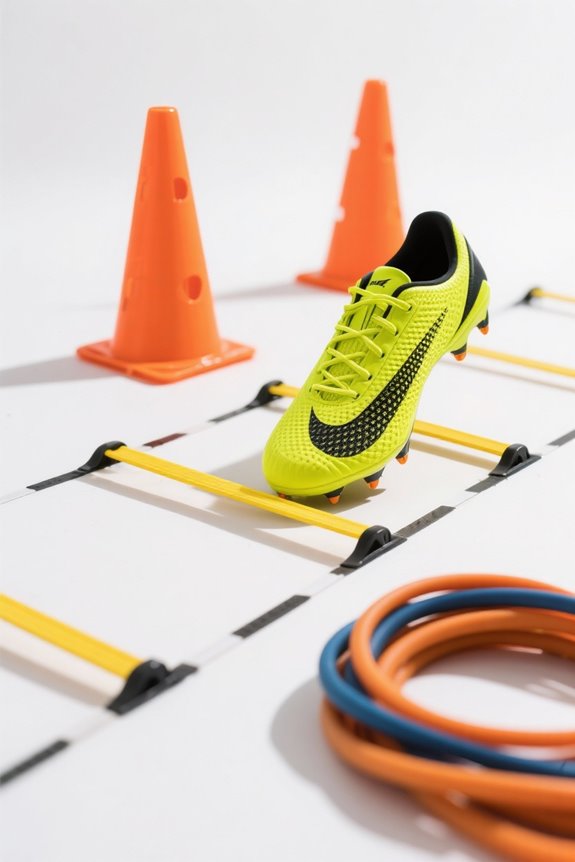
Plyometric and jumping drills play an essential role in developing the explosive power and agility necessary for football players to excel on the field. These exercises, including front and lateral box jumps, improve jump mechanics by enhancing leg strength and lateral movement capabilities. They provide significant plyometric benefits such as increased vertical jump and improved ankle stability. Single-leg bounds and squat jumps focus on maximizing power with minimal ground contact, promoting better coordination and rapid force development. Additionally, depth jumps train reactive strength, critical for game situations. Incorporating weighted variations, like lateral jumps, intensifies resistance, further bolstering strength. Ultimately, these drills enable players to perform at an elite level while reducing their risk of injury. Resistance bands can also be used to enhance these drills, providing additional resistance to improve strength and agility during training.
Recommended Products

WHAT'S INCLUDED: MAXPRO Sport Orange SmartConnect, MAXPRO 3-piece Quick Connect Long Bar, 2x MAXPRO Workout Handles, 2x MAXPRO Ankle/Wrist Straps, 2x MAXPRO Door Mount Brackets & USB Charger


Solid Wood Construction for Safe Squats & Jumps: Built from high-quality wood, this plyometric platform offers dependable support for squats, step-ups, and jumping exercises. Great for power training, calisthenics, and weightlifting at home or in the gym.
Specialized Cutting and Sprint Drills
Developing agility and quickness through specialized cutting and sprint drills is fundamental for football players aiming to enhance their on-field performance. Quick cut drills focus on executing sharp 90-degree turning techniques, emphasizing foot speed and balance by using proper weight distribution. The Zigzag Cone Drill reinforces controlled cutting and footwork, allowing players to practice directional changes at speed. The “M Drill” enhances cutting mechanics by improving push-off and maintaining a low center of gravity. Additionally, the T-Drill cultivates lateral quickness essential for defensive maneuvers. Finally, the 5-10-5 drill boosts overall sprint mechanics, enhancing balance during rapid direction changes. Collectively, these drills guarantee that players refine their cutting techniques and develop agility critical for success in football. Incorporating agility ladder drills into training can further elevate these skills by improving foot speed and coordination.
Combining Drills for Maximum Agility
Combining various agility drills is vital for football players seeking to enhance their athletic performance and overall effectiveness on the field. Implementing agility training techniques that integrate ladder and cone drills creates multi-dimensional drills, imperative for developing both footwork precision and explosive power. For instance, alternating ladder drills like the Ickey shuffle with cone drills, such as the L-drill, boosts neuromuscular adaptation while simulating game scenarios. Additionally, incorporating shuttle runs with reactive drills enhances cardiovascular fitness, explosiveness, and cognitive processing speed, further refining agility. This thorough approach guarantees athletes benefit from improved lateral quickness, reaction speed, and overall muscle memory. Ultimately, the strategic combination of these drills prepares players for the dynamic challenges of actual game situations. Utilizing tools like a football training sled can further augment strength training and complement agility work, ensuring players are well-rounded in their conditioning.
Importance of Agility Training in Football
Agility training stands as a fundamental component in the development of football players, as it greatly contributes to both athletic performance and injury prevention. Enhanced agility allows athletes to respond quickly to unpredictable stimuli, such as opposing defenders and ball movements, improving critical skills like dribbling and decision-making under pressure. This training develops key athletic qualities, including balance and coordination, which are essential in maintaining proper posture during rapid movements. Additionally, greater body control achieved through agility exercises considerably reduces the risk of injuries, particularly during direction changes. Overall, the performance benefits of agility training are evident across all player positions, making it a pivotal aspect of thorough football training regimens aimed at optimizing both safety and effectiveness on the field. The use of high-quality materials in training equipment like harnesses enhances the overall training experience and effectiveness.
Frequently Asked Questions
How Often Should I Practice Agility Drills Each Week?
Agility training frequency should ideally be 2-3 times weekly, ensuring an ideal practice schedule that balances intensity and recovery. This approach enhances performance while reducing injury risk through adequate rest between sessions.
Can Agility Drills Improve My Overall Football Performance?
Agility drills substantially enhance football performance by sharpening fundamental skills and improving speed. These exercises boost responsiveness and decision-making, which are essential for executing football fundamentals effectively during competition, ultimately leading to superior athletic performance on the field.
What Age Is Appropriate to Start Agility Training?
Agility training benefits young athletes beginning around ages 6 to 8, utilizing age-specific exercises that enhance coordination and balance. Early focus on fun and fundamental skills lays a foundation for future athletic development and injury prevention.
Do I Need Equipment for Agility Drills?
For effective agility drills, incorporating equipment such as agility ladders and cones is beneficial. Agility ladder drills enhance foot speed, while cone drills improve direction changes, both essential for developing overall athletic agility.
How Can I Track My Progress in Agility Training?
To track progress in agility training, utilizing training apps to monitor agility benchmarks and performance metrics is essential. These tools provide valuable insights, enabling athletes to make data-driven adjustments and enhance their training effectiveness.


