As an Amazon Associate, we earn from qualifying purchases. Some links on this site are affiliate links at no extra cost to you. Our recommendations are based on thorough research and editorial judgment.


How Do Linemen Build Strength And Power?

Linemen build strength and power through a rigorous training regimen that emphasizes explosive power development and absolute strength. Techniques such as power cleans, box jumps, and heavy lifts, including squats and deadlifts, enhance overall muscle hypertrophy and force production. They also focus on trunk stability through exercises like isometric lunges and dynamic control drills, ensuring safety and injury prevention. Additionally, conditioning strategies, including High-Intensity Interval Training (HIIT) and agility drills, further optimize their performance. Further insights are available on advanced techniques.
Key Takeaways
- Linemen build strength through heavy compound lifts like squats, deadlifts, and bench presses to enhance muscle hypertrophy and force production.
- Explosive power is developed through techniques such as power cleans, medicine ball throws, and plyometric drills to simulate game conditions.
- Core stability and dynamic control are enhanced with exercises like isometric lunges and explosive medicine ball slams, improving overall balance and deceleration.
- Conditioning and endurance are prioritized with High-Intensity Interval Training (HIIT) and sled-based conditioning to develop explosive power and repeated-effort capacity.
- Regular evaluations and progressive overload techniques are essential for maximizing strength gains and ensuring safety during training.
Explosive Power Development Techniques
How do linemen effectively develop explosive power to enhance their performance on the field? Linemen employ a variety of techniques focusing on upper body explosiveness and lower body agility. Exercises such as power cleans, medicine ball throws, and plyometric drills are essential for fostering total-body power. These activities simulate game conditions, improving hand speed and coordination critical for effective blocking. Additionally, lower body training, including box jumps and sprint starts, is crucial for quick bursts from the line of scrimmage. Agility cone drills reinforce rapid directional changes, although maintaining a low center of gravity is equally important. Ultimately, by combining these targeted drills, linemen achieve the explosive strength necessary to dominate their positions effectively during gameplay. Incorporating tools like training dummies can enhance practice sessions by mimicking real-game scenarios for better skill application.
Building Absolute Strength
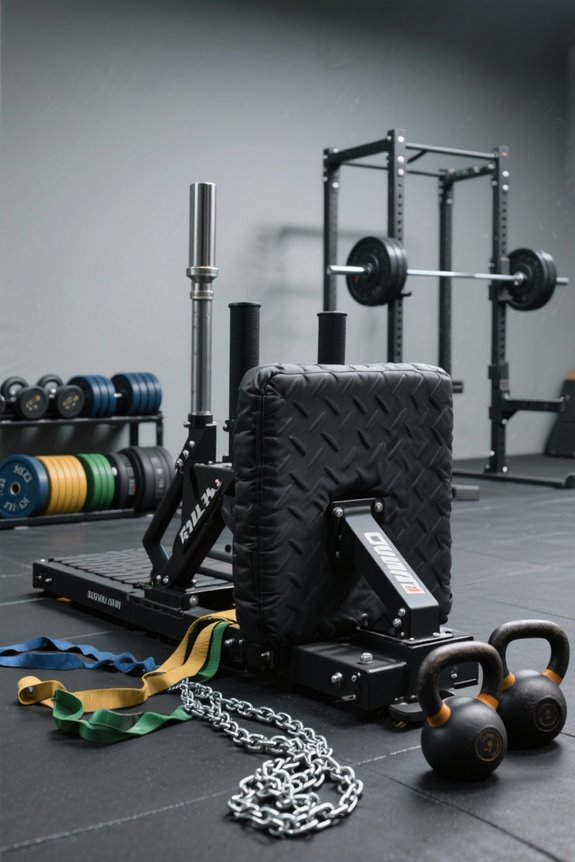
Building absolute strength is an essential component of a lineman’s training regimen, as it directly impacts their performance on the field. Key to developing absolute strength, core compound lifts such as squats, deadlifts, and bench presses enable significant muscle hypertrophy while targeting critical muscle groups. These lifts incorporate maximal effort methods, using near-maximal loads to recruit fast motor units, thereby enhancing force production capabilities. Progressive overload and consistent training are indispensable for steady strength gains, as they guarantee adaptation of both muscles and the nervous system. Additionally, specific assistance exercises, including sled pushes and overhead squats, support the development of functional strength that translates directly to improved performance during gameplay. Tackling dummies play a crucial role in enhancing technique and strength through targeted practice. Ultimately, a focus on absolute strength is fundamental for linemen’s success.
Enhancing Trunk Stability and Dynamic Control
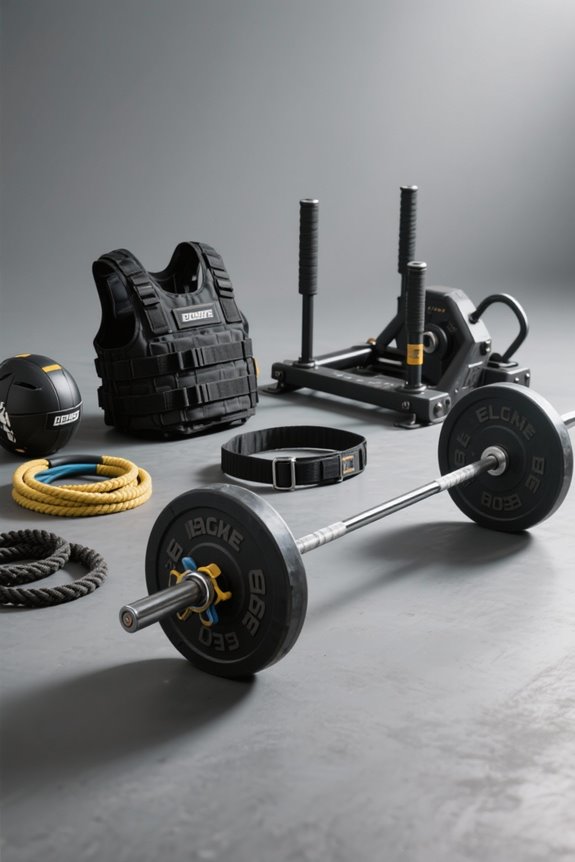
Dynamic trunk control is a crucial element in enhancing the effectiveness of linemen, as it enables them to withstand and respond to the physical demands of the game. Techniques focused on trunk engagement are essential for improving stability and dynamic control, which are important when facing pass rushers. Core strength exercises, including isometric lunges with cross lateral punches and explosive medicine ball slams, are recommended for developing strength and coordination. These exercises enhance the ability to maintain balance during contact situations, allowing for quicker deceleration and improved cutting ability. Additionally, combining trunk stability training with football-specific drills, like sled pushes, guarantees that linemen can apply their core strength effectively during games, optimizing performance and reducing injury risk. Engaging in resistance band training helps to further develop the necessary muscle groups essential for football performance.
Recommended Products

Build Shoulder and Core Strength and Stability - The Deluxe 4KOR Resistance Cord Strength System is designed to be a convenient system to improve shoulder and core strength and stability. This system includes 5 different resistance levels (7lbs, 12lbs,17lbs, 22lbs, and 30lbs), with 2 cords per resistance level, for a total of 10 resistance cords. System also includes 2 handles, 2 foot straps, 2 door strap anchors, 2 power rack straps, 2 exercise charts, and a carrying bag.

WHAT’S IN THE BOX: Add an extra challenge to your training with TRX long resistance bands. This pack of full-body-size strength bands includes multiple levels of resistance from 5–70 lbs. for the 4 pack and 5–150 lbs. for the 6 pack.

Full-Body Exercise: Designed for casual home users or experts; Half exercise ball is filled with possibilities whether you are working on balance, strength, and flexibility training
Conditioning and Endurance Strategies
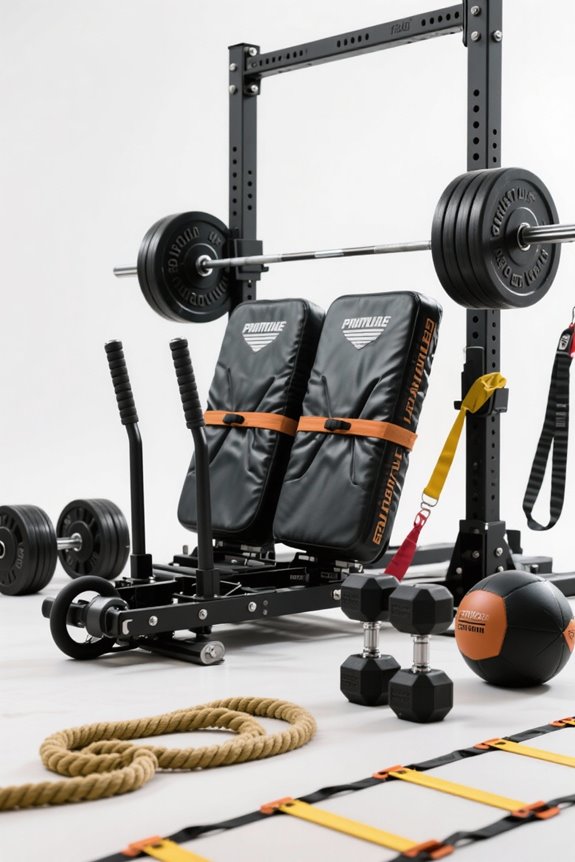
Conditioning and endurance are essential components for linemen, as they directly influence performance during intense game situations. High-Intensity Interval Training (HIIT) is effective, incorporating 5–20 yard sprints that enhance anaerobic capacity fundamental for gameplay. Conditioning drills, such as prowler sled sprints, improve both endurance and explosive power, while varied loading promotes time- and distance-based fatigue resistance. Further, grouped sprint sets develop the repeated-effort capacity necessary for multiple plays. Sled-based conditioning, including pushing and pulling, enhances lower-body anaerobic endurance, fostering strength endurance important for linemen. Plyometric training, featuring explosive jumps, improves neuromuscular coordination and rapid force development, essential for sustained performance. Collectively, these strategies guarantee linemen remain resilient, agile, and ready throughout the duration of games. Additionally, incorporating sled-based training into routines can significantly bolster lower-body strength and power.
Position-Specific Agility Training
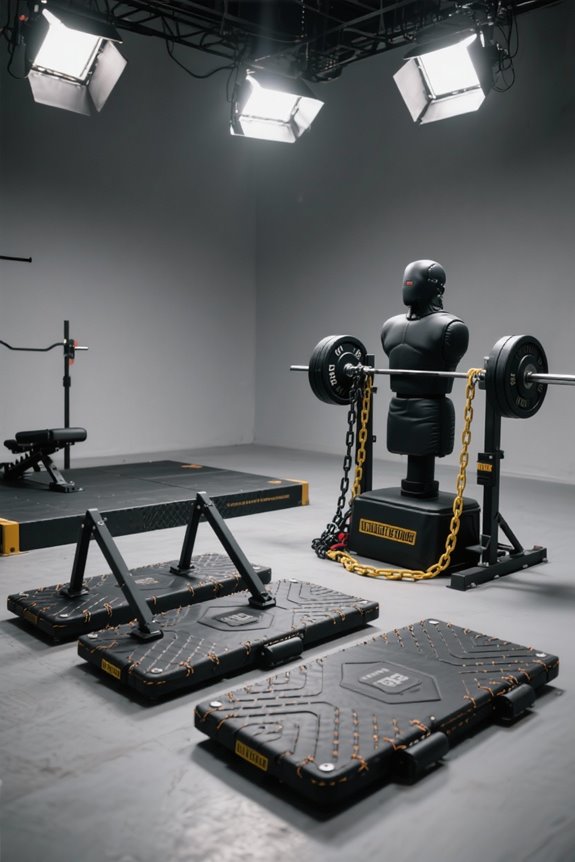
Agility training tailored specifically for linemen plays an essential role in enhancing their on-field performance by improving their quickness, coordination, and ability to change direction rapidly. Lateral quickness drills, such as circle shuffles and S-Runs, are fundamental for developing movement skills that enable linemen to navigate around blockers effectively. Additionally, reactive agility exercises are imperative, incorporating drills like the Sack drill, which simulates game situations, allowing linemen to practice evading obstacles. Cone drills also promote explosive speed and quick directional changes, which are crucial during plays. By integrating these drills into their training regimes, linemen can greatly enhance their agility, enabling them to perform better under the dynamic pressures of a competitive game environment. Furthermore, safety features and design are critical when selecting agility training equipment to mitigate injury risks while performing these drills.
Importance of Muscle Recovery
Muscle recovery is a crucial component of any athlete’s training regimen, particularly for linemen who endure rigorous physical demands on the field. Effective muscle recovery techniques are essential for enhancing performance and preventing injuries. Incorporating low-intensity exercises, such as foam rolling and dynamic lunges, promotes blood flow and reduces muscle stiffness. Active rest days featuring mobility drills assist in muscle relaxation, while contrast baths and cryotherapy help decrease inflammation and accelerate healing. Nutrition also plays an important role; prioritizing meals with lean proteins and carbohydrates replenishes glycogen stores for ideal recovery. Finally, sufficient sleep, ideally eight hours nightly, allows for important hormonal regulation needed for muscle repair, underscoring the holistic approach required for effective muscle recovery in linemen. Furthermore, the use of proper equipment, including moisture-wicking technology, can also aid in recovery by keeping athletes dry and comfortable during training and practice sessions.
Flexibility and Mobility Work
Flexibility and mobility work constitutes a foundational element in the training regimens of linemen, who require ideal range of motion to perform effectively on the field. Key exercises for enhancing hip mobility include windshield wipers and sidelying hip CARs, which promote flexibility and joint range. Dynamic drills, such as hurdle drills and backpedal with hip flips, further develop hip rotational mobility, essential for agile movements during gameplay. Additionally, stretching techniques utilizing foam rollers and yoga can improve overall muscle elasticity and reduce injury risks, focusing on the posterior chain. Strengthening foot and ankle muscles through exercises like the tripod exercise enhances foot strength and stability, contributing notably to a lineman’s overall performance and power generation on the field. Incorporating agility training into their routine can significantly elevate a lineman’s effectiveness in on-field performance.
Explosive Upper-Body Drives Using Resistance Bands
Building upon the foundational principles of flexibility and mobility, linemen incorporate explosive upper-body drives using resistance bands to enhance their performance on the field. Utilizing specific band resistance techniques, linemen execute rapid standing band presses, positioning the bands low across the triceps to maximize resistance. This exercise emphasizes explosive press mechanics, where athletes assume an athletic stance and press the band forward with speed and power. Performing three reps per set, with thirty-second rest intervals, allows for effective training of triceps, chest, and shoulders, critical for blocking efficiency. Additionally, varying band resistance over time promotes strength gains while maintaining an athletic posture enhances the transfer of power to the field. Such methods guarantee peak preparation for heavier lifting and on-field demands. Regular evaluations of chest protector condition ensure safety, further emphasizing the importance of protecting vital areas during rigorous training sessions.
Recommended Products

This Bundle Contains: 1 Concept2 Ski Exercise Machine Indoor Exercise Machine | Indoor Aerobic Wind Resistance Skiing System + 1 SkiErg Floor Stand + 1 Garmin HRM-Dual Heart Rate Monitor + 1 Signature Series Resistance Band

Bundle Includes: The Bundle includes the Squat Rack with pull up bar, plate and bar storage, and the Weight Lifting Platform to give you everything you need in your light-commercial gym,home gym or garage gym

The Original Waterrower - Handcrafted and Built to Last: Designed in the mid '80s by Yale and US National Team Rower John Duke. WaterRower continues to combine stylish design, handcrafted workmanship, our unique WaterFlywheel resistance and ethically sourced materials create the world's finest rowing simulator
Utilizing Heavy Lifts for Maximal Force
Incorporating heavy lifts into a lineman’s training regimen is vital for maximizing force production, as these exercises directly contribute to overall performance on the field. Key lifts, such as heavy squats and deadlift variations, build core strength, enhancing hip mobility and posterior chain development. This foundation supports explosive pushing activities, significant for linemen when engaging opponents. Strongman exercises, like sled pushes, simulate in-game dynamics while optimizing maximal force application. Additionally, unilateral lifts improve balance and coordination, addressing common asymmetries. A structured range training approach, focusing on heavy lifts at the start of the week and incorporating performance metrics, facilitates progressive overload. These practices guarantee linemen develop the necessary strength and power to excel in demanding game scenarios. Including high-density foam cores in practice equipment helps in injury prevention while training for strength and power.
Recommended Products

T-3 SERIES POWER RACK: Built tough with 2" x 3" 11-gauge steel and a durable bolt-together design. Available in 80" or 90" heights to fit your gym, with Westside hole spacing through the bench zone, 2" spacing above and below, 6" side hole spacing, and your choice of powder-coat finish.

Multi-position squat equipment features rack-out tiers with polyurethane covers to eliminate noise and protect the bar and equipment.

【All in One Home Gym Partner】Maximize the use of JELENS squat rack to create your home gym - one machine can meet your diverse needs. JELNES provides everything you need for full body workout, such as bench presses, squats, 360 ° mines, seated rowing, pull ups, triceps extensions and more, allowing you to do unlimited exercise in a limited space, taking muscle training to a new level!
Implementing Interval Training for Endurance
Interval training emerges as an essential component in the training regimen of linemen, addressing the unique demands of football’s stop-and-start sequences. By employing various interval strategies, linemen can enhance both aerobic and anaerobic capacity, vital for sustaining high-intensity efforts throughout the game. Common regimen components include high-intensity sprints and hill workouts, which boost VO2 max and lactate threshold, promoting endurance adaptations while preserving muscle mass. Additionally, these training methods mimic the actual pace of football, allowing linemen to recover efficiently between plays. Structured workouts, such as 30-second sprints followed by equal rest, can considerably improve performance late in games. Ultimately, incorporating these interval training protocols enables linemen to maintain peak conditioning and readiness on the field. Furthermore, agility ladder drills can be integrated to further enhance coordination and speed, complementing the benefits of interval training.
Drills for Technical Skills and Physical Qualities
To enhance the performance of linemen on the football field, drills focusing on technical skills and physical qualities are imperative. Agility drills, such as ladder and cone exercises, play an important role in technique refinement and develop essential footwork patterns. Plyometric exercises, like box jumps and lateral hops, boost explosive power, enabling linemen to react quickly at the line of scrimmage. Strength and coordination training, utilizing sandbags, emphasizes dynamic stability and mimics actual blocking motions. Additionally, foot and ankle functional exercises enhance overall mobility, which supports foundational skill acquisition. Combining these targeted drills improves agility, strength, and power, crucial for linemen competing effectively against opposing players in high-pressure situations. Consistent practice fosters advancement in key athletic attributes.
Frequently Asked Questions
How Often Should Linemen Train Each Week for Optimal Strength?
Like a well-tuned machine, linemen should train weekly for peak strength maintenance, ideally 3 to 4 times, balancing rigorous sessions with recovery. More experienced athletes may increase to 4 to 6 sessions as needed.
What Role Does Nutrition Play in Building Strength for Linemen?
Nutrition plays a critical role in building strength for linemen through macronutrient balance, ensuring adequate protein, carbohydrates, and fats intake. Hydration importance further enhances muscle recovery and performance, supporting overall training effectiveness on the field.
How Can Linemen Prevent Injuries During Training?
Linemen can prevent injuries during training by implementing dynamic warm-up routines, which enhance muscle readiness. Consistent injury prevention strategies, including strength training and proper technique, further reduce risks associated with rigorous physical activity.
What Supplements Can Enhance Strength and Power in Linemen?
Supplements such as creatine monohydrate, protein powders, beta alanine, and pre-workout formulas can greatly enhance strength and power in linemen, improving performance and recovery during intense training sessions and competitive play.
How Do Sleep Patterns Affect Performance and Recovery for Linemen?
Sleep patterns profoundly influence performance and recovery for linemen; ideal sleep quality enhances recovery time, reducing fatigue and improving cognitive function. Restful nights transform physical exertion into rejuvenation, setting the stage for peak performance on game day.


