As an Amazon Associate, we earn from qualifying purchases. Some links on this site are affiliate links at no extra cost to you. Our recommendations are based on thorough research and editorial judgment.

What Should Parents Know About Youth Football Equipment?

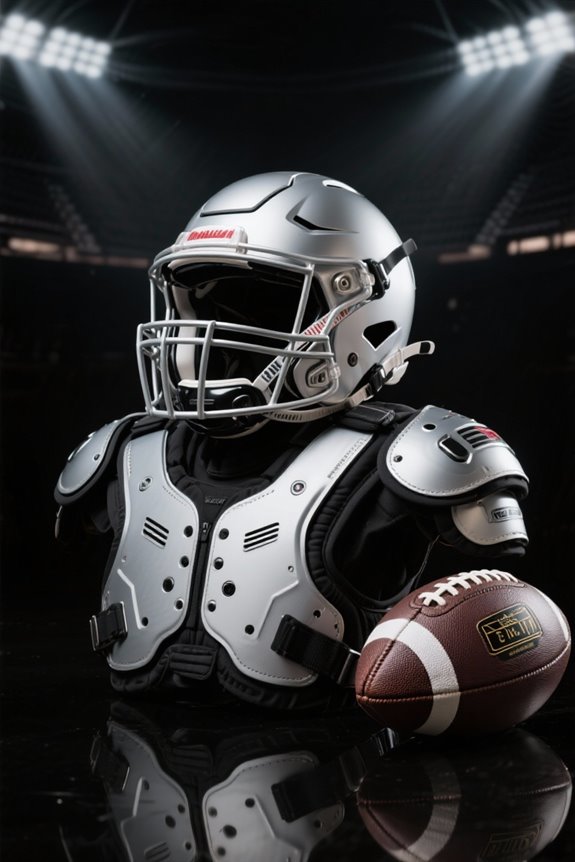
Parents must understand the NOCSAE youth football helmet standards, effective March 1, 2027, which mandate a weight limit of 3.5 pounds and emphasize youth-specific designs. Regular equipment inspections are essential, focusing on the integrity of helmets, mouthguards, and pads to reduce injury risks. Approximately 5% of youth players incur concussions each season, emphasizing the significance of concussion awareness. Coaches play a crucial role in ensuring equipment compliance and recognizing safety protocols. Additional information on protective gear and safety measures follows.
Key Takeaways
- Ensure youth helmets are NOCSAE certified and weigh no more than 3.5 pounds for optimal safety.
- Regular equipment inspections by coaches are essential to identify any damage or wear and tear.
- Properly fitted gear, including shoulder pads and mouthguards, significantly reduces injury risks during play.
- Educate your child about concussion awareness and the importance of reporting any symptoms immediately.
- Encourage coaches to apply safety protocols, including limiting contact practices and using advanced cushioning technology in helmets.
Understanding Youth Helmet Standards
As youth football continues to face scrutiny over safety, understanding helmet standards is vital for ensuring player protection. The National Operating Committee on Standards for Athletic Equipment (NOCSAE) has introduced the first safety standard, ND006, specifically for youth football helmets, with an effective date set for March 1, 2027. This standard addresses unique risk factors for younger players, including their larger head-to-body ratios and weaker necks. Moreover, helmet weight limitations are imposed, dictating that helmets, including facemasks, must not exceed 3.5 pounds. These weight restrictions are fundamental for youth helmet safety, as lighter helmets reduce strain on cervical spines. Currently, only a few manufacturers produce compliant helmets, prompting a shift toward youth-specific design rather than merely miniaturizing adult models. Furthermore, helmets equipped with advanced cushioning technology significantly improve impact absorption, enhancing protection during play.
Recommended Products

Virginia Tech 5-Star helmet; ranked 1st among 31 helmets tested with a 0.19 score (Average 5-Star youth helmet: 2.82 – lower score indicates better performance)

Patented side impact protection PSIP research based mandible protection helps reduce the forces from side impacts

Patented side impact protection PSIP research based mandible protection helps reduce the forces from side impacts
Importance of Regular Equipment Inspections
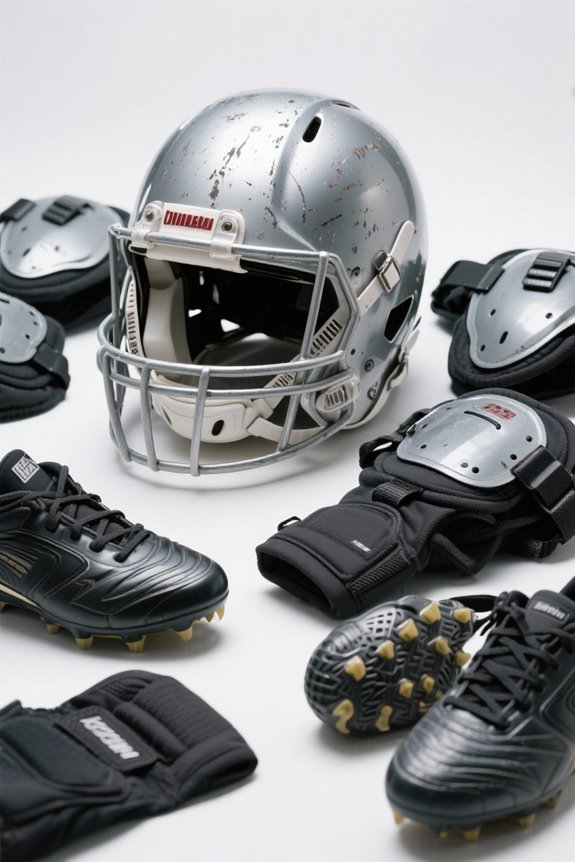
Regular equipment inspections play a critical role in maintaining safety standards in youth football. Coaches should perform thorough visual inspections before each practice and game, focusing on helmets, shoulder pads, and other protective gear to evaluate their condition. Inspection frequency is essential; monitoring for cracked shells, bent face masks, and worn padding maintains equipment integrity. Additionally, mouthguards and cleats necessitate checks for cleanliness and damage, as failure to do so can increase injury risks. Systematic tracking of equipment status enhances accountability, allowing for timely reconditioning or replacement. Maintenance that aligns with safety standards not only preserves equipment functionality but also guarantees peace of mind for parents, fostering a safer playing environment for youth football participants. The importance of regular inspections cannot be overstated, as they are crucial in preventing potential equipment failures during games.
Recommended Products

Offset shell design manages a broad range of impact types

Fitted liner system

Patented side impact protection (PSIP) research-based mandible protection helps reduce the forces from side impacts
Concussion Awareness and Prevention
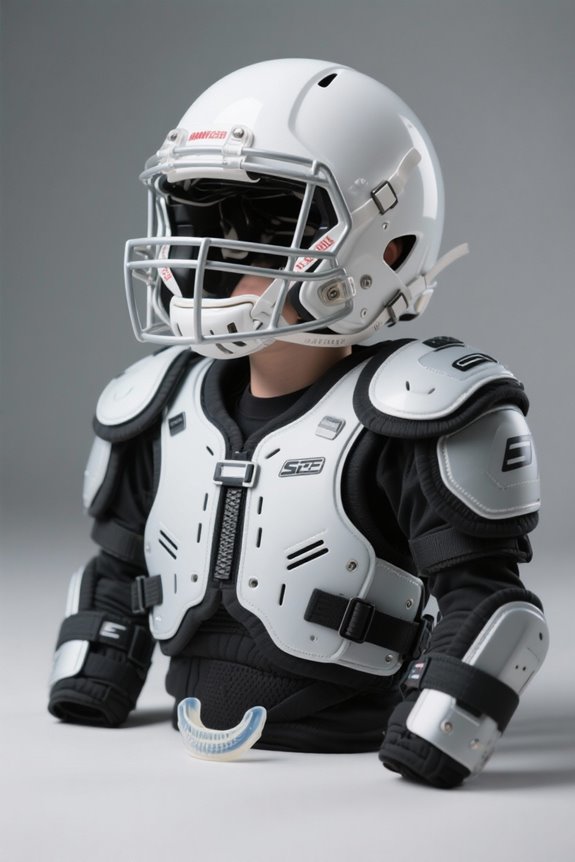
Concussions frequently pose a considerable risk in youth football, necessitating heightened awareness and preventive measures among coaches, players, and parents. Research indicates that youth players sustain concussions at lower head accelerations compared to adults, highlighting the need for tailored concussion education and injury monitoring. Approximately 5% of youth football participants, ages 5-14, experience a concussion each season, primarily during games where 51-57% of incidents occur. Techniques such as limiting contact practices and implementing safer tackling methods can markedly reduce head impacts. Furthermore, the use of technology to monitor head impacts enables early identification of concussive symptoms, improving overall player safety. Ongoing education and adherence to safety protocols are critical for minimizing concussion risks in youth football. Additionally, investing in proper field marker visibility can enhance player awareness and reduce unintentional collisions during games.
Recommended Products

Virginia Tech 5-Star helmet; ranked 1st among 31 helmets tested with a 0.19 score (Average 5-Star youth helmet: 2.82 – lower score indicates better performance)

Virginia Tech 5-Star helmet; ranked 1st among 34 helmets tested with a 0.19 score (Average 2024 5-Star youth helmet: 2.74 – lower score indicates better performance)

Virginia Tech 5-Star helmet; ranked 1st among 31 helmets tested with a 0.19 score (Average 5-Star youth helmet: 2.82 – lower score indicates better performance)
Required Protective Gear for Youth Players
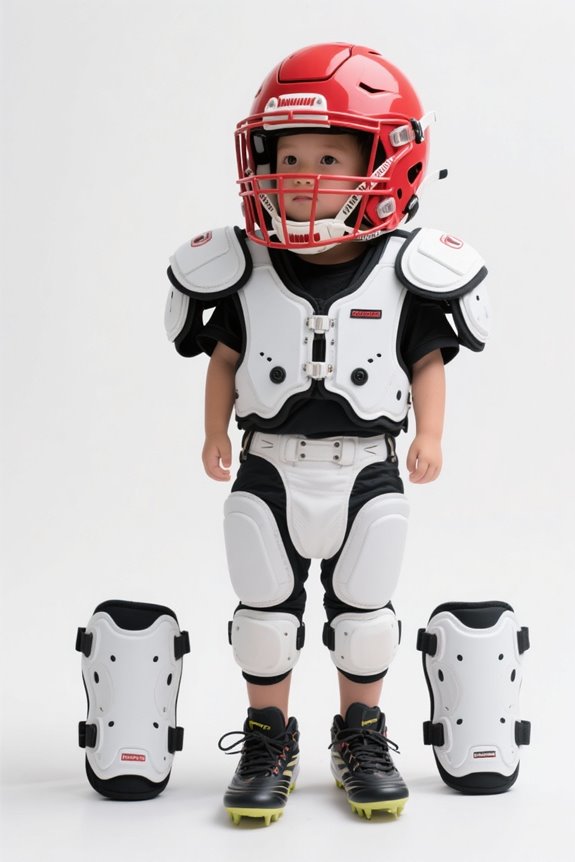
Youth football players are required to wear specific protective gear that is essential for minimizing the risk of injury during practices and games. Helmets must feature the NOCSAE certification seal, ensuring compliance with safety standards, while weighing no more than 3.5 pounds. These helmets, designed for youth, enhance injury prevention by addressing rotational acceleration impacts. Mouthguards are critical in preventing dental injuries and have been shown to reduce concussion risk by absorbing impact forces. Additionally, shoulder pads must fit snugly to protect against blunt trauma, while lower body pads offer essential cushioning for hips, thighs, knees, and tailbones. Each piece of protective gear is engineered with specific gear specifications to enhance overall player safety. Incorporating proper elbow protection is also important, as it helps reduce the risk of injuries during high-contact situations on the field.
Recommended Products

Earned a 5-star safety rating in the Virginia Tech Helmet Ratings; with a 1.35 score, only the VICIS ZERO2 scored better

Earned a 5-star safety rating in the Virginia Tech Youth Helmet Ratings

Multi-layered protection on the F7 helmet including Tecktonic plates on the crown to create a unique 3D movement system
The Role of Coaches in Equipment Safety
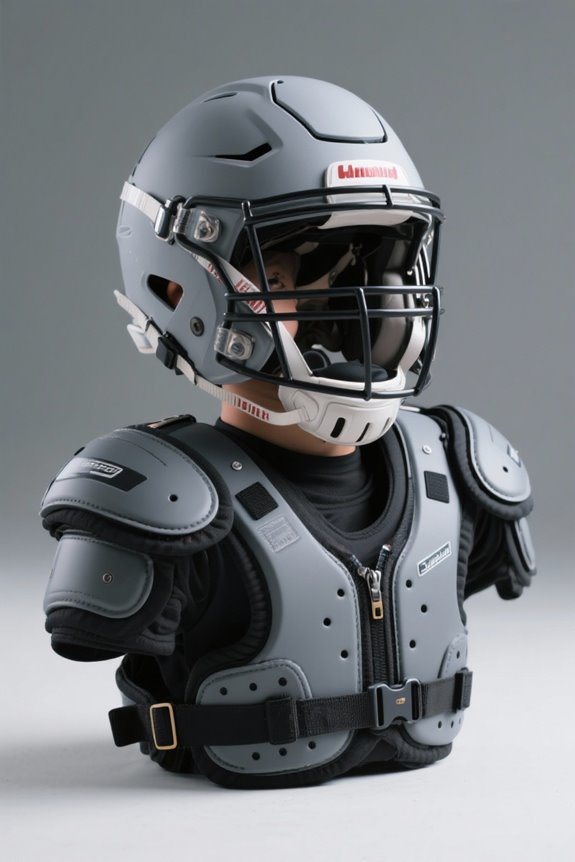
In youth football, the responsibility for equipment safety extends beyond the players; coaches play a pivotal role in ensuring that all protective gear is maintained and utilized correctly. Coach responsibilities include conducting regular equipment inspections and ensuring compliance with safety standards, such as the NOCSAE guidelines for helmets. Coaches are mandated to verify that all gear is properly fitted, with damaged equipment promptly replaced to minimize injury risks. Coaches are also required to enforce participation rules, prohibiting players without complete and appropriate gear from participating. Additionally, obtaining safety certifications, like the “Heads Up Football” program, equips coaches to recognize concussion symptoms and manage injuries effectively, emphasizing the importance of ongoing education in equipment safety for youth football teams. Using advanced materials to construct helmets can significantly enhance protection for young players during gameplay.
Recommended Products

Football's first ever position-specific helmet, engineered for reducing linemen's repetitive, low velocity helmet impacts

Football's first ever position-specific helmet, engineered for reducing linemen's repetitive, low velocity helmet impacts

TOP-TIER PROTECTION: All Schutt F7 AiR models earned the highest rating from the independent Virginia Tech Helmet Lab
Frequently Asked Questions
How Do I Choose the Right Size Football Helmet for My Child?
To choose the right helmet size, measure head circumference, consult size charts, and guarantee snug fitting. Proper helmet fitting is essential for safety, as helmets must meet safety standards to effectively protect young players.
Are There Specific Brands Recommended for Youth Football Helmets?
Studies reveal top-rated youth helmets can reduce concussion risk considerably. Recommended brands like VICIS and Schutt emphasize helmet safety and brand reliability, ensuring families prioritize both protection and quality when selecting youth football helmets.
What Should I Do if a Helmet Gets Damaged During the Season?
Upon helmet damage during the season, one should assess repair options and adhere to replacement policies. Verify reporting to coaches, and avoid using compromised helmets to maintain safety and compliance with appropriate standards.
Can My Child Still Play if They Have a Previous Concussion?
A child with a previous concussion can only return to play once symptom-free, following a graduated protocol. Medical clearance is essential to guarantee safety and mitigate risks associated with potential re-injury and concussion symptoms.
How Can I Support My Child’s Team in Adopting Safety Protocols?
Supporting a child’s team in adopting safety protocols involves fostering team communication and promoting safety education. Engaging with coaches, attending meetings, and advocating for resources can help create a safer environment for young athletes.


