As an Amazon Associate, we earn from qualifying purchases. Some links on this site are affiliate links at no extra cost to you. Our recommendations are based on thorough research and editorial judgment.


How Has Football Helmet Technology Evolved For Safety?

Football helmet technology has greatly progressed to enhance safety standards over time. Initially, padded leather helmets offered minimal protection but evolved to include plastic materials, improving structural integrity. The introduction of face masks in 1935 decreased facial injuries, while innovations in multi-layered padding and air-filled designs further enhanced impact absorption capabilities. Recent advancements, such as smart helmets with real-time sensors, promote player safety through data analysis. This ongoing innovation reflects the commitment to safer gameplay, with future trends promising even more improvements.
Key Takeaways
- The introduction of padded leather helmets in the early 1900s significantly improved player safety by reducing head injuries during play.
- Transitioning to plastic helmets in 1939 enhanced structural integrity, providing better protection during collisions as technology advanced.
- The addition of facemasks in 1935 drastically reduced facial injuries and became mandatory in 1939, highlighting their importance for player safety.
- Modern helmets incorporate advanced materials and sensors for real-time monitoring of impacts, leading to informed safety decisions and reduced head trauma.
- Continuous collaboration and innovation among manufacturers focus on developing helmets tailored to unique impact patterns and enhancing overall protective capabilities.
Early Football Helmet Materials: The Padded Leather Era
During the early 1900s, the evolution of football helmet materials began with the introduction of padded leather helmets, which greatly transformed player safety standards. Initially, players wore soft leather skull caps without a requirement to protect their heads during play. By the 1920s, padded leather helmets gained popularity, creating a padded history that notably reduced head injuries. Key developments, such as the introduction of hardened leather in 1917, improved protection, but helmets still lacked face masks, leaving players at risk of facial injuries. Early designs primarily featured ear flaps for additional coverage, yet they often impeded ventilation and player hearing. This leather evolution marked notable advancements in player safety, paving the way for future innovations in football equipment. With impact absorption technologies emerging later, helmets have continued to enhance protection and player safety significantly.
Transition to Plastic: Advancements in Durability and Protection
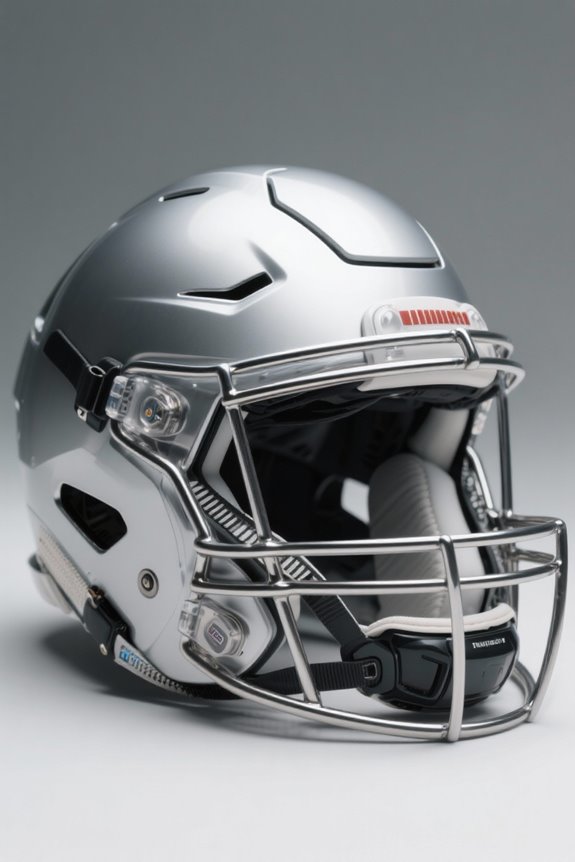
The shift from leather to plastic football helmets marked a significant advancement in player safety and equipment durability, beginning with Riddell’s introduction of the first plastic helmet in 1939. This material evolution allowed helmets to maintain better structural integrity during collisions, as plastic offered improved durability compared to leather. However, early plastic helmets faced challenges, including manufacturing defects that led to their temporary ban in the NFL in 1948. By 1949, advancements in plastic formulations resolved these issues, and helmets were re-adopted. The change fostered an environment for further innovations, as the introduction of polycarbonate shells in the 1980s provided enhanced impact resistance, allowing for lighter helmets that sustained structural integrity while improving player comfort. Furthermore, the technology behind hand shields evolved alongside helmets, demonstrating the ongoing commitment to improve safety in football training and gameplay.
Recommended Products

TOP-TIER PROTECTION: All Schutt F7 AiR models earned the highest rating from the independent Virginia Tech Helmet Lab

Football's first ever position-specific helmet, engineered for reducing linemen's repetitive, low velocity helmet impacts

The Flex System has flexibility engineered into the shell, facemask and clip to reduce impact force
The Role of Face Masks in Enhancing Player Safety
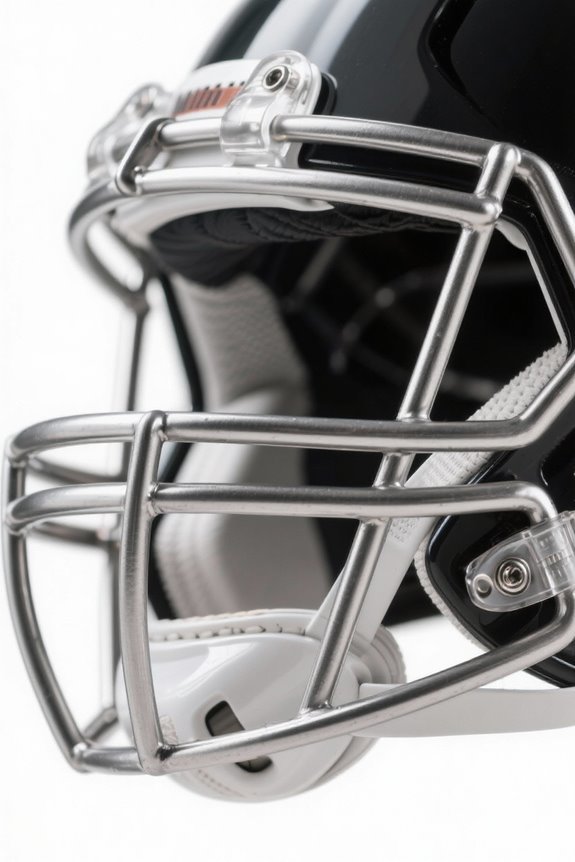
Facemasks have played an essential role in enhancing player safety by greatly reducing the incidence of facial injuries during football games. Initially introduced by Vern McMillain in 1935, facemask design has evolved considerably. Early designs included a single bar, providing minimal protection, but advancements led to multiple-bar configurations that better shielded players’ faces from injury. The NCAA mandated helmet use with facemasks in 1939, formalizing their importance in injury prevention. By the 1960s, most NFL players wore facemasks, which drastically reduced facial injuries like broken noses and lost teeth. Nonetheless, as facemask technology progressed, player behavior changed, prompting safety regulations, including facemask penalties, to mitigate aggressive tactics that could lead to additional injuries on the field. Today, helmets feature advanced materials that enhance overall safety and impact absorption, contributing to the continued evolution of player protection.
Recommended Products

Football's first ever position-specific helmet, engineered for reducing linemen's repetitive, low velocity helmet impacts

Named top-ranked helmet by NFL & NFLPA helmet laboratory testing

Football's first ever position-specific helmet, engineered for reducing linemen's repetitive, low velocity helmet impacts
Innovations in Helmet Padding and Impact Absorption
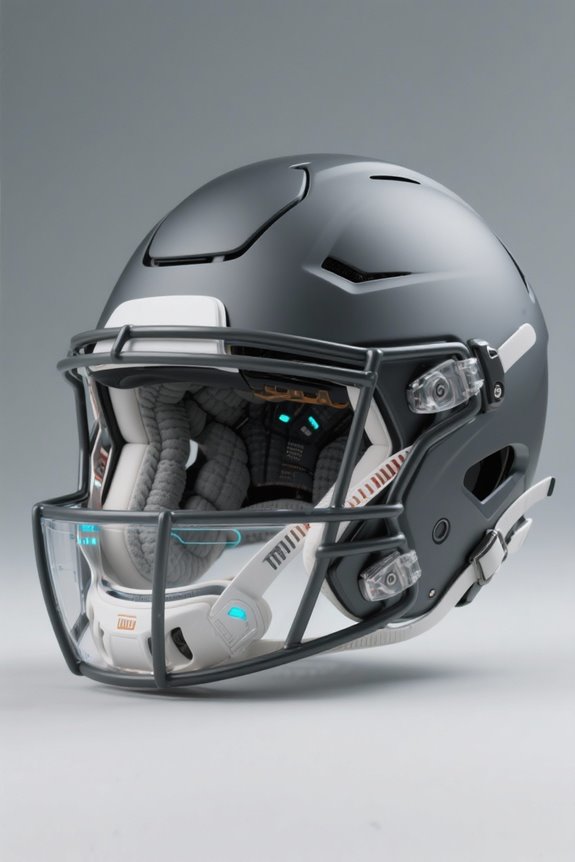
Innovative advancements in helmet padding technology have dramatically transformed player safety by enhancing impact absorption capabilities. Contemporary padding materials integrate multi-layered foam systems that optimize the dynamics of shock absorption, helping to distribute impact forces over a wider area. Research has shown that air-filled helmets introduced in the late 1970s provide adjustable protection, effectively adapting to various impact severities and player head shapes. In addition, modern developments include liquid-based shock absorber liners that can reduce impact forces by up to 33%, addressing both linear and rotational accelerations that lead to concussions. Innovations such as 3D-printed padding structures offer customization and enhanced resilience, ensuring that helmets continue to evolve in their role in safeguarding athletes from serious injury. Furthermore, the incorporation of the RFLX-S impact layer in new designs significantly enhances player protection by effectively absorbing and deflecting impact forces.
Recommended Products

Earned a 5-star safety rating in the Virginia Tech Helmet Ratings

ADVANCED IMPACT TECHNOLOGIES: CURV thermoplastic composite internal/external arch and epaulette
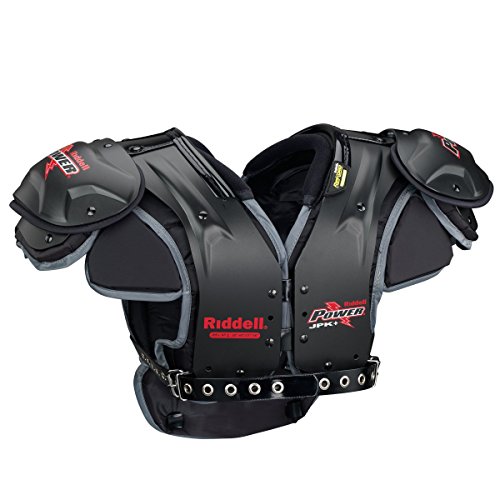
Integrated RipKord Technology
Helmet Safety Testing: Standards and Methodologies
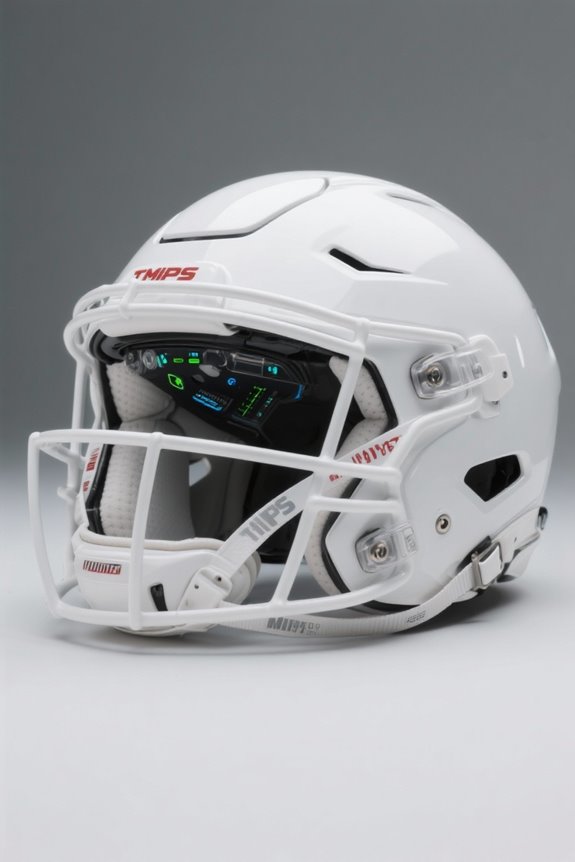
A thorough approach to helmet safety testing is critical for ensuring player protection in football, as substantial advancements in testing methodologies have improved the evaluation of headgear. The National Operating Committee on Standards for Athletic Equipment (NOCSAE) sets safety standards that require both drop tower and pneumatic ram testing to assess helmets’ effectiveness. The drop tower method involves 29 impacts per helmet across varied speeds and environmental conditions, while pneumatic ram testing simulates actual collision scenarios through multidirectional impacts. Additionally, rigorous protocols dictate the use of instrumented NOCSAE headforms, ensuring compliance through quality control measures. Ultimately, these extensive helmet testing procedures aim to continually enhance player safety outcomes in the dynamic environment of football. Moreover, advanced technologies like RipKord are integrated into modern helmets to provide enhanced protection against head injuries.
Integration of Technology in Modern Helmets
Recent advancements in helmet technology have revolutionized player safety protocols in football, building on established safety testing standards. Modern helmets now feature sensor integration that enables real-time monitoring of impact magnitude and direction during gameplay. These built-in sensors provide essential data to coaching and medical staff, allowing for early identification and analysis of potentially injurious hits. Such technology enhances response times to possible concussions and supports long-term injury research. Smart helmets, connected to advanced analytics platforms, empower teams with data-driven insights for informed safety decisions. Furthermore, the continuous development of impact-absorbing materials, layered systems, and soft-shell covers further improves overall helmet performance, demonstrating significant reductions in impact metrics and enhancing player protection on the field. This evolution is exemplified by VICIS helmets, which incorporate advanced impact absorption technologies and customizable fit systems.
Customization and Fit: Tailoring Helmets for Individual Players
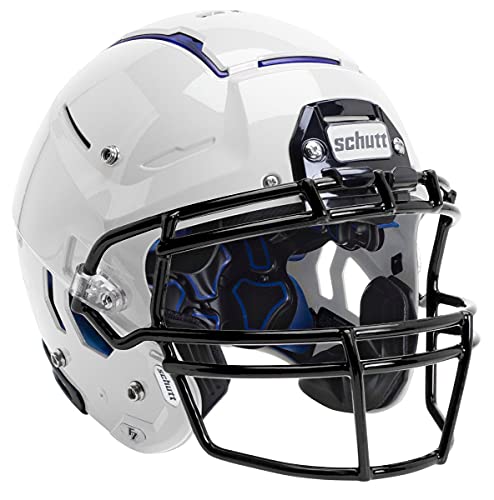
How can helmet designs better accommodate the unique needs of each player? Recent advancements in helmet technology emphasize personalized fitting through digital head scanning and ergonomic design. By utilizing 3D imaging, manufacturers can accurately capture the shapes of players’ heads, producing personalized digital avatars and eliminating generic sizes. Such technology enables ideal shell and padding configurations tailored for each athlete’s comfort and safety. Additionally, helmets like Schutt’s fitting model incorporate sensors that map pressure distribution on the player’s head, facilitating customized interior padding. These innovations, alongside adjustable internal systems, guarantee a precise fit that adapts over time, preserving balance and reducing pressure points. Overall, these customized solutions greatly enhance helmet performance and player experience on the field. Furthermore, innovative designs, like those seen in football training equipment, allow for enhanced protection without compromising player mobility.
Recommended Products

Earned a 5-star safety rating in the Virginia Tech Helmet Ratings; with a 1.35 score, only the VICIS ZERO2 scored better

Virginia Tech 5-Star helmet; ranked 1st among 31 helmets tested with a 0.19 score (Average 5-Star youth helmet: 2.82 – lower score indicates better performance)
Only compatible with carbon steel facemasks
The Influence of Research on Helmet Design and Safety
As research increasingly informs helmet design and safety, significant advancements arise in understanding the complexities of head trauma associated with football. Recent research advancements highlight the potential of liquid shock absorbers, which can reduce concussive and subconcussive impact severity by approximately 33% compared to traditional foam helmets. These materials adapt to diverse impact velocities, proving more effective in safeguarding players against both fast and slow impacts. Further, enhanced testing protocols incorporating rotational forces have compelled organizations like NOCSAE to revise safety standards, focusing on real-world impact scenarios. Innovative non-destructive testing techniques, such as pneumatic impact rams, provide essential data for refining helmet components. Collectively, these developments present vital design implications for future helmet innovation, ensuring improved player safety and performance. Additionally, the increasing emphasis on collector satisfaction reflects the necessity of creating helmets that not only prioritize safety but also appeal to fans and collectors alike.
Manufacturer Transparency and Competition in Helmet Safety
In an era where player safety is paramount, the role of manufacturer transparency in helmet safety standards has become increasingly critical. Organizations like the National Operating Committee on Standards for Athletic Equipment (NOCSAE) establish publicly available performance standards, ensuring that helmets are validated through rigorous certification processes. Independent verification by the Safety Equipment Institute (SEI) confirms safety claims, enhancing safety accountability among manufacturers. Transparency facilitates consumer access to lists of certified helmets for different age groups and safety levels, promoting informed choices. Competition among leading manufacturers, such as Riddell and Schutt, drives innovation, as companies develop helmets with advanced materials and integrated safety technologies. These dynamics push manufacturers to continuously adapt to new standards, ensuring ongoing improvements in helmet safety. This is particularly evident with Riddell SpeedFlex helmets which feature state-of-the-art technology designed to enhance player protection and comfort.
Future Trends in Football Helmet Technology and Safety
Future trends in football helmet technology and safety focus on a multifaceted approach to enhancing player protection through innovative designs and advanced materials. Manufacturers are increasingly developing position-specific designs that address unique impact patterns, utilizing 3D scanning for custom-fit helmets that improve safety and comfort. Advances in materials, such as thermoplastic polymers, contribute to superior strength-to-weight ratios, while liquid shock absorbers reduce impact forces considerably. Additionally, emerging focus on helmet sustainability incorporates eco-friendly materials, minimizing environmental impacts. Embedded sensors offer real-time monitoring of impact data, informing adaptive safety measures and informing iterative design improvements. Collectively, these innovations promise to enhance protective capabilities and elevate safety standards within the sport. The ongoing collaboration among experts guarantees continued advancement in this crucial area, including developments in patented side impact protection that ensure player safety.
Frequently Asked Questions
How Often Should Football Helmets Be Replaced for Safety?
Football helmets should be replaced every ten years to meet established replacement standards. However, factors like visible wear, damage, or lack of a manufacture date may necessitate earlier replacement to guarantee peak helmet lifespan and player safety.
Are All Football Helmets Subjected to the Same Safety Testing?
Not all football helmets undergo identical testing standards; rigorous helmet certification processes vary by age group and league. Youth helmets face distinct evaluations, while professional models undergo stringent assessments to address high-impact requirements and safety demands.
What Materials Are Banned in Modern Football Helmets?
Banned materials in modern football helmets include outdated plastics, certain leather types, and components that shatter upon impact. Helmet construction now prioritizes advanced composites and design elements that enhance impact absorption and overall player safety.
How Do Player Age and Position Affect Helmet Design?
Player age and position greatly influence helmet design, with youth football helmets prioritizing lightweight, flexible materials for safety, while positional differences lead to tailored features concerning impact protection and comfort to accommodate unique collision risks.
Can Helmet Technology Fully Prevent Concussions in Football?
Helmet technology cannot fully prevent concussions in football. Despite advancements in helmet effectiveness and protective features, significant risks remain due to impacts’ nature, showcasing limitations in concussion prevention, particularly against rotational and cumulative forces.


