As an Amazon Associate, we earn from qualifying purchases. Some links on this site are affiliate links at no extra cost to you. Our recommendations are based on thorough research and editorial judgment.


What Are The Different Types Of Football Cleats And Their Uses?

Football cleats come in three primary types: low-cut, mid-cut, and high-cut, each designed for specific roles and playing conditions. Low-cut cleats enhance mobility, suitable for speed-oriented positions like wide receivers. Mid-cut cleats balance support and flexibility, beneficial for players requiring rapid directional changes, such as running backs. High-cut cleats provide maximum ankle stability, ideal for linemen facing intense physical confrontations. Understanding these distinctions is essential for optimizing performance on various playing surfaces, with further exploration revealing more about their features and benefits.
Key Takeaways
- Football cleats come in three main ankle heights: high-cut for stability, mid-cut for balanced support and flexibility, and low-cut for maximum agility.
- Molded cleats provide consistent traction on firm ground, while detachable cleats allow customization for varying field conditions.
- Firm ground (FG) cleats are ideal for natural grass surfaces, while soft ground (SG) cleats excel in muddy conditions with longer studs.
- Artificial grass (AG) and multi-ground (MG) cleats are designed for synthetic fields, featuring shorter studs to maximize traction without damaging turf.
- Proper fit and comfort are crucial for performance and injury prevention, making correct cleat selection essential based on player position and field type.
Understanding Ankle Heights in Football Cleats
When choosing football cleats, how does ankle height impact performance and injury risk? High-cut cleats provide maximum ankle support by extending well above the ankle, which enhances stability against twisting motions. These are preferred by linemen who engage in physical confrontations where strong footing is vital. Conversely, mid-cut cleats offer a balance between support and agility, allowing for rapid movement while mitigating some ankle injury risks. A study indicates that high-top cleats do not markedly lower the incidence of ankle sprains compared to mid or low options. Ultimately, player positions dictate cleat selection, as durability and traction also influence cleat performance. Comfort and fit remain essential aspects in safeguarding against ankle injuries, regardless of cleat height. Players often favor lightweight designs like adidas Men’s Adizero for enhanced speed and performance on the field.
Low-Cut Cleats: Mobility and Agility
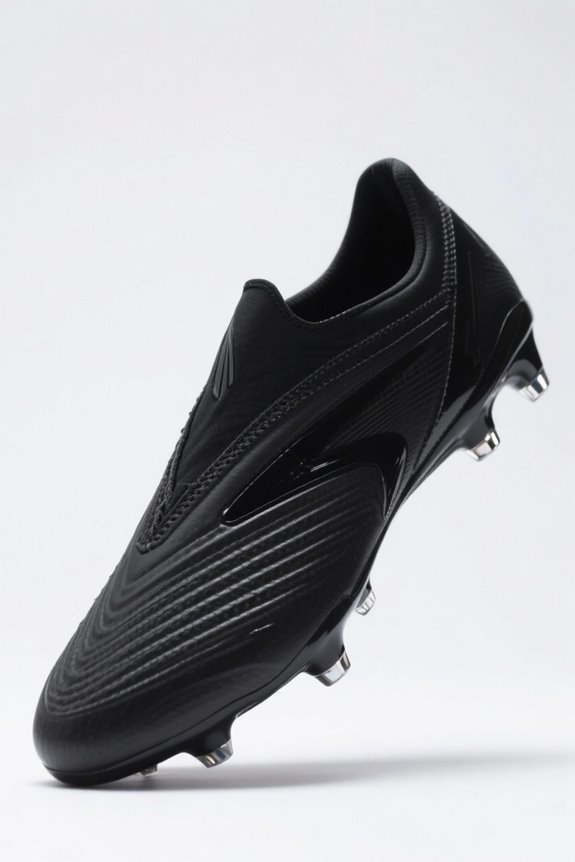
Low-cut cleats serve as an essential component in enhancing mobility and agility for players on the football field, particularly for those in speed-focused positions. These cleats utilize a lightweight construction, promoting speed and reducing fatigue during intense gameplay. Their flexible uppers facilitate natural foot movement while enabling players to make quick directional changes. Ideal for wide receivers and defensive backs, low-cut cleats support sharp cuts, breakaways, and high-speed sprints. While they allow maximum ankle mobility and improve body responsiveness, they offer minimal ankle support, making them less suitable for positions requiring robust protection against sprains. Overall, their design focuses on optimizing traction, ensuring stability during fast-paced plays, and reducing muscle fatigue for enhanced performance. Players benefit from specialized traction patterns that guarantee stability during rapid directional changes.
Mid-Cut Cleats: Balance of Support and Flexibility
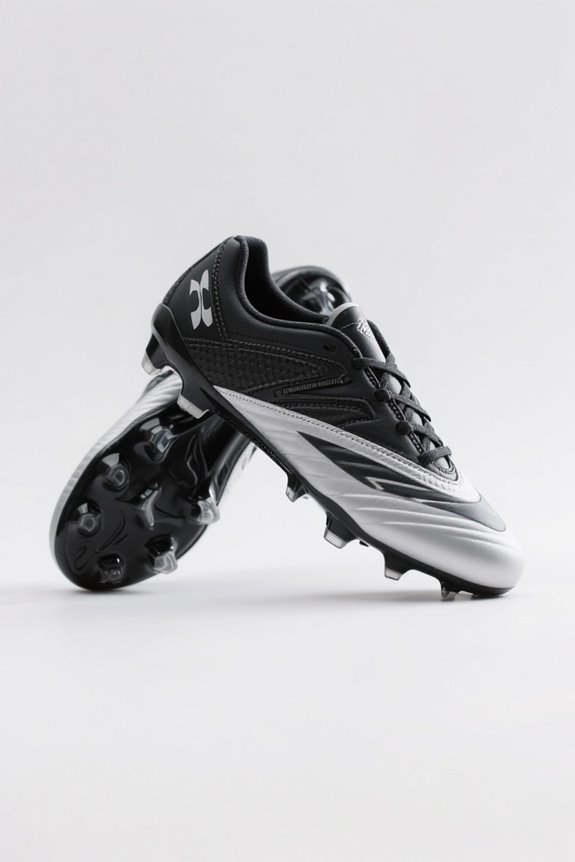
Mid-cut cleats represent an essential choice for football players seeking a harmonious blend of support and flexibility on the field. Extending above the ankle, mid-cuts provide increased ankle support benefits compared to low-cut options, while allowing greater freedom of movement than high-cuts. This design greatly aids players, particularly running backs, quarterbacks, and linebackers, who require stability during quick direction changes and contact plays. For effective cleat selection tips, it is advisable to take into account factors such as fit and the degree of ankle coverage required. Mid-cut cleats, often lightweight yet durable, enhance performance by ensuring traction on various surfaces and resisting debris, thereby making them a preferred option for those needing protection without sacrificing agility. Additionally, many mid-cut cleats are designed with aesthetically appealing looks which can boost player confidence on the field.
Recommended Products

360-Degree Flyknit Construction: Provides a secure, second-skin fit for superior lockdown and support.

Game-Changing Performance: Nike Alpha Menace Pro 2 football cleats deliver a snug, locked-down fit, foam cushioning, and responsive traction to elevate your on-field performance.

High-Cut Cleats: Stability for High-Impact Roles
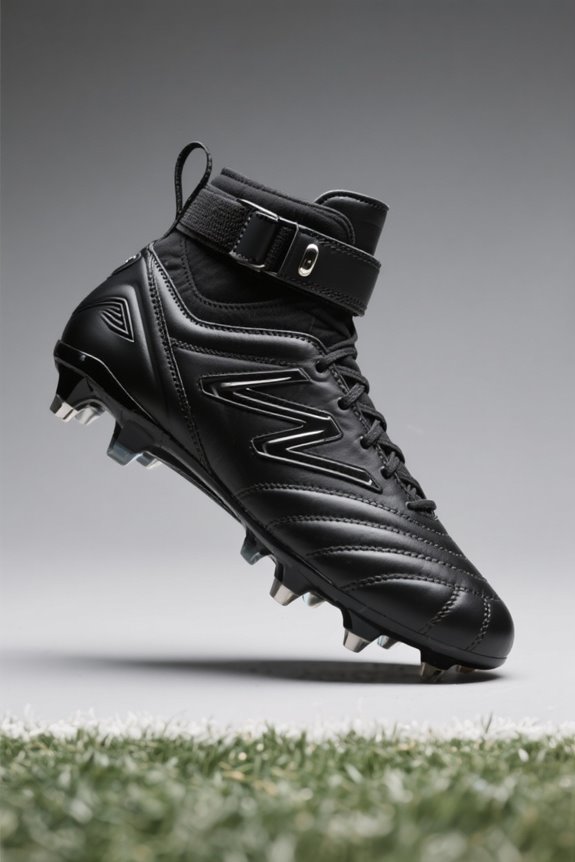
High-cut cleats offer essential ankle stability and support, making them an ideal choice for football players in high-impact roles. These cleats extend above the ankle, providing critical protection against twisting and rolling injuries, often encountered by linemen and other players involved in physical confrontations. The snug fit reduces lateral ankle movement, effectively lowering the risk of sprains, consequently contributing to injury prevention. While high-cut cleats are especially favored by offensive and defensive linemen, they may not suit skill positions focused on speed and agility. The increased material used for ankle support may compromise mobility, yet the high cut benefits outweigh these trade-offs for those prioritizing stability during intense play in the trenches. Additionally, traction and grip features found in these cleats enhance performance on the field by improving maneuverability.
Exploring Stud Designs: Molded vs. Detachable
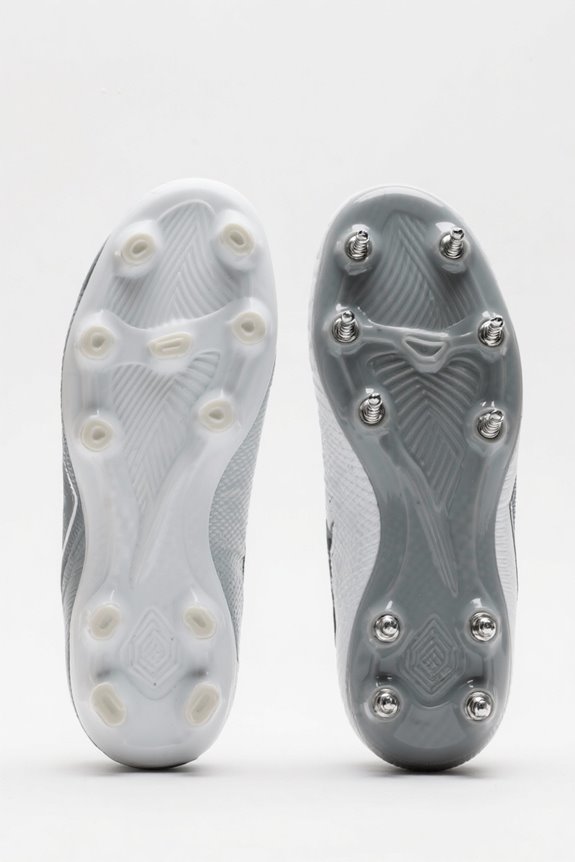
When discussing football cleats, an essential consideration pertains to the stud designs, namely molded versus detachable options, which greatly influence performance on various playing surfaces. Molded cleats feature fixed studs made from plastic or rubber, offering consistent traction for firm ground or artificial turf. This cleat technology is designed for durability, minimizing maintenance needs while ensuring stability. Conversely, detachable cleats allow players to customize stud configuration, with removable studs that can optimize grip on soft ground. These cleats penetrate deeper into muddy surfaces, maximizing traction. However, they require regular maintenance to prevent detachment during gameplay. Each design serves specific conditions, with molded cleats being preferable for stable surfaces and detachable studs excelling in wet, challenging environments. Additionally, traction capabilities are critical for performance in varied conditions, making the choice of cleat type significant for all athletes.
The Benefits of Molded Cleats
Numerous players in the football community prefer molded cleats due to their distinct advantages in usability and performance. These cleats offer molded advantages such as a lower price point, which makes them budget-friendly for many athletes. With permanently fused studs, molded cleats require less maintenance compared to detachable options, simplifying cleaning and reducing the risk of losing components. Their lightweight design enhances speed and agility, providing reliable traction on artificial turf and firm surfaces. However, the fixed stud configuration limits adaptability to varied playing conditions, potentially affecting performance on softer ground. While molded cleats are convenient and simple to use, player preferences often lean towards balance between performance and durability, considering their overall lifespan and usage recommendations. Additionally, athletes often seek low football cleats that combine comfort and performance for optimal on-field execution.
Advantages of Detachable Cleats
Detachable cleats offer significant advantages for football players, particularly with their ability to adapt to diverse field conditions. The flexibility to switch studs allows athletes to optimize traction, enhancing performance across various surfaces, from dry grass to muddy fields. This stud customization supports players’ unique requirements, while ensuring cleat durability, as individual worn or broken studs can be replaced without the need for full cleat replacement. Consequently, this leads to a longer lifespan for the cleat base itself. Additionally, different stud lengths can improve grip in adverse weather, reducing slip risks and potential injuries. To summarize, detachable cleats provide essential benefits, including adaptability, enhanced performance, and cost efficiency, crucial for players aiming to maintain peak athletic capabilities. Moreover, the option for customization of cleat studs allows players to tailor their cleats specifically to the conditions they will encounter on the field.
Rubber Bottom Cleats for Turf Play
Rubber bottom cleats have emerged as a preferred choice for athletes competing on artificial turf, given their unique design characteristics that optimize performance on synthetic surfaces. These cleats feature short rubber studs, which maximize traction while preventing deep penetration into the turf, an important factor outlined in turf performance analysis. The rubber outsoles offer flexibility and support, effectively reducing joint stress, thereby enhancing comfort during play. Moreover, rubber cleats demonstrate an ability to facilitate quick movements, essential for fast-paced games. While gauging cleat selection factors, it is vital to note that these cleats excel on hard surfaces but may not perform as effectively on natural grass. Diverse options in the market allow for tailored choices based on personal preferences and playing conditions. Consequently, maintaining rubber cleats through regular cleaning guarantees ongoing performance and durability.
Field Type Considerations for Cleat Selection
When selecting football cleats, the type of field greatly influences the appropriate choice, as varying conditions demand specific features for ideal performance. For instance, Soft Ground (SG) cleats, with longer, metallic studs, are best for muddy and wet natural grass, ensuring deep traction. In contrast, Multi-Ground (MG) cleats offer versatility for players adjusting between various surfaces, combining elements from both Firm Ground and Artificial Grass designs. Meanwhile, Artificial Grass (AG) cleats are tailored for modern synthetic turf, featuring shorter rubber studs that reduce abrasions. Understanding cleat technology and its impact on field maintenance is essential; improper selection might lead to injuries or damage to the playing surface. Additionally, evaluating traction features can significantly enhance overall performance on the field. As a result, careful consideration of field type is important for selecting the right football cleats.
Firm Ground (FG) Cleats: Conditions and Use
Firm Ground (FG) cleats are specifically engineered to excel on natural grass surfaces that maintain a compact and firm texture, making them a preferred choice for many football players. These cleats feature molded plastic studs, often conical or bladed, designed for ideal traction and stability during quick movements. FG cleat characteristics include a sole plate made of rigid plastic to support evenly spaced studs, which help distribute weight to prevent excessive pressure. They perform best on hard natural grass, in dry to mildly damp conditions, but should be avoided on very soft or muddy fields. Regular FG cleat maintenance, including cleaning after play, is essential for preserving stud integrity and maximizing performance. Additionally, the use of aggressive outsoles in these cleats enhances grip, allowing for swift acceleration on the field.
Soft Ground (SG) Cleats: Maximum Traction
Soft Ground (SG) cleats are specifically designed to provide maximum traction and stability on soft, muddy, and wet playing surfaces, making them essential for athletes competing in adverse conditions. The cleat technology employed in SG cleats features longer studs, often conical or bladed, which enhance grip and reduce slippage during play. Traction testing confirms that these studs penetrate the ground effectively, ensuring stable footing. Additionally, anti-clog technology is integrated to prevent mud from sticking, ensuring consistent performance throughout competitions. Constructed from lightweight yet durable materials, these cleats allow improved agility and control on slippery fields, greatly reducing the risk of injury. Their design is particularly suited for rainy games and early morning contests, where ideal grip is vital for competitive advantage.
Recommended Products


Nike Gripknit, a sticky texture that provides grip where you need it, gives you the control you need for ultimate precision. It provides equal grip in wet or dry conditions.

Nike Men's Football Cleats
Artificial Grass (AG) Cleats: Performance on Synthetic Fields
Artificial Grass (AG) cleats are specifically engineered for ideal performance on synthetic playing surfaces, addressing the unique challenges posed by artificial turf. These cleats feature shorter, rubber or plastic studs, which provide traction optimization without damaging the turf fibers. The optimized stud height facilitates that players maintain grip without excessive penetration, making them suitable for quick movements. Bladed stud configurations enhance stability, allowing for sharper turns necessary in football gameplay. Additionally, AG cleats also focus on injury prevention by balancing traction levels and minimizing rotational resistance, thereby reducing stress on ligaments during rapid pivots. These designs enable athletes to maintain speed and agility on uniform surfaces, ultimately improving their overall performance while minimizing the risk of injuries commonly associated with synthetic fields.
Multi-Ground (MG) and Turf (TF) Cleats
When players seek versatile footwear that accommodates various playing surfaces, Multi-Ground (MG) and Turf (TF) cleats emerge as suitable options for their performance needs. Multi-Ground cleats feature a hybrid plate of circular and bladed studs, offering surface adaptability benefits for natural grass, synthetic fields, and hard grounds. In contrast, Turf cleats are designed specifically for artificial surfaces, utilizing short rubber studs for peak traction without damaging the turf. Both cleat types require proper maintenance; cleat maintenance tips include cleaning studs after use and avoiding excess moisture to prolong their lifespan. Ultimately, selecting the right cleat type enhances performance, comfort, and safety while minimizing the risk of injury during play on varied surfaces.
Position-Specific Cleat Recommendations
Position-specific cleat recommendations are essential for optimizing performance on the football field, as different roles demand unique footwear characteristics tailored to individual athletic needs. Wide receivers and defensive backs benefit from low-cut cleats, which emphasize speed and agility, featuring enhanced traction and flexible materials, such as the Nike Vapor Edge Pro 360. Running backs require mid-cut cleats that blend power and quickness, exemplified by models like the Under Armour Highlight MC, balancing stability and agility. Quarterbacks, demanding both agility and stability, prefer mid-cut designs with responsive traction, such as the Nike Vapor Edge Speed 360. Conversely, offensive and defensive linemen necessitate high-cut cleats for maximum ankle support, with durable models like the Nike Force Savage Elite 2 addressing their specific position demands through advanced cleat technology.
Material Innovations in Football Cleat Design
Material innovations in football cleat design have undergone substantial advancements, revolutionizing how athletes interact with the playing surface. The benefits of 3D printing include customized support and lighter weight, as seen in models like the Nike Vapor Ultimate. Auxetic materials, prominent in Under Armour’s UA Clone, enhance fit by dynamically adjusting to individual foot shapes. Knit technology advancements, such as Nike Flyknit, provide a breathable, “second skin” experience with reduced irritation risks. Furthermore, traction plate enhancements allow for tailored grip across various playing surfaces, greatly improving performance during rapid movements. Additional sustainable cleat features, focusing on reduced material use, contribute to eco-friendly footwear options, while adaptive fitting technologies guarantee maximum comfort and control for athletes in high-intensity situations.
Frequently Asked Questions
How Do I Properly Clean and Maintain My Football Cleats?
Proper cleat cleaning involves removing debris, using mild soap, and air drying. Maintenance tips include inspecting for wear, conditioning leather, rotating pairs, and storing in a ventilated space to prolong longevity and performance.
What Size Should I Choose for Optimal Cleat Fit?
Ideal cleat sizing requires following fitting guidelines that accommodate both length and width, ensuring comfort without pressure points. Testing cleats with game socks and considering foot shape can enhance overall performance on the field.
Can I Wear Football Cleats for Other Sports?
Football cleats are not recommended for other sports, as they lack the necessary traction and flexibility found in soccer cleats or baseball cleats. Using them can hinder performance and increase the risk of injury.
What Are Common Brands for Youth Football Cleats?
“Variety is the spice of life.” Popular youth brands for cleats include Nike, adidas, Under Armour, Jordan Brand, and Phenom Elite, each offering diverse cleat options designed to enhance performance while ensuring comfort and support for young athletes.
How Often Should I Replace My Cleats?
To maintain ideal performance, players should replace cleats every one to two seasons. Cleat longevity varies by usage and surface, as worn cleats lead to performance decline and increased risk of injury on the field.


