As an Amazon Associate, we earn from qualifying purchases. Some links on this site are affiliate links at no extra cost to you. Our recommendations are based on thorough research and editorial judgment.

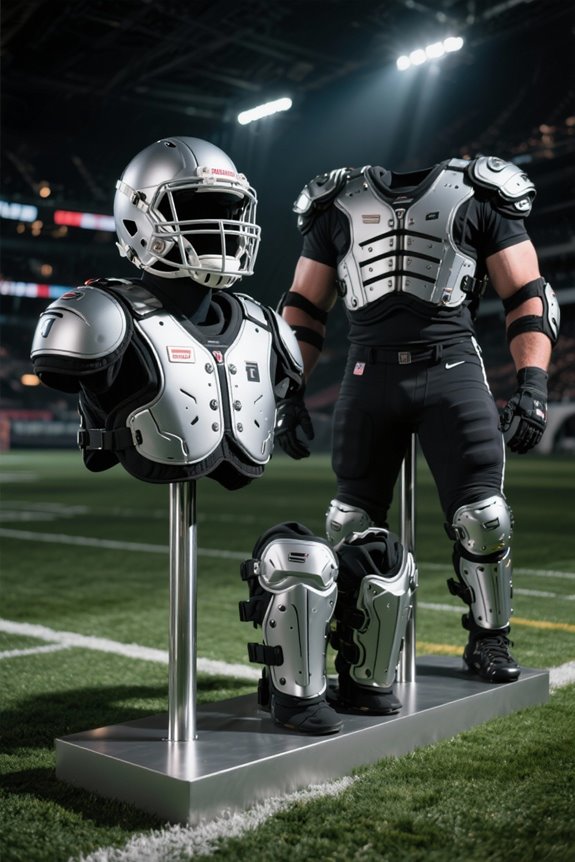
What Padding Do Quarterbacks And Linemen Wear Differently?

Quarterbacks and linemen wear shoulder pads designed for distinct functions. Quarterbacks utilize lightweight, flat pads to enhance mobility, allowing for swift arm movements, while linemen prefer bulkier, cantilevered pads that prioritize protection and impact absorption during frequent collisions. The materials differ as well; linemen’s pads feature thicker foam for shock resistance, whereas quarterbacks benefit from breathable, moisture-wicking designs. These tailored features reflect the varied demands of each position, ensuring safety and performance on the field. Further exploration reveals additional nuances related to shoulder pad technology.
Key Takeaways
- Quarterbacks wear lighter, flat-profile pads for enhanced arm mobility and quick rotational movement, while linemen use bulkier cantilevered pads for maximum impact absorption and protection.
- Linemen’s shoulder pads feature thicker foam layers to absorb collisions, whereas quarterbacks’ pads use high-density foam for agility without compromising safety.
- Moisture-wicking linings in quarterbacks’ pads promote breathability, while linemen’s pads utilize abrasion-resistant materials for durability against frequent impacts.
- Fit differs: quarterbacks prefer snug, comfortable designs for freedom of motion, while linemen require a secure fit that balances coverage and flexibility.
- Quarterbacks benefit from pads with ion channels for breathability, while linemen’s pads often include advanced shock absorption technologies to handle repetitive impacts.
Design and Purpose of Shoulder Pads
Shoulder pads serve a critical role in American football, designed specifically to protect players while accommodating their unique movement requirements. The design variances between linemen and quarterbacks underscore their distinct padding functionality. Linemen utilize larger, bulkier shoulder pads for extensive coverage, absorbing and dispersing impact from frequent collisions. These pads feature extended protection for the chest, shoulders, and back. In contrast, quarterback pads prioritize mobility, incorporating tapered designs with lighter materials to facilitate swift movements, such as throwing. They minimize bulk in the chest and back areas. Advanced padding technologies, including high-density foam for linemen and TPU cushioning for quarterbacks, enhance both impact absorption and comfort, ensuring each player receives ideal protection tailored to their role on the field. Additionally, Schutt shoulder pads are engineered to provide optimum safety and performance across different athlete positions.
Recommended Products

Medium + Super Skill Combination: Configured with - Super Skill Arch, Super Skill Epaulets, Super Skill Cups and a Skill 3/8” Shoulder Foam. Each shoulder pad and size combination is uniquely configured by our experts to ensure maximum safety and performance for your exact needs on the field.

PROTECTION FOR TOUGH POSITIONS: TAG ALT4-950 shoulder pads feature high-impact polycarbonate epaulets and NV815 super foam for top energy absorption, built specifically for running backs, linebackers, fullbacks and defensive backs.

One Bundle, Full Coverage: Shoulder pads, back plate, and wrist coach working together to give skill position players everything they need — protection, breathability, and play management all in one package.
Material and Construction Differences
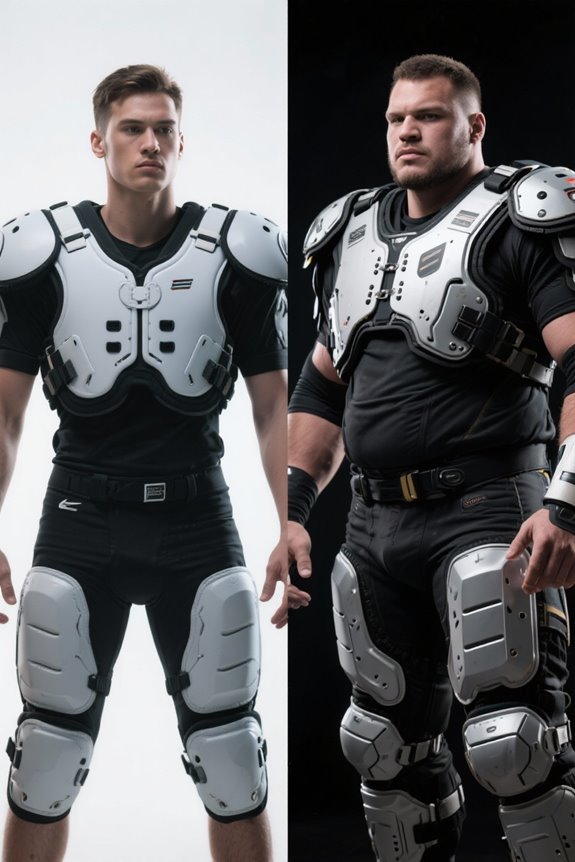
In American football, the distinction between materials and construction methods used for quarterback and linemen pads is pivotal for optimizing player performance and safety. Quarterback pads typically employ lightweight, high-density foam, enhancing mobility while integrating advanced synthetic fibers for ventilation. In contrast, linemen pads utilize thicker, denser foam layers and reinforced plastic shells designed for maximum shock absorption under heavy impacts. Material comparisons reveal that quarterbacks benefit from moisture-wicking linings, while linemen favor abrasion-resistant exteriors to withstand constant contact. Construction techniques differ as well; quarterbacks’ pads feature flat profiles for flexibility, while linemen’s pads adopt cantilevered designs to protect vulnerable areas. Such differences underscore the necessity for tailored equipment to meet the unique demands of each position. Additionally, the selection criteria for linemen shoulder pads emphasize protection and fit, ensuring linemen are adequately safeguarded during intense gameplay.
Cantilevered vs. Flat Pad Designs
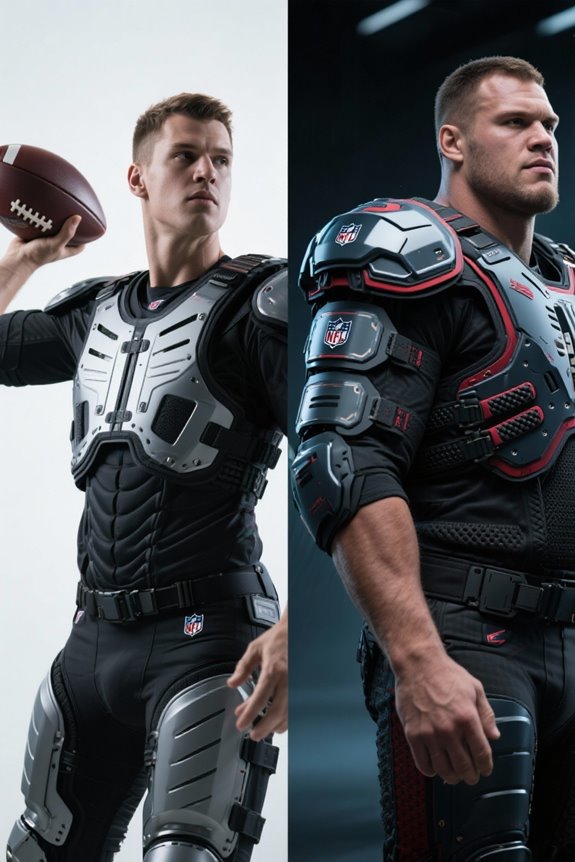
The distinction between cantilevered and flat pad designs plays an essential role in meeting the diverse requirements of players on the football field. Cantilevered pads feature an arched shell that disperses impact, making them suitable for linemen who encounter frequent collisions. This design evolution prioritizes protection over agility, which can affect mobility and throwing mechanics if misapplied to skill positions. Conversely, flat pads sit closer to the body, allowing for enhanced shoulder flexibility and a lightweight feel, aligning with the needs of quarterbacks and skill players requiring mobility. This pad technology enables quicker rotational movements, reducing fatigue during games. Additionally, Riddell’s STAC Shoulder Pad System enhances comfort and support, further differentiating options available for various player types. Ultimately, the choice between designs hinges on the specific demands of player roles, reflecting the intricacies of football equipment adaptation.
Impact Resistance Requirements
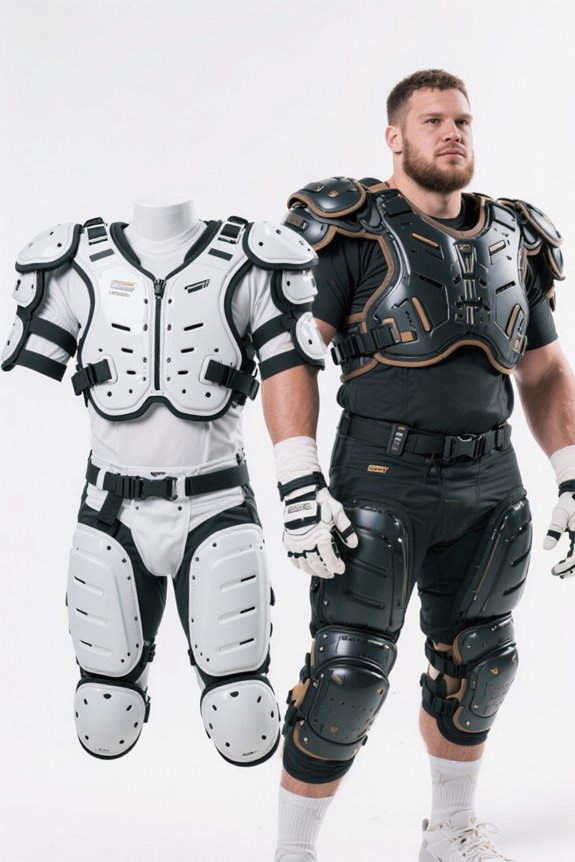
Impact resistance requirements for football helmets have evolved substantially to address the distinct needs of different player positions, ensuring safety during high-impact scenarios. The National Operating Committee on Standards for Athletic Equipment (NOCSAE) establishes performance standards that helmets must meet, undergoing rigorous testing, including 29 diverse impacts and six critical testing locations at varying speeds. Newly implemented rotational threshold standards demand helmets mitigate both linear and rotational forces during collisions. Position-specific testing simulates real-game helmet-to-helmet and helmet-to-ground impacts. Quarterbacks require lighter padding for awareness, while linemen utilize denser padding for repeated impacts. Technologies like liquid-filled shock absorbers and advanced materials are designed to enhance impact resistance, showcasing significant reductions in head acceleration metrics necessary to minimize concussion risks across various player roles. The Air Fit Liner System in helmets like the Riddell SpeedFlex also plays an integral role in achieving personalized fit and comfort during play.
Recommended Products

The Flex System has flexibility engineered into the shell, facemask and clip to reduce impact force

Patented side impact protection PSIP research based mandible protection helps reduce the forces from side impacts

Patented side impact protection PSIP research based mandible protection helps reduce the forces from side impacts
Fit and Comfort Considerations
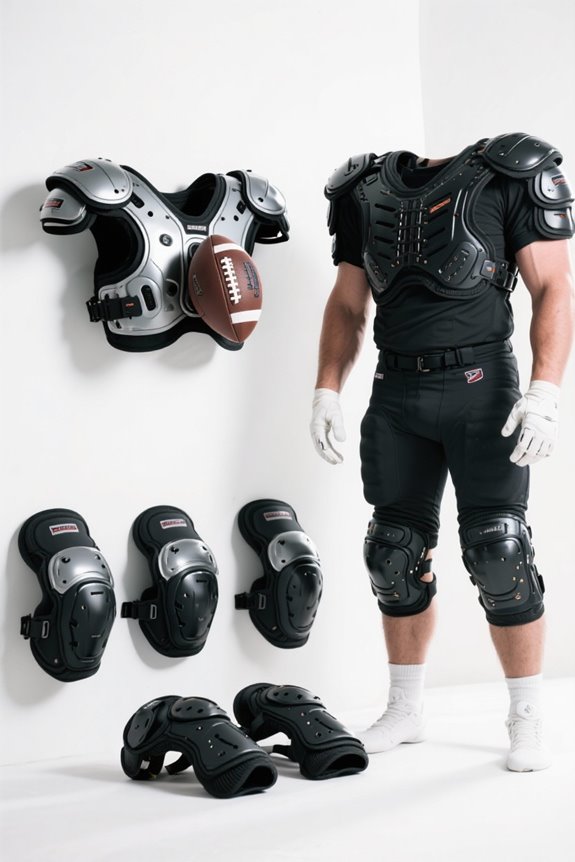
Fit and comfort considerations for football padding vary considerably between quarterbacks and linemen, as each position demands unique characteristics to optimize performance and safety. Quarterbacks typically prioritize a lighter, low-profile design to maximize arm mobility, facilitating throwing mechanics while maintaining comfort levels. Fit adjustments are essential for linemen, who require a snug, protective fit that balances coverage with flexibility for blocking. Linemen generally use denser foam and additional straps to guarantee a stable, locked-in feel, while quarterbacks may opt for breathable foam and ventilation designs to mitigate overheating. Both positions benefit from pads that resist compression, enhancing durability, but differ distinctly in how bulk impacts performance and overall comfort levels during gameplay. Factors such as impact absorption are crucial for ensuring safety while maintaining the necessary fit for each player’s specific role on the field.
Key Features of Linemen Shoulder Pads
Key features of linemen shoulder pads are designed to cater to the specific demands of players in this position, where protection and mobility are paramount. The shoulder pads feature a flat, low-profile design that minimizes grab points, thereby reducing the risk of holding penalties. Enhanced coverage is achieved through larger epaulets and a cantilever arch system, employing advanced padding technology to absorb impact and guarantee safety during aggressive plays. Ventilation is optimized with breathable materials and integrated airflow channels that manage heat effectively. Additionally, weather-resistant fabrics maintain performance in various climates. With adjustable fit systems and reinforced stitching, these shoulder pads adhere to strict protection standards, guaranteeing durability and effectiveness over the duration of the game. These protective features can improve overall athletic performance, allowing linemen to focus on their gameplay without compromising safety.
Recommended Products
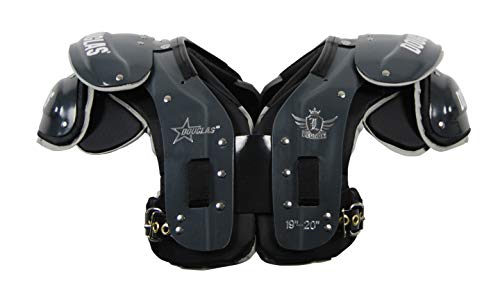
Great for OL, DL, LB, DE, TE
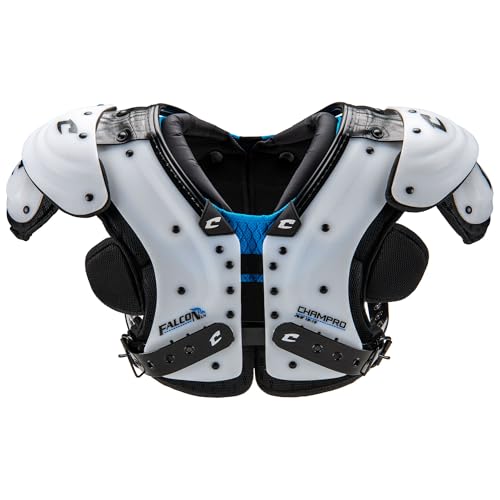
Breathable, lightweight polyester/spandex fabric ensures a supportive, snug fit.

Breathable, lightweight polyester/spandex fabric ensures a supportive, snug fit.
Key Features of Quarterbacks Shoulder Pads
Quarterbacks shoulder pads are engineered to provide maximum protection and mobility, vital for players in this significant position. These pads utilize padding innovation, featuring lightweight construction that enhances mobility without compromising safety. The low-profile design allows for ideal arm motion and improved field vision, essential for effective passing. Many models incorporate a two-in-one system, combining a compression vest with removable protective plates to minimize bulk while maximizing freedom of movement. High-density impact foam is strategically placed for shock absorption, focusing on areas vulnerable to impacts. Additionally, the pads’ contoured fit guarantees coverage without excessive overhang, allowing quarterbacks to comfortably raise their arms for throwing. Enhanced ventilation channels improve breathability, further supporting mobility enhancement during gameplay. Furthermore, these pads often include advanced shock absorption capabilities, such as leaf spring technology, which ensures comprehensive protection against impacts.
Position-Specific Padding Needs
The distinct padding needs for football positions arise from the fundamental differences in their roles, particularly between quarterbacks and linemen. Quarterbacks require padding customization that emphasizes mobility, resulting in lighter, low-profile pads that facilitate arm swings and throwing motions. In contrast, linemen benefit from bulkier, rigid designs aimed at maximizing impact absorption during frequent collisions. Their pads often feature thicker, denser materials covering larger areas for protective coverage, particularly around the shoulders and chest. This positional variation illustrates how quarterback pads prioritize flexibility and targeted protection, while linemen’s pads focus on durability and extensive impact resistance. Overall, each role demands specific padding adaptations to meet the physical challenges encountered on the field, ensuring ideal performance and safety. Additionally, the importance of material durability in shoulder pads ensures both players are adequately protected throughout the season.
Shoulder Pad Selection Guidelines
Selecting the appropriate shoulder pads is essential for ensuring both safety and performance on the football field, as improper fitting can lead to injury or ineffective play. Proper padding selection involves ensuring that the pads fully cover the shoulders and extend just beyond them, while both front and back pads should secure important areas like the chest and upper back comfortably. Fitting techniques dictate that pads should fit snugly without causing tightness around the neck or arms to maintain movement. Additionally, choosing pads that meet certification standards, incorporate antimicrobial fabrics, and feature adjustable straps enhances safety and fit. Regular maintenance, including cleaning and inspection, is critical for extending the usable life and efficacy of shoulder pads for players. Furthermore, just like shin guard selection ensures proper protection, well-fitted shoulder pads greatly contribute to a player’s confidence on the field.
Frequently Asked Questions
How Do Shoulder Pads Affect a Player’s Performance on the Field?
Like a heavy anchor, restrictive shoulder pad types can hinder a player’s performance impact on the field, limiting mobility and throwing velocity, while optimized designs balance protection and freedom, enhancing overall athletic capability during gameplay.
What Are the Common Brands for Quarterback and Linemen Shoulder Pads?
Popular shoulder brands for quarterbacks include Battle Sports and XTECH, utilizing lightweight materials for mobility. In contrast, linemen prefer brands like Schutt Sports and Riddell, focusing on durable materials for heavy impact protection and coverage.
How Often Should Shoulder Pads Be Replaced?
Ironically, despite advancements in technology, shoulder pads boast a lifespan of only ten years. Their material durability diminishes over time, urging timely replacements to guarantee player safety and compliance with evolving standards. Safety first, after all!
Can Shoulder Pads Be Customized for Individual Players?
Shoulder pad customization is widely available, allowing players to tailor their gear for ideal player comfort. This customization includes adjustments for fit, coverage, and aesthetics, ensuring enhanced performance while meeting individual needs and preferences on the field.
What Is the Cost Difference Between Linemen and Quarterback Shoulder Pads?
A notable statistic reveals linemen shoulder pads can range from $150 to over $300. In a cost analysis and price comparison, these pads generally surpass quarterback pads, which typically start around $100 to $180.


