As an Amazon Associate, we earn from qualifying purchases. Some links on this site are affiliate links at no extra cost to you. Our recommendations are based on thorough research and editorial judgment.

What Is The Importance Of A Mouthguard In Football?

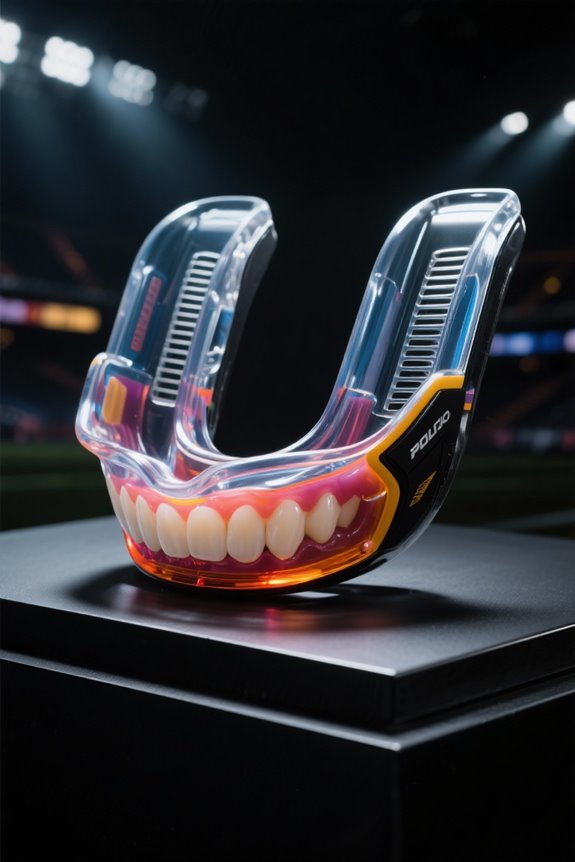
Mouthguards are essential in football as they notably mitigate the risk of dental injuries and concussions. Their use has led to a dramatic reduction in orofacial injuries, decreasing from nearly 50% to 0.5% since the implementation of mandatory usage in 1962. Custom-fitted mouthguards provide superior protection by stabilizing the jaw and reducing stress on teeth, while also helping to absorb impact forces that could lead to concussions. Understanding their importance is vital for athlete safety and overall health. Further insights on innovative technologies in mouthguard design will enhance safety measures.
Key Takeaways
- Mouthguards significantly reduce the risk of dental injuries, lowering the chance of orofacial injuries by 1.6 to 1.9 times without protection.
- Since mandatory use began in 1962, mouthguards have dramatically decreased orofacial injuries in football players from nearly 50% to just 0.5%.
- Custom-fitted mouthguards provide superior comfort and protection by conforming to the athlete’s mouth, stabilizing the jaw, and reducing stress on teeth.
- Mouthguards also lower concussion risks by absorbing and distributing impact forces, mitigating brain acceleration during collisions on the field.
- The economic benefits include reduced healthcare costs and enhanced safety, emphasizing the value of mouthguards in injury prevention for athletes.
The Role of Mouthguards in Preventing Dental Injuries
Mouthguards play a critical role in preventing dental injuries among football players, particularly in youth and adolescent athletes, who are statistically at higher risk for such injuries. Football ranks among the leading causes of dental trauma, with a reported injury prevalence of 15.5% in child athletes, especially among boys. Studies indicate that without a mouthguard, the risk of orofacial injury is 1.6 to 1.9 times higher. Efficacy is dramatically illustrated by the mandatory use of mouthguards since 1962, which led to a reduction in orofacial injuries from nearly 50% to 0.5%. These protective devices work by absorbing impacts, redistributing forces, and preventing various dental injuries, such as fractures and avulsions, thereby demonstrating their necessity in football. Additionally, using a mouthguard significantly enhances protection against dental injuries during high-contact plays.
Impact on Concussion Risks and Brain Protection
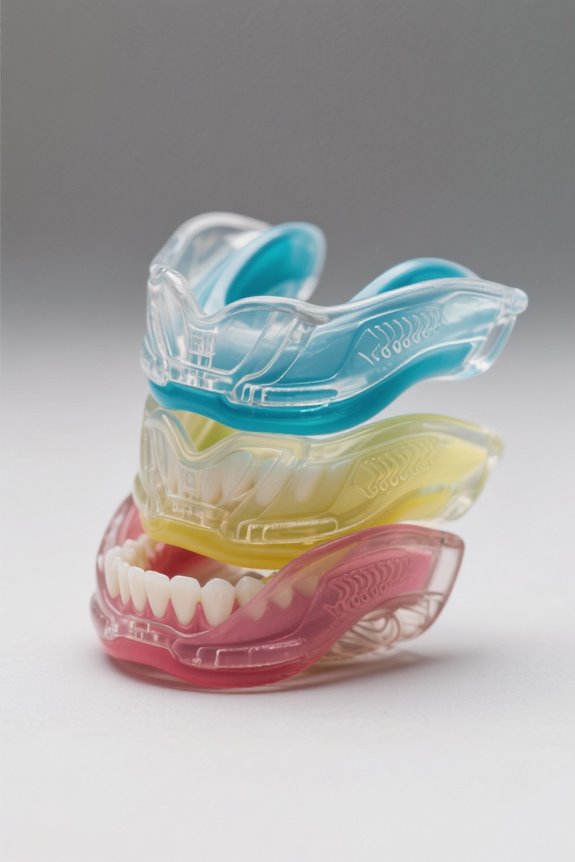
The usage of mouthguards has been recognized as an important factor in reducing concussion risks among athletes in contact sports, particularly football. Research indicates that mouthguards can absorb and distribute forces during impacts, potentially mitigating brain acceleration and rotational forces linked to concussions. Studies published in the British Journal of Sports Medicine and the Journal of the American Dental Association have noted a significant reduction in concussion risks for high school and college players wearing mouthguards. These protective devices stabilize the jaw, reducing the likelihood of mandibular impact against the skull base, which can cause brain injuries. Despite mixed findings in some studies, overall evidence supports the inclusion of mouthguards as part of strategies for effective brain injury prevention in athletics. Additionally, models like the Shock Doctor Lip Guard provide specialized protection for football players, ensuring compliance with safety regulations while enhancing comfort during play.
Importance of Custom-Fitted Mouthguards
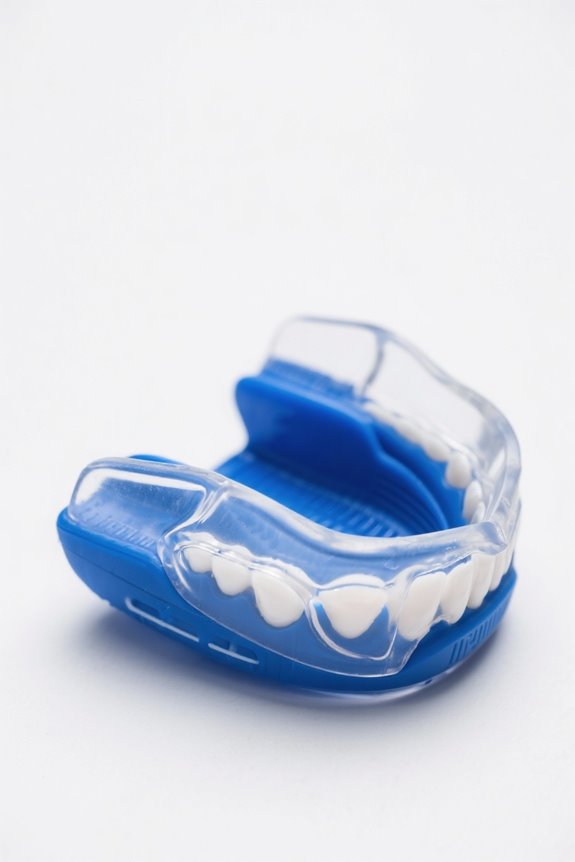
Custom-fitted mouthguards offer athletes a crucial advantage in dental protection and overall safety during contact sports like football. These custom designs closely conform to the unique contours of each athlete’s mouth, effectively stabilizing the jaw and considerably reducing the risk of dental trauma, including fractures and soft tissue injuries. Research shows that custom-fitted mouthguards can reduce stress on teeth and jaws by over 25% compared to generic versions. In addition, the superior material quality guarantees enhanced durability and longevity, making them cost-effective in the long term. A well-fitted mouthguard minimizes movement during play, thereby ensuring constant protection and promoting long-term oral health, making them an invaluable investment for athletes concerned about their safety. Additionally, choosing a mouthguard with proper airflow design can further improve comfort and performance during athletic activities.
Enhancing Athlete Comfort and Compliance
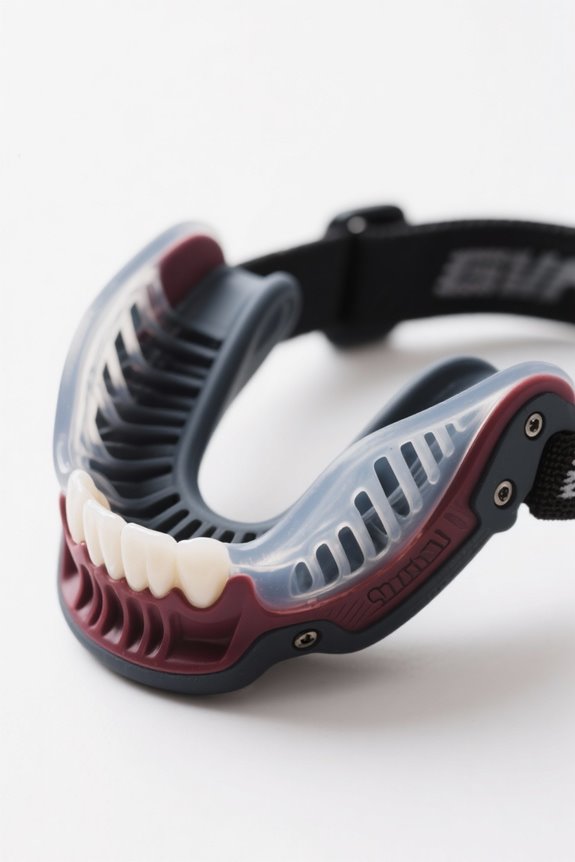
Achieving athlete comfort and compliance with mouthguards is essential in preventing oral injuries during football and other contact sports. A proper fit is vital, as custom-fitted mouthguards conform precisely to an athlete’s teeth, greatly enhancing overall athlete comfort. Additionally, breathability features in well-designed mouthguards promote easier airflow, improving breathing efficiency during intense games. These advancements not only encourage longer usage times but also reduce the psychological impact of oral injury anxiety. Effective education strategies and open communication about the performance benefits of these mouthguards reinforce compliance factors among athletes, ensuring they understand the protective advantages. Moreover, mouthguards suited for multiple sports enhance versatility and make regular use more feasible, fostering a commitment to injury prevention practices throughout an athlete’s career. Furthermore, selecting mouthguards with advanced airflow channels can further improve oxygen intake, contributing to better athletic performance.
Understanding Injury Statistics in Football
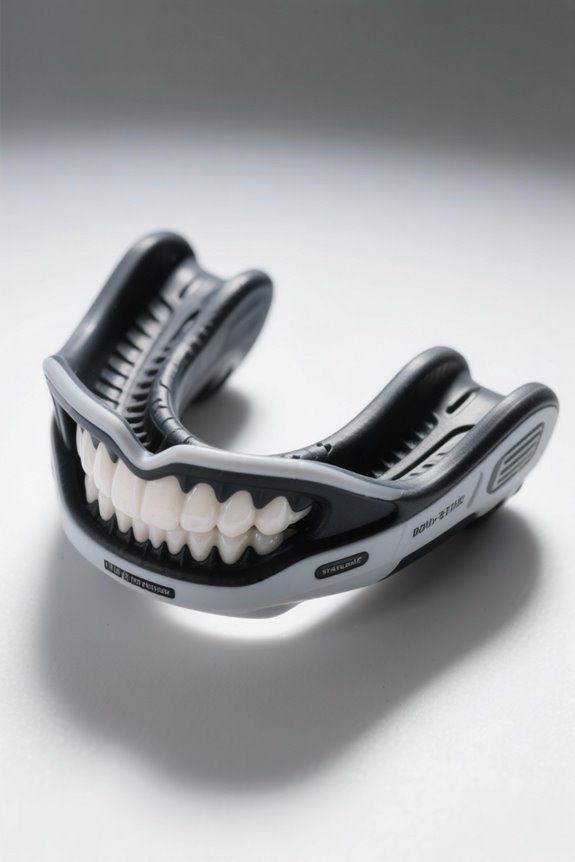
Understanding injury statistics in football reveals a concerning trend, as the sport is notorious for its high incidence of orofacial and dental injuries among players. The prevalence of these injuries considerably escalates when mouthguards are not utilized, increasing the risk of trauma by 1.6–1.9 times. Common injuries among various player demographics include dental fractures, jaw fractures, and soft tissue lacerations. Studies indicate that 16.6% of children without mouthguards experience dental injuries, compared to 11.8% of users, suggesting some protective effect. Additionally, concussions are a critical injury concern, with mouthguards potentially mitigating the severity and likelihood of such injuries. As a result, the need for better awareness regarding mouthguard usage among athletes is paramount in enhancing safety measures within the sport. The effectiveness of mouthguards is further supported by the protective features they offer, significantly reducing the risk of dental trauma during play.
Economic Benefits of Wearing Mouthguards
The economic advantages of wearing mouthguards in football are increasingly recognized, particularly in light of rising injury statistics that underscore the need for protective gear. Valued at approximately USD 5.49 billion in 2022, the global sports mouthguard market is projected to reach USD 8.51 billion by 2030, driven by market trends highlighting the importance of injury prevention. Consumer preferences are shifting towards technologically advanced, customizable mouthguards that enhance comfort and usability. By considerably reducing the incidence of orofacial injuries, mouthguards help mitigate costly medical expenses for athletes and organizations, reflecting potential savings in insurance premiums and healthcare costs. Consequently, the adoption of mouthguards offers economic benefits at both individual and institutional levels, fostering a safer playing environment. Furthermore, the inclusion of dental warranties can significantly reduce long-term dental costs for athletes.
Regulatory Support and Organizational Recommendations
Regularly enforcing regulatory support for mouthguard use in football has become imperative, especially considering the rising incidence of orofacial injuries among players. The National Federation of State High School Associations (NFHS) mandates mouthguard use to greatly reduce such injury risks, with similar requirements observed across all U.S. states for high school football. In addition, the NCAA enforces mandatory mouthguard use in collegiate competition, ensuring compliance with established safety standards. Prominent organizations, including the American Dental Association, advocate for properly fitted mouthguards to diminish dental trauma. Moreover, the Sports Medicine Advisory Committee emphasizes the necessity of regulatory mandates for all contact sports, reinforcing the importance of customized mouthguards to optimize protection and reduce liability during play. Effective mouthguards, such as those with advanced airflow designs, play a key role in enhancing athlete performance while ensuring safety.
Common Misconceptions About Mouthguards
While many athletes and parents recognize the importance of mouthguards, a number of misconceptions persist regarding their efficacy and necessity in various sports. One common myth suggests that mouthguards can prevent concussions; however, no credible scientific evidence supports this claim, as concussions involve brain dynamics beyond the mouthguard’s control. Additionally, there is a belief that only athletes in high-contact sports require mouthguards, while dental injuries can occur in sports like soccer and basketball, underscoring the need for myth awareness and athlete education. Moreover, not all mouthguards provide equal protection; custom-fitted versions offer superior comfort and effectiveness compared to generic options. Regular cleaning and replacement are also essential for maintaining hygiene and preventing oral infections. Athletes can also benefit from protective padding found in other sports equipment, which may contribute to overall safety during gameplay.
Educating Coaches and Parents on Mouthguard Use
Educating coaches and parents about the fundamental role of mouthguards in football is essential for enhancing player safety and reducing the risk of orofacial injuries. Coach education plays a crucial role, as studies show that when coaches endorse mouthguard use, athlete compliance markedly increases. Training programs that focus on the benefits of mouthguards can effectively reduce rates of dental and facial injuries. In addition, parent awareness is critical; research indicates that informed parents are more likely to guarantee consistent mouthguard use among their children. By promoting the selection of custom-fitted mouthguards and addressing misconceptions, both coaches and parents can foster a culture of safety, ultimately minimizing the risks associated with football-related injuries. Additionally, emphasizing the importance of high-quality materials in mouthguard construction can further enhance protection against injury.
Trends in Mouthguard Usage Among Athletes
A notable disparity exists in mouthguard usage patterns among athletes, which highlights the varying levels of awareness and adherence to safety protocols in different sports. According to trends analysis, combat sports report a remarkable 100% mouthguard usage, while team sports athletes exhibit considerably lower rates of approximately 29.5%. This discrepancy indicates potential gaps in education and practice regarding mouthguard importance. Often, team sports athletes face more issues related to comfort, such as difficulties in speaking and breathing, likely due to insufficient awareness of proper maintenance. Additionally, custom-made mouthguards demonstrate better adherence to usage recommendations, suggesting that enhanced education for coaches and players could positively influence compliance rates among team sports participants, ultimately fostering a safer sporting environment. Improved education about shoulder pad protection can also contribute to overall safety on the field.
The Long-Term Health Benefits of Mouthguards
Mouthguards play an essential role in promoting long-term health benefits for athletes, particularly in contact sports such as football. They greatly diminish the risk of dental trauma, preserving both natural teeth and restorations, which, in turn, reduces future oral health complications. The long-term effects include decreased need for extensive dental procedures, resulting in financial savings. In addition, mouthguards absorb impact forces, which lowers the incidence of concussions and related brain injuries. They also assist in preventing teeth grinding, mitigating enamel loss, and ensuring better jaw alignment, which supports overall oral health. Consistent mouthguard use enhances oral functions critical for athletic performance, ultimately promoting sustained participation in sports while safeguarding long-term health interests.
Innovations in Mouthguard Technology
Advancements in mouthguard technology greatly enhance player safety and performance in contact sports like football. Intelligent mouthguards (IMG), equipped with smart sensors, accurately monitor head impacts using accelerometers and gyroscopes. This data is transmitted wirelessly to sideline staff, allowing for instant evaluations of potential concussions. Bioengineering advancements have led to the development of custom-fit carbon fiber mouthguards, which absorb considerably more impact energy compared to traditional models. Emerging technologies also feature multi-metric tracking capabilities, evaluating both performance and health metrics. With real-time impact detection integrated into concussion protocols, these innovations represent a vital shift towards a more proactive approach to athlete safety, offering data essential for quick medical evaluations and personalized risk management strategies.
Frequently Asked Questions
How Do I Choose the Right Mouthguard for My Child?
Choosing the right mouthguard for a child involves ensuring unparalleled comfort level and impeccable fit quality. Stock, boil-and-bite, or custom-fitted options exist, with the latter often proving superior for safety in high-impact sports.
Can Mouthguards Cause Jaw or Teeth Pain?
Mouthguards can cause discomfort and dental issues if improperly fitted, altering jaw position and exacerbating TMJ disorders. Custom-made mouthguards minimize these risks, ensuring better fit and reducing the likelihood of pain during athletic activities.
What Materials Are Mouthguards Typically Made From?
Mouthguards typically consist of materials like ethylene vinyl acetate (EVA) for its superior shock absorption, polyvinyl chloride (PVC) for affordability, and medical-grade silicone for comfort. Each mouthguard type balances material benefits with user-specific protection and fit requirements.
How Often Should Mouthguards Be Replaced?
“An ounce of prevention is worth a pound of cure.” Mouthguard lifespan varies, necessitating replacement frequency every 6 to 12 months for athletes, while custom guards last 1 to 3 years, depending on usage intensity and fit.
Are There Mouthguards Designed for Specific Sports Besides Football?
Yes, mouthguards are designed for specific sports such as hockey and basketball. Hockey mouthguards offer protection against high-velocity impacts, while basketball mouthguards are lighter to suit the game’s play style and potential for incidental contact.


