As an Amazon Associate, we earn from qualifying purchases. Some links on this site are affiliate links at no extra cost to you. Our recommendations are based on thorough research and editorial judgment.


What Is The Difference Between A Wide Receiver And A Tight End?

Wide receivers and tight ends fulfill distinct roles on an American football team. Wide receivers specialize in catching passes and creating separation from defenders, emphasizing speed and agility, while tight ends combine both receiving and blocking capabilities, usually contributing to offensive schemes as versatile players. Typically, wide receivers weigh between 180-210 lbs and average 12-15 yards per catch, whereas tight ends range from 240-260 lbs, historically evolving to excel in both roles. Further insights reveal deeper nuances in their contributions.
Key Takeaways
- Wide receivers focus primarily on catching passes, requiring speed, agility, and precise route running to gain separation from defenders.
- Tight ends possess dual roles in blocking and receiving, aligning closer to the offensive line to enhance offensive strategies.
- Wide receivers typically weigh between 180-210 lbs, emphasizing speed, while tight ends range from 240-260 lbs, balancing strength with agility.
- Wide receivers are usually more targeted in the passing game, achieving higher reception yards and touchdown rates compared to tight ends.
- The evolving role of tight ends now includes significant receiving skills, shifting them from auxiliary blockers to key offensive threats.
Recommended Products

Jugs Football Passing Machine throws precise passes, punts, and kickoffs to any spot on your field.

Low impact: inclusive ergonomic design accommodates a wide range of users at various fitness levels. Patented 2: 1 natural stepping motion and comfortable seat provide a low impact total body workout

Jugs Field General Football Machine throw accurately from 5 to 60 yards, allowing you to hit receivers in stride, running any route in playbook
Primary Responsibilities of Wide Receivers
Wide receivers serve as essential components of the offensive unit in American football, primarily tasked with the important function of catching passes from the quarterback during gameplay. Their primary responsibility involves securing receptions while facing pressure from defensive players. Excellent hand-eye coordination and strong hands are necessary for reliable catches. Route running is a core skill, as wide receivers follow predetermined routes, such as slants and fades, designed to create separation from defenders. Effective route running demands agility and precise timing, aligning with the quarterback’s throw windows. Consistency in executing crisp routes and achieving 1-on-1 matchups is fundamental, ultimately contributing to the offense’s overall success and sustaining drives during competitive play. To enhance their performance, wide receivers often wear gloves designed with advanced grip technology to improve control and catching ability.
Primary Responsibilities of Tight Ends
In the domain of American football, tight ends occupy a unique dual role that blends the responsibilities of both receivers and blockers. Primarily, they serve as important blockers on running plays, engaging defensive linemen and linebackers using refined blocking techniques to create running lanes. During passing plays, tight ends protect the quarterback by neutralizing pass rushers and executing edge sealing blocks. Simultaneously, they are reliable receiving targets, adept at running routes over the middle of the field, exploiting their size and strength to win contested catches. Frequently, they act as safety valves for quarterbacks and are significant in red zone situations, where their combination of blocking techniques and receiving skills presents matchup advantages, making them essential to an offense’s success. Moreover, tight ends must also consider the importance of utilizing lightweight and breathable shoulder pads to enhance mobility and reduce injury risk during gameplay.
Physical and Skill Characteristics
The physical and skill characteristics of wide receivers and tight ends distinctly reflect their specialized roles on the football field. Wide receivers typically exhibit a lean body composition, weighing between 180-210 lbs, allowing for ideal speed and agility, while tight ends generally weigh 240-260 lbs, demonstrating a bulkier frame to withstand blocking duties. An agility comparison reveals that wide receivers excel in lateral quickness and sprinting speed, often running 40-yard dashes in under 4.5 seconds. Conversely, tight ends balance speed with strength, essential for effective blocking and short-route catching. Strength analysis indicates that tight ends outperform wide receivers in upper body strength, while wide receivers excel in muscular endurance related to speed. This skill diversity highlights the distinct athletic demands faced by each position. Additionally, mesh practice jerseys designed specifically for football positions offer features such as breathability and durability that support these athletes’ performance.
Recommended Products

30 feet in diameter


Men's mesh practice jersey
Typical Field Alignment and Formations
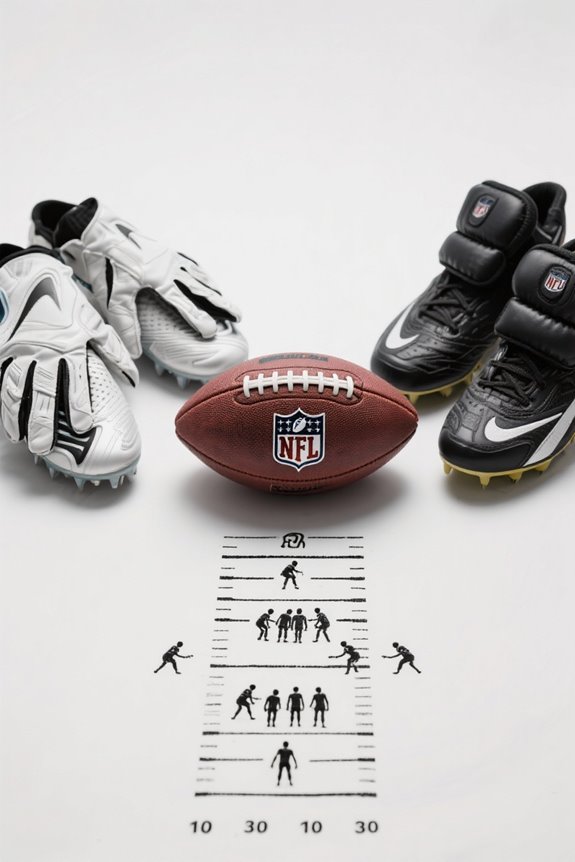
Football formations demonstrate the distinct alignments and strategic roles of wide receivers (WRs) and tight ends (TEs) on the field. WRs typically align near the sidelines, often split wide to enhance field spacing and exploit defensive coverage. In contrast, TEs usually position themselves closer to the offensive line, either directly on it or slightly off, allowing them to function as both blockers and receivers. Formations such as “11 Personnel” feature one TE with multiple WRs, balancing run and pass options. Meanwhile, formations like “5 Wide” utilize WRs’ wider alignments, maximizing passing threats. TEs may adopt flexibility in alignment, moving to wing or flex positions, contrasting with the perimeter positioning of WRs to optimize offensive strategies. Target pockets in training nets can simulate these receiving areas, aiding both WRs and TEs in developing their skills.
Recommended Products

ADJUSTABLE ANGLES – The removable bullseye target features a 5-point adjustment system, allowing you to set angles from 90° vertical to 180° flat. This versatility makes it ideal for practicing a wide range of passing techniques and drills.

【Keep Balls in Play – No More Chasing Missed Shots】Say goodbye to lost balls and broken windows! This heavy-duty backstop net keeps every ball within your play area, protecting your yard, windows, and plants so you can focus on the game, not on retrieving balls.

Commercial-Grade Golf Mat – made from 100% premium nylon fiber for a clean, professional feel and reliable performance.
Receiving Statistics and Usage Trends
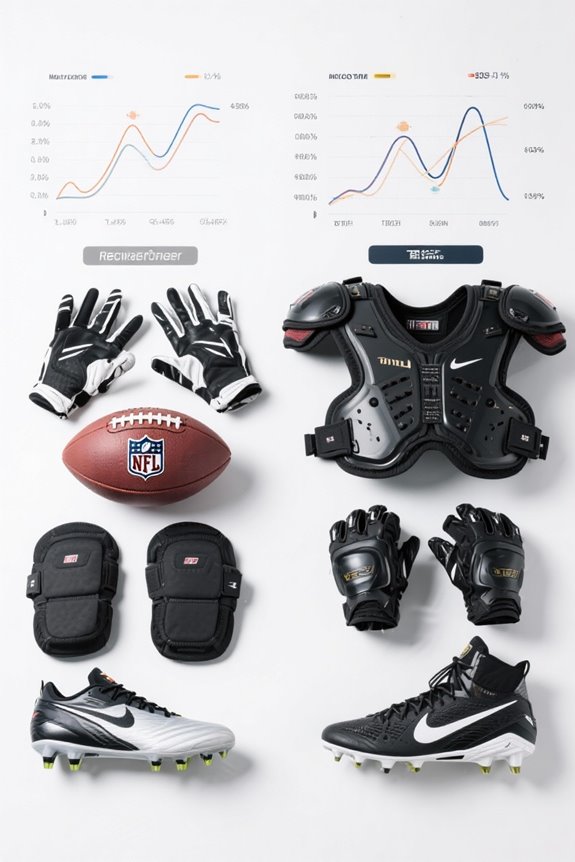
Receiving statistics and usage trends provide a thorough understanding of the distinct roles of tight ends and wide receivers within modern offenses. Wide receivers typically receive higher target rates, dominating offensive schemes as primary receiving threats, often exceeding 100 receptions per season. In contrast, tight ends receive fewer targets but can still achieve significant volumes, with elite players occasionally exceeding 80 targets annually. Although wide receivers average 12 to 15 yards per reception, tight ends generally range from 8 to 12 yards, with some notable exceptions. Touchdown contributions favor wide receivers, who frequently score in double digits, while tight ends contribute effectively in the red zone. Both positions excel in first down conversions, highlighting their vital roles in sustaining drives and big play potential. Moreover, a well-fitted adult athlete’s mouthguard can enhance performance and safety, reflecting how each player’s gear can impact their effectiveness on the field.
Recommended Products

YOKKAO Boxing Gloves are made of premium leather, providing excellent durability and protection for all your training needs, including pro boxing gloves and youth boxing gloves.

Shatterproof and Washable—Nose Guard helps to avoid injury from impact on the face after surgery. Made of carbon fiber, it is elastic, not easy to break under heavy impact. Ultra light/hard. Stronger impact resistance and more durable. Clean it directly with water. Comes with storage bag, easy to store and carry. The choice of professional athletes.

You are viewing the BIG BUD (63L) - BLACK - Heavy duty 1000D Nylon Duffel Bag (13" x 23" x 13").
Tactical Impact on Offensive Strategy
In contemporary football, the tactical impact of wide receivers and tight ends is essential for offensive strategy, as their unique skill sets shape play-calling and formation designs. Wide receivers stretch defenses by creating vertical threats and exploiting speed mismatches, resulting in big-play opportunities. Their ability to force one-on-one matchups reveals coverage weaknesses, permitting diverse route-running to advance plays effectively. Conversely, tight ends contribute to offensive strategy through their blocking capabilities, aiding both pass protection and the running game while maintaining tempo. Their hybrid role generates tactical advantages by enabling defenses to reveal weaknesses through formation variety. Overall, the interplay of these positions creates offensive mismatches, compelling defenses to adjust strategically and enhancing the overall effectiveness of the team’s offensive scheme. Additionally, the use of advanced grip technologies in football gloves helps players maintain better control of the ball, further influencing the dynamics of wide receiver and tight end play.
Evolution of the Tight End Position
Initially developed as auxiliary offensive linemen, tight ends have greatly transformed within the framework of modern football, reflecting advancements in athleticism and tactical usage. Historically, tight ends focused primarily on blocking duties, resembling offensive tackles more than receivers. The historic evolution of the position began with players like Mike Ditka and John Mackey, who showcased receiving skills that reshaped perceptions of tight ends. As tight end innovations emerged, coaching strategies adapted, emphasizing both receiving capabilities and blocking responsibilities. Over the past fifteen years, this transformation has become evident, with leading tight ends frequently exceeding 140 targets annually, thereby proving their critical role in offensive schemes. Today’s tight ends, such as Travis Kelce and George Kittle, exemplify this blend of versatility and impact. The reliance on tackling dummies in training further enhances these players’ skills, allowing them to refine their blocking techniques in a safe environment.
Role of Wide Receivers in Offenses
Wide receivers serve a critical function within offensive schemes in football, primarily tasked with catching passes from the quarterback to advance the ball and score touchdowns. Effective wide receivers utilize precise catching techniques and must exhibit reliable hands to secure the ball, particularly in contested situations. They run specific routes and must be adept at making route adjustments based on defensive coverage, demonstrating awareness and football IQ. Speed, agility, and body control are essential, allowing receivers to create separation from defenders and exploit mismatches. After making a catch, they aim to gain additional yards, turning short gains into substantial plays. Ultimately, their performance considerably influences the effectiveness of an offense, requiring them to master both receiving and blocking responsibilities. Many top receivers also invest in lightweight designs to enhance their speed and agility on the field.
Impact of Positional Versatility
Positional versatility considerably influences the effectiveness of football offenses, as tight ends combine blocking and receiving abilities to enhance offensive schemes. Their dual-threat nature allows them to effectively impact both run and pass plays, creating favorable mismatches against linebackers and safeties. This tight end versatility necessitates defensive adaptations, as opponents must adjust their coverage schemes to accommodate the unique skill set of such players. For instance, teams commonly utilize tight ends in various alignments—on the line, in the slot, or as a receiver—which expands offensive possibilities. The presence of a versatile tight end often forces defenses to assign multiple defenders, complicating their game plans, and ultimately making offensive coordinators more adept at exploiting defensive weaknesses for strategic advantage. In addition, teams often select specific football shoulder pads that maximize protection while allowing tight ends the freedom to perform at their best.
Trends in Player Evaluation and Fantasy Football
As the landscape of the National Football League evolves, trends in player evaluation and fantasy football emphasize a fundamental shift in how tight ends and wide receivers are assessed. Increasingly, tight ends receive over 100 targets per season, altering player valuation and fantasy rankings considerably. While wide receivers are favored for their route running, tight ends now play essential roles as primary receiving options, enhancing their target distribution. This positional scarcity in fantasy leagues heightens the value of elite tight ends in roster construction. Teams focus on matchup exploitation through dynamic offensive schemes, complicating drafting strategies. Ultimately, performance consistency becomes critical, as both positions yield varying contributions to fantasy scores, reflecting the changing paradigms of football’s strategic landscapes. Additionally, players equipped with superior grip technologies are demonstrating impressive reception rates, further influencing drafting decisions.
Recommended Products
Gorilla Grip Technology: Our working gloves feature advanced Gorilla Grip technology, ensuring maximum grip even in wet, dry, or oily conditions; perfect as construction gloves and working gloves for men, these gloves for work are essential for any job

FITS TWO 6 GALLON BUCKETS: PowerNet's Baseball Bucket Bag holds two 6 gallon baseball buckets, that conveniently slide into the bag through the zippered opening. Easily transport a combination of coaching equipment, including a batting helmet and baseball glove or other baseball training equipment

TOP QUALITY SPEARGUN FOR SPEARFISHING - The Sniper Alpha speargun is designed for spearfishers looking for simplicity, functionality and reliability; With a focus on high-quality materials and meticulous design, this sling gun speargun is an essential tool for your next underwater adventure
Frequently Asked Questions
Can a Tight End Be Faster Than a Wide Receiver?
While tight end speed can occasionally match that of a wide receiver, particularly in elite cases, wide receiver agility generally allows for superior overall speed and separation, making it rare for tight ends to consistently outperform them in raw speed.
How Do Injuries Impact Each Position Differently?
Injuries affect positions differently; wide receivers often experience severe lower-body injuries impacting speed, while tight ends face upper-body issues that challenge blocking strength. This discrepancy emphasizes the unique demands and resilience of each role in performance.
What Are Common Penalties for Both Positions?
Common penalties for both positions include offensive pass interference, often due to pushing off defenders, and holding penalties, particularly for tight ends during blocking or for wide receivers in screen plays, leading to vital yardage loss.
How Do WRS and TES Contribute to Special Teams?
In the theater of special teams roles, wide receivers sprint like arrows, employing speed for returns, while tight ends anchor with robust blocking techniques, creating a symphony of strategy that shapes field position and momentum.
Are There Different Coaching Strategies for WRS and TES?
Different coaching strategies exist for wide receivers and tight ends, focusing on route concepts for WRs to enhance separation while emphasizing blocking techniques for TEs to guarantee versatility in both receiving and blocking roles on the field.