As an Amazon Associate, we earn from qualifying purchases. Some links on this site are affiliate links at no extra cost to you. Our recommendations are based on thorough research and editorial judgment.


How Do Football Gloves Improve Player Performance?

Football gloves improve player performance by enhancing grip, safety, and comfort. Advanced materials increase surface area contact, reducing drops and improving ball control. Specialized palm materials provide maximal tackiness, while protective padding mitigates injury risk. Ergonomic designs facilitate natural hand movement, reducing fatigue. Moisture-wicking fabrics manage sweat and guarantee grip consistency in varying conditions. In addition, customizability allows for personal expression, impacting confidence and decision-making. Understanding these benefits elucidates their importance in player performance on the field.
Key Takeaways
- Enhanced grip technologies ensure secure ball handling, reducing the likelihood of fumbles during critical plays.
- Protective padding mitigates hand injuries, allowing players to perform confidently and without fear of injury.
- Ergonomically designed gloves provide a superior fit, enabling better control and dexterity for improved gameplay.
- Moisture-wicking and breathable materials maintain grip quality in various weather conditions, optimizing performance throughout the game.
- Customization options foster player confidence and personal identity, promoting better focus and decision-making during gameplay.
Enhanced Grip for Secure Ball Handling
Enhanced grip is a critical factor in secure ball handling for football players, and advancements in glove technology greatly influence performance. Through innovative design, grip mechanics are enhanced via high-friction materials such as silicone or rubberized patterns, maximizing contact area with the football. These developments minimize moisture build-up, essential for maintaining grip styles that suit different player positions. For example, gloves tailored for wide receivers focus on strong grip with minimal padding, while quarterbacks prefer lightweight designs that do not hinder ball release or accuracy. This progressive approach guarantees that athletes can maintain ball control under various weather conditions, further solidifying their ability to execute plays efficiently. Ultimately, tailored grip technologies, such as Air C-TACK technology, support peak performance in a competitive environment.
The Role of Specialized Palm Materials
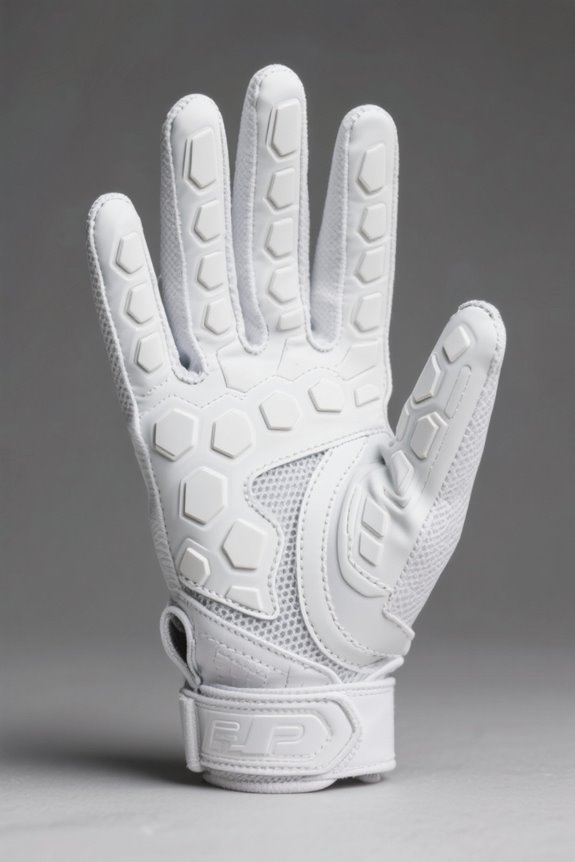
In football, the performance of players is greatly influenced by the specialized materials used in glove palm construction, which directly impact grip and ball handling. Specialized palm materials such as silicone and synthetic sticky options provide superior tackiness, improving control even in adverse weather conditions. These materials often feature durability characteristics, enabling them to withstand wear from intense gameplay, thereby extending their lifespan. Genuine leather palms, while long-lasting, usually lack the necessary stickiness that enhances grip performance. Additionally, Thermoplastic Elastomers (TPE) contribute to flexibility and durability, allowing gloves to maintain shape while fitting snugly. Overall, the interplay of these palm materials and their durability features considerably affects a player’s ability to effectively manage the football during play. For example, modern gloves utilize specialized grip technologies to optimize performance across various playing environments.
Grip-Enhancing Technologies
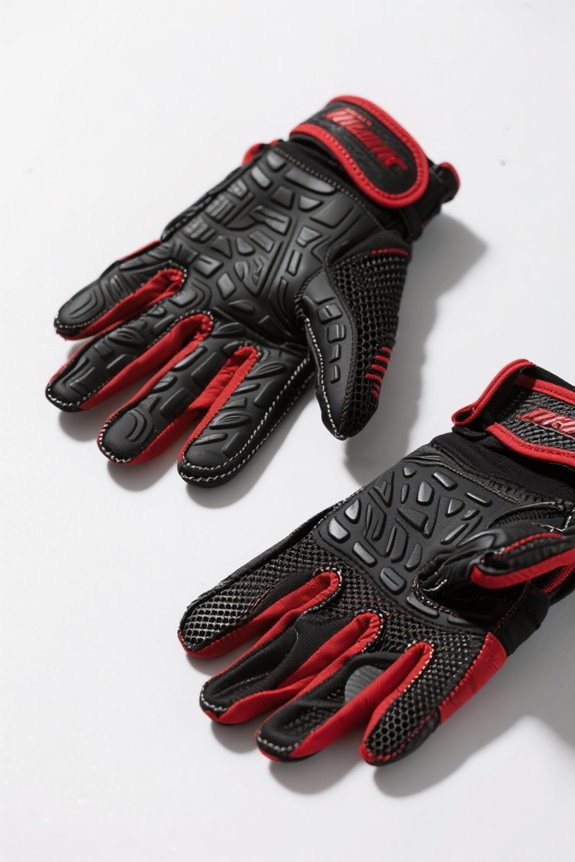
Grip-enhancing technologies have become increasingly essential in optimizing player performance on the football field, as they greatly contribute to grip strength and ball control. Innovative materials, such as modified chitosan—known for its biopolymer advantages—provide superior grip consistency, helping athletes to maintain their hold in diverse weather conditions. Polymer films, like those used in Grip Boost gel, form a smooth surface that guarantees reliable grip without leaving residue. Multiple brands have developed proprietary technologies, such as C-TACK, to assure effective grip even during rain or sweat. Additionally, advancements, including textured palms and quick-drying materials, enhance durability and performance reliability, allowing players to focus on their game with increased confidence and effectiveness. Many of today’s football gloves, including models like the Just for You Momma Football Receiver Gloves, utilize specialized technologies for superior grip and comfort.
Recommended Products

BORN TO FLY - take your goalkeeping to the next level! Our professional soccer gloves made from comfortable and breathable neoprene give you a secure feel and first-class comfort.

First-to-Market - Hybrid Lineman Palm with BOOST+ Leather and Tack. Our proprietary BOOST+ Grip Technology is infused into the top-grade genuine leather palm, delivering elite-level feel and control. Activated by heat and pressure, it keeps you locked in through every point of contact. Reinforced Tack zones provide consistent, long-lasting grip and Palm Heel protection.

Designed for linemen, provides substantial padding while maintaining a flexible, minimal feel; C-TACK padded palm patch for added grip and protection when you're going hard against your opponent
Surface Area Contact and Ball Control

Football gloves play an essential role in enhancing ball control through an increased surface area contact between the glove and the ball during play. The design of these gloves allows for surface area optimization, extending coverage across the fingers, palm, and lower hand. This design leads to improved glove traction, as silicone or rubberized patterns engineered into the palms maximize effective contact points essential for secure catches. Advanced synthetic materials create a high-friction interface, ensuring glove performance remains reliable despite varying weather conditions. A larger, more distributed contact area helps improve ball security while minimizing drops, particularly in high-impact situations. Uniformity in contact across the glove’s surface offers consistent performance, enabling players to maintain control effectively, enhancing overall gameplay. Many of these gloves incorporate NXT-Grip technology, which provides superior, consistent stickiness for optimal performance.
Reduced Muscular Effort and Enhanced Efficiency
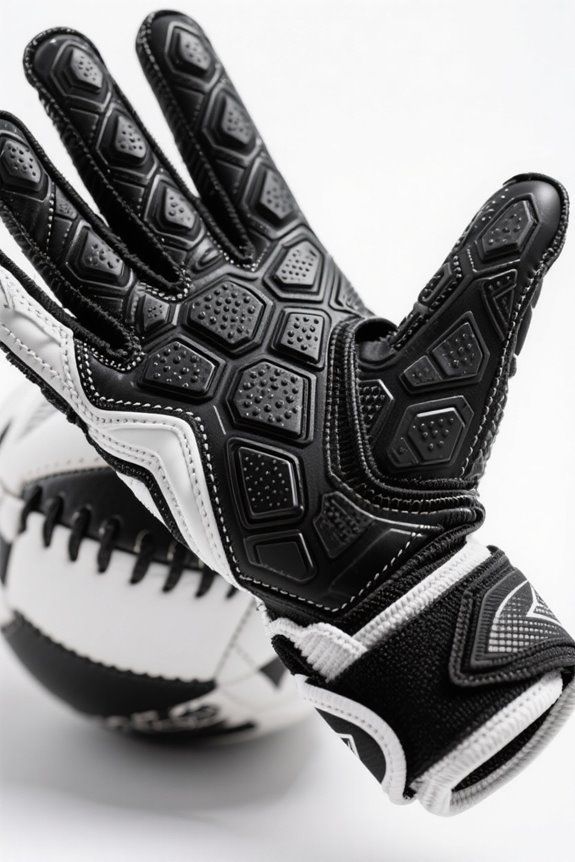
While a properly designed football glove enhances a player’s grip on the ball, it inadvertently increases muscular demand during play. The thickness and design of gloves can reduce grip strength by up to 31%, requiring additional effort from the forearm muscles to maintain grip efficiency. In submaximal tasks, this extra muscular effort may increase muscle activation, potentially leading to quicker onset of fatigue during extended use. As a result, players may experience decreased handgrip strength, with reductions reported at 61.6% post-performance. Furthermore, the adaptation to increased resistance from gloves can improve overall muscle efficiency over time. Consequently, athletes must balance the protective benefits of gloves with their impact on muscular demand to optimize performance on the field. Additionally, using high-tack silicone palms can further enhance grip, especially in challenging weather conditions.
Protective Padding and Injury Prevention
Protective padding in football gloves plays a critical role in preventing injuries, particularly in positions frequently subjected to impact. Injury statistics indicate that approximately 1.2 million hand injuries occur annually in college football, with 30% directly related to hand trauma. Various padding materials enhance comfort balance while addressing position requirements; linemen and linebackers utilize dense padding for impact absorption, whereas receivers may prefer lighter padding for dexterity. Advanced protective features, such as reinforced wrist support and shock-absorbent foams, help mitigate the risk of both acute and repetitive trauma injuries. Overall, strategically designed gloves reduce risks of cuts, bruises, and fractures, thereby sustaining performance levels and enhancing player safety during high-contact scenarios on the field. Adequate padding is vital for overall safety during play, ensuring players can perform effectively without compromising their well-being.
Recommended Products

Curved shape: Fairtex Thai pads are specifically designed for maximum endurance and impact. This boxing equipment allows for hard hitting & punching with maximum trainer protection
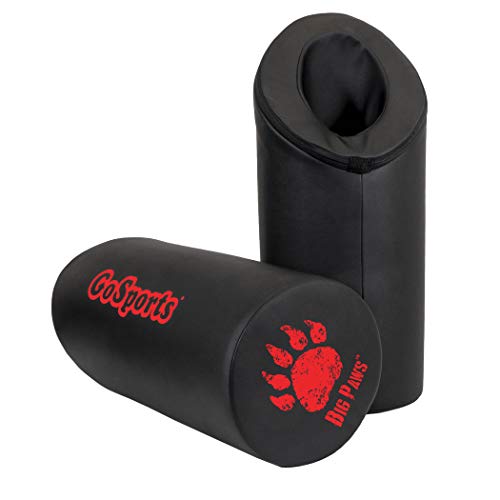
BIG PAWS: Heavy-duty wearable arm guards for simulating defenders for a variety of drills across all major sports and martial arts

Snake Skin Technology for unparalleled legal stickiness
Impact Absorption and Hand Safety
Hand safety is considerably enhanced through the integration of advanced impact absorption technologies in modern football gloves. These gloves utilize specially designed padding materials that effectively absorb and dissipate collision forces, minimizing the risk of injury during play. Lineman gloves, for instance, often feature thicker padding in key areas to protect against tackles and impacts. Ergonomically designed to maintain flexibility and dexterity, these gloves prevent movement restriction while safeguarding the hands. Reinforced palms and finger areas guard against cuts and bruises, further reducing injury likelihood. As a result, the overall impact absorption capacity of football gloves plays a significant role in maintaining hand health, allowing players to perform effectively without the constant threat of injury. Additionally, superior grip from features like silicone palms enhances performance even in challenging weather conditions.
Recommended Products

EXTRA DURABLE DESIGN FOR ARTIFICIAL GRASS PLAY – Engineered for maximum longevity and protection, these professional goalkeeper gloves are specifically developed for use on artificial grass and hard surfaces. The durable latex palm resists abrasion while maintaining consistent grip and comfort, allowing goalkeepers to perform confidently even under high-impact, fast-paced conditions.

The Duo technology with 3D latex dots on the inner side of the highly grippy and tacky palm foam prevent from any slipping of the hand and boost the tactility and impact absorption for maximized ball control.

OFFICIAL DC COMICS JOKER DESIGN: Unleash chaos on the field with the Phenom Elite x DC Comics “The Joker” Quantum Speed Cleats. Featuring The Joker’s iconic purple and green colorway, along with his mischievous grin, these cleats embody unpredictability and flair. Officially licensed, they merge comic book style with elite performance, perfect for athletes who play with confidence and attitude.
Stabilizing Joints and Preventing Strain
The stabilization of joints and prevention of strain in football players is greatly enhanced through the use of specialized football gloves, which offer critical support during dynamic movements. The compression benefits provided by these gloves play an important role in stabilizing finger and wrist joints, ultimately reducing the risk of injuries. By supporting ligaments and tendons, the gloves minimize micro-movements that could lead to joint strain, promoting proper alignment. Additionally, certain models incorporate wrist support features that help prevent hyperextension, thereby further safeguarding against excessive joint motion. This stabilization enhances control during essential actions such as catching and tackling. Overall, the effective integration of joint stabilization within football gloves contributes to both player performance and injury prevention on the field. Notably, gloves with high-tack silicone palms offer elite grip, enhancing player control even in challenging conditions.
Comfort of Ergonomically Designed Gloves
While many factors contribute to a football player’s performance, the comfort provided by ergonomically designed gloves plays an essential role in enhancing overall effectiveness on the field. These gloves are engineered to offer a superior fit that mimics a second skin, allowing full hand mobility without restricting blood flow. Player feedback indicates that a snug fit prevents slipping, critical for maintaining control of the ball. The use of lightweight materials with soft inner linings minimizes fatigue and reduces friction. Ergonomic designs also incorporate stretchable fabrics that adapt to the user experience, ensuring dexterity. Properly fitted gloves enhance tactile sensitivity and prevent discomfort, ultimately contributing to improved performance during games, which is imperative for player success. Additionally, gloves like the Nike Superbad 7.0 utilize advanced grip technology, further elevating a player’s ability to catch and control the ball effectively.
Moisture-Wicking and Breathable Fabrics
Moisture-wicking and breathable fabrics are critical components in the design of modern football gloves, greatly impacting player performance on the field. These materials enhance moisture management by effectively pulling sweat away from the skin, thereby keeping hands dry and improving grip. Elevated ventilation efficiency is achieved through breathable designs that promote airflow, preventing heat buildup that can lead to discomfort during play. Additionally, these fabrics help maintain grip quality in adverse conditions by reducing the risk of soggy gloves. Manufacturers combine these moisture-wicking fabrics with sticky grip materials, ensuring that gloves remain secure and functional through intense activities. Overall, effective moisture management and ventilation are essential for optimizing player performance and comfort during games. Furthermore, specialized wrist support is crucial in preventing injuries and enhancing grip strength during gameplay.
Flexibility for Unrestricted Movement
Flexibility in football gloves is essential for excellent player performance, as it allows athletes to execute a wide range of movements without restriction. The use of stretchable synthetic materials, such as nylon and spandex, promotes natural hand movement, while features like anatomically designed padding enhance finger flexibility. Advanced flexibility techniques, including two-way stretch inserts and ergonomic designs, minimize material bunching, ensuring smooth fit and mobility. Additionally, floating thumb technology allows for superior grip without sacrificing overall flexibility. This anatomical fit, combined with supportive wrist features, contributes considerably to movement dynamics on the field. By maintaining a snug fit without impeding circulation, these gloves enable players to enhance their performance through improved dexterity and natural hand actions during gameplay.
Psychological Impact of High-Quality Gloves
The psychological impact of high-quality football gloves noticeably influences player performance, especially among goalkeepers, as the perception of their equipment can enhance confidence and decision-making on the field. Confidence elevation stems from the feeling of trust in reliable gear, which encourages bolder play and decisive actions. Research indicates that goalkeepers who feel protected by their gloves exhibit reduced anxiety and hesitation during critical moments. This sense of mental preparedness allows them to focus on positioning and reflexes rather than worrying about potential injuries or grip failures. Consequently, high-quality gloves enable goalkeepers to approach aggressive situations with assurance, fostering an overall commanding presence that ultimately enhances on-field performance. Therefore, the psychological benefits of quality gloves are paramount for athletic success.
Customizability and Personal Expression
How does customizability in football gloves enhance player performance and individual expression? Custom football gloves provide players with extensive personalization options, allowing for color coordination with team colors or personal preference. These gloves feature custom designs, including unique graphics through sublimated prints, fostering a distinct visual identity. Furthermore, players can add initials or jersey numbers, enhancing personal ownership and pride. This integration of personalization supports team cohesion while maintaining individual distinction. Customization tools available through various brands enable players to create gloves tailored to their exact specifications. Such personalization not only boosts confidence but also reinforces the connection between a player’s identity and their equipment, potentially leading to improved performance on the field.
Technological Advancements in Glove Design
Technological advancements in football glove design represent a significant leap in equipment innovation, enhancing both performance and safety for players. Key developments in grip technology include materials that replicate gecko foot texture, providing ideal stickiness for ball control in various weather conditions. Adhesive-like coatings, such as Boost+ Grip Technology, enable improved handling without sacrificing flexibility. Material innovation focuses on lightweight, durable fabrics, including synthetic composites that combine leather and advanced polymers for enhanced grip and moisture wicking. In addition, 3D scanning technology allows for custom-fit gloves tailored to individual hand shapes, improving comfort and performance. These innovations aim to balance maximum grip with finger flexibility, supporting player dexterity and reducing injury risk during competition.
Recommended Products

✅ Keep it safe with extra finger protection. When the shots get harder, the Rebel 2.0 Sky Blue keeps you in the safe zone and protects your fingers. The individual finger protection elements can easily be removed and inserted.

✅ Newly developed Gecko Cut. Combines the Rolled Fingers Cut and Negative Cut in an unprecedented way.

T1TAN Red Beast 3.0 - Goalkeeper Gloves - with Finger Protection - Soccer Goalkeeper Gloves - Size 8
✅ Finger Protection: The Beast with extra protection: the flexible and individually removable finger protection elements can prevent unintentional overstretching of your fingers. For maximum safety. In every game.
Market Trends and Player Preferences
Market trends reflected in the football glove industry indicate a robust growth trajectory, with the global market expected to increase from USD 2.3 billion in 2026 to USD 3.28 billion by 2030, representing a compound annual growth rate (CAGR) of 6.1% during the forecast period. This expansion is significantly driven by heightened participation across youth, amateur, and professional levels, particularly in North America. Market segmentation reveals a diverse consumer demographic, with increasing engagement from women and youth, thereby broadening the target audience for specialized gloves. Additionally, the rise in fitness trends and interest in protective gear fosters demand, as enhanced performance features and safety become essential in players’ equipment choices, reflecting evolving preferences across regions.
Frequently Asked Questions
How Often Should I Replace My Football Gloves?
Football gloves should typically be replaced every 1–2 months for active players, especially high school and college athletes. Glove material quality greatly influences performance enhancement, as worn gloves hinder grip and flexibility essential for ideal gameplay.
Can Football Gloves Be Washed Without Damaging Them?
Like nurturing a delicate flower, proper washing techniques are essential for football gloves. Hand-washing with care preserves glove materials, preventing damage while maintaining performance. Avoid machine washing unless necessary, as it risks shape and grip deterioration.
What Sizes Are Available for Youth and Adult Players?
Youth sizes typically range from Small to Large, accommodating hand lengths of 5 to 7 inches. Adult sizes span from Small to XXXL, fitting hand lengths of 6.5 inches and exceeding 9 inches for different players.
Are There Specific Gloves for Different Weather Conditions?
Yes, gloves are designed for different weather conditions, utilizing weather-resistant materials and advanced grip technology. These innovations guarantee peak performance, enhancing grip reliability in both wet and cold environments for players across various positions.
How Do I Properly Break in New Football Gloves?
Like a skilled artisan molding clay, one must gently embrace new gloves, employing breaking techniques such as light cleaning and controlled wear, guaranteeing glove materials adapt. This dance ensures a perfect fit, enhancing performance and comfort.


