As an Amazon Associate, we earn from qualifying purchases. Some links on this site are affiliate links at no extra cost to you. Our recommendations are based on thorough research and editorial judgment.


What Are The Academic Requirements For College Football Players?

College football players must meet specific academic requirements set by the NCAA. They need to complete 16 NCAA-approved core courses and maintain a core-course GPA of at least 2.3 for Division I or 2.2 for Division II eligibility. Additionally, players must register with the NCAA Eligibility Center, submitting their high school transcripts and amateurism questionnaire. Compliance with graduation and amateurism standards is vital, ensuring long-term eligibility for participation in college athletics. More insights are available on these essential regulations.
Key Takeaways
- College football players must complete 16 NCAA-approved core courses over four years of high school for eligibility.
- A minimum core-course GPA of 2.3 is required for NCAA Division I and 2.2 for Division II.
- By the seventh semester, players must complete 10 core courses, including 7 in English, math, or natural/physical science.
- Registration with the NCAA Eligibility Center is essential for student-athletes in Divisions I and II to track academic progress.
- Players must maintain amateurism, meaning they cannot receive benefits or payment related to their athletic abilities.
NCAA Core Course Requirements
To participate in college football at the Division I or II levels, student-athletes must fulfill specific NCAA core course requirements that are vital for maintaining athletic eligibility. Student-athletes must complete 16 NCAA-approved core courses during high school, ensuring a distribution over at least four years. By the beginning of their seventh semester, they need to have at least 10 core courses, including 7 in English, math, or natural/physical science, with grades locked upon completion. Additionally, it is mandatory to take a minimum of 4 units of core courses every academic year. Non-core or remedial classes do not count toward this requirement. Adhering to the core course timeline is essential for achieving eligibility and potential scholarship opportunities. Furthermore, student-athletes should also consider the impact of proper sizing on their performance, as proper footwear can significantly affect their agility and speed on the field.
Recommended Products
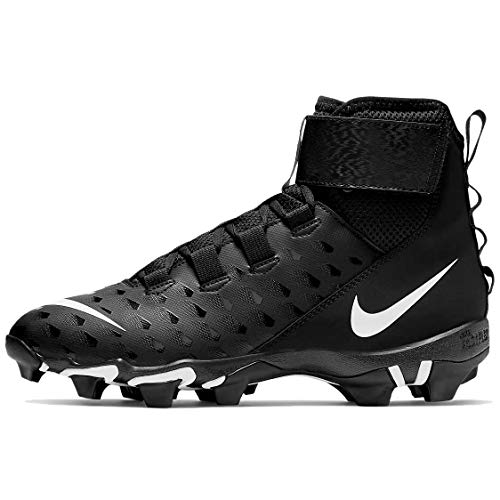
GAME-READY TRACTION. The Nike Force Savage Shark 2 is built for the trenches. Its durable design is backed by molded details made to help resist abrasion. A Nike Fastflex outsole keeps things going with an articulated design that helps you move freely.

Elastic cuff around the ankle is comfortable and breathable.

Show off your devastating speed and power in the Nike Alpha Menace Elite 2 football cleat. Flyknit upper construction and a Pebax plate provide exceptional support and responsiveness during quick cuts and other fast paced play.
NCAA GPA and Academic Performance Standards
Academic performance related to GPA greatly impacts a student-athlete’s eligibility in NCAA college football. For Division I, a minimum core-course GPA of 2.3 is required, while Division II mandates 2.2. The NCAA focuses solely on these approved core courses, disregarding overall GPA. Due to this, student-athletes must exercise academic diligence to guarantee they meet these standards, as failing to achieve the required GPA results in ineligibility, regardless of athletic talent. Ongoing GPA monitoring is encouraged for both athletes and coaches to prevent unexpected issues during recruitment. Regular counseling and the use of tracking worksheets are recommended to help student-athletes align their coursework with NCAA requirements and maintain eligibility throughout their high school career. Additionally, training equipment that enhances skill development and safety is crucial for ensuring athletes remain competitive and on track for academic and athletic success, as proper equipment selection can significantly impact performance.
Standardized Testing Requirements

How do standardized testing requirements affect college football players? The NCAA’s removal of SAT and ACT score requirements for Divisions I and II athletes starting in the 2023-2026 academic year greatly shifts eligibility criteria. Now, eligibility primarily depends on the completion of required high school core courses and a minimum GPA, reducing barriers for athletes from under-resourced backgrounds. While many colleges have adopted test-optional policies, some still require standardized testing for admission or scholarship considerations. Additionally, coaches may implement recruitment strategies focusing more on academic coursework rather than test scores since standardized assessment is no longer critical for NCAA eligibility. Student-athletes may choose to take these tests voluntarily to enhance their prospects for academic scholarships at specific institutions. This change mirrors the increasing recognition of equipment accessibility and cost as vital factors in supporting all student-athletes effectively.
NCAA Eligibility Center Registration
NCAA Eligibility Center registration represents a vital step for student-athletes aiming to compete at the collegiate level in Divisions I and II. This registration process involves establishing either a Certification Account or a free Profile Page, with the former being fundamental for NCAA eligibility. Students must provide personal information, request official high school transcripts, and complete an amateurism questionnaire to confirm their non-professional status. The NCAA advises early registration, preferably before ninth grade, to better track academic progress and guarantee adherence to eligibility requirements. While the Certification Account registration takes approximately 30-45 minutes, the Profile Page requires about 15 minutes. Additionally, the registration necessitates a valid email for communication and includes fees for Certification Accounts based on residency. Furthermore, students should be aware that having moisture-wicking technologies in their athletic gear can enhance their performance during practices and competitions.
Graduation and Amateurism Requirements
Ensuring eligibility for college football involves adherence to both graduation and amateurism requirements, critical components for prospective student-athletes. To qualify for NCAA Division I and II programs, players must complete a minimum of 16 NCAA-approved core courses before enrollment, maintaining a specific core GPA. Additionally, student-athletes must meet progressive benchmarks in their coursework to retain eligibility. Regarding amateurism, players cannot receive payments or benefits related to their athletic abilities, a rule pivotal to maintaining amateur status and preserving scholarship opportunities. Compliance issues arise if student-athletes engage in professional leagues or receive compensatory agreements prior to enrollment, potentially invalidating their eligibility. Therefore, both graduation and amateurism requirements are essential for maintaining NCAA standards and facilitating long-term academic and athletic success. Moreover, understanding the importance of safety standards and durability can benefit student-athletes when selecting equipment for their training and competition.
Frequently Asked Questions
What Is the Timeline for NCAA Eligibility Certification?
The eligibility process for NCAA certification begins during junior year, with transcripts due after the sixth semester. Final documents must be submitted post-senior year, ensuring timely completion of the certification timeline for athlete participation.
How Do Core Course Grades Impact Athletic Scholarships?
How vital are core course grades for athletic scholarships? They greatly impact scholarship retention, as poor performance in the core curriculum jeopardizes eligibility, despite athletic talent, making academic achievement essential for student-athletes’ success.
Can I Transfer Schools and Keep My NCAA Eligibility?
Yes, an athlete can transfer schools and maintain NCAA eligibility by adhering to transfer rules and meeting eligibility standards, such as maintaining academic good standing and satisfying progress-toward-degree requirements at the new institution.
Are There GPA Requirements for Student-Athletes in Graduate Programs?
Unbeknownst to many, graduate program requirements for student-athletes demand a minimum GPA, typically around 2.0. Failure to meet these standards jeopardizes both athletic eligibility and potential scholarships, instilling a precarious sense of urgency and responsibility.
What Resources Are Available for Academic Support in College Sports?
Colleges offer numerous resources for academic support in sports, including tutoring services for core subjects and academic workshops focusing on time management and study skills. These programs help athletes maintain eligibility while balancing academics and athletics effectively.


