As an Amazon Associate, we earn from qualifying purchases. Some links on this site are affiliate links at no extra cost to you. Our recommendations are based on thorough research and editorial judgment.

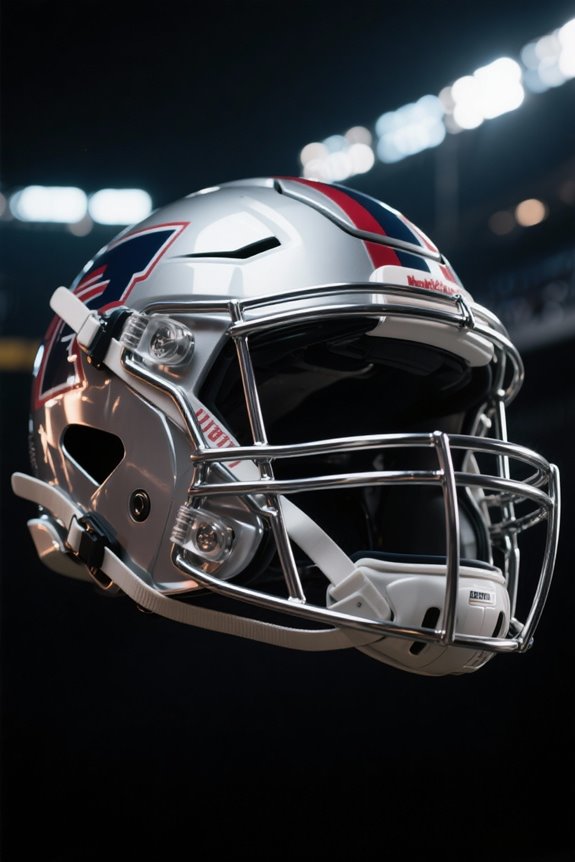
How Often Should Football Helmets Be Replaced?

Football helmets should be replaced every ten years, with the National Athletic Equipment Reconditioners Association recommending annual reconditioning and recertification for helmets ten years old or newer. Regular inspections for visible damage, such as cracks or worn padding, are vital, as these can compromise safety. Exceeding recertification schedules can render helmets unusable for play. Compliance with NOCSAE standards guarantees peak performance and protection, making it imperative for teams to stay informed about helmet maintenance and safety protocols. Further insights can enhance understanding of helmet safety measures.
Key Takeaways
- Football helmets should be reconditioned and recertified annually if they are ten years old or newer.
- Helmets older than ten years are generally not eligible for reconditioning and should be replaced.
- Regular inspections should be conducted to identify signs of visible damage or wear that necessitate replacement.
- Replacement is mandatory if safety labels are removed or expired, indicating non-compliance with safety standards.
- Follow manufacturer specifications for recertification intervals, usually no longer than every two years.
Understanding the Importance of Helmet Safety
As the incidence of head injuries in youth football continues to raise concerns among parents and coaches, understanding the importance of helmet safety becomes paramount. The implementation of youth-specific helmet standards by NOCSAE addresses unique injury risks, particularly related to children’s higher head-to-body ratios and weaker neck muscles. Helmets designed under these standards are subjected to rigorous third-party verification by the Safety Equipment Institute, ensuring they meet requirements aimed at lowering concussion risk. Proper helmet fit is equally critical; a snug fit can reduce movement during play, thereby enhancing protection. Although helmets considerably mitigate severe brain injuries, they cannot prevent all concussions, necessitating heightened concussion awareness among athletes, coaches, and parents in tandem with essential safety measures. Additionally, helmets like the Schutt F7, which boast 5-star safety ratings, are designed to enhance player protection through innovative impact resistance technology.
Recommended Reconditioning Frequency
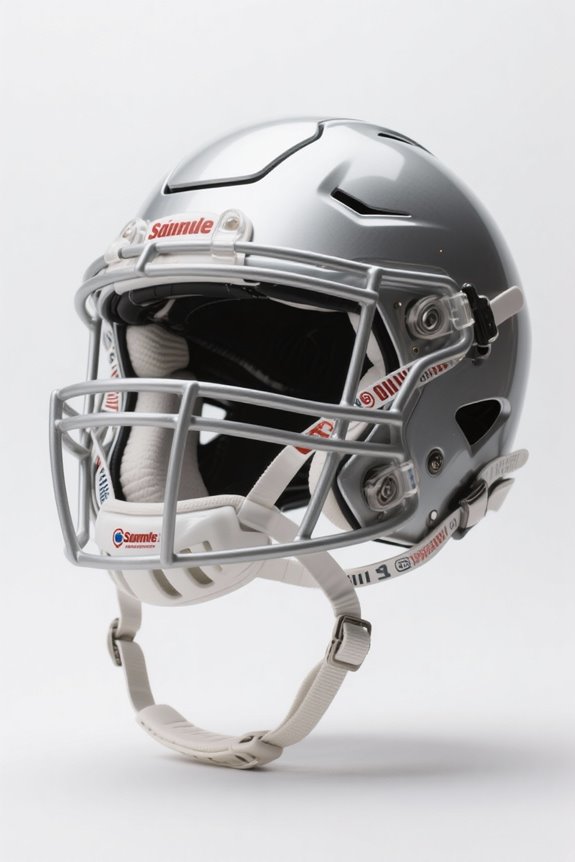
Football helmets require careful attention to reconditioning frequency to confirm player safety and helmet integrity. It is recommended that helmets used in football be reconditioned and recertified every season, as this helps maintain safety and hygiene standards. The National Athletic Equipment Reconditioners Association (NAERA) advocates for annual recertification for helmets that are 10 years old or newer. Helmets older than this generally do not undergo reconditioning by licensed facilities. Some manufacturers set a minimum reconditioning cycle of two years. The timing of reconditioning is essential; it should occur soon after the season concludes, ideally between January and April, to make certain helmets are ready for the next season, preventing delays associated with busy reconditioning periods. Regular inspection for signs of wear is also crucial to ensure helmets remain safe throughout their usage.
Recommended Products

Wilson Football Prep Kit - Wax Bar and Brush

Cleans and polishes helmets, visors in easy application
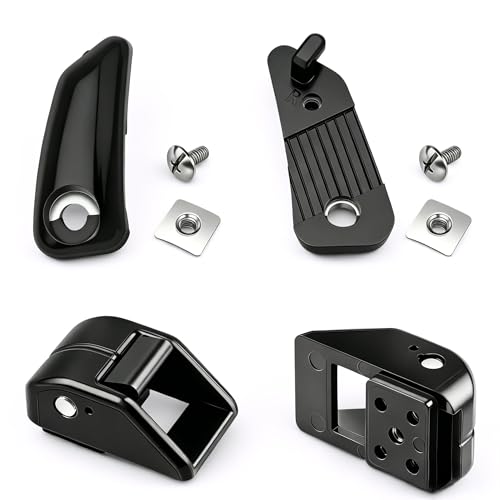
Complete Repair Kit Included - This Honkador set includes 1 Loc Chinstrap Fastener Kit and 1 Chin Strap Cam Loc Housing Set (2-Pack), providing all the parts needed to repair and secure your helmet straps.
Manufacturer Guidelines for Helmet Reconditioning
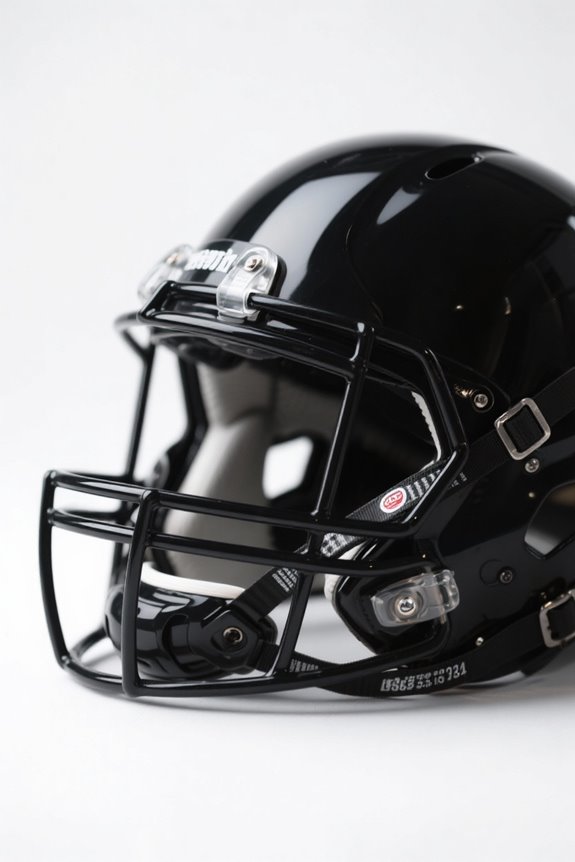
Manufacturer guidelines for helmet reconditioning outline specific intervals and requirements to guarantee player safety and equipment performance. According to NOCSAE, only licensed companies may conduct reconditioning processes, ensuring that helmets undergo rigorous disassembly, cleaning, and inspection. NAERA recommends annual reconditioning, while many manufacturers suggest cycles every two years, regardless of usage. Helmets older than ten years cannot be reconditioned, as per NAERA regulations, and recertification is advised even for unused helmets to uphold safety standards. Following reconditioning, helmets receive a dated recertification label that confirms compliance with NOCSAE regulations. This systematic approach permits accurate tracking of reconditioning history, essential for maintaining player protection and equipment integrity throughout its service life. Additionally, recommended safety ratings play a critical role in assessing the effectiveness of helmet reconditioning efforts.
Recommended Products

1" wide stripe, 22" long to cover ANY helmet!

**Complete Football Care Kit** – Includes **1 soft horsehair brush (4.7 inches)**, **1 hard hog bristle brush (4.7 inches)**, and **2 premium wax bars (2.5 oz each)**—everything needed to clean, condition, and enhance grip on leather footballs.

Football p3-in-1 Football Prep Kit: Includes 2 wax bars and 1 bristle brush—everything you need for premium football care. Unlike traditional football mud, this football kit is specially designed to offer enhanced grip, improved tack, and superior protection for your game ball. rep kit - 110g - 2 bars
Signs That Indicate Helmet Replacement
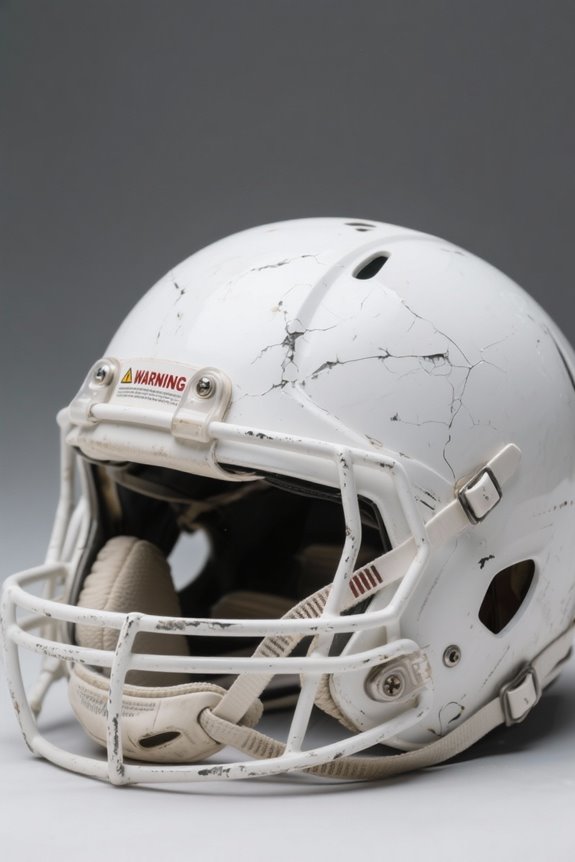
While proper maintenance and reconditioning can extend the lifespan of football helmets, certain signs necessitate immediate replacement to secure player safety. Visible physical damage, such as hairline cracks or fractures in the shell, indicates compromised structural integrity, which is an essential replacement trigger. Additionally, interior padding that is loose or missing diminishes impact absorption capabilities. Impact indicators, like activated sensors or deformation due to significant hits, further signal that a helmet can no longer provide adequate protection. Aging signs, including fading or warped materials, also suggest a need for replacement. Finally, safety labels that are removed or expired indicate loss of compliance and warrant immediate action to confirm player safety remains a top priority during gameplay. It’s important to remember that advanced materials and technologies used in helmets play a crucial role in their effectiveness and safety.
Recommended Products

Facemask fits S, M, L, XL Adult and Youth SpeedFlex helmets only. DOES NOT FIT any other helmet from any manufacturer.

Facemask fits S, M, L, XL Adult and Youth SpeedFlex helmets only. DOES NOT FIT any other helmet from any manufacturer.
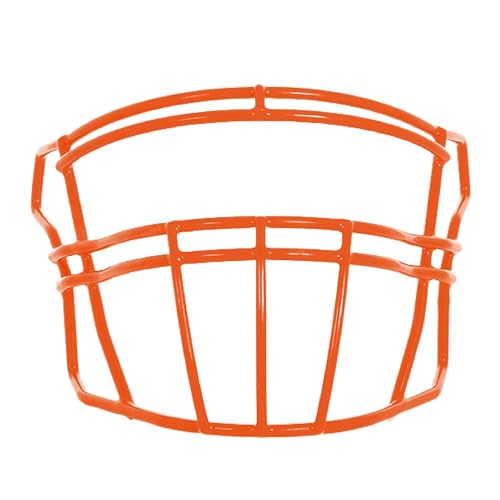
Facemask fits S, M, L, XL Adult and Youth SpeedFlex helmets only. DOES NOT FIT any other helmet from any manufacturer.
Common Expiration Dates for Football Helmets
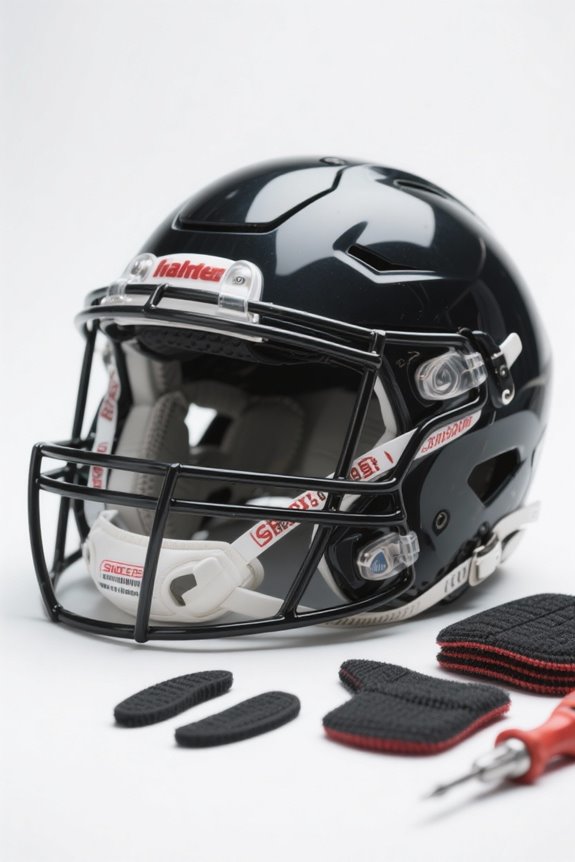
Determining the common expiration dates for football helmets is essential for ensuring player safety. Helmets typically have a maximum usable life of 10 years, after which recertification is no longer permitted. Manufacturers and organizations, such as NOCSAE and NAERA, recommend annual reconditioning and recertification to maintain performance and safety, while a two-year minimum recertification interval is acceptable if necessary. For effective maintenance, organizations adopting a two-year schedule must recondition at least half of their helmets annually. Inspections at the end of each season allow for early identification of helmets in need of recertification. Failure to recertify helmets within designated expiration timelines renders them unusable for certified play, underscoring the importance of adherence to established replacement schedules. Additionally, helmets should not only be replaced based on their maximum usable life but also after any major impacts or visible damage that could compromise safety.
The Role of NOCSAE and NAERA in Helmet Certification
In the domain of football helmet certification, two pivotal organizations, NOCSAE (National Operating Committee on Standards for Athletic Equipment) and NAERA (National Athletic Equipment Reconditioners Association), play essential roles in ensuring player safety and performance. NOCSAE establishes rigorous standards that helmets must meet to minimize the risks of head injuries, incorporating scientific research and expert input. Compliance with NOCSAE standards is vital for effective performance evaluations, including factors like the Severity Index (SI). SEI certification, conducted by an independent entity, validates that helmets have undergone extensive testing and meet NOCSAE’s stringent requirements. Manufacturers must adhere to these specifications, as modifications to helmets post-certification may result in non-compliance and prohibit their use in competitive play. Additionally, the integration of protective features in modern helmets significantly enhances player safety and reduces injury risk.
Inspection and Maintenance Program Essentials
Effective inspection and maintenance of football helmets are critical components of player safety, requiring a structured program that encompasses regular evaluations and timely interventions. In-season helmet inspections must follow standardized inspection protocols to assess pads, air bladders, shell conditions, and unauthorized alterations. Using maintenance checklists guarantees consistency throughout the inspections. Unique identification and tracking of each helmet are essential for managing reconditioning schedules and histories. Personnel without experience should seek assistance from NOCSAE-licensed reconditioning companies to enhance their inspection skills. Helmets typically need reconditioning every two years, with many experts recommending annual evaluations to manage wear effectively. Maintaining detailed records allows for verification of helmet compliance and prevents the use of expired equipment. Regular assessments ensure that high safety ratings of models like VICIS helmets are consistently upheld.
Identifying Physical Damage and Wear
Inspection protocols serve as a preventive measure in maintaining football helmet integrity, which requires a keen eye for identifying physical damage and wear. Effective damage assessment begins with examining visual indicators, such as cracks, fractures, and dents that compromise structural soundness. Scuff marks may indicate past impacts, warranting further investigation, while interior padding should be checked for compression or tears, signifying reduced effectiveness. Additionally, helmet liners exhibiting stiffness or separation from the shell impact shock absorption. Utilizing shock indicator stickers or impact sensors enhances assessment accuracy, detecting underlying damage not visible externally. Regular inspections align with manufacturer recommendations to replace helmets every five years or sooner if damage is observed, ensuring ideal safety and performance on the field. Safety features importance cannot be overlooked as they play a crucial role in preventing serious injuries during gameplay.
Recommended Products

Our Gamebreaker PRO soft shell helmet is being utilized in multiple sports, perfect for schools who'd like to utilize them for multiple programs throughout the year to save on cost.

Lacrosse Helmet Repair Kit by Cascade.

[Football Helmet Part for Riddell] This value-packed kit includes:2 football helmet thumb screws, 10 bladder valve screws, 2 chinstrap cam lock housings, 2 strap-loc fastener and 4 football helmet chin strap clips.
The Impact of Certification Loss on Helmet Usability
Loss of certification greatly impacts the usability of football helmets, as it indicates the equipment no longer complies with established safety standards and may compromise protective capabilities. When helmets lose certification, players are at greater risk of sustaining traumatic brain injuries due to diminished shock absorption, resulting from repeated impacts, even when no visible damage occurs. Such certification implications highlight the necessity for ongoing safety compliance, particularly for youth helmets, which face distinct vulnerabilities. In addition, using non-certified helmets creates a false sense of security, undermining concussion prevention efforts. Manufacturers and users may also encounter legal ramifications, including product liability issues, if injuries arise from using helmets without valid certification, emphasizing the importance of adherence to updated safety protocols. Furthermore, regular helmet inspections are crucial to maintaining effective performance and ensuring that the safety features continue to deliver adequate protection.
Why Regular Recertification Is Critical
Why is regular recertification of football helmets crucial to player safety and performance? Annual recertification, as recommended by NAERA, plays an essential role in maintaining safety standards, ensuring all helmets remain compliant with current NOCSAE regulations. Such recertification benefits include rigorous inspections for damage and functionality confirmation through standardized testing, imperative to validate warranties. NOCSAE requires that manufacturers specify recertification intervals, frequently no longer than two years, reinforcing compliance assurance. Additionally, helmets older than ten years generally cannot be reconditioned, as safety reliability diminishes greatly. Consequently, the process not only preserves athlete health through sanitization but also mitigates potential liability for organizations using outdated or non-compliant equipment. Regular recertification is fundamental to ongoing player protection and equipment reliability, particularly since safety ratings play a crucial role in determining the effectiveness of helmets in preventing head injuries.
Unique Tracking Systems for Helmet History
In the domain of football safety, the implementation of unique tracking systems for helmet history represents a significant advancement in monitoring player protection and equipment integrity. Helmet tracking technologies, such as the Head Impact Telemetry (HIT) System, incorporate embedded accelerometers to measure impact forces in real time, facilitating immediate evaluation after significant hits. Additionally, advanced scanning apps assess individual head shapes for personalized fit, which enhances safety and comfort during play. Centralized helmet inventory software maintains detailed records of usage monitoring, ensuring helmets are replaced according to actual wear rather than arbitrary timelines. Overall, these innovative systems promote informed decision-making in helmet maintenance, thereby contributing to improved player safety throughout their football careers.
Guidelines for Offseason Storage and Care
Proper offseason storage and care of football helmets is vital for maintaining their effectiveness and longevity, which in turn promotes player safety. Helmets should be stored in a sheltered, temperature-controlled environment, avoiding extremes of heat, cold, and humidity. Stacking helmets can cause damage; thus, using shelving units promotes good air circulation and reduces the risk of mold development. Before storage, thorough helmet cleaning is recommended to eliminate sweat, dirt, and bacteria, with special attention to removable parts. Helmets must be completely air-dried to avert mildew. It is also important for helmet padding to be inspected and stored properly; deflating inflatable liners can extend their lifespan. Regular inspection during the offseason guarantees that helmets maintain safety compliance and functionality.
The Role of Licensed Reconditioners
Maintaining the integrity and performance of football helmets during the offseason is essential for athlete safety, making the role of licensed reconditioners increasingly important. These reconditioners, recognized by the National Operating Committee on Standards for Athletic Equipment (NOCSAE), hold the responsibility to disassemble, inspect, clean, and restore helmets to meet safety standards. Upon completion, only licensed entities may apply recertification labels, confirming that the helmets conform to original performance specifications. The reconditioning process involves thorough inspections for hidden defects and includes vital testing, such as NOCSAE drop tests. Regular audits of reconditioning facilities reinforce compliance and quality control, assuring that helmets are ready for safe use in competitive situations, thereby minimizing potential injury risks in the sport.
Understanding the Lifecycle of a Football Helmet
Football helmets have a defined lifecycle that is essential for athlete safety and performance. This lifecycle begins with the selection of appropriate helmet materials designed to absorb impact effectively. Following their manufacture, helmets typically have a certification life of up to 10 years, according to guidelines from the National Athletic Equipment Reconditioners Association (NAERA). Annual inspections and reconditioning are critical to maintain performance standards. Each reconditioned helmet must undergo rigorous impact testing to validate its integrity. Helmets exceeding their certification life or displaying physical damage should be replaced immediately to guarantee compliance with safety protocols. Companies licensed by the National Operating Committee on Standards for Athletic Equipment perform essential reconditioning, signifying the importance of professional oversight in maintaining helmet safety.
Frequently Asked Questions
What Is the Cost of Helmet Reconditioning Services?
The cost of helmet reconditioning services typically ranges from $40 to $100. Regular helmet maintenance offers reconditioning benefits, protecting safety and extending lifespan, while ensuring compliance with manufacturer warranties through proper upkeep and inspection.
Can I Recondition My Helmet Myself?
Like trying to tame a wild stallion, DIY reconditioning of helmets compromises helmet safety. Expert inspection and repairs are necessary, as self-reconditioning lacks the required knowledge and equipment, risking serious safety violations and potential gameplay disqualification.
What Happens if My Helmet Is Not Recertified?
Failure to recertify helmets jeopardizes helmet safety and increases concussion risks. Non-compliance leads to potential bans, product liability issues, and diminished athlete confidence, undermining efforts for effective concussion prevention and overall injury risk reduction.
How Can I Track My Helmet’s Maintenance History?
How can one effectively monitor a helmet’s maintenance history? Utilizing tracking software options alongside regular helmet inspection tips guarantees thorough documentation of repairs, inspections, and reconditioning, promoting safety and compliance throughout its lifecycle.
Are There Specific Brands That Require Different Care?
Brand differences exist in helmet care, where specific manufacturers may require tailored inspection protocols, cleaning methods, and padding replacements. Adhering to each brand’s guidelines guarantees maximum helmet performance and player safety throughout its lifespan.


