As an Amazon Associate, we earn from qualifying purchases. Some links on this site are affiliate links at no extra cost to you. Our recommendations are based on thorough research and editorial judgment.

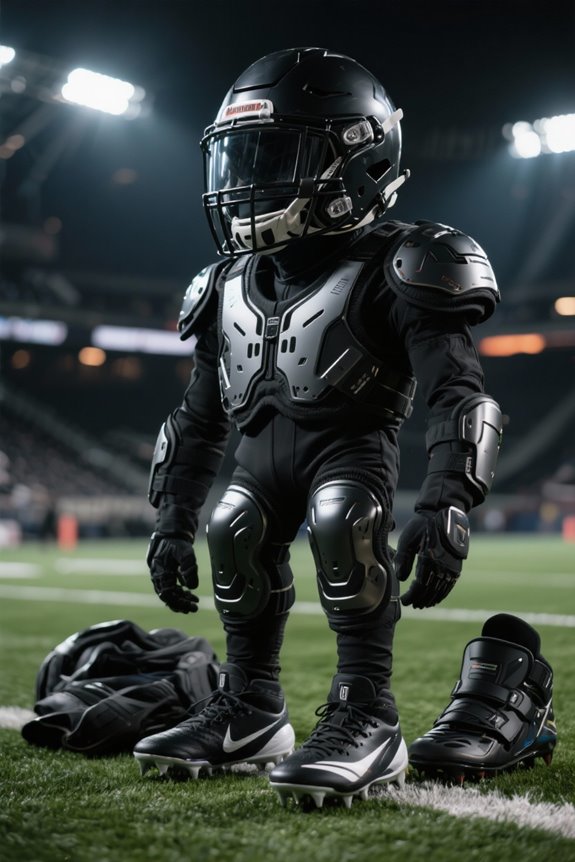
How Has Equipment Changed To Reduce Injuries In Football?

Football equipment has greatly evolved to enhance player safety through innovations in helmet design, padding materials, and adherence to stringent safety regulations. Modern helmets incorporate multi-layered shells and advanced padding that absorb up to 25% more impact force than their predecessors. Continuing advancements, including carbon fiber shells and high-performance shoulder pads, reflect ongoing efforts to reduce injury risks. Despite these improvements, challenges persist, such as economic barriers to accessing top-performing helmets. Further details reveal the changing landscape of player safety equipment.
Key Takeaways
- Modern football helmets feature multi-layered shells and advanced padding materials, improving impact absorption and reducing head injury risks significantly.
- NOCSAE certification standards ensure that helmets meet safety requirements, enhancing protective capabilities throughout a player’s career.
- Technology integration in safety protocols enables real-time injury monitoring and data-driven recovery processes to enhance player safety.
- Enhanced shoulder pads and knee gear have been developed to provide better protection against collisions while balancing mobility and safety.
- Continuous research into helmet design and materials aims at further reducing concussive forces and enhancing overall player safety on the field.
Evolution of Helmet Design and Materials
The evolution of helmet design and materials has greatly transformed the safety of football players over the decades, with notable advancements originating in the early 20th century. Initially, helmets were crafted from hardened leather, providing minimal padding and limited protection, resulting in frequent injuries. In 1939, Riddell introduced plastic helmets, which offered improved durability and comfort. By the 1950s, the shift to plastic helmets became universal in the NFL, further enhancing player safety. Subsequent innovations included advanced padding advancements, such as inflatable vinyl cushions in the 1970s, which customized fit and enhanced impact absorption. Today’s helmets utilize multi-layered shells, integrating rigid and flexible materials, demonstrating a significant leap in design evolution and overall protection against concussive forces. Recent advancements, like the use of the RFLX-S impact layer, effectively absorb and deflect impact forces, further improving player safety.
Safety Standards and Certification Milestones
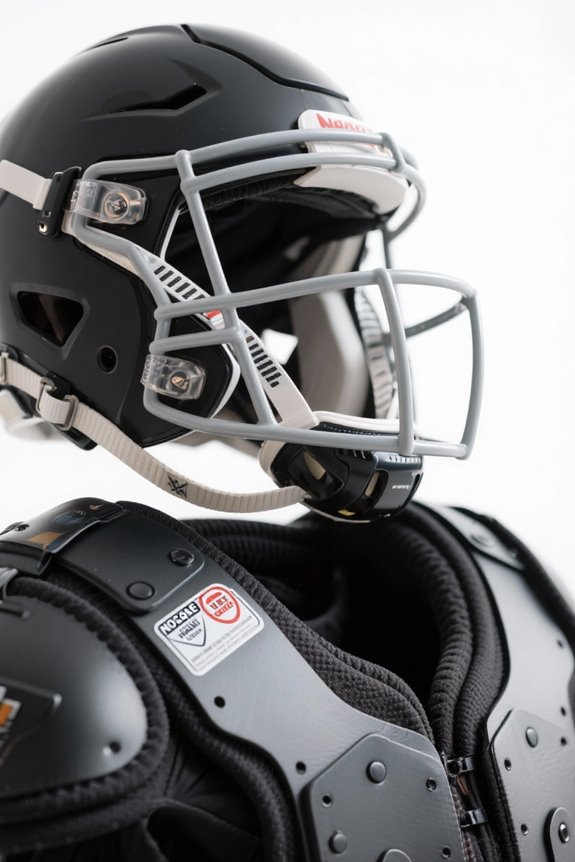
Recognizing the critical importance of player safety, the National Operating Committee on Standards for Athletic Equipment (NOCSAE) was established in 1968 in response to alarming statistics, including 32 fatalities among football players due to head injuries. In 1973, NOCSAE introduced its first helmet performance standard, emphasizing helmet certification to mitigate head injury risks. By 1978, the NCAA mandated the usage of NOCSAE-certified helmets for college players, followed by the NFHS for high school athletes in 1980. Initially, manufacturers self-certified compliance, but in 2015, third-party certification by the Safety Equipment Institute (SEI) became obligatory. This change enhanced compliance enforcement, ensuring helmets undergo rigorous testing and audits to maintain safety standards and protect athletes effectively from head injuries. Additionally, advancements in lineman shoulder pads have contributed significantly to reducing injuries by providing enhanced protection and support during intense gameplay.
Recommended Products

Earned a 5-star safety rating in the Virginia Tech Helmet Ratings; with a 1.35 score, only the VICIS ZERO2 scored better

Virginia Tech 5-Star helmet; ranked 1st among 31 helmets tested with a 0.19 score (Average 5-Star youth helmet: 2.82 – lower score indicates better performance)
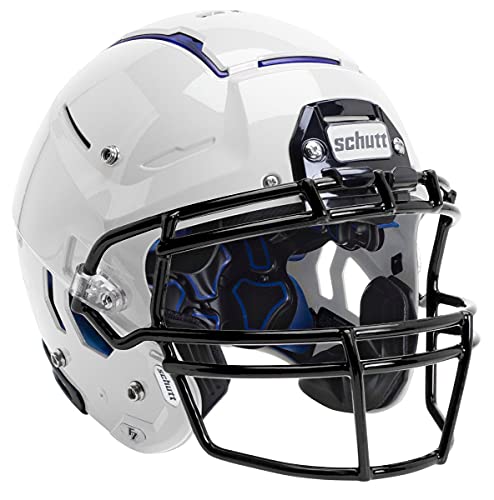
Only compatible with carbon steel facemasks
Advances in Shoulder and Body Padding
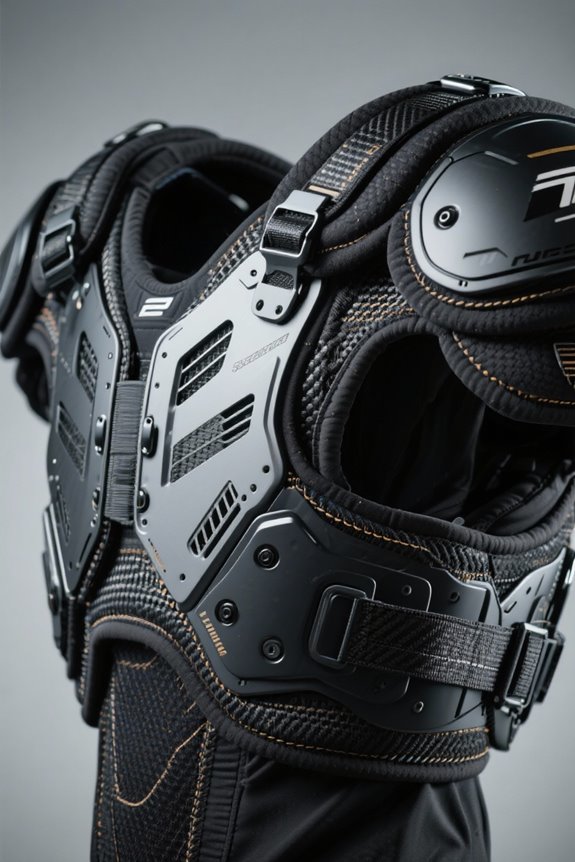
Advancements in shoulder and body padding have become paramount in enhancing player safety within the sport of football, building on the foundation of stringent helmet safety measures established by organizations like NOCSAE. New materials, utilizing advanced cushioning and innovative geometric designs, can absorb up to 25% more impact force than traditional alternatives, enhancing protection during collisions. Biomechanical engineering facilitates the creation of customizable, lightweight padding that maintains flexibility while hardening upon impact. Incorporating features such as moisture-wicking fabrics and ventilation systems also promotes comfort and temperature regulation, reducing heat stress and fatigue. Furthermore, structural innovations like carbon fiber shells improve stability, ensuring ideal protection without compromising players’ range of motion, which has been adopted widely across various football leagues. These advancements, particularly in customizable fit through adjustable straps, allow players to tailor their equipment for maximized safety and performance.
Recommended Products

Large + Standard Combination: Configured with - Standard Arch, Standard Epaulets, Skill Cups, and a Standard 1/2" Shoulder Foam. Each shoulder pad and size combination is uniquely configured by our experts to ensure maximum safety and performance for your exact needs on the field.

CONSTRUCTION: Engineered with aerospace-grade materials that deliver maximum durability while maintaining exceptional flexibility for elite performance

ADVANCED IMPACT TECHNOLOGIES: CURV thermoplastic composite internal/external arch and epaulette
The Role of Rules in Injury Prevention
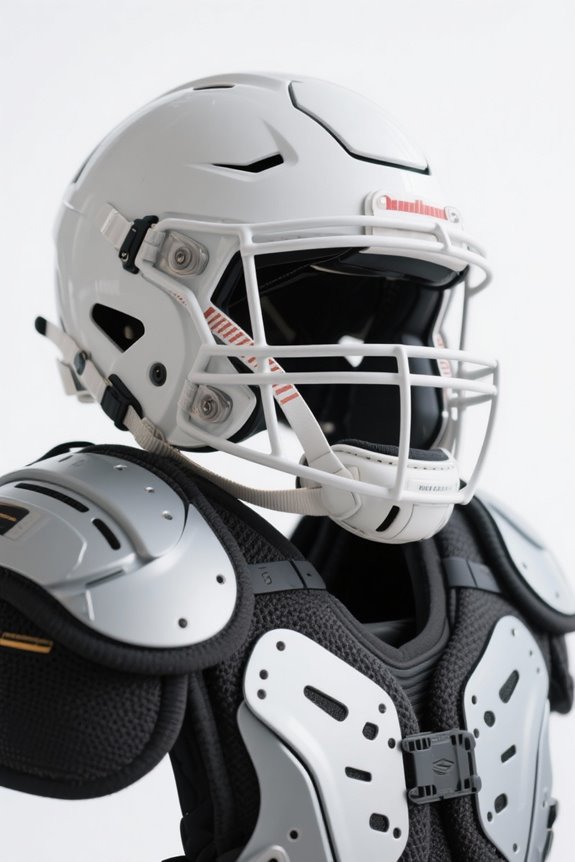
While the physical nature of football inherently poses risks, the implementation of extensive rule changes serves as a crucial strategy in injury prevention. Recent rule modifications, particularly concerning concussion protocols, focus on enhancing player safety by addressing high-risk situations. For instance, adjustments to kickoff plays considerably reduce concussion risks associated with high-impact collisions. Additionally, the enforcement of proper tackling techniques helps to lower the incidence of concussions and other serious injuries. Organizations like the NFL employ injury surveillance and expert panels to continuously assess injury data and refine rules effectively. This adaptive approach guarantees that strategies remain relevant and focused on mitigating injuries, aligning with ongoing developments in football safety standards and protocols. Furthermore, advancements in helmet technology, such as patented side impact protection, further enhance the protective measures for players on the field.
Impact of Improved Equipment on Injury Statistics
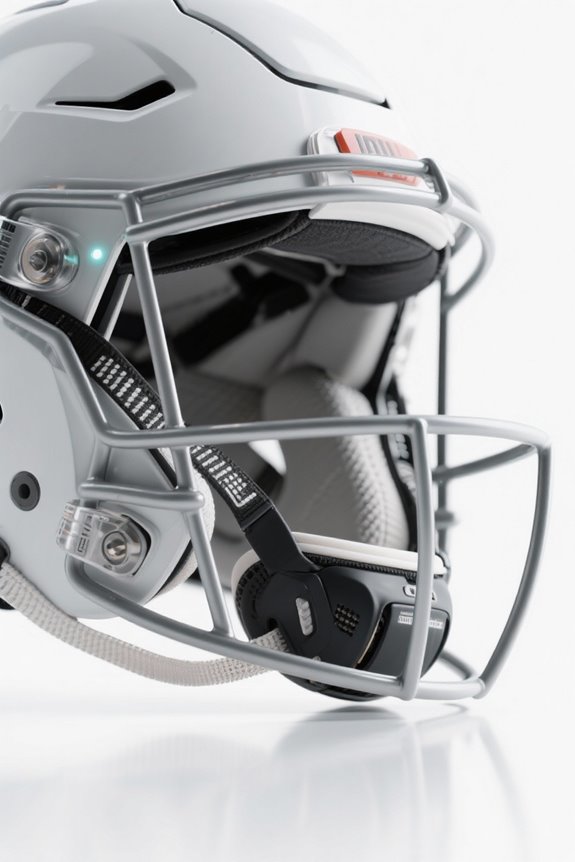
As equipment technology in football evolves, recent improvements have notably impacted injury statistics, particularly concerning head and limb injuries. Enhanced helmet designs utilize advanced materials to effectively absorb impact forces, considerably reducing the risk of skull fractures and severe head injuries during play. Studies indicate that regular recertification guarantees helmets maintain their protective capacity throughout the season. In addition, improvements in shoulder pads and knee gear have effectively reduced injury severity caused by collisions and lower extremity sprains. However, increased practice intensity, especially during fully padded scrimmages, correlates with higher concussion rates. Therefore, balancing protective gear usage with practice conditions remains essential for maximizing player safety and minimizing overall injury rates in football. Furthermore, multi-layered protection systems in helmets, such as those found in the Schutt F7 VTD, enhance safety by dispersing impact forces more effectively.
Emergency Response Innovations in Sports Medicine
The implementation of innovative emergency response protocols in sports medicine has become increasingly essential to player safety on the football field. Emergency Action Plans (EAPs) outline systematic procedures for addressing life-threatening injuries, guaranteeing rapid response through onsite ambulances and strategically placed emergency equipment, such as automated external defibrillators (AEDs). Regular response training for coaches and sideline personnel equips them to recognize and act quickly during cardiac emergencies. Additionally, these protocols establish communication links with local emergency systems, facilitating smooth shifts for injured athletes to medical facilities. The presence of multidisciplinary emergency response teams secures a coordinated approach to treatment, enhancing survival rates following critical incidents. Overall, advancements in emergency response are crucial for protecting players’ health. Proper equipment maintenance plays a vital role in ensuring the longevity and efficiency of safety measures in place.
Integration of Technology in Injury Monitoring
Advancements in technology play an essential role in monitoring injuries within the sport of football, offering unprecedented insights into player health and performance. Wearable technology, such as GPS and digital biosensors, tracks players’ positions and physiological data in real time during games and practices. This data includes metrics like speed, acceleration, impacts, and heart rate, which are crucial for player monitoring and injury prediction. Data analytics enhances this process by analyzing datasets that incorporate training, performance, and injury history to forecast injury risk effectively. AI models can simulate various scenarios to provide daily updates on potential injuries, allowing teams to adjust training and recovery protocols. This thorough integration of technology greatly contributes to injury prevention and management strategies in football, especially through the use of accurate head circumference measurement, which ensures that helmets fit properly to enhance safety on the field.
Recommended Products

60 Day FREE Subscription: The PitcheroGPS Tracker & Player Vest includes a 60 Day FREE subscription, allowing players to test every feature before subscribing to the GPS Player App. Once the 60 Day subscription ends, an annual subscription of $60 is required ($5 per month).

SUBSCRIPTION REQUIRED : Access all features with a $6.9 monthly subscription. To help you decide if the service meets your needs, we offer a 30-day free trial with your first subscription.

SUBSCRIPTION REQUIRED : Access all features with a $6.9 monthly subscription. To help you decide if the service meets your needs, we offer a 30-day free trial with your first subscription.
Ongoing Challenges and Future Directions
Despite the integration of technology in monitoring injuries, ongoing challenges persist in enhancing player safety and performance in football. Approximately 30% of NFL players opt against wearing top-performing helmets, which are vital for mitigating concussion risks. Economic barriers markedly hinder broader helmet adoption, particularly in amateur and youth leagues, where advanced helmets are often prohibitively expensive. In addition, no helmet can eliminate the risk of concussions, as they merely reduce the severity of impacts. Alongside helmet advancements, addressing shoulder protection also presents challenges, as rigid shoulder pads impede mobility, essential for performance. Future efforts must focus on balancing protective equipment with athletic functionality while fostering inclusive access to safer gear across all levels of football. Additionally, the use of TPU cushioning in helmets significantly enhances impact absorption, providing advanced safety features for players.
Frequently Asked Questions
How Often Should Football Helmets Be Replaced?
Football helmets should be replaced every ten years to adhere to helmet lifespan standards. Replacement frequency guarantees they remain compliant with certification regulations, thereby maximizing player safety and minimizing the risk of injury during play.
What Are Common Misconceptions About Football Equipment Safety?
In the domain of protective armor, misconceptions abound; misunderstood safety often arises from outdated standards. People mistakenly believe equipment alone safeguards players, neglecting the importance of technique, coaching, and education in preventing injuries and ensuring safety.
How Do Players Choose the Right Size and Fit for Gear?
Players choose the right size and fit for gear through proper fitting techniques, including precise measurements of body dimensions, adherence to manufacturer sizing charts, and guidance from athletic trainers or equipment managers to guarantee maximum protection and comfort.
Are There Any Specific Care Instructions for Football Equipment?
What guarantees football equipment remains effective? Proper equipment maintenance and adherence to cleaning guidelines are essential. Regular inspections, thorough cleaning, and appropriate storage prevent deterioration, ultimately supporting player safety and maximizing the lifespan of gear.
What Costs Are Associated With High-Quality Football Equipment?
High-quality football equipment incurs significant costs due to advanced materials and custom fitting, which enhance performance benefits and injury prevention. Ongoing research, technology integration, and player-specific adaptations further contribute to these rising expenses for teams and manufacturers.


