As an Amazon Associate, we earn from qualifying purchases. Some links on this site are affiliate links at no extra cost to you. Our recommendations are based on thorough research and editorial judgment.

How Does An Offensive Line Protect The Quarterback?

The offensive line protects the quarterback by utilizing various blocking techniques and coordinated slide protection schemes. Each lineman assumes specific roles, ensuring effective communication to adjust to defensive alignments. Techniques such as the kick step and punch technique enhance defensive engagement, while pre-snap evaluations guide blocking assignments. Cohesion among linemen is essential for maintaining a secure pocket. Understanding these concepts is crucial to recognizing the complexities of quarterback protection and its impact on game performance and strategies.
Key Takeaways
- The center assesses defensive alignments and calls blocking schemes essential for effective pass protection.
- Tackles shield the quarterback’s blind side, crucial for defending against edge rushers.
- Guards execute double-teams and provide interior stability against defensive pressure.
- Slide protection schemes allow linemen to adjust and cover specific gaps during passing plays.
- Effective communication ensures linemen adapt to defensive shifts and blitzes, maintaining a secure pocket for the quarterback.
Understanding Slide Protection Schemes
In American football, understanding slide protection schemes is imperative for the offensive line‘s ability to effectively safeguard the quarterback during passing plays. Slide protection fundamentals involve offensive linemen working as a coordinated unit, sliding in one direction to cover specific gaps. Each lineman is assigned a gap responsibility, focusing on blocking defenders entering that zone. The outermost blocker on the slide side, typically a tackle, prevents edge pressure. Additionally, blitz recognition techniques are essential, as the running back often assists by picking up unaccounted blitzers. In half-slide protection, responsibilities primarily target inside linebackers, while full slide protection guarantees linemen focus on gap responsibilities. Effective communication and decision-making are important for adapting to defensive strategies that challenge slide protection. Understanding the importance of impact absorption and safety can also enhance the effectiveness of practice sessions for offensive lines.
Types of Slide Protection and Their Applications

Understanding the different types of slide protection is essential for offensive linemen who endeavor to efficiently shield the quarterback from defensive pressures. Slide protection strategies include variations such as 4-Man, Full-Line, and Half-Line Slide Protection. The 4-Man formation focuses on zoning to counter edge rushers while utilizing a running back for additional support. Full-Line Slide Protection, utilizing all five linemen, is ideal for quick passes as it creates a protective shell. Conversely, Half-Line protection combines a sliding zone with man-to-man blocking, offering flexibility against mixed defenses. Additionally, slide protection is crucial in designed rollouts and play-action passes, ensuring the quarterback has a clear vision and timing while maneuvering pressure, showcasing the necessity of adaptable offensive line formations. The importance of maximum protection and comfort cannot be overstated, as it enhances the quarterback’s ability to execute plays effectively under pressure.
Recommended Products

RESISTANT: Hikeen rugby blocking pad features a denser foam for added durability and is able to withstand heavy use and abuse, making it a long-lasting training tool. And is less prone to bending or warping over time.

Acquire better defensive skills with an innovative training device that every coach, trainer and athlete should incorporate into their workouts.

CONTACT DRILLS: Heavy-duty blocking pad for safely simulating contact drills for a variety of sports or for martial arts training
Offensive Line Roles in Quarterback Protection
The offensive line plays a significant role in safeguarding the quarterback, forming the backbone of the offensive protection scheme. Key center responsibilities include reading defensive alignments, calling blocking schemes, and executing pass protection as the line initiates movement after the snap. Guards, positioned adjacent to the center, focus on the interior, often executing double-teams against formidable defensive linemen to guarantee stability. Meanwhile, tackles utilize specialized tackle techniques to defend against edge rushers, maintaining leverage and protecting the quarterback’s blind side. Effective communication among linemen guarantees that blocking assignments adjust dynamically according to defensive shifts and potential blitzes. This collaborative effort among linemen is essential to maintaining cohesion and providing a secure pocket for the quarterback, critical for offensive success. A well-protected quarterback often has the crucial time needed to make decisive plays and maximize energy dispersal to reduce injury risk.
Techniques for Effective Pass Protection
Techniques for effective pass protection are fundamental components of an offensive line’s success, ensuring that the quarterback remains shielded during critical plays. The kick step serves as the initial movement, positioning linemen laterally against rushers while emphasizing proper foot placement outside the knees and hips. Once in position, the punch technique involves early hand placement to establish a strong triangular frame, delivering a powerful strike to disrupt the defender’s balance. Maintaining leverage is essential; linemen must utilize weight distribution focused on their inside groin to counter bull rushes effectively. Proper posture, with square shoulders and a low center of gravity, allows better engagement with defenders. Together, these techniques create a cohesive protective strategy, safeguarding the quarterback against defensive threats. Incorporating high-quality lineman gloves into their gear can further enhance grip and protection during these critical maneuvers.
Recommended Products

Price For: Each Dilution Ratio: Ready to Use Insect Control Type: Repels Form: Wipes Targeted Insects: Fleas, Flies, Mites, Mosquitoes, Ticks Insect Group: Flying/Crawling Standards: EPA Registered, Passes Lineman's Glove Test Item: Insect Repellent Wipes Country of Origin (subject to change): United States

Breathable compression Lycra back delivers a performance fit. AVAILABLE IN FULL FINGER STYLE.

Designed for linemen, provides substantial padding while maintaining a flexible, minimal feel; C-TACK padded palm patch for added grip and protection when you're going hard against your opponent
Pre-Snap Communication and Adjustments
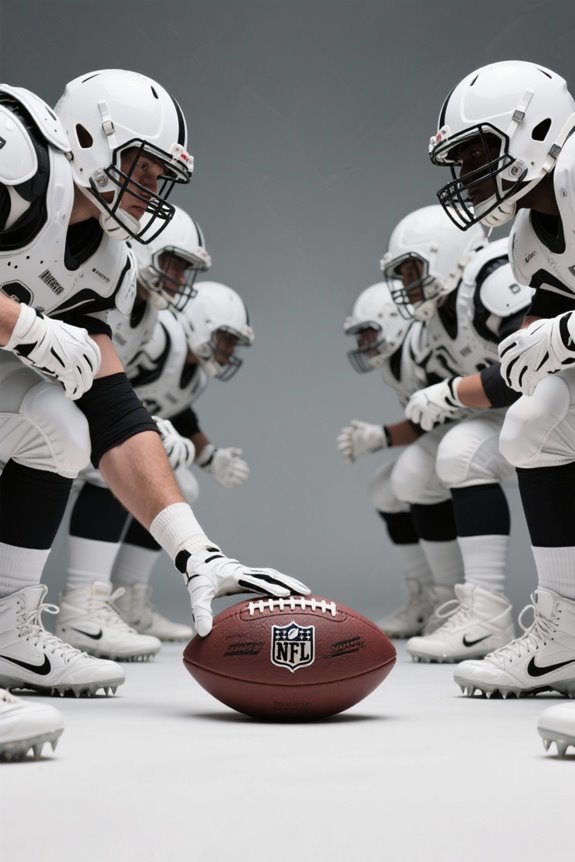
Pre-snap communication is a critical aspect of preparing an offensive line to effectively protect the quarterback during a game. This involves using pre-snap signals to identify defensive front alignments and make protection calls, which guide the offensive line’s slide direction. For example, terms like “LEAF” or “RIVER” specify which direction to block and the number of linemen involved in the slide. Additionally, the line communicates man matchups, guaranteeing all players understand their responsibilities, particularly against blitzes. Nonverbal signals, such as taps, further facilitate adjustments during the snap. Effective pre-snap communication guarantees cohesion among linemen and running backs, equipping them to counter defensive stunts and adapt to shifting defensive alignments, thereby enhancing quarterback protection. Furthermore, using durable materials in training equipment can help linemen practice these techniques consistently, ensuring they are well-prepared for game situations.
Evaluating the Strengths of Protection Schemes
Evaluating the strengths of protection schemes involves a thorough analysis of team performance metrics, which reflect the ability of offensive lines to shield quarterbacks from defensive pressures. For instance, the Jacksonville Jaguars and Denver Broncos showcased exemplary pass protection, allowing only 34 and 36 pressures, respectively, and maintaining low sack percentages of 2.0%. High snap counts, often exceeding 70 per game, indicate consistency among starters, correlating with improved protection metrics. Additionally, successful offensive strategies utilize versatile linemen to adapt to various defensive schemes, enhancing overall effectiveness. Key metrics, such as average time to sack and pass block win rates, offer insights into how efficiently these lines perform, ultimately influencing quarterback success and team dynamics throughout the season. Effective offensive lines often employ double-wall and vacuum-sealed designs to enhance their protection schemes against aggressive defenses.
Common Weaknesses in Offensive Line Protection
Understanding the common weaknesses in offensive line protection is essential for evaluating how well a team can shield its quarterback from defensive threats. A significant issue lies in blindside protection, where unprotected or mismanaged players can leave the quarterback vulnerable to sacks. In addition, rush lane vulnerabilities arise from poor communication and misalignment during complex defensive schemes, often leading to unblocked defenders. Inconsistent execution of protection schemes, such as half slide protections, forces quarterbacks into hurried decisions detrimental to performance. Furthermore, individual linemen’s struggles against speed rushers or power moves can create early pressure, negatively impacting the quarterback’s ability to execute plays effectively. Collectively, these factors increase the risk of turnovers and diminish overall offensive efficiency. Tackling dummies can be an invaluable resource for offensive linemen to practice their blocking techniques and enhance their skills without risking injury.
Frequently Asked Questions
How Does a Quarterback’s Footwork Influence Offensive Line Protection?
A quarterback’s footwork mechanics directly influence offensive line protection by enhancing mobility and signaling blocking adjustments. Improved foot placement allows linemen to better anticipate defensive movements, leading to more effective, coordinated responses against pressure during plays.
What Impact Does Weather Have on Pass Protection Effectiveness?
Weather conditions greatly affect pass protection effectiveness, as adverse elements like rain or snow can lead to slippery surfaces. This often compels teams to adjust strategies, emphasizing shorter passes and reliance on run plays for better protection.
How Do Different Offensive Schemes Affect Line Protection Strategies?
Different offensive schemes considerably influence line protection strategies; for instance, teams utilizing zone blocking often see a 25% increase in successful pass plays. Play action variables require linemen to adapt dynamically, affecting timing and blockers’ responsibilities.
Why Is Team Chemistry Important for Offensive Line Cohesion?
Team chemistry is essential for offensive line cohesion, as it fosters effective communication skills and trust building. This alignment allows linemen to anticipate actions, coordinate strategies, and swiftly adjust to defensive challenges, enhancing overall performance.
How Can Injuries Affect an Offensive Line’s Performance?
Injuries severely impact an offensive line’s performance by disrupting the depth chart and hindering cohesion. Effective injury management becomes essential, influencing player substitutions and strategies, ultimately leading to decreased effectiveness in blocking and protection schemes.