As an Amazon Associate, we earn from qualifying purchases. Some links on this site are affiliate links at no extra cost to you. Our recommendations are based on thorough research and editorial judgment.

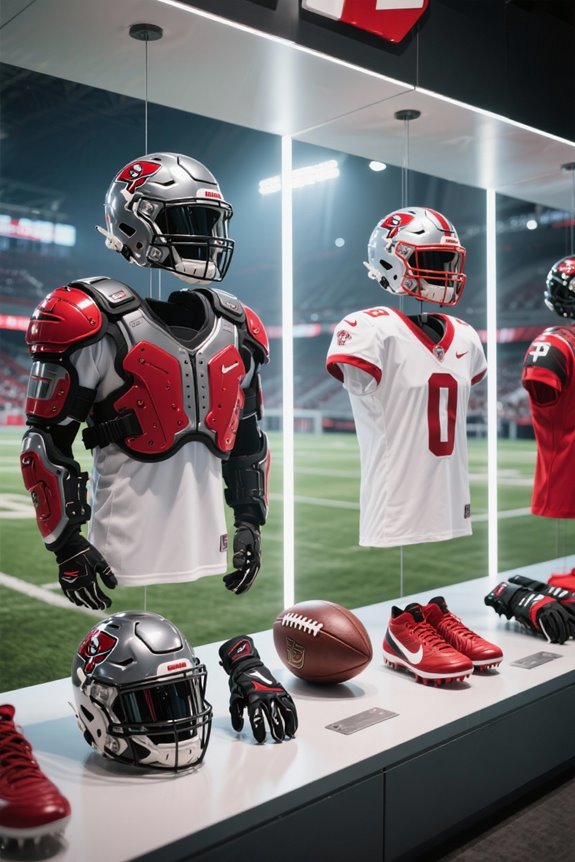
What Is The Difference Between Offense And Defense In Football?

In football, the offense and defense serve opposing roles. The offense aims to advance the ball and score points by initiating plays, primarily through the quarterback, running backs, and receivers. Conversely, the defense seeks to prevent scoring by obstructing the offense’s plays, employing tactics such as tackling and intercepting passes. Each unit consists of specialized positions focused on strategic execution. Understanding these dynamics is essential, offering insights into the game’s complexities and the critical interplay between these units.
Key Takeaways
- Offense focuses on advancing the ball to score points, while defense aims to prevent the opposing team from scoring.
- Offensive players, like quarterbacks and running backs, drive the play, whereas defensive players, such as linemen and defensive backs, work to disrupt it.
- Offensive strategies include formations like the spread and air raid, contrasting with defensive strategies such as blitzing and coverage schemes.
- Effective offense relies on skills like quick decision-making and route running, while defense requires anticipation, visual tracking, and communication.
- The between offense and defense is dynamic, with each adapting strategies in response to the other’s tactics during the game.
Definition of Offense and Defense
In the domain of football, the terms “offense” and “defense” denote two fundamental components of the game, each with distinct roles and responsibilities. Offense is the team unit responsible for advancing the ball toward the opponent’s end zone to score points, initiating play by snapping the ball from the line of scrimmage. The primary goal of offensive strategy is to gain yardage through running or passing plays, with success measured by points scored and yardage gained. Conversely, the defense is tasked with preventing the opposing offense from scoring, employing defensive tactics aimed at disrupting plays through tackling, interceptions, and turnovers. As a result, understanding the definitions of offense and defense is essential for grasping the overall dynamics of football. Tactics like utilizing tacky grip technology in gloves can enhance a player’s performance in both offensive and defensive roles.
Roles of Offensive Players
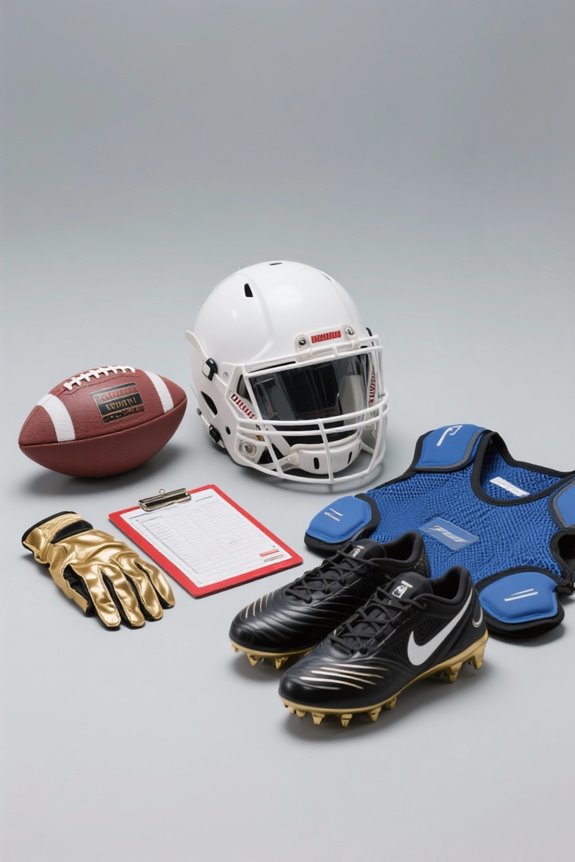
Various roles within the offensive unit are essential for the success of a football team, with each player assigned specific responsibilities that contribute to advancing the ball and scoring points. The quarterback (QB) orchestrates offensive strategies, leading the team and executing plays by delivering forward passes or handing the ball to running backs (RB). Running backs vary in subpositions, with agility-focused halfbacks and blocking fullbacks, they both support the passing and rushing game. Meanwhile, wide receivers (WR) execute routes and catch passes, while also aiding in blocking. Tight ends (TE) combine blocking and receiving, providing versatility in player formations. Offensive linemen (OL) consist of critical blockers who protect the QB and open lanes for running plays, ensuring effective offensive execution. Proper fit in offensive footwear is also crucial for maximizing performance and comfort during gameplay.
Recommended Products
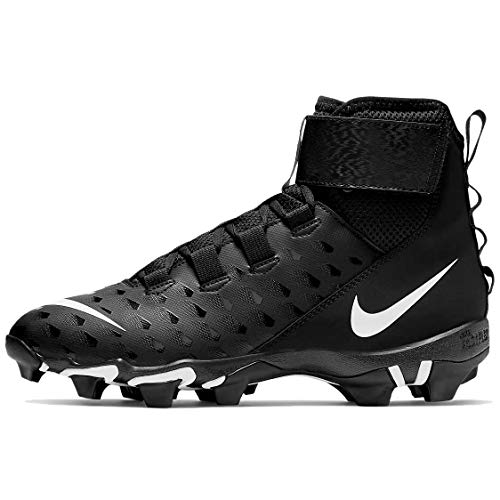
GAME-READY TRACTION. The Nike Force Savage Shark 2 is built for the trenches. Its durable design is backed by molded details made to help resist abrasion. A Nike Fastflex outsole keeps things going with an articulated design that helps you move freely.

New Alpha plate is made of mixed sticky rubber in the forefoot and heel for extra traction.

Nike Alpha Menace 4 Varsity Molded Men's Football Cleats White Black FN0027-100 Size 9
Roles of Defensive Players
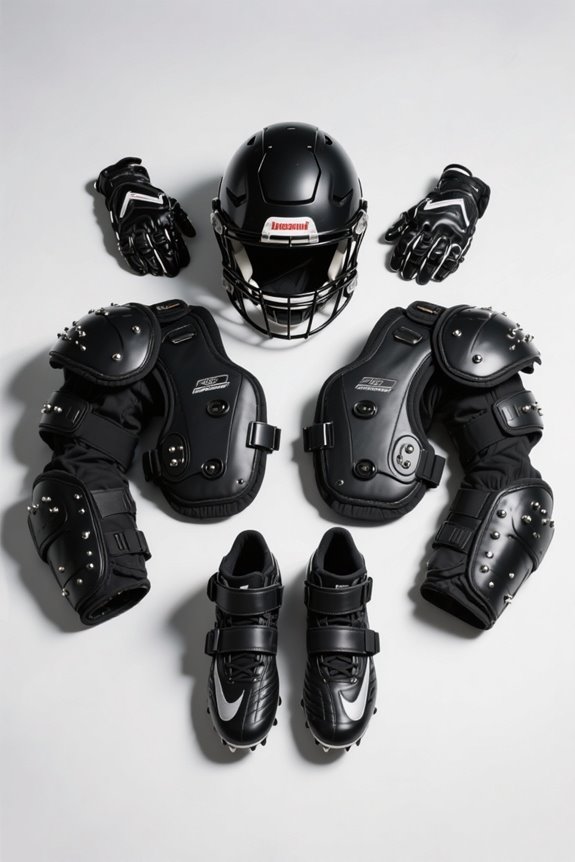
Defensive players play a pivotal role in countering the strategies employed by the offensive unit, with their effectiveness greatly impacting the overall performance of a football team. Their roles are defined by specialized player positioning within various defensive schemes. Defensive linemen, including defensive tackles and ends, disrupt offensive plays by engaging blockers and pursuing the quarterback. Linebackers, positioned behind the linemen, excel in tackling and coverage, often reading offensive formations to anticipate plays. Defensive backs, which include cornerbacks and safeties, focus on pass defense, using speed and awareness to prevent completions. Overall, the interplay and coordination among these players are essential in executing complex formations, ensuring a cohesive approach to thwarting offensive advances. Additionally, defensive backs often rely on high-impact protection from equipment like specialized shoulder pads to maintain performance and safety on the field.
Recommended Products

Medium + Super Skill Combination: Configured with - Super Skill Arch, Super Skill Epaulets, Super Skill Cups and a Skill 3/8” Shoulder Foam. Each shoulder pad and size combination is uniquely configured by our experts to ensure maximum safety and performance for your exact needs on the field.

PROTECTION FOR TOUGH POSITIONS: TAG ALT4-950 shoulder pads feature high-impact polycarbonate epaulets and NV815 super foam for top energy absorption, built specifically for running backs, linebackers, fullbacks and defensive backs.

One Bundle, Full Coverage: Shoulder pads, back plate, and wrist coach working together to give skill position players everything they need — protection, breathability, and play management all in one package.
Key Offensive Positions and Responsibilities
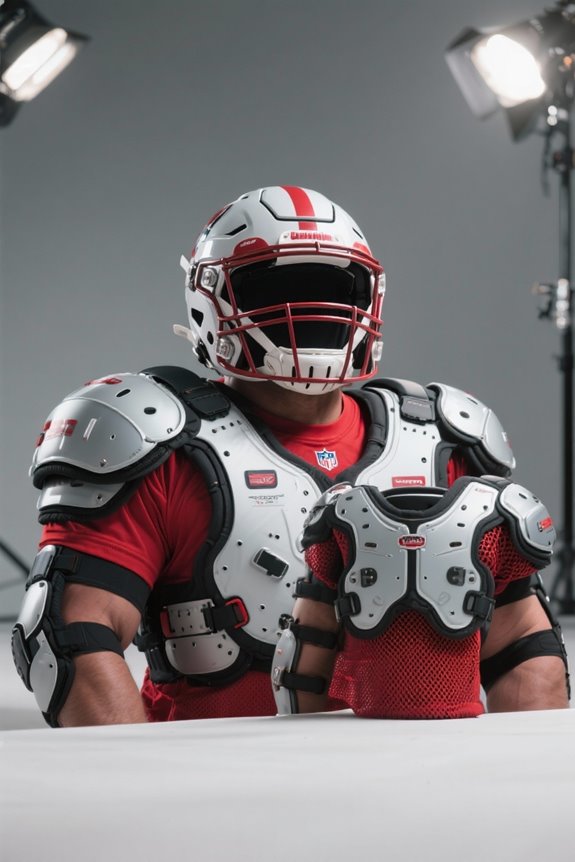
Football’s offensive unit comprises several key positions, each with distinct responsibilities that contribute to the overall effectiveness of the team. The quarterback’s duties include play calling, receiving the snap, and executing decisions on whether to pass, run, or hand off the ball. Running back roles primarily involve being ball carriers on rushing plays, with additional responsibilities in blocking and catching passes. Fullback functions increasingly focus on blocking for running backs or executing short-yardage runs, adding power to rushing strategies. Wide receiver skills center on running precise routes and catching passes to advance plays. Offensive linemen responsibilities are critical, as they provide necessary protection for the quarterback and create running lanes through effective blocking during both passing tactics and rushing strategies. The effectiveness of these players can significantly improve with the right footwear, as proper fit and sizing considerations enhance their performance on the field.
Recommended Products

Men's football cleats for traction and speed

Men's football cleats with lockdown traction for explosive moves

Men's football cleats with support and traction for top performance play
Key Defensive Positions and Functions
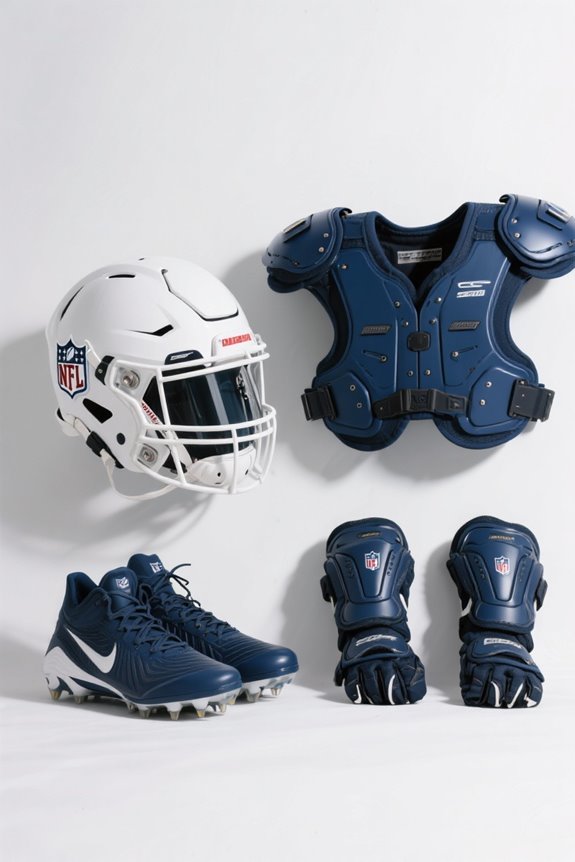
The key defensive positions in football are crucial components of a team’s strategy, designed to counter and neutralize the offensive threats posed by opponents. The defensive line, including defensive ends and tackles, forms the first line of defense, focusing on disrupting plays and pressuring the quarterback. Linebackers, versatile in nature, bridge the gap between the line and the secondary, defending against both runs and short passes. Additionally, defensive backs—comprising cornerbacks and safeties—play critical roles in pass coverage and run support. Each position requires specific defensive alignments and player responsibilities, emphasizing speed, strength, and tactical awareness. Effective communication and mental acuity are also essential, enabling players to adjust alignments based on offensive formations and strategies. Regular training sessions, such as those with an agility ladder, can significantly enhance players’ speed and coordination on the field.
Recommended Products

Multi-Sport & Therapy Approved Used by professionals in soccer, basketball, boxing, and physical therapy, BlazePod makes training fun, fast, and measurable. Improve focus, speed, and cognitive agility across any discipline.

TRAINER KIT - Your Pods are the foundation of your training experience. Trainer kit is recommended for all trainers on the move for one-on-one or small group training. More Pods give you more versatility, more stations, color coding, and the ability to set up a wider variety of drills.

Boost Match-Day Reactions Train for high-speed situations on the pitch. Sharpen your first touch, footwork, and awareness with drills that build faster reactions and smarter decisions.
Strategic Approaches of Offense
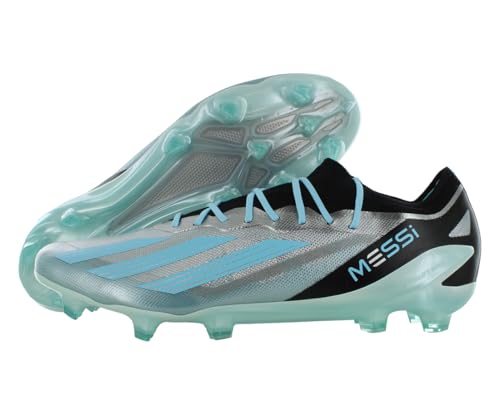
Strategic approaches employed by offensive units in football are critical to achieving success on the field, as they focus on maximizing scoring opportunities while minimizing turnovers. The spread offense utilizes multiple wide receivers to stretch defenses, creating favorable one-on-one matchups. In contrast, the air raid emphasizes a pass-heavy attack, operating at high tempo with simplified play-calling from spread formations. The option offense introduces multiple decision-making processes for the quarterback, generating confusion among defenders. Additionally, the pistol formation combines elements of shotgun and traditional setups, enhancing offensive versatility. Modern offenses emphasize strategic execution through statistical analysis, balancing passing and running to control game tempo and preserve possession, consequently leading to increased efficiency and scoring potential. Furthermore, high-quality turf shoes can significantly enhance players’ performance on the field, providing proper traction and support during gameplay.
Recommended Products

Strategic Approaches of Defense
In football, effective defensive strategies are essential for countering dynamic offensive threats and maintaining control of the game. Successful formations like the Nickel Defense and Dime Defense utilize multiple defensive backs to enhance pass coverage against various offensive alignments. The 46 Defense adds extra players near the line of scrimmage, focusing on stopping the run and defending in the red zone. Coverage schemes, such as man-to-man and zone coverage, allow defenders to adapt according to game situations, offering solutions for deep passes or tight coverage. Blitzing strategies aim to pressure the quarterback, forcing errors while requiring calculated risk management. Ultimately, a cohesive approach combining these defensive strategies guarantees a team’s competitiveness on the field. Incorporating tools like tackling dummies assists in improving defensive skills, allowing players to practice fundamental techniques in a safe environment.
Skill Sets Required for Offensive Players
While various positions on the football field contribute uniquely to the overall offensive strategy, each player must possess a specialized skill set that enhances their effectiveness. Quarterbacks require strong leadership and quick decision-making, while wide receivers rely on speed, agility, and precise route running. Running backs need a combination of speed, vision, and power to exploit defensive weaknesses, and offensive linemen emphasize size, strength, and technique to dominate the line of scrimmage. Key to this offensive coordination is the skill development across positions, which facilitates effective communication and synchronization. In addition, maintaining discipline in play execution plays a critical role in minimizing penalties, ultimately affecting the overall efficiency of the offensive unit. Effective training equipment, such as durable materials, can significantly enhance the skill development needed for success on the field.
Skill Sets Required for Defensive Players
Defensive players in football require a diverse set of skills that enable them to effectively counteract the offensive strategies of their opponents and anticipate plays. Crucial visual skills allow defenders to track the ball and maintain awareness of surrounding players, while anticipation skills are critical for timing interceptions and tackles. Physical traits, such as speed, agility, and strength, enhance their ability to react and maintain position during plays. Technical skills involve mastering coverage techniques and sound tackling, guaranteeing effective play execution. Communication strategies are essential for coordinating assignments, and mental attributes, including discipline and a high football IQ, support informed decision-making. Additionally, run support capability guarantees defenders can assist against rushing plays and adapt to various offensive threats. Exercises that improve agility training equipment can also enhance a defender’s overall effectiveness on the field.
Team Structure in Football
Team structure in football is essential for both offensive and defensive units, as each plays a critical role in the overall success of the game. The offense consists of 11 players, including offensive linemen and backs, who execute offensive strategies to advance toward the opponent’s end zone. Key positions, such as quarterbacks and running backs, specialize in moving the ball forward, while tight ends and wide receivers support these efforts. On the defensive side, teams field 11 players as well, organized into defensive formations designed to counteract offensive plays. Defensive units comprise a line, linebackers, and defensive backs, each assigned specific roles to stop the advance of opposing teams and protect the end zone from scoring attempts. Proper equipment selection significantly impacts player performance in both offensive and defensive drills.
Game Dynamics Between Offense and Defense
In the game of football, the dynamics between offense and defense reflect a complex interplay of strategic planning and real-time adaptations, as each unit seeks to outmaneuver the other. The offense primarily focuses on scoring methods like touchdowns and field goals, employing various play execution techniques to progress the ball. Conversely, the defense aims to disrupt these efforts by preventing yardage gains and forcing turnovers. The success of each unit hinges on their ability to adapt to the other’s strategies; offenses manipulate tempo and formations, while defenses rely on disciplined positioning and quick reactions. This ongoing battle shapes the pace and flow of the game, emphasizing the importance of tactical variations and real-time decision-making during each play.
The Importance of Coordination in Football
Coordination plays a significant role in football, influencing the performance and effectiveness of both offensive and defensive units. Effective coordination fosters team synergy, enabling players to anticipate each other’s movements and make informed decisions on the field. Structured leadership facilitates this coordination by distributing roles among team members, reducing dependency on any single player while enhancing adaptability in high-pressure situations. Tactical adaptability is essential; as teams navigate various match contexts, the ability to adjust spacing and positioning proves important, particularly during ball possession phases. Additionally, statistical analysis of player performance informs coaching strategies and optimizes special teams’ coordination, leading to measurable improvements in game outcomes. Overall, cohesive coordination enhances resilience, adaptability, and collective efficiency within football teams.
Frequently Asked Questions
How Do Timeouts Affect Offense and Defense Strategies?
Timeout strategies greatly influence team dynamics; offensive adjustments allow for meticulous planning, while defensive timeouts empower strategic countermeasures. Each facet ultimately shapes the game’s tempo, affecting momentum and win probability in critical moments.
What Impact Does Weather Have on Offensive and Defensive Performance?
Weather influences performance variability, causing offensive strategies to adjust in adverse conditions, often steering towards running plays. Defensively, weather can heighten errors, impacting tackling efficiency and contributing to altered game dynamics on the field.
How Are Penalties Handled for Offense and Defense Differently?
Penalties are handled differently for offense and defense; offensive foul types typically result in penalty yardage moving backward without granting automatic first downs, while defensive fouls often yield first downs, considerably affecting gameplay and strategy.
Can a Player Switch Between Offensive and Defensive Roles During a Game?
Can a player seamlessly shift between offensive and defensive roles during a game? Position flexibility is restricted; substitutions are mandatory, allowing for strategic stamina management without illegal play alterations, ensuring fairness and maintaining game integrity.
What Are the Typical Formations Used by Offense and Defense?
Typical offensive strategies include formations like I, Spread, and Shotgun, emphasizing versatility and space. Defensive schemes such as 4-3, 3-4, and Nickel focus on balancing run-stopping capabilities and pass coverage to counteract opposing offenses effectively.


