As an Amazon Associate, we earn from qualifying purchases. Some links on this site are affiliate links at no extra cost to you. Our recommendations are based on thorough research and editorial judgment.


What Is Clock Management In Football?

Clock management in football is a strategic approach that utilizes game and play clocks to influence the outcome of a match. It involves coaches and quarterbacks working together to maximize scoring opportunities while minimizing the opposing team’s response. Key rules govern clock stoppages, including incomplete passes and plays out of bounds. Effective techniques, such as strategic play calling and tempo adjustments, enhance performance under pressure. Understanding clock management is essential for teams aiming to optimize their competitive edge, revealing much more about its complexities.
Key Takeaways
- Clock management in football involves strategically utilizing game and play clocks to optimize time during matches.
- Coaches and quarterbacks collaborate to preserve time and create adaptive strategies, particularly in the final minutes of each half.
- Key factors include game clock stoppages, chain resets, and understanding play clock mechanics to influence team strategy.
- Effective clock control relies on clear communication, situational awareness, and efficient execution of plays by all team members.
- Common mistakes include poor timeout management, rushed plays, and a lack of aggressive strategy which can lead to wasted opportunities.
Definition and Significance of Clock Management
Clock management in football is a strategic imperative that profoundly impacts the outcome of a game. This vital aspect focuses on effectively utilizing the game and play clocks to either slow down or accelerate time passage during critical moments. Primarily, coaches and quarterbacks collaborate to implement ideal strategies for time preservation, especially when maintaining a lead or maximizing scoring potential. Effective clock management can markedly hinder the opposing team’s ability to respond, consequently shaping the momentum of the game. Its importance intensifies in the final minutes of each half, requiring adaptive strategy evolution based on situational dynamics. Ultimately, proper execution can delineate winning from losing, rendering clock management a pivotal factor in competitive football environments. Additionally, effective communication during these moments can further enhance a team’s ability to execute their clock management strategies.
Recommended Products

As Seen in the Super Bowl LX (Microsoft 365 Copilot commercial)

Real-time clock 12/24 h: Display format [HH: MM: SS], (HH = hours, MM = minutes, SS = seconds), Press key [4] to switch between the 12/24 hour format

【Lucky Time Scoreboard for Game】Score, Time, Period, Ball Possession and Bonus are highly visible displayed on the electronic scoreboard( 9.8x14.8in). 3in&1.8in digital can be clearly seen within 70 ft. This scoreboard is the ideal companion for sports leagues, tournaments and training.
Key Rules and Mechanics Affecting the Clock
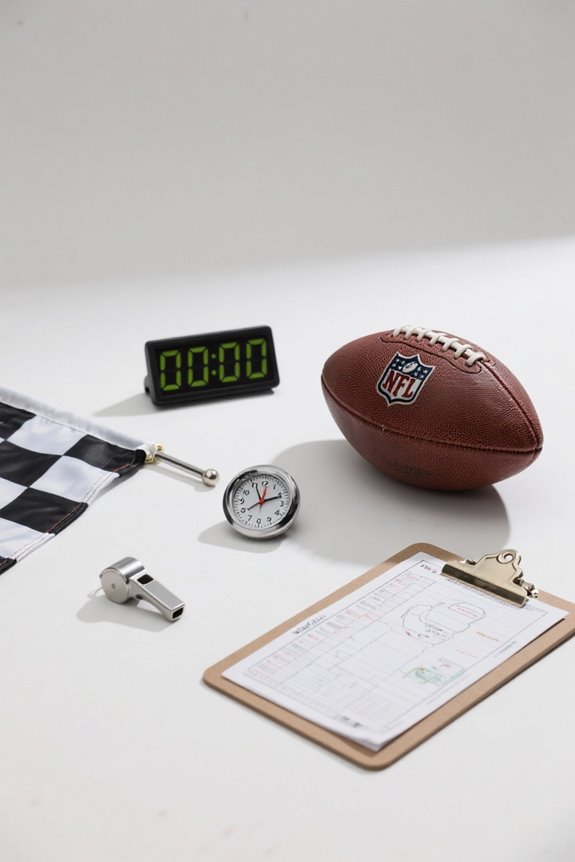
The management of the game clock and play clock in football is governed by a set of specific rules and mechanics that directly influence how teams strategize during a match. Clock stoppages occur under various circumstances, such as incomplete passes or players running out of bounds, while play resets are triggered by first downs and penalties. The game clock stops to allow for chain resets, and the play clock typically starts at 40 seconds after the ball is declared dead. If the play clock drops below 25 seconds without being ready, officials can reset it to 25 seconds. These rules guarantee that teams are aware of timing dynamics and can optimize their gameplay strategies effectively throughout the contest. Additionally, understanding diverse play options can significantly enhance a team’s ability to manage the clock strategically.
Recommended Products

Professional Scoreboard:High-brightness lamp beads, score (0-199),time,quarter(0-9),foul,Bouns,shot clock,80db buzzer reminder when time ends


DESIGN FOR FOOTBALL: Home/Guest Score, To Go and Ball On up to 99, Quarter up to 9. Clock counts down from 99:59 to 00:00, counts up from 00:00 to 99:59, customizable for the time needed. It will make a beep when score changes and time arrives, the sound can be disabled.
Roles and Responsibilities in Managing the Clock
Effective management of the game clock in football relies on the concerted efforts of various individuals, each with specific roles and responsibilities that contribute to the overall success of a team’s strategy. The officiating crew is essential, as their official duties include monitoring the game clock, coordinating stoppages, and ensuring accuracy in accordance with the rulebook. The clock operator is responsible for updating the game clock and scoreboard, requiring keen awareness of the referee’s signals. In addition, coaches make strategic clock management decisions while players must display awareness of game situations, executing plays efficiently to optimize clock usage. This team dynamic underscores the importance of communication and preparation, ultimately impacting a team’s performance and outcomes substantially.
Recommended Products

Multisport Scoreboard:timer、score、period、poss、bonus,suitable for basketball,football,volleyball,baseball and etc

Large clock and interval timer for commercial gyms and competitions. IP65 rated for both indoor and outdoor use

PREMIUM CHIPSET & HD DISPLAY FOR PRECISION--Our laser timer equipped with a high-performance chipset for accuracy and an HD display for clear, easy-to-read timing—even in bright sunlight. The durable, wear-resistant alloy frame ensures long-lasting use for both amateurs and pros.
Techniques for Effective Clock Control
Successful clock control in football involves a variety of techniques that can greatly influence a game’s outcome. Effective play calling is critical; coaches often choose short runs or high-percentage passes to maintain clock management while avoiding risky deep throws that can halt the clock. Utilizing the full 20-second play clock maximizes available time and prevents unnecessary stoppages. Strategic timeout strategy is equally important; resourceful use of timeouts during critical moments can stop the clock or provide players rest without losing control. Additionally, adjusting tempo based on game situations allows teams to dictate the pace, slowing down play to limit possessions or speeding up to exploit opponent weaknesses. These methods collectively guarantee effective clock control throughout a game, and incorporating insights from mental training techniques can further enhance a team’s performance under pressure.
Recommended Products

FOR A SPORTY WAKE-UP - Start the day with energy with our unique night light alarm clock. Let the American Football light up when you press it, creating a captivating experience.

Full-Color Dry Erase surfaces
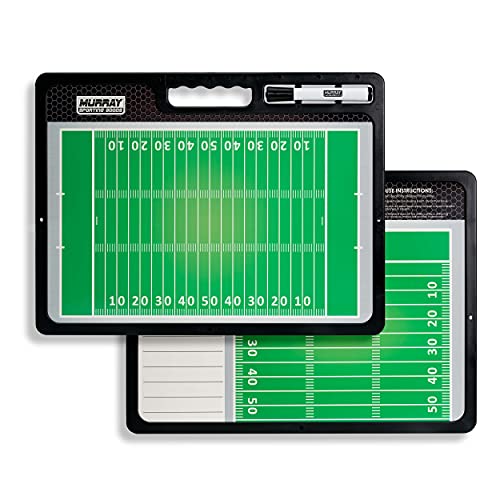
Double-Sided Premium Football Clipboard: Our dry erase coaches football board has a full field design on the front and a half field design with a notes section on the back
Common Mistakes in Clock Management
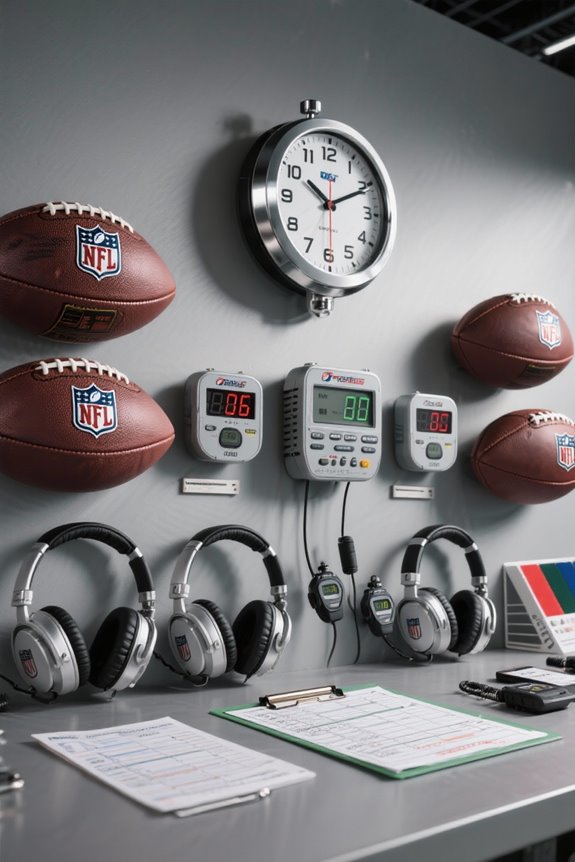
Many teams struggle with clock management, often making common mistakes that can greatly impact the outcome of a game. One significant error is failing to utilize timeout strategy effectively, where teams waste vital timeouts early, leaving none for critical late-game moments. Additionally, poor situational awareness hinders decision-making, as players and coaches may not have a clear plan for specific time and score scenarios. This often results in rushed plays or penalties. Repetitive mistakes under pressure reveal systemic issues, including a tendency toward conservative decision-making that neglects aggressive strategies to maximize scoring opportunities. To improve, organizations must prioritize team-wide training on clock awareness, ensuring that all players understand the implications of time management in various game situations. Effective decision-making under pressure can be likened to the importance of proper fit in athletic gear, which significantly impacts performance and comfort.
Recommended Products

DESIGN FOR FOOTBALL: Home/Guest Score, To Go and Ball On up to 99, Quarter up to 9. Clock counts down from 99:59 to 00:00, counts up from 00:00 to 99:59, customizable for the time needed. It will make a beep when score changes and time arrives, the sound can be disabled.

Super Simple Operation:All functions can be completed with just one button, which is super easy to use and simple to operate
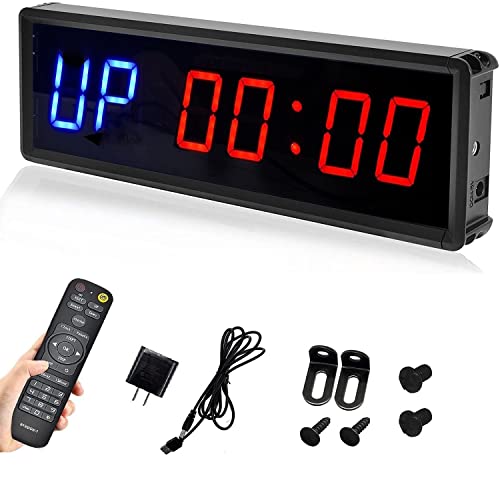
NICE DISPLAY WITH BRIGHT LED : Timer size is 11 inch length x 4inch height. This timer consists of two digits in blue and four digit in red.With bright 1.5inch led which you can view the time clearly on the wall at garage or gym. Gym timer comes with many functions to meet all your needs during training. 12/24 Hours normal time, countdown/up in minutes and seconds, stopwatch, custom interval mode, tabata,FGB.
Frequently Asked Questions
How Does Clock Management Differ Between College and NFL Football?
Clock management differs between college rules and NFL rules, with college stopping the clock for first downs in specific situations, while the NFL maintains continuous play. Additionally, timeout and play clock regulations highlight distinct approaches in both leagues.
What Strategies Do Teams Use for Last-Minute Clock Management?
Teams employ timeout strategies and two-minute drills to optimize last-minute clock management. Efficient communication, quick huddles, and targeted plays help preserve time while maximizing possessions, essential for successful late-game scoring attempts.
Can Players Influence the Clock During Gameplay?
Players can greatly influence the clock during gameplay through player awareness and the use of strategic timeouts. They employ quick lineup changes and conscious timing decisions to optimize clock management and enhance scoring opportunities.
How Do Weather Conditions Impact Clock Management Decisions?
Weather effects greatly influence clock management decisions, necessitating altered game strategies. Rain may encourage conservative plays, while extreme temperatures and winds prompt teams to adjust pacing, prioritizing ball control and possession to maximize clock efficiency.
What Are the Consequences of Poor Clock Management?
Poor clock management greatly reduces scoring opportunities, as ineffective timeout usage often leads to unfavorable game situations. This mismanagement heightens stress and decision-making errors, ultimately contributing to a higher likelihood of losing close games.


