As an Amazon Associate, we earn from qualifying purchases. Some links on this site are affiliate links at no extra cost to you. Our recommendations are based on thorough research and editorial judgment.

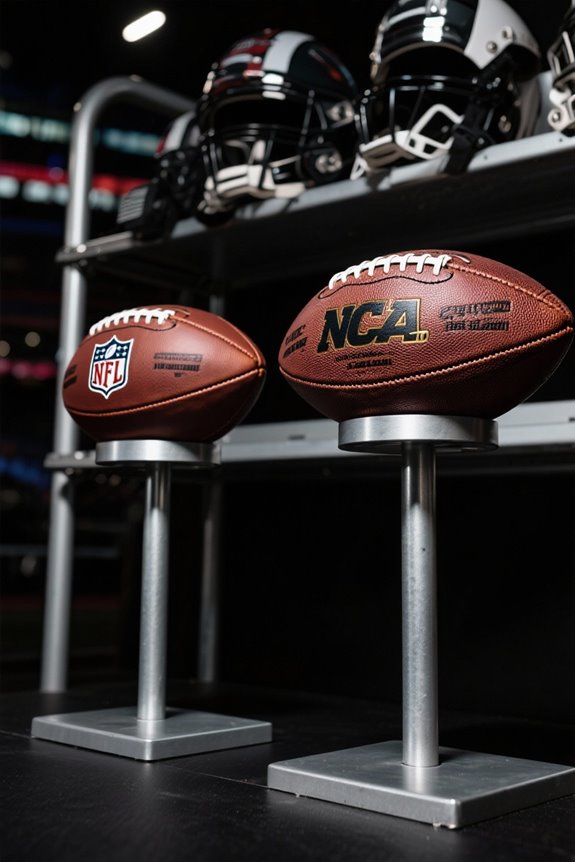
What Is The Difference Between College Football And NFL Rules?

College football and the NFL have distinct rules that govern gameplay. In college, a catch requires only one foot in bounds, while the NFL mandates both feet. The NFL maintains continuous play unless specified, whereas college football stops the clock after first downs. Overtime in the NFL features guaranteed possessions, unlike college’s 25-yard line format. Different penalties, such as pass interference yardage, further distinguish strategies. These variances illustrate the complexities of football regulations, prompting deeper exploration of the subject.
Key Takeaways
- NFL requires two feet in bounds for a catch, while college football only needs one foot for a completed catch.
- The game clock in college football stops after a first down, unlike the NFL, where it runs continuously except in specific situations.
- In the NFL, a player is down only when touched after a fall; in college, any ground contact stops play.
- NFL penalties vary with defensive holding yielding an automatic first down, whereas college football imposes a 10-yard penalty without one.
- Overtime rules differ: NFL guarantees each team a possession, while college football starts at the opponent’s 25-yard line without a game clock.
Catch and In-Bounds Rules
While both college football and the NFL offer exciting gameplay, the differences in their rules regarding catches and in-bounds status are significant and influence the strategies employed by players. In the NFL, a completed catch requires both feet to be in bounds, which introduces complex catch nuances that focus on precise foot placement. As a result, sideline catches are more challenging and frequently reviewed, leading to increased scrutiny on in bounds measurement. Conversely, college football only mandates one foot in bounds for a catch to be considered complete, allowing more opportunities for spectacular catches. This fundamental rule distinction influences not only receiver positioning but also quarterback strategies, as NFL players must prioritize footwork and awareness, while college players enjoy a more lenient standard benefiting catch dynamics. Additionally, the emphasis on injury prevention in player strategies underscores how closely rules can impact performance on the field.
Down by Contact and Play Stoppage
Understanding the differences in down by contact rules between college football and the NFL is essential for players, coaches, and fans alike, as these distinctions greatly impact gameplay and strategy. In the NFL, a player is deemed down by contact only if a defender touches them after a fall, allowing for potential continuation of play. Conversely, in college football, any player contact with the ground, excluding hands or feet, results in immediate play stoppage, irrespective of defensive engagement. This leads to shorter plays and emphasizes stability for ball carriers. The NFL’s rules encourage dramatic moments and extended plays, whereas college rules create a quicker game pace, resulting in more frequent stoppages and impacting offensive strategy on both levels. Additionally, moisture-wicking technologies found in player gear help athletes to maintain focus and performance during these rapid shifts in gameplay.
Overtime Format
Overtime format in college football and the NFL showcases distinct structural differences that affect game outcomes and strategies. In the NFL, overtime lasts 10 minutes during regular season games, with both teams guaranteed at least one possession, regardless of scoring, until a potential tie occurs. Conversely, college football’s overtime rules require each team to start at the opponent’s 25-yard line, ensuring no tie is possible. Additionally, there is no game clock, which shifts the focus to down and distance rather than time. To enhance scoring dynamics, teams must attempt a two-point conversion starting in the second overtime. These fundamental scoring differences illustrate how overtime formats can lead to varying approaches and outcomes in both leagues, much like how adjustable belts provide flexibility and safety in flag football gameplay.
Penalties and Enforcement Differences
The enforcement of penalties in college football and the NFL illustrates significant differences that shape gameplay and strategy. In the NFL, defensive holding results in a 5-yard penalty and an automatic first down, while college football imposes a 10-yard penalty without always granting the first down, unless the foul is against an eligible receiver. This discrepancy alters defensive strategies, as NFL officials enforce tighter rules due to the automatic first down impact. Additionally, NFL pass interference acts as a spot foul, potentially leading to severe penalty yardage, while college football enforces a fixed 15-yard penalty. These enforcement nuances not only dictate player behavior but also influence the overall dynamics of the game, emphasizing the strategic importance of understanding penalty impact at each level.
Clock Management and Play Timing
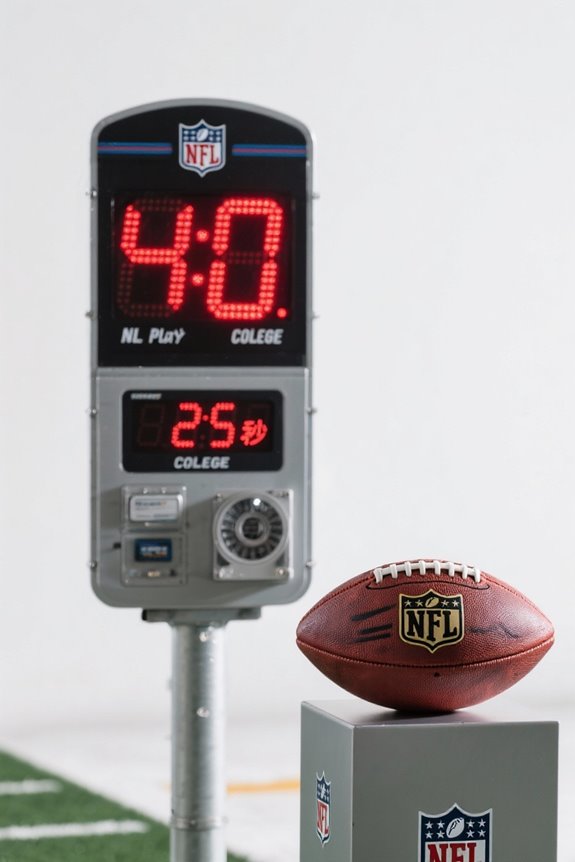
Clock management and play timing represent crucial aspects that differentiate college football from the NFL, impacting game strategies and team performance. In college football, the game clock stops temporarily after a first down to reset the chains, while in the NFL, it continues running unless a timeout is called or the ball carrier goes out of bounds. Since 2023, college rules mirror the NFL’s approach outside the final two minutes. Both leagues implement a 40-second play clock, but college football permits a 25-second reset for certain stoppages. Additionally, the NFL emphasizes continuous gameplay through its clock rules, adding urgency to late-game situations. These differences necessitate distinct timing strategies for teams in each league, particularly during critical moments of the game. Understanding the importance of grip technology is essential for players when strategizing in colder conditions.
Recommended Products

THE PERFECT GIFT FOR SPORTS FANS & TECH LOVERS With support for over 50 apps, Glance Scroll is a true all-in-one LED display. From live sports scoreboards to crypto tickers, news headlines, and even custom animations, this is the ultimate gadget for anyone who loves sports, tech, and cool gear.

Large clock and interval timer for commercial gyms and competitions. IP65 rated for both indoor and outdoor use

Made for Running: This Ledgital Race clock is made for small running events like 5K, school track meets, novelty runs, community relays, family fun runs and more. You can also use it as a sports timer with its extended functions like stopwatch, countdown timer, EMOM, Tabata, FGB, etc.
Player Eligibility and Roster Rules
While both college football and the NFL establish rigorous player eligibility and roster rules, significant differences exist that shape the landscape of each league. In college football, athletes may play immediately after high school, enjoying four seasons of eligibility within five years of enrollment, provided they maintain academic standards. Conversely, NFL players must be at least three years removed from high school to enter the draft, and underclassmen declaring early forfeit their remaining college eligibility. The recruiting process in college is direct, relying on scholarship offers to build rosters of up to 85 players. In addition, NCAA regulations protect amateur status, preventing athletes from signing professional contracts, which adds another layer of complexity absent in NFL player eligibility protocols. Furthermore, both leagues emphasize player eligibility to ensure the integrity and competitiveness of their respective games.
Substitution Rules
Substitution rules in college football and the NFL play essential roles in shaping game strategies and dynamics, with each league employing distinct regulations that influence team performance and player management. In college football, unlimited substitutions occur during dead-ball situations, allowing for rapid personnel changes and the effective management of player fatigue. Conversely, the NFL requires players to enter the field before the play clock expires, necessitating structured substitution strategies focused on specific formations and timing. This variation emphasizes strategic deployment and situational endurance in the NFL, while college football’s rules support diverse tactical schemes through quicker changes. Both leagues permit player re-entry, but their substitution dynamics reflect differing complexities and coaching philosophies, ultimately impacting the overall game flow. Additionally, the organization of player roles, such as using specialized compartmentalization of gear, can further dictate substitution patterns and effectiveness during games.
Recommended Products

INFLATABLE DESIGN: Half the cost of foam step over dummies, with the same functionality & durability; Great for agility training at home or on the field; Pre-weighted with 4 lbs of sand, measures 48 x 18 x 10 inches (LxWxH)
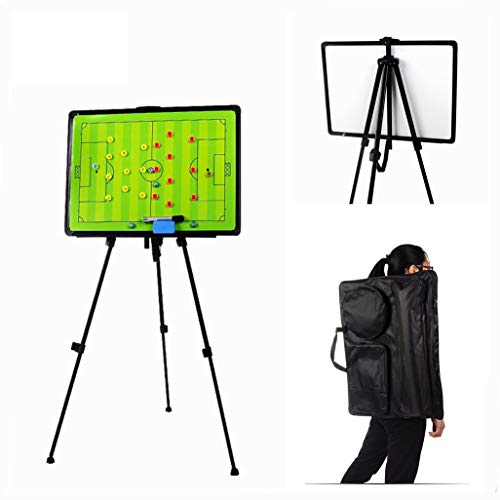
Superior Material: Waterproof material + Magnetic pitch + Write and wipe + Stand + Storage backpack, 2 in 1 marker pen giving you clear and vivid printing for coaching clipboard.

Great for Solo or Duo Training: 54 cards contain several American Football drills. These include warmup, ball handling, and game insight exercises. Drills for offense and defense movements.
Defensive Strategies and Rules
Defensive strategies and rules in both college football and the NFL are defined by distinct regulatory frameworks that substantially influence gameplay and team dynamics. In the NFL, defensive coverage must adapt due to stricter penalties for defensive pass interference (DPI), where fouls result in spot fouls causing automatic first downs. Conversely, the NCAA’s capped 15-yard penalty encourages more aggressive defensive play, as it results in less severe consequences. Additionally, the treatment of defensive holding varies, with the NFL applying automatic first downs more frequently. Targeting rules in college compel defenders to avoid dangerous hits, while the NFL uses personal fouls without automatic ejection. These differences substantially shape defensive strategies, affecting how teams approach the pass rush and coverage. Understanding helmet maintenance guidelines is essential for players to ensure their safety during the heated moments of competition.
Recommended Products

The Flex System has flexibility engineered into the shell, facemask and clip to reduce impact force

Patented side impact protection PSIP research based mandible protection helps reduce the forces from side impacts

Patented side impact protection PSIP research based mandible protection helps reduce the forces from side impacts
Game Duration and Play Count
Game duration and play count represent critical differences between college football and the NFL, shaping the overall pace and flow of each game. Both leagues feature a total game length of 60 minutes divided into four quarters; however, college games historically average around 3.5 hours, compared to the NFL’s 3 hours and 12 minutes. Recent college rules have narrowed this disparity by reducing game length. Significantly, college football sees an average of 175 plays per game, surpassing the NFL’s 153, largely due to differing clock management strategies. In college, the clock stops frequently for first downs, enhancing offensive play strategies. Conversely, the NFL’s continuous clock minimizes stoppages, resulting in a more concise and controlled gameplay environment. Additionally, the customization process and additional fees in merchandise can reflect the differences in fan engagement between the two leagues.
Frequently Asked Questions
How Does Player Scouting Differ Between College and NFL Teams?
Player scouting differs dramatically between college and NFL teams, with NFL scouts employing exhaustive talent assessments, advanced analytics, and relentless player evaluations to identify a mere fraction of the immense raw potential found in college athletes.
What Is the Role of College Football Recruiting Services?
College football recruiting services streamline the recruiting process by implementing targeted recruiting strategies, providing thorough athlete evaluations, and maintaining updated profiles. They serve as essential intermediaries between prospective student-athletes and college coaches, ensuring compliance with NCAA regulations.
Are College Football Players Compensated for Their Participation?
Like flowers reaching for sunlight, college football players receive limited compensation under NCAA regulations, primarily through player scholarships. Recent changes allow athlete endorsements, yet financial implications remain stark compared to professional counterparts, emphasizing ongoing disparities.
How Do Media Rights Differ for College and NFL Games?
Media rights for NFL games involve centralized contracts generating significant revenue sharing among teams, while college football features fragmented media contracts, resulting in unequal revenue distributions that reflect varying conference negotiating power and market valuations.
What Are the Broadcasting Differences Between College and NFL Football?
Broadcasting differences between college and NFL football include distinct broadcasting agreements and advertising strategies, with the NFL utilizing extensive commercial breaks, while college games maintain continuity, emphasizing fewer interruptions and a more fluid viewer experience.


