As an Amazon Associate, we earn from qualifying purchases. Some links on this site are affiliate links at no extra cost to you. Our recommendations are based on thorough research and editorial judgment.


How Do You Read NFL Statistics And Analytics?

To effectively read NFL statistics and analytics, one must familiarize themselves with advanced metrics like Expected Points Added (EPA) and receiver efficiency indicators such as Open Percentage. Utilizing platforms like nfelo and StatsBomb can provide deeper insights through thorough datasets. Understanding team strategies involves analyzing predictive models of opponent tendencies and player performance forecasts. Common misconceptions, such as the misinterpretation of completion percentage or total yardage, may cloud assessments. More intricate details and insights await those who explore further.
Key Takeaways
- Understand basic metrics like yards gained, completion percentage, and touchdowns to gauge player performance effectively.
- Familiarize yourself with advanced metrics like Expected Points Added (EPA) to assess the impact of plays on scoring potential.
- Analyze receiver performance through metrics such as Open Percentage and Yards Per Route Run to evaluate their efficiency.
- Consider the context of statistics; for instance, not all interceptions are quarterback mistakes and can vary by situation.
- Utilize resources like nfelo and StatsBomb for visualizations and deeper insights into player and team analytics.
Understanding Advanced Metrics in the NFL
As the NFL continues to evolve, understanding advanced metrics has become essential for analyzing player performance and team strategies effectively. Metrics such as Expected Points Added (EPA) play a pivotal role in evaluating offensive efficiency, offering detailed insights beyond traditional statistics. By quantifying how much a specific play affects a team’s expected points, EPA highlights the true impact of passing accuracy and situational analysis. Additionally, receiver efficiency metrics, like Open Percentage and Yards Per Route Run, provide critical evaluations of receiver performance, revealing their effectiveness in creating plays. Defensive metrics, including tackle probabilities and coverage stats, also contribute to a thorough understanding of a team’s capabilities, emphasizing the importance of both offensive and defensive strategies in professional football analytics. The evaluation of youth quarterback wristbands further underscores how effective communication and organization aid in enhancing gameplay.
Key Tools and Platforms for Data Analysis
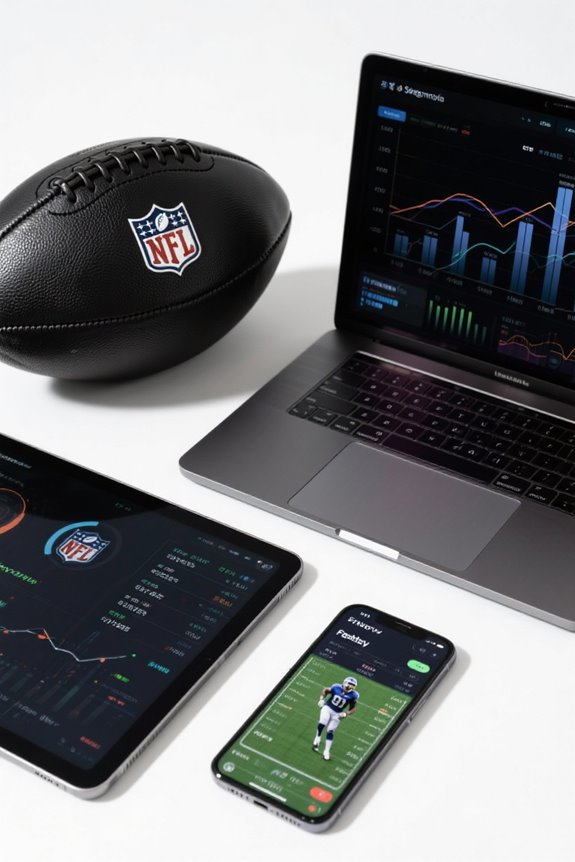
Understanding the importance of data analysis in the NFL requires familiarity with key tools and platforms that provide extensive insights into player performance and team dynamics. Significantly, platforms like nfelo utilize the nflfastR dataset to deliver advanced metrics through data visualization, enhancing the comprehension of complex statistics. Player tracking technology captures detailed metrics, including speed and distance, facilitating the analysis of over 200 metrics per play. Tools such as StatsBomb offer granular event data, while Comparisonator employs AI for player comparisons aiding recruitment decisions. Additionally, centralized platforms like SūmerNFL streamline data management for effective scouting. Lighter options significantly improve player performance by enhancing agility on the field. Collectively, these resources empower teams with actionable insights, improving strategic outcomes while enhancing fan engagement through advanced analytical capabilities.
Applications of Analytics in Team Strategy
In the domain of the NFL, the application of analytics has become integral to shaping team strategies, as teams increasingly rely on data-driven insights to enhance their decision-making processes. Predictive models analyze opponent tendencies, optimizing game strategy in real-time, as coaches adjust offensive and defensive schemes based on evolving circumstances. Advanced metrics, such as red zone efficiency and turnover margins, guide critical tactical decisions, balancing aggression with ball security. Additionally, machine learning algorithms forecast player performance, improving evaluation accuracy during drafts and trades. Data utilization extends to understanding opponent dynamics, allowing teams to exploit weaknesses. Furthermore, employing speed training techniques can enhance player performance, continuously elevating teams’ competitive edge. Ultimately, analytics fosters a more informed approach to team strategy, facilitating effective game planning and ongoing performance enhancement across the NFL landscape.
Common Misconceptions About NFL Statistics
Common misconceptions about NFL statistics can lead to flawed assessments of player performance and team dynamics. Completion percentage myths suggest it equates to quarterback accuracy, disregarding factors such as throw difficulty and receiver errors. As analysts note, completion rates can mask true effectiveness, particularly when comparing quarterbacks like Aaron Rodgers and Drew Brees. Additionally, the prevailing belief in the superiority of a running game over passing ignores data revealing higher efficiency rates for passing plays. Yardage limitations further complicate evaluations, as total yardage often fails to indicate team strength or success. Finally, interceptions context must be considered, as not all picks result from quarterback mistakes, underscoring the complexities inherent in analyzing NFL statistics accurately.
The Future of Analytics in Professional Football
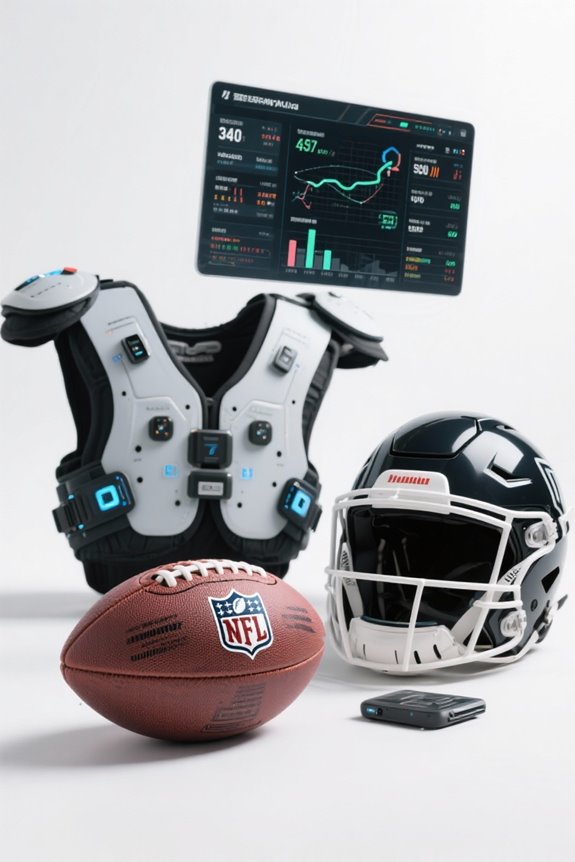
The future of analytics in professional football is poised for significant transformation, driven by advancements in technology and methodology that enhance player assessment and game strategy. The expansion of player tracking systems, such as Next Gen Stats, utilizes RFID chips, capturing real-time positional data, which aids in predictive modeling of player performance. Machine learning further analyzes vast datasets, improving team strategies while facing challenges from inherent unpredictability. Additionally, analytics are increasingly integrated into media, enriching fan engagement through targeted advertising and contextual insights. As teams leverage these innovations, insights gleaned from advanced metrics will optimize player development and coaching strategies, ultimately guiding decision-making by providing a probabilistic framework that enhances the competitive edge. Moreover, strength training for football helps teams develop tailored programs that improve athlete performance based on analytical data.
Frequently Asked Questions
What Is the Difference Between Traditional and Advanced NFL Statistics?
Traditional metrics, such as passing yards and touchdowns, provide a straightforward performance overview. In contrast, advanced measures like Expected Points Added and Completion Percentage Over Expected deliver a more nuanced analysis by considering context and multiple variables.
How Do Players Benefit From Performance Analytics?
Players benefit from performance analytics by utilizing advanced analytics tools to identify strengths and weaknesses, allowing for personalized improvement plans. This data-driven approach enhances skill development, optimizes strategies, and aids in injury prevention and recovery.
Can Fans Access NFL Analytics Data?
Fans can indeed access NFL analytics data, enhancing fan engagement through platforms like Next Gen Stats and team-specific apps. This data accessibility allows fans to explore advanced insights, enriching their overall experience while following the league.
How Are NFL Statistics Updated During Games?
NFL statistics are updated continuously during games through live updates, utilizing tracking devices and expert operators. This guarantees accurate game tracking, capturing real-time player performance and event data for immediate statistical refresh and analysis.
What Role Do Coaches Play in Using Analytics?
Coaches utilize analytical tools to inform coaching strategies, balancing data-driven insights with subjective judgment. Their approach varies, as some embrace aggressive tactics shaped by analytics, while others remain conservative, influenced by broader factors beyond mere statistics.


