As an Amazon Associate, we earn from qualifying purchases. Some links on this site are affiliate links at no extra cost to you. Our recommendations are based on thorough research and editorial judgment.


How Do Weather Conditions Affect Fantasy Football Performance?

Weather conditions markedly affect fantasy football performance by altering player effectiveness and game strategies. For instance, wind speeds over 15 mph can lower quarterbacks’ and wide receivers’ fantasy scores by 30-50%. Rain typically decreases passing stats by around 12%, while increased rushing attempts bolster running back performance. In snowy conditions, passing success drops considerably, favoring ground strategies. Coaches adapt strategies according to weather forecasts, which could enhance team performance. More insights on this topic follow.
Key Takeaways
- Wind speeds over 15 mph can significantly reduce quarterback and receiver fantasy scores by 30-50%, impacting passing efficiency.
- Rain decreases passing stats by about 12%, affecting quarterbacks, receivers, and tight ends while increasing rushing attempts.
- Running backs gain fantasy value during adverse weather conditions as teams shift focus to rushing plays for better performance.
- Snow and cold impair player agility and cause a decrease in passing success by about 25%, leading to more ground game strategies.
- Advanced weather analysis tools help monitor conditions, aiding in strategic planning and informed lineup adjustments for fantasy success.
The Impact of Wind on Offensive Strategies
As wind conditions greatly influence performance on the football field, teams must strategically adapt their offensive plays to mitigate its effects. The reduction in passing efficiency becomes pronounced as wind speeds increase; visiting teams experience a drop of over 9% in passing yards at just 10 mph. Consequently, these conditions prompt coaches to shift their rushing strategy by increasing running attempts. Specifically, rushing attempts rise approximately 4% for visiting teams under similar conditions. In contrast, home teams, familiar with local wind patterns, exhibit less sensitivity, maintaining a degree of passing efficiency. This adaptation not only reflects operational adjustments but aims to enhance overall offensive effectiveness in windy scenarios, as rushing remains a more reliable avenue compared to the uncertain nature of passing. Additionally, the incorporation of proper warm-up routines can further help mitigate performance impacts caused by challenging weather conditions.
Rain and Its Effect on Player Performance
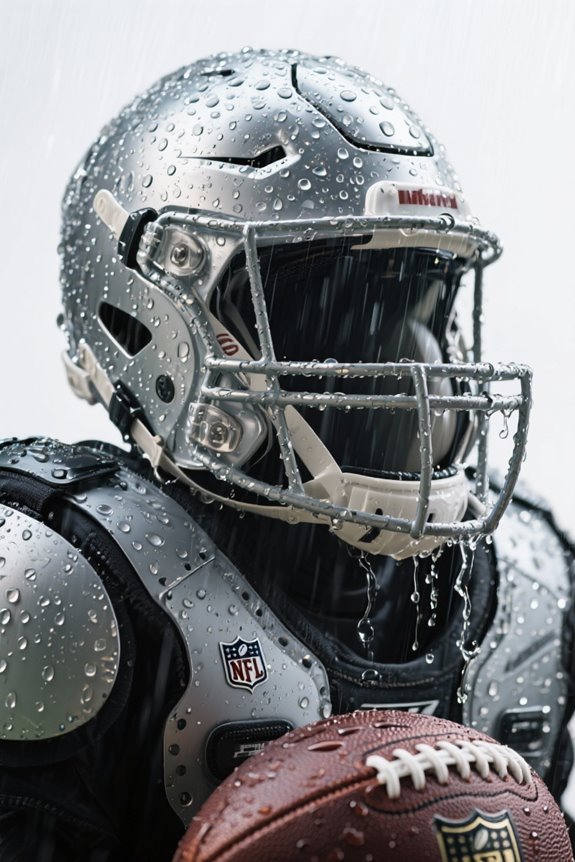
How does rain influence player performance in football? Rainy conditions greatly impact passing accuracy and game strategies. It leads to a nearly 3% drop in completion percentage, with total passing yards declining by about 45 yards and approximately 0.6 fewer touchdowns per game. Consequently, teams tend to favor conservatively high-percentage passes due to slippery field conditions affecting ball handling. In contrast, rushing strategy often improves, with rushing attempts increasing by about 1.5 per game, resulting in 15 more combined rushing yards. These weather impacts contribute to a decrease in overall scoring trends by an average of 2 to 4 points. For fantasy implications, managers should note player adjustments favoring running backs over pass-heavy offensive players during rain. Additionally, the use of durable, high-density foam in tackling equipment can provide an edge during wet conditions by enhancing player safety and performance.
Snow and Cold Weather Challenges
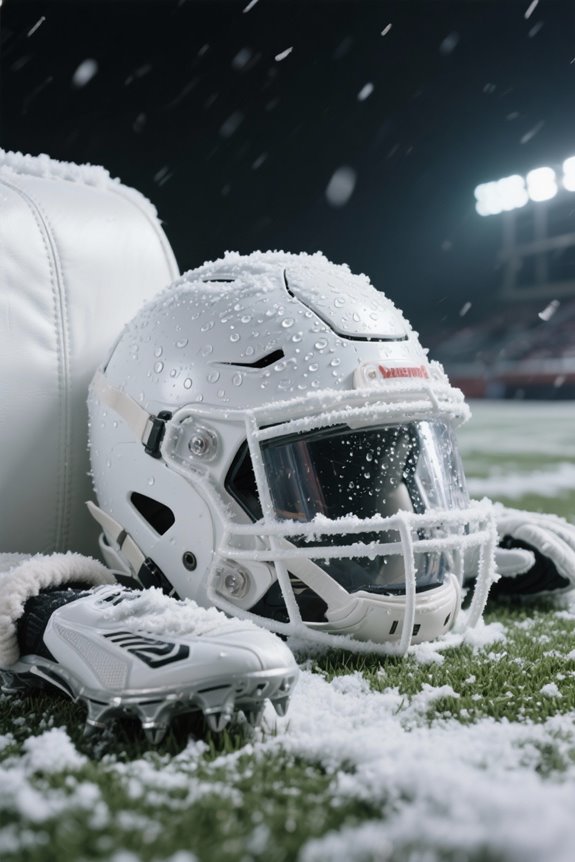
Snow and cold weather present significant challenges for football players, affecting not only their performance but also the overall game strategy. The snow impact on field traction leads to player slips, hindering agility and speed. Cold temperatures contribute to muscle stiffness, increasing the risk of cold injury and diminishing mobility. Consequently, teams often pivot towards a ground game strategy, as passing success diminishes by approximately 25% in heavy snow. Visibility is also compromised, impairing both kicking accuracy and the ability of receivers to track passes. As scoring totals typically decrease due to the slower pace, fantasy football performance shifts towards running backs who thrive under such conditions. Ultimately, teams must adapt strategies and monitor weather forecasts closely to optimize performance and reduce risk. Additionally, the use of high-quality smoke visors can enhance player visibility and protection against glare during winter games.
Managing Extreme Heat in NFL Games
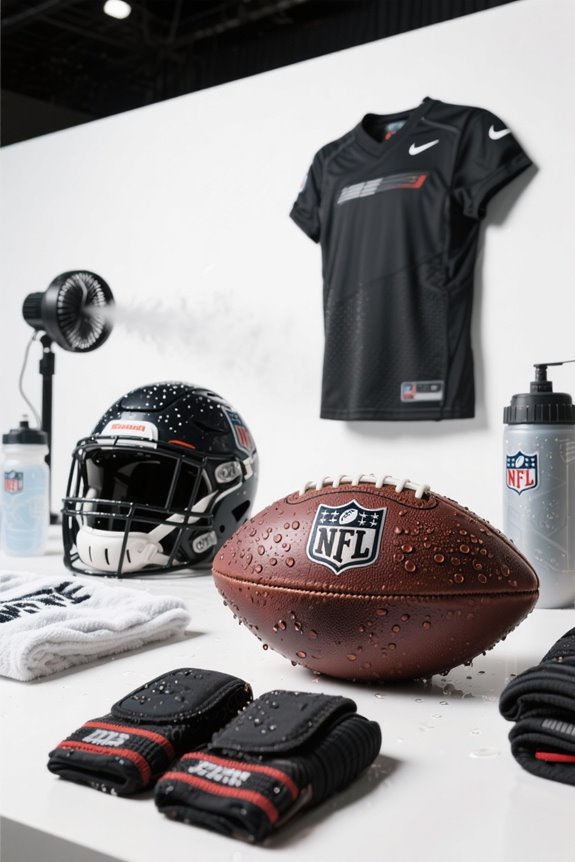
Extreme heat poses significant challenges for NFL players and teams, particularly in cities already experiencing increased temperatures. With an average rise of 2.8°F since 1970, places like Phoenix and Houston face severe heat risks. Such conditions lead to health issues, including heat sickness, impacting player performance and endurance. Effective heat adaptation involves rigorous hydration strategies, vital to mitigating fatigue during games. Teams often emphasize passing plays, as rushing effectiveness declines under extreme heat. Coaches may rotate players more frequently to manage this risk, utilizing hydration protocols and cooldown strategies. Consequently, addressing these heat-related challenges is essential for maintaining competitive performance and player safety, particularly as early season games occur in high-temperature environments. The use of tackling dummies for both conditioning and skill development can also help players adjust to the physical demands of extreme conditions.
Strategic Adjustments Due to Adverse Weather
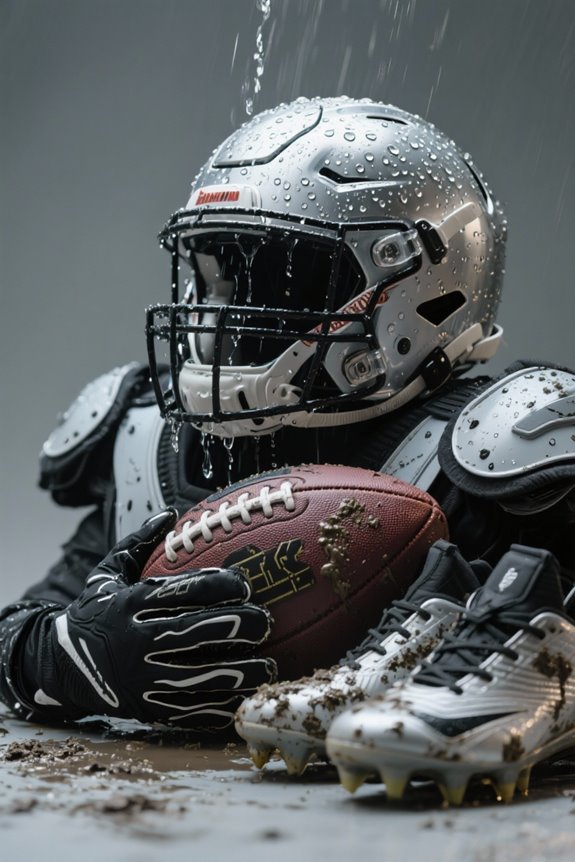
As adverse weather conditions impact NFL games, teams often implement strategic adjustments to optimize performance and maintain competitive advantage. In high winds, particularly those exceeding 15 mph, passing strategies shift towards shorter, safer completions, as quarterbacks experience diminished accuracy and distance. Similarly, heavy rain or snow often forces teams to adjust routes and play calls, markedly affecting the effectiveness of wide receivers and tight ends. Conversely, rushing adjustments are prioritized, as running backs become central to the offensive scheme. With elevated precipitation, running backs frequently see an increase in average fantasy points, as teams lean towards ground attacks to mitigate passing errors and enhance ball security. Ultimately, these adaptations reflect the need for teams to navigate challenging weather effectively. High-quality gloves featuring specialized palm materials can also significantly enhance grip performance, further supporting player effectiveness during adverse weather conditions.
Recommended Products

The ultimate grip, even in wet conditions!

PALM: innovative uhlsport AQUAGRIP combines Aqua additives with high-grip elements for an ultimate grip level in wet conditions.

WELCOME TO THE PROS: You are your team's last line of defense; Excel as a teammate and player with specialized, roll-negative, hybrid-cut soccer goalkeeper gloves by Storelli; Includes premium mesh storage bag
Weather-Influenced Fantasy Value Shifts
Weather conditions greatly influence fantasy football performance, particularly shifting the value assigned to different player positions during adverse events. Wind speeds above 15 mph typically result in strategy shifts, reducing quarterbacks’ and wide receivers’ average fantasy scores by 30-50%. This is due to impaired passing accuracy, which diminishes performance variations considerably. Similarly, precipitation can decrease passing stats by approximately 12% during rain, further affecting quarterbacks, wide receivers, and tight ends negatively. Contrastingly, running backs often experience increased value under challenging conditions, as teams rely more on rushing plays to mitigate adverse weather effects. Additionally, kickers may suffer accuracy losses in snow or high winds, highlighting the profound impact of weather on overall fantasy scoring potential across various positions. The use of weather-resistant glove materials can enhance grip for players in challenging conditions, potentially mitigating some performance decline.
The Role of Weather in Betting Markets
While various factors influence betting markets, the impact of weather conditions on game dynamics plays an essential role in shaping odds and overall betting strategies. Extreme weather typically shifts betting lines, particularly for totals, as bettors anticipate lower scoring in adverse conditions. For instance, rain increases fumble rates, influencing scoring predictions, and consequently, completion and total offense prop bets. Sportsbooks heavily consider wind, as it disrupts passing games, leading to lower passing yard and touchdown props. Additionally, markets frequently adjust as weather forecasts improve closer to kickoff, responding dynamically to real-time conditions. Bettors employing historical data on team performance in specific weather can identify trends and potential value, enhancing their decision-making process when placing wagers against shifting betting lines. Understanding the effects of high-density foam on player safety can also aid in evaluating how weather may impact game conditions.
Monitoring Weather Conditions for Fantasy Success
Monitoring real-time weather conditions is imperative for fantasy football participants looking to optimize their lineups. Wind speeds over 15 mph can markedly disrupt passing games, decreasing completion rates by up to 10%, which affects quarterbacks and wide receivers adversely. When wind exceeds 20 mph, particularly in inclement weather, quarterbacks often struggle to score more than 15 fantasy points. In contrast, running backs may benefit in such conditions due to a strategic shift toward rushing, potentially increasing their fantasy points. In addition, precipitation can exacerbate performance issues, with heavy rain or snow compounding the challenges faced by passing-oriented players. As a result, integrating real-time monitoring into fantasy lineup adjustments is essential for maximizing player performance based on prevailing weather conditions. Coaches can also draw insights from resources like “Defensive Football Strategies” to understand how weather can influence game plans.
Tools for Analyzing Weather Effects on Performance
How can fantasy football participants enhance their lineups in the face of varying weather conditions? Utilizing advanced weather analysis tools, participants can access real-time game day forecasts that provide vital updates on factors impacting player performance. These tools regularly auto-refresh, displaying essential metrics such as wind speed, precipitation, and temperature. Additionally, they feature color-coded impact reports to facilitate quick assessments of weather severity. Models that project how weather conditions affect game script and player scoring further improve decision-making, especially under adverse conditions like high winds or snow. By integrating expert analysis with weather data, fantasy managers can make informed roster adjustments, ensuring peak performance as conditions evolve, thereby increasing their chances of success in fantasy football. Moreover, understanding how traction patterns influence player performance under wet conditions can aid in lineup decisions.
Frequently Asked Questions
How Do Weather Conditions Impact Player Injury Rates During Games?
Weather conditions greatly impact player injury rates, juxtaposing hot, humid environments that elevate exertional illnesses against cold, wet surfaces that increase slips and falls. These variations in surface conditions directly influence overall injury risk during games.
Should I Bench High-Performing Players in Poor Weather?
In poor weather, strategic benching of high-performing players is advisable. Effective weather strategies involve evaluating player adjustments, particularly for quarterbacks and wide receivers, while running backs may maintain value due to increased rushing opportunities.
Do Specific Positions Suffer More Due to Adverse Weather?
Quarterbacks struggle markedly in adverse weather, often scoring under 15 fantasy points. Meanwhile, wide receiver efficiency diminishes dramatically, especially in rain and snow, underlining the challenges faced by these positions during inclement conditions.
How Can Weather Conditions Influence Player Morale?
Weather effects greatly influence player psychology, often leading to increased anxiety, decreased motivation, and lowered morale. Adverse conditions can disrupt routines, creating additional stress and hindering performance, while positive weather can enhance mood and cognitive function.
Can Weather Affect the Referee’s Decisions During a Game?
Weather conditions weave a tapestry of challenges for referees, influencing decision accuracy. Referee biases may emerge as fog and wind obscure plays, requiring heightened vigilance and adaptation to maintain the integrity of officiating amidst swirling distractions.


