As an Amazon Associate, we earn from qualifying purchases. Some links on this site are affiliate links at no extra cost to you. Our recommendations are based on thorough research and editorial judgment.

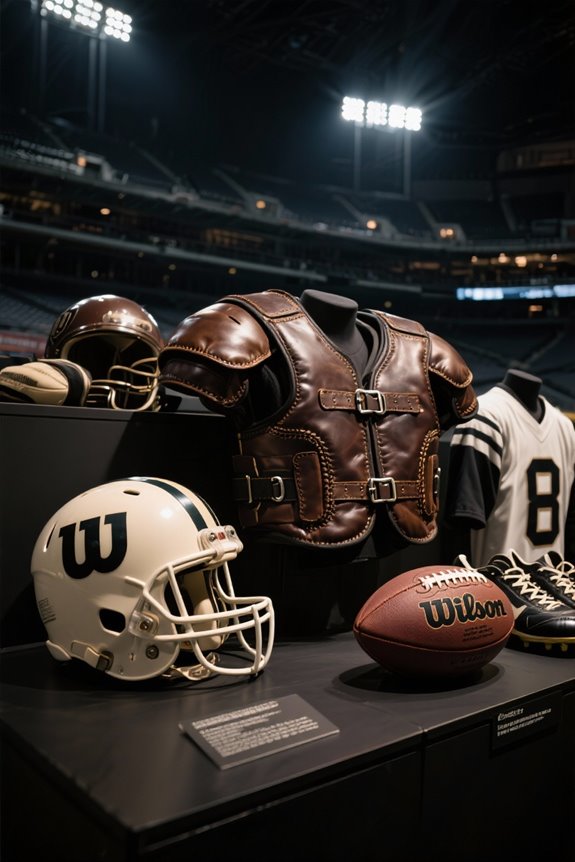
Who Invented American Football And When?

American football originated in the late 19th century, evolving from rugby and soccer. Key contributions came from Walter Camp, often referred to as the “Father of American Football.” Camp introduced significant innovations, such as the line of scrimmage and the system of downs, which structured gameplay. His efforts transformed chaotic early matches into a more organized sport. Understanding these foundational changes is essential for appreciating the game’s development over time. More insights follow.
Key Takeaways
- American football evolved from rugby and soccer in the 19th century during the early college games.
- Walter Camp, active in the late 1800s, is often called the “Father of American Football.”
- Camp introduced significant changes, like the line of scrimmage, in the 1880s and 1890s.
- The forward pass was legalized in 1906, further shaping the game’s development.
- Camp’s innovations in rules and gameplay laid the foundation for modern American football.
The Early Influences of Rugby and Soccer
While American football’s origins are often attributed to distinctive rule modifications and gameplay strategies, its early development was considerably influenced by rugby and soccer, which were introduced to American colleges in the 19th century, particularly during the 1870s and 1880s. An early game between Rutgers and Princeton in 1869 highlighted a hybrid style that combined elements of both sports. Initial American football lacked standardized rules, leading to chaotic gameplay. Rugby influences included continuous play and physicality, but adaptations were made, such as the shift from scrummages to structured scrimmages. Additionally, soccer adaptations contributed to scoring reforms, emphasizing touchdowns over conversion kicks, gradually establishing a unique identity for American football distinct from its rugby and soccer predecessors. The evolution of these games laid the groundwork for strength training approaches that are now integral to the development of football athletes.
Walter Camp: The Father of American Football

Walter Camp, recognized as the “Father of American Football,” played a pivotal role in transforming early rugby into a distinctly American sport during the late 19th century. While at Yale University, Camp proposed essential changes that greatly influenced football evolution, including reducing team size from 15 to 11 players. He established the line of scrimmage, allowing for structured plays rather than chaotic scrums. Furthermore, Camp invented the quarterback position and the system of downs, which required teams to advance a specified yardage. As Yale’s head coach, he emphasized advanced coaching techniques, applying engineering methods to training. His contributions not only shaped the NCAA framework but also positioned him as an influential figure in the development of modern football strategy and organization. His methods mirror the use of training tools that enhance skill development and performance.
Key Rule Changes and Innovations

The evolution of American football has been greatly shaped by key rule changes and innovations that distinguish it from its rugby origins. The legalization of the forward pass in 1906 marked a crucial turning point, enhancing offensive strategies drastically. Subsequent rule evolution continued to refine the game, such as the 1933 allowance for passes from anywhere behind the line of scrimmage. Scoring balance became a chief concern, reflected in adjustments to touchdown values, from four points at inception to six by 1912, promoting thrilling plays over field goals. Additionally, changes to penalties for pass interference and incomplete passes encouraged riskier and more dynamic offensive approaches, ultimately influencing coaching strategies and game outcomes considerably. Such modifications have defined the contemporary framework of American football. An established brand reputation often correlates with the durability and functionality of football training gear, reflecting a broader context in sports evolution.
The Transition From College to Professional Football

As American football evolved, the change from college to professional leagues became a significant aspect of the sport’s growth and competitive structure. The emergence of NCAA college football as a primary talent development system produced many skilled athletes suited for the NFL. Institutions with rigorous Division I programs provided essential experience and exposure, allowing players to refine their skills. Consequently, NFL teams heavily relied on player scouting, meticulously evaluating collegiate talent through drafting processes that involve intense evaluations. Compatibility between a player’s college scheme and an NFL team’s structure became crucial for successful shifts. The NFL Draft, an organized mechanism for this change, enables teams to secure promising talent, shaping the future landscape of professional football. The importance of effective communication on the field among coaches and players enhances overall team performance and coordination during games.
The Lasting Legacy of Walter Camp

A profound influence on the development of American football can be attributed to Camp, who introduced numerous foundational changes that reshaped the sport. He established key innovations, such as the line of scrimmage, the system of downs, and the standardization of team size to eleven players. Camp’s coaching techniques, including specialized player training and the use of visual aids, revolutionized athlete preparation, improving tactical understanding. His role in shaping team strategies included designing formations that remain central to the game. Additionally, Camp co-created the All-America team, contributing to national player recognition and setting standards for talent evaluation. Widely regarded as the “Father of American Football,” his legacy endures through ongoing recognition and adherence to the rules he established. His influence is reminiscent of the durable materials used in modern sports equipment to ensure safety and enhance performance.
Frequently Asked Questions
How Did Rugby and Soccer Influence American Football’s Development?
Rugby rules introduced running with the ball and tackling, while soccer techniques shaped initial gameplay and scoring methods. These influences greatly transformed American football, refining its structure and strategy into the distinct sport known today.
What Was the First Official College Football Game?
With only 100 spectators present, the first game of college football occurred on November 6, 1869, featuring Rutgers and Princeton. This historic match marked the dawn of college teams competing in American football.
How Did American Football Gain Popularity Outside Ivy League Schools?
American football gained popularity outside Ivy League schools through community leagues’ formation and significant media coverage. These factors expanded the sport’s reach, fostering interest among diverse universities and local communities across the United States.
When Did American Football Transition From Amateur to Professional?
American football shifted from amateur to professional primarily in the early 1900s, as professional leagues began forming, showcasing early teams. This evolution propelled the sport toward unprecedented heights of popularity and commercial viability.
Who Were Other Key Figures in Early American Football History?
Early pioneers like Caspar Whitney and Pudge Heffelfinger played pivotal roles in American football history, while coaching innovations by figures such as Walter Camp advanced strategies and techniques, shaping the sport’s evolution and governance in its infancy.


