As an Amazon Associate, we earn from qualifying purchases. Some links on this site are affiliate links at no extra cost to you. Our recommendations are based on thorough research and editorial judgment.

What Is The History Of Monday Night Football?

Monday Night Football (MNF) began in 1970, revolutionizing American sports broadcasting by introducing prime-time NFL games. Initially, experimental games demonstrated audience interest, leading to its establishment with a high-profile opener featuring the Cleveland Browns and New York Jets. Roone Arledge’s innovations transformed telecasts through unique angles and immersive techniques. Broadcasting shifted from ABC to ESPN in 2006, with select games returning to ABC in 2020. MNF’s profound cultural impact connects viewers, reflecting its significance beyond sports. Further exploration reveals additional milestones in its history.
Key Takeaways
- Monday Night Football (MNF) was established in 1970, transforming American sports broadcasting with its inaugural game featuring the Browns and Jets.
- Roone Arledge revolutionized sports telecasts, introducing immersive techniques that made MNF a cultural staple rather than just a game broadcast.
- Innovative three-announcer commentary from Frank Gifford, Don Meredith, and Howard Cosell set new standards in audience engagement during the founding era.
- MNF aired on ABC until 2005, then transitioned to ESPN, showcasing shifts in sports broadcasting and media rights dynamics.
- The program became a cultural phenomenon, uniting families and friends around televisions for communal viewing experiences and shaping American leisure.
Origins and Early Experiments
The origins of Monday Night Football can be traced back to NFL Commissioner Pete Rozelle’s vision in the early 1960s, as he sought to enhance the league’s visibility through prime-time television. Rozelle’s initial attempts to schedule Friday night games in 1964 failed due to concerns regarding high school football attendance and the legal limitations imposed by the Sports Broadcasting Act of 1961. Consequently, he redirected focus to Monday nights, aiming to tap into a less competitive prime-time slot. Beginning in 1964, the NFL conducted experimental Monday night games, revealing significant audience interest and paving the way for a regularly scheduled game. These efforts laid the groundwork for Monday Night Football’s eventual establishment in 1970, transforming American sports broadcasting. The show’s 5-pad football girdles helped showcase the advancements in player protection equipment during broadcasts, reflecting the evolution of the game.
Founding Era (1970–1985)
Following the early experiments that successfully demonstrated audience interest in Monday night games, the establishment of Monday Night Football (MNF) in 1970 marked a pivotal moment in American sports broadcasting. The inaugural broadcast, featuring the Cleveland Browns against the New York Jets, garnered a remarkable 33 rating, surpassing ABC’s expectations. The founding era faced challenges, including shifts in audience engagement and the eventual departure of notable announcer Howard Cosell in 1984, which affected viewer dynamics. The innovative three-announcer booth, including Frank Gifford, Don Meredith, and Cosell, introduced a new paradigm in sports commentary. Despite these founding challenges, MNF remained a cultural staple, influencing the landscape of American television and setting ratings records that showcased its widespread popularity. This high level of engagement can be compared to the popularity of football shoulder pads among players, who prioritize safety and performance on the field.
Roone Arledge and Television Innovation
Pioneering a new standard in sports broadcasting, Roone Arledge transformed Monday Night Football into a television phenomenon. His innovative approach emphasized sports entertainment, moving beyond mere event coverage. Arledge introduced broadcast techniques borrowed from variety shows and documentaries, creating an immersive viewer experience. He incorporated unique camera angles, slow-motion replays, and field microphones, capturing the game’s emotional intensity. This immersive style redefined sports telecasts, establishing them as cultural events rather than simple broadcasts. Furthermore, by treating sports presentations as entertainment productions, he engaged a broader audience. Techniques such as scene-setting storylines and audience interaction galvanized viewer loyalty and interest, solidifying Monday Night Football’s place in television history and transforming sports broadcasting for future generations. Additionally, the introduction of compression technology in athletes’ gear has also influenced sports performance and viewer engagement significantly.
Broadcast Evolution and Network Transitions
As the landscape of sports broadcasting evolved, significant changes in network affiliations and programming strategies took shape, particularly concerning Monday Night Football. Initially aired on ABC from 1970 to 2005, the program utilized advanced broadcast technology, enhancing viewer engagement through innovative production techniques, such as multiple camera angles and dynamic shot presentations. In 2006, Monday Night Football shifted to ESPN, reflecting broader changes in media rights and the growing prominence of cable networks. This alteration allowed for continued coverage in a cable environment, with ESPN retaining the rights through 2019. The return of select broadcasts to ABC in 2020 demonstrated a collaboration between traditional broadcasting and cable, ensuring the program’s adaptation to modern viewer needs while preserving its essential format. The decision to transition reflects the growing prominence of cable networks in the television landscape.
Cultural and Sporting Impact
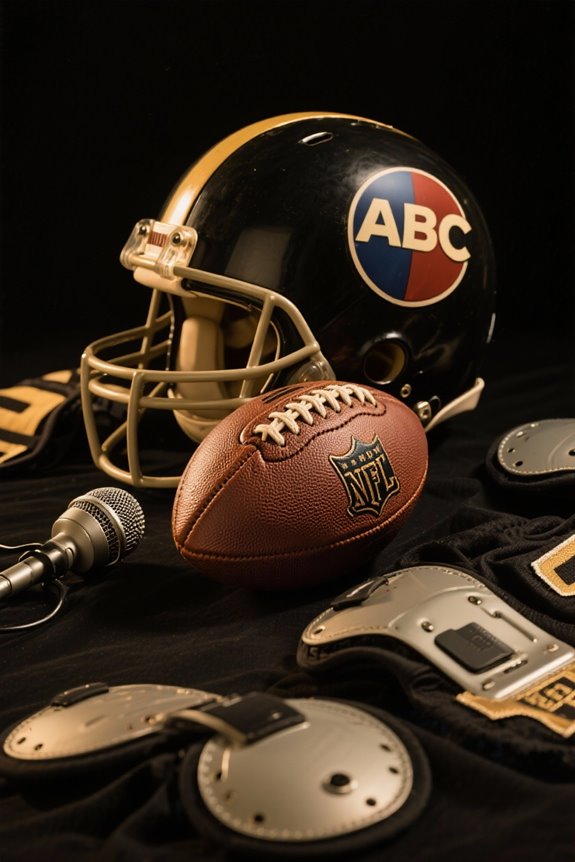
The cultural impact of Monday Night Football (MNF) extends far beyond the domain of American football, as it has become an integral part of the nation’s social fabric since its inception in 1970. Its cultural significance lies in its ability to attract a diverse audience, uniting families and friends around televisions for communal viewing experiences. The show not only popularized NFL games but also transformed sports broadcasting, using innovative techniques that enhanced audience engagement. Iconic moments, such as Howard Cosell’s announcement of John Lennon’s death, reinforced MNF’s connection to wider societal events. Consequently, MNF has shaped social customs and conversation, becoming a cornerstone of American leisure and a reflection of evolving cultural narratives within the United States. Additionally, eye black stickers used by players have become a trend, blending performance and style, much like the presentation of the games themselves.
Frequently Asked Questions
Who Were the First Teams to Play in Monday Night Football?
The first teams to play in Monday Night Football were the Cleveland Browns and the New York Jets. The event marked a significant moment, later showcasing star players like Joe Namath and impacting football broadcasting.
What Notable Moments Occurred During Mnf’s Early Seasons?
During its early seasons, *Monday Night Football* featured legendary games showcasing iconic players like Joe Namath and Johnny Unitas. These thrilling matchups captivated audiences, solidifying the show’s status as a cultural phenomenon in American sports.
How Has Viewership Changed Over the Years?
Viewership trends for Monday Night Football have shifted notably over the years, with audience demographics evolving. Initially dominated by broadcast television, later changes to cable resulted in fluctuations in overall audience numbers and engagement levels.
What Awards Has Monday Night Football Received?
In the grand arena of sports journalism, Monday Night Football has garnered multiple Emmy Awards, including Outstanding Achievement in Sports Programming from 1971-1973 and recognition for its influential broadcasting, blending entertainment with competitive spirit.
Are There Any Famous MNF Commercials or Promotions?
Iconic advertisements and memorable promos shaped Monday Night Football’s legacy, featuring catchphrases and star players. Notable campaigns included Hank Williams Jr.’s theme song and dramatic storytelling, transforming the viewing experience into a national event celebrated weekly.


