As an Amazon Associate, we earn from qualifying purchases. Some links on this site are affiliate links at no extra cost to you. Our recommendations are based on thorough research and editorial judgment.


What Are The Most Historic Rivalries In College Football?

Historic rivalries in college football include matchups like Michigan vs. Ohio State, a contest that began in 1897, marked by legendary coaches and defining moments. Other significant rivalries are Yale vs. Princeton, highlighted by tactical evolutions since 1873, and the Army vs. Navy game, showcasing inter-service competition since 1890. Rivalries such as Alabama vs. Auburn and Yale vs. Harvard demonstrate cultural importance and intense competition. Understanding these traditions enhances appreciation for the sport’s history and impact.
Key Takeaways
- Michigan vs. Ohio State is a storied rivalry tied to the Toledo War, showcasing iconic moments like the “Ten Year War” and the 2006 matchup.
- Yale vs. Princeton is one of the oldest rivalries, dating back to 1873, notable for influencing collegiate prestige and admissions.
- Army vs. Navy, established in 1890, highlights inter-service competition with a vibrant atmosphere, featuring historic victories and military pageantry.
- Yale vs. Harvard’s annual “The Game” symbolizes college football’s significance, often determining the Ivy League championship and showcasing rich traditions.
- Alabama vs. Auburn, known as the Iron Bowl, has notable moments, like Chris Davis’s 2013 touchdown, reflecting competitive intensity and national attention.
Michigan vs. Ohio State
The rivalry between the University of Michigan and Ohio State University is a storied and intense competition, deeply rooted in history and marked by significant sporting achievements. Originating from the 1835 Toledo War, the animosity solidified as both institutions met on the football field beginning in 1897. The early dominance of Michigan, highlighted by the decisive 34-0 victory in their inaugural game, laid the foundation for fierce competition. The “Ten Year War” (1969-1978) between legendary coaches Woody Hayes and Bo Schembechler marked a significant era, with games often dictating Big Ten championships. Memorable moments, such as the 1902 victory of 86-0 and the thrilling 2006 matchup, illustrate the ongoing significance of this rivalry in college football history. This intense competition mirrors the importance of selecting the right girdle for protecting players in high-stakes matchups.
Yale vs. Princeton
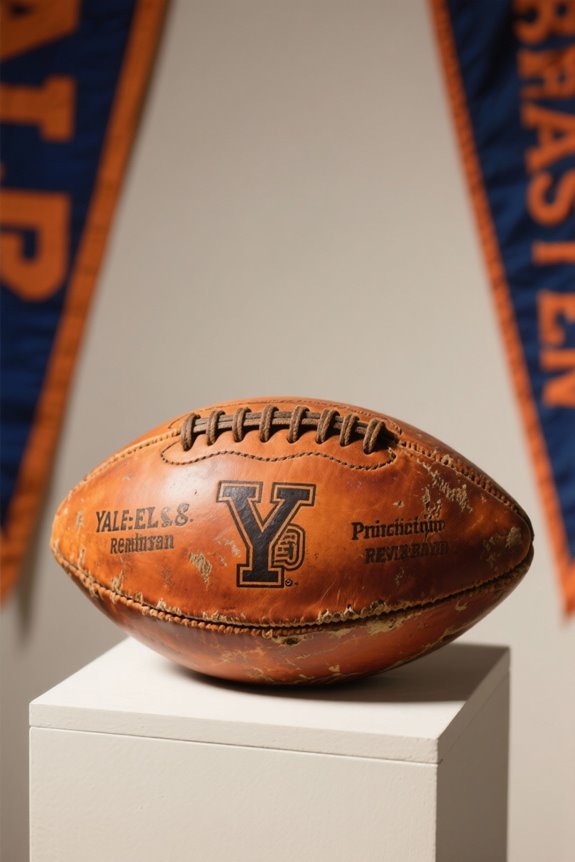
Regarded as one of the oldest continuous rivalries in American football, the Yale-Princeton competition traces its origins back to 1873, positioning itself as a foundational element in the early development of collegiate athletics. This historic rivalry not only shaped football strategies but also contributed to the academic prestige of both institutions. Yale and Princeton have claimed multiple collegiate national championships, with 28 and 27 titles, respectively. Key moments, such as the pivotal 1874 game, saw tactical evolution influenced by coaching strategies, altering the course of the sport. Yale leads the all-time series 80-55-10, emphasizing the competitiveness of their encounters. The rivalry’s impact extends beyond the field, affecting admissions, alumni relations, and defining campus traditions that continue today. Moreover, high-density foams used in modern training dummies were influenced by the safety considerations from historic rivalries like Yale vs. Princeton, reflecting the evolution of player protection in the sport.
Army vs. Navy
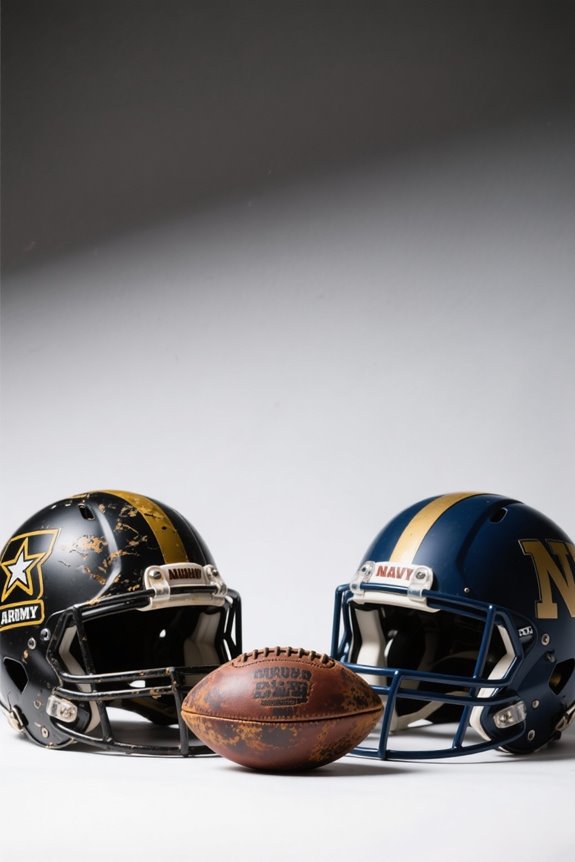
Established in 1890, the Army-Navy football game represents one of the most enduring rivalries in college football, characterized by its rich historical significance and inter-service competition. The rivalry origins date back to Navy’s first triumph over Army, 24-0, and has evolved into a national event, typically held in Philadelphia. The series overview currently shows Navy leading with 63 wins against Army’s 55. Historic moments include Navy’s record 51-0 victory in 1973 and memorable tie in 1946. Cultural significance is amplified by extensive pageantry traditions, including military demonstrations and alumni involvement, creating a unique atmosphere. Recent trends indicate Navy’s dominance, particularly their 14-game winning streak from 2002 to 2015, illustrating the evolving competitive landscape of this legendary matchup. The extensive pageantry traditions enhance not only the rivalry’s allure but also engage fans and alumni alike in an unforgettable experience.
Yale vs. Harvard
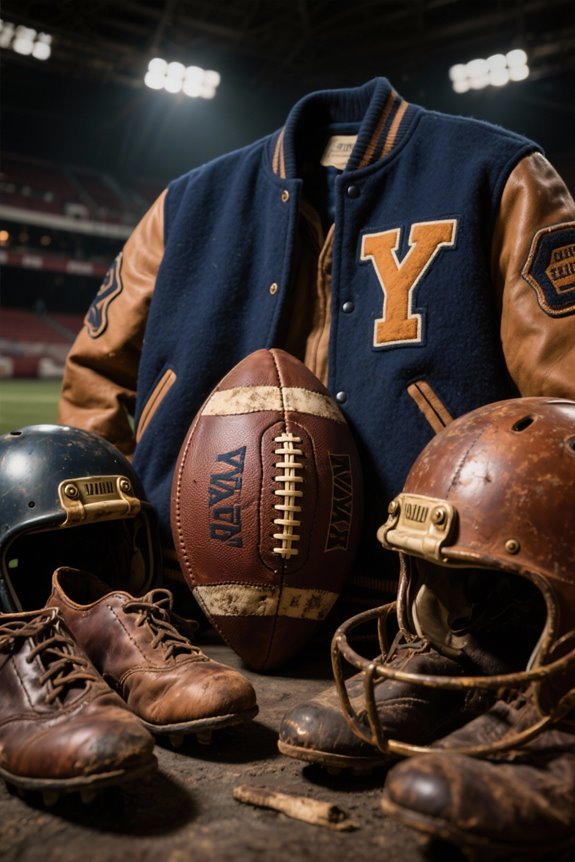
Often celebrated as “The Game,” the Yale vs. Harvard rivalry epitomizes college football’s historic significance, dating back over 150 years. This contest, originating in 1875, remains the second-oldest rivalry in the sport and has profound cultural impact, showcasing enduring alumni pride and institutional legacy. The rivalry has produced extraordinary historic moments, such as the dramatic 1968 tie and the thrilling 2005 triple-overtime match, highlighting not just athletic prowess but the competitive spirit entrenched in both Harvard traditions and Yale legacy. Each encounter serves as a focal point for thousands of fans, symbolizing the deeper academic and social connections between the two esteemed universities. As the final game of the season, it often decides the Ivy League championship, underscoring its enduring football significance. Chest protectors, designed with high-density EVA foam padding, ensure player safety and comfort during such intense matchups.
Alabama vs. Auburn
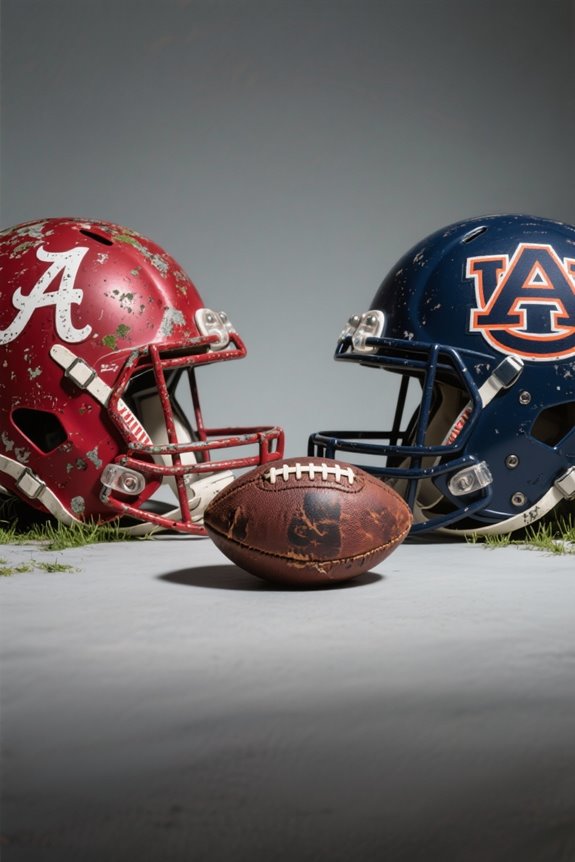
The Iron Bowl, the highly anticipated annual clash between the Alabama Crimson Tide and Auburn Tigers, represents one of college football’s most storied rivalries. Historically, Alabama leads the series with approximately 51 wins to Auburn’s 37, alongside one tie since their first meeting in 1892, where Auburn triumphed 32-22. The rivalry’s impact extends beyond records, considerably influencing SEC standings and national attention. Notable moments include Chris Davis’s game-winning touchdown in 2013 and Alabama’s dominant 55-0 victory in 1948. Games are often tightly contested, reflecting each team’s competitive parity; many were decided by a touchdown or less. With approximately 89 meetings to date, the Iron Bowl embodies both cultural significance and economic influence in Alabama, drawing fervent support from fans statewide. Authentic helmets, like the NCAA Florida Gators Revolution Speed Full-Size Authentic Football Helmet, are often used by true fans to celebrate such legendary matchups.
Georgia vs. Tennessee
One of college football’s prominent rivalries, the competition between the University of Georgia and the University of Tennessee has endured for over a century, with the first game played in 1899. Currently, Georgia holds a dominant lead in the all-time series, boasting 30 victories to Tennessee’s 23, alongside 2 ties. This rivalry has witnessed notable shifts, as Georgia enjoys a 9-game winning streak from 2017 through 2026, illustrating their recent dominance. However, Tennessee, historically a formidable opponent, seeks resurgence to reclaim past glory, marked by a 9-game win streak against Georgia from 1989 to 1999. Matches alternate between the campuses, intensifying the historical significance of this fierce rivalry within the Southeastern Conference. The excitement of these games often mirrors the intense strategies showcased on dry erase boards, essential tools that help coaches communicate plays effectively.
UCLA vs. USC
Rooted deep in the fabric of college football, the rivalry between the University of California, Los Angeles (UCLA) and the University of Southern California (USC) stands out as a defining competition that began in 1929. Known as the “Battle for Los Angeles,” this rivalry features over 95 matchups, with USC leading the series 53–34–7. The annual game, traditionally held at the Rose Bowl or Los Angeles Memorial Coliseum, impacts both teams’ conference standings and bowl eligibility considerably. Recent trends indicate a slight shift, as UCLA has won two of the last three encounters, challenging USC’s historical dominance. This rivalry represents not just athletic competition but also deep cultural, academic battles between California’s flagship institutions, fostering rich traditions and intense fan engagement.
Stanford vs. California
Remarkable for its historical significance, the rivalry between Stanford University and the University of California, Berkeley, known as the Big Game, has been a prominent feature of college football since its inception in 1892. Originating at Haight Street Park, the rivalry embodies California pride and Stanford traditions, particularly through the iconic Stanford Axe, awarded since 1933. The Axe’s dramatic history, including theft and recovery, adds to its lore as a premier rivalry trophy. Memorable moments like “The Play” in 1982 emphasize the intensity of the competition, which has involved remarkable players like John Elway. As college football evolution continues, the Big Game fosters a unique fan culture, marking one of the longest and most storied rivalries in NCAA history.
Penn State vs. Ohio State
The rivalry between Penn State University and Ohio State University has evolved into one of the most significant matchups in college football, characterized by competitive intensity and historical developments. Dating back to their controversial first game in 1912, the rivalry showcases historic moments, including a decisive 63-14 victory for Penn State in 1994. Major coaching legacies, particularly under Joe Paterno and Jim Tressel, have increased championship implications, making each contest essential for both teams’ playoff aspirations. Fan experiences remain vibrant, with high attendance and passionate support. As of 2023, Ohio State leads the overall series 25-14 and continues to exhibit dominance, yet the rivalry retains its prominence and allure despite changing conference dynamics. The intense competition not only impacts team performance but also highlights the importance of player safety and performance during these high-stakes games.
Frequently Asked Questions
What Factors Contribute to the Intensity of These Rivalries?
The intensity of college football rivalries stems from fan culture, which fosters deep emotional investment, and historical context that includes significant events, geographical ties, and long-standing institutional pride, creating passionate and spirited competitions.
How Have Rivalries Evolved Over the Years?
Over the years, rivalries have experienced historic changes, adapting to evolving rivalry dynamics. From regional contests to national spectacles, their significance has deepened through intensified competition, media coverage, and cultural symbolism, shaping college football’s landscape.
What Role Do Alumni Play in These Rivalries?
Alumni engagement greatly influences rivalries by fostering school pride and cultural heritage, while their legacy impact is evident through financial support, recruitment efforts, and by keeping traditions alive, enhancing the emotional intensity surrounding these competitions.
How Are Rivalries Celebrated by Fans and Schools?
Rivalry revelry resonates through fan traditions and vibrant events, as enthusiastic supporters showcase rivalry memorabilia. Schools amplify excitement with spirited celebrations, from tailgating to costume contests, fostering fierce friendships and competitive camaraderie during anticipation-filled matchups.
What Are the Economic Impacts of These College Football Rivalries?
The economic impacts of college football rivalries include skyrocketing ticket sales and substantial boosts for local businesses, as fans flock to host cities, enhancing hotel occupancy, restaurant revenues, and transportation services during game weekends.


